African daisy
Osteospermum ecklonis. Family Asteraceae. Perennial.
Also called Cape daisy, Cape marguerite, Blue-and-white daisy.
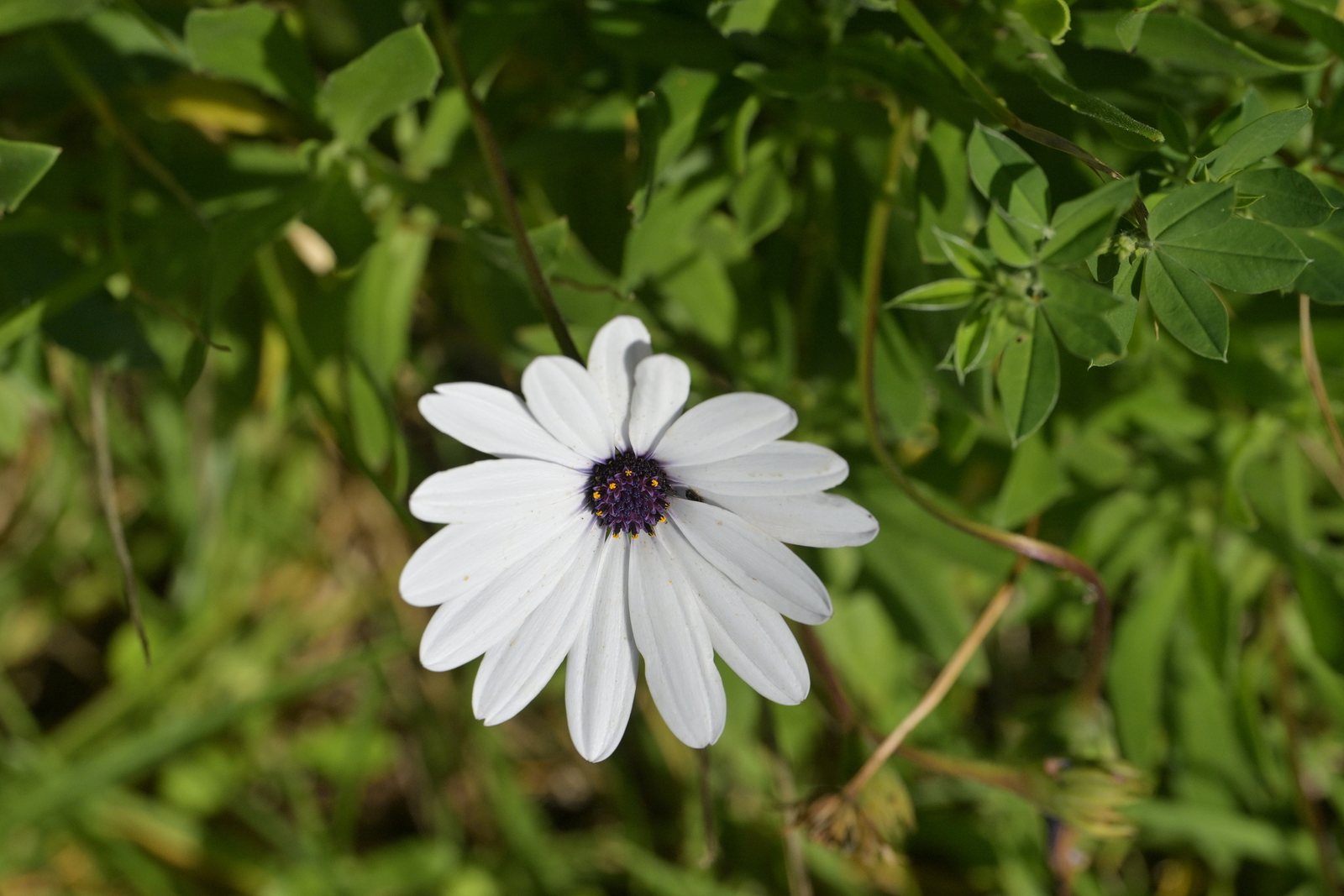
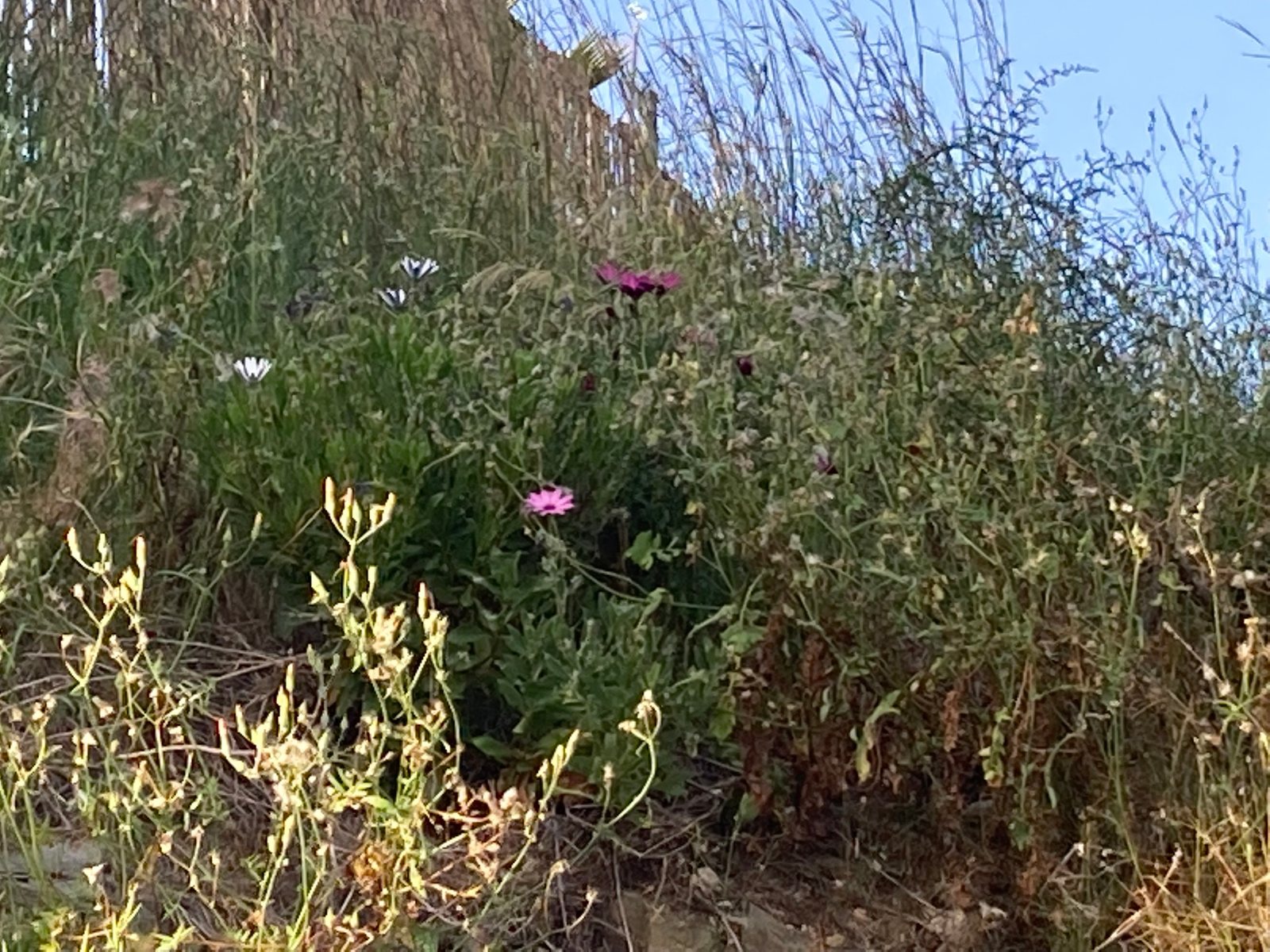
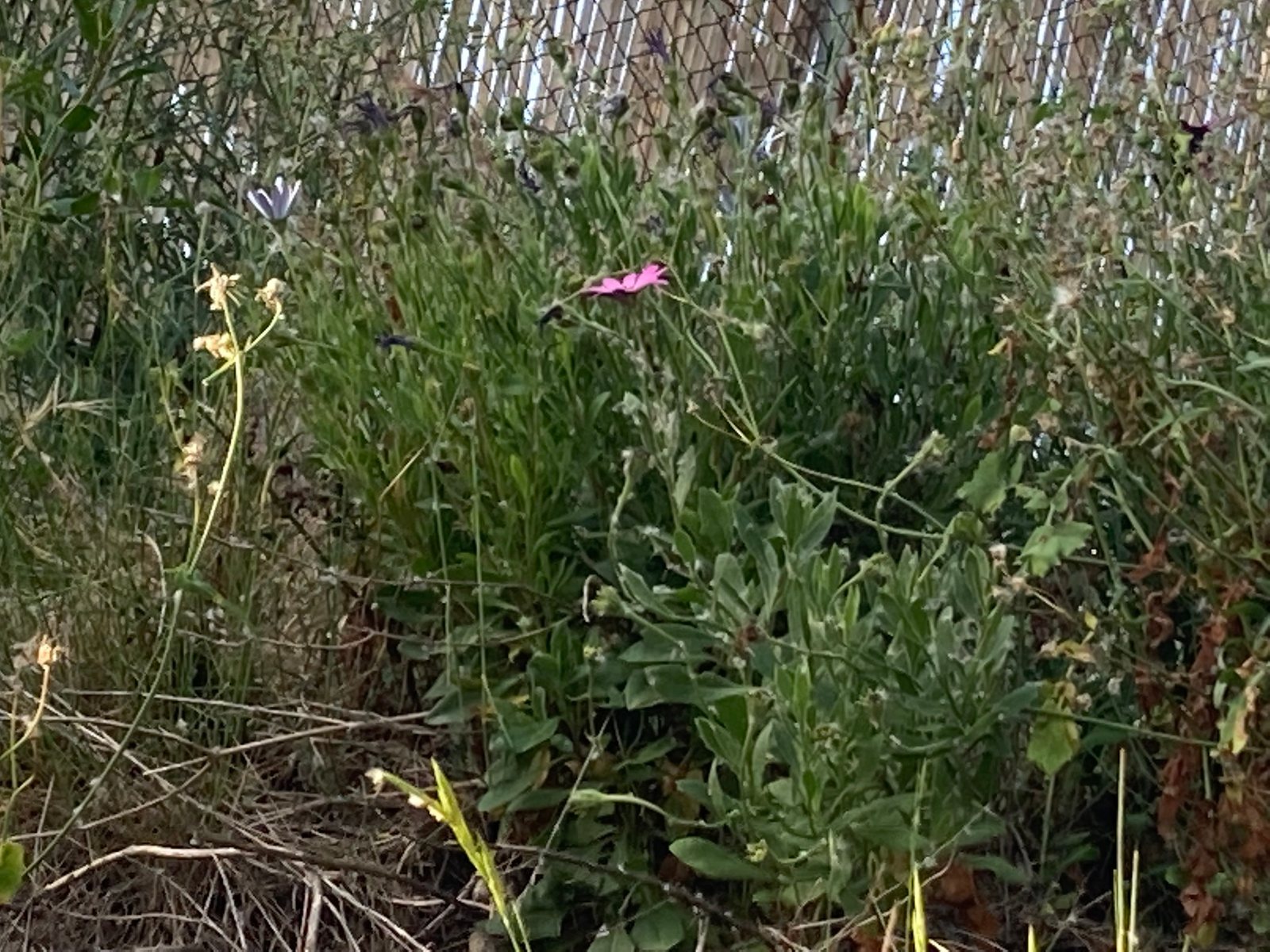
African daisy is a South African, evergreen, shrubby perennial grown for white daisies with violet-blue centres and purple-tinted petal backs. It flowers best in sunny, mild weather and is grown as an annual where winters are cold; many compact, brightly coloured plants sold as African daisies are hybrids rather than the species.
At a glance
- Sun
- Full sun; tolerates light afternoon shade in hot climates, but flowers less in shade.
- Water
- Water regularly while establishing. Once established, let the soil partly dry between waterings; container plants need more frequent checks.
- Soil
- Well-drained sandy or loamy soil. Avoid heavy, waterlogged ground, especially in winter.
- Height
- 2-3 ft (0.6-0.9 m)
- Spread
- 2-4 ft (0.6-1.2 m)
- Flowers
- White flowers with violet-blue centres, mainly spring through autumn in mild conditions. Flowering often slows during intense summer heat; blooms commonly close at night and in dull weather.
- Foliage
- Evergreen. Green, slightly fleshy, spoon-shaped to lance-shaped leaves, often with toothed edges.
- Growth
- Fast in warm weather.
- Care needed
- Low
The year at a glance
- Pollinators
- Deer resistant
- Drought tolerant
- Low allergen
| J | F | M | A | M | J | J | A | S | O | N | D | |
|---|---|---|---|---|---|---|---|---|---|---|---|---|
| Flowers | ||||||||||||
| Plant |
Northern hemisphere months. In Australia, shift them by six.
- Difficulty
- Moderate
- Toughness
- Fairly tough
Will it suit your garden?
Pick your zone, country, light and whether you have pets.
Full sun is 6 or more hours of direct sun a day, part shade 3 to 6 hours, shade under 3.
How it grows
Planting day
1 ft (0.3 m)
After 1 year
1.7 ft (0.53 m)
After 2 years
2.5 ft (0.75 m)
full size
About 2 years to full size.
From a typical nursery size, at an average rate for this kind of plant. A rule of thumb, not a forecast.
Good to know
- Cats and dogs
- Safe
- Invasive in
- Australia
- In the garden
- Spreads vigorously: plan to contain it.
- Growth rate
- Fast
Care
Jobs through the year
- WaterMay, Sep–Oct, every 14 days
- Water established plants in the ground when soil partly dries; new plants and pots need more frequent checks.
- WaterJun–Aug, every 7 days
- Water established plants in the ground if soil is drying; avoid saturation and check pots more often.
- WaterJan–Apr, Nov–Dec, every 21 days
- For frost-free overwintered plants only, water sparingly when compost is nearly dry.
- FeedMay–Sep, every 21 days
- For container plants only, apply a light flowering-plant feed at the label rate.
- PruneMay
- Pinch young shoot tips for bushier growth and remove winter damage from overwintered plants.
- PruneJun–Aug
- Lightly trim after a main flowering flush; avoid cutting into bare old wood.
- DeadheadMay–Oct, every 7 days
- Remove faded flowers to encourage further flowering.
- ProtectSep–Oct
- Before the first frost, move plants or rooted cuttings into bright, frost-free shelter; otherwise grow as annuals.
- Plant after frost danger has passed, allowing room for the mature spread.
- Water at soil level and let the surface dry between waterings; do not leave pots standing in water.
- Feed container plants lightly with a flowering-plant fertiliser during active growth; avoid excessive nitrogen.
- Remove spent flowers to encourage further flowering and reduce self-seeding.
- In cold regions, keep cuttings or container plants in a bright, frost-free place over winter.
Pruning. Pinch young shoot tips to encourage branching, and lightly trim after a main flush of flowers. Where plants overwinter outdoors, remove frost-damaged growth in spring once frost risk has passed; avoid cutting hard into bare old wood.
Through the year
- Early spring
- Check overwintered plants for pests and remove dead or damaged growth once severe frost risk has passed.
- Spring
- Plant outdoors after the last frost, choosing a sunny position with free-draining soil.
- Late spring
- Pinch young plants for bushier growth and begin light feeding of container plants.
- Summer
- Deadhead regularly, check pots for dryness and lightly trim plants after a flowering flush.
- Late summer
- Take non-flowering shoot cuttings if you want replacement plants for next year.
- Autumn
- Move plants you want to keep into bright, frost-free shelter before frost; reduce watering as growth slows.
In the garden
- Plant along sunny border edges for a low mound of foliage and a long display of daisies.
- Use in free-draining patio pots with trailing verbena for contrasting flower shapes.
- Combine with lavender and santolina in gravel gardens, keeping crowns clear of wet mulch.
- Plant in sheltered coastal gardens with compact ornamental grasses, away from natural vegetation where it may escape.
Garden styles it suits: Mediterranean, Coastal, Dry gravel garden, Cottage garden, Modern courtyard and Pollinator garden.
Plant it with: Lavender, Santolina, Verbena, Salvia, Blue fescue and Thyme.
Wildlife: Open flowers provide pollen and nectar for bees and other flower-visiting insects, particularly in sunny weather.
Problems to watch for
- Root and crown rot in wet soil: improve drainage, empty pot saucers and replace badly affected plants.
- Aphids on soft shoots: wash off small colonies with water; use insecticidal soap if needed, avoiding open flowers.
- Whitefly on sheltered or overwintered plants: inspect leaf undersides, isolate affected pots and treat with an appropriate insecticidal soap.
- Sparse flowering in shade or extreme heat: move to a sunnier site if shaded; during heat, maintain sensible watering and wait for cooler weather rather than adding extra fertiliser.
Safety
Not known to be toxic to cats, dogs, horses or people. Species-specific safety information is limited, so do not treat the flowers or leaves as edible; eating plant material may still cause stomach upset.
Where it spreads. Can escape gardens and invade coastal vegetation in southern Australia, including Western Australia, South Australia and Victoria. Avoid planting beside coastal bushland in these regions, remove seedlings and dispose of prunings responsibly.
Easily confused with
Trailing African daisy (Osteospermum fruticosum)
Usually forms a lower, spreading or trailing mat, while O. ecklonis develops a more upright, bushy framework.
Cape marigold (Dimorphotheca sinuata)
A true annual, usually with orange or yellow flowers and softer, narrower foliage, rather than an evergreen woody base.
Marguerite daisy (Argyranthemum frutescens)
Has finely divided, fern-like leaves and usually yellow flower centres; African daisy has simple leaves and typically violet-blue centres.
The name
Osteospermum comes from Greek words meaning 'bone seed', referring to its hard fruits, and ecklonis honours the botanical collector Christian Friedrich Ecklon.
Propagation. Take softwood or semi-ripe cuttings from non-flowering shoots in spring or late summer and root in a free-draining medium under cover. Seed can be sown in spring, but seedlings from garden hybrids may differ from the parent.
Checked against open data
- Accepted botanical name
- Dimorphotheca ecklonis Osteospermum ecklonis is an older name for Dimorphotheca ecklonis.
- In the US and Canada
- Introduced in the lower 48 states.
- Native range
- Cape Provinces.
Sources: GBIF (CC BY 4.0), USDA PLANTS and Trefle (CC BY 4.0). The care and design notes are LandscapeGPT's own.
See it in your own yard.
Upload a photo of your yard and see it redesigned with plants that suit your climate, each checked against your zone.