African iris
Dietes iridioides. Family Iridaceae. Perennial.
Also called Fortnight lily, Wild iris, Butterfly iris.
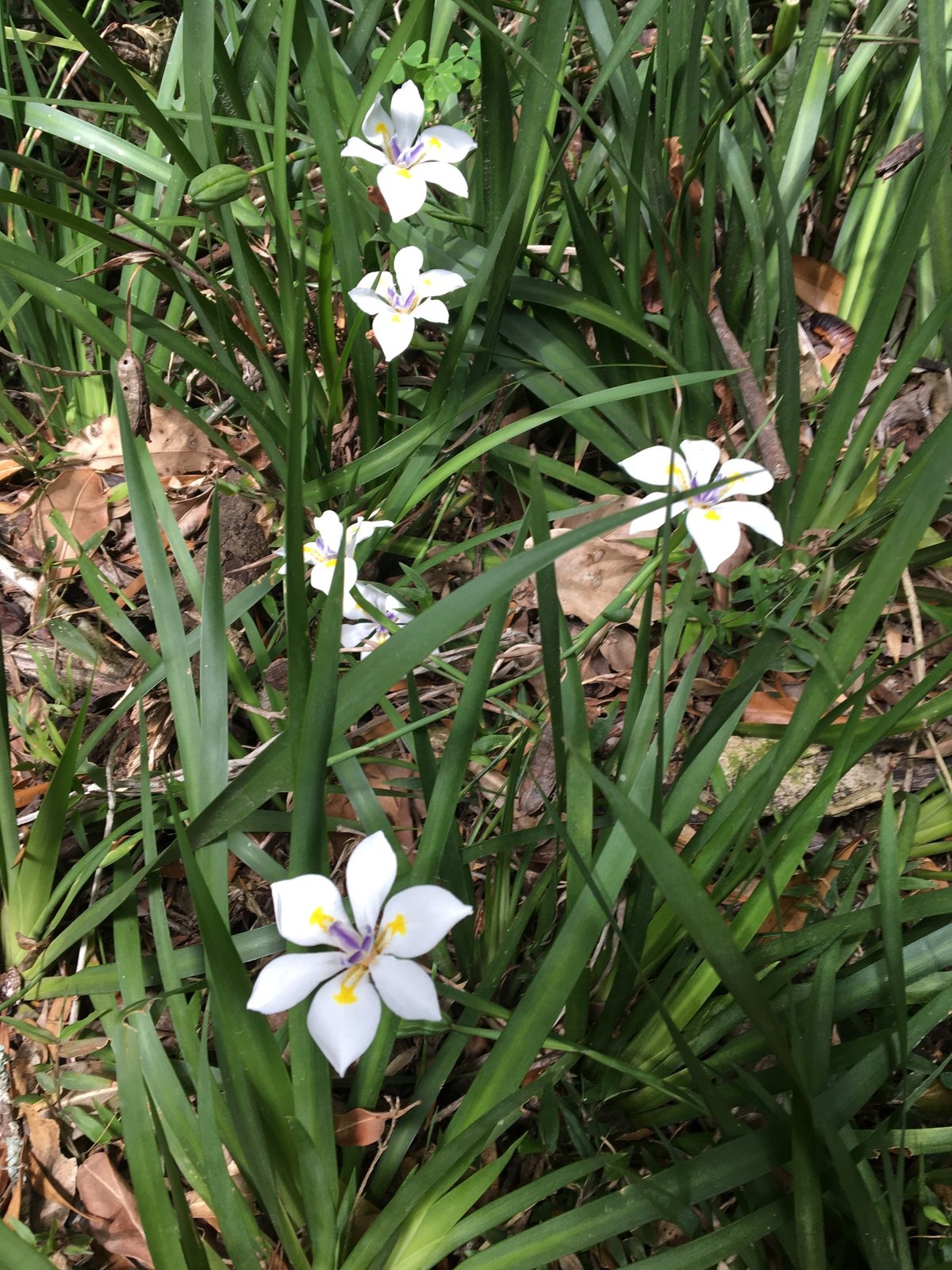
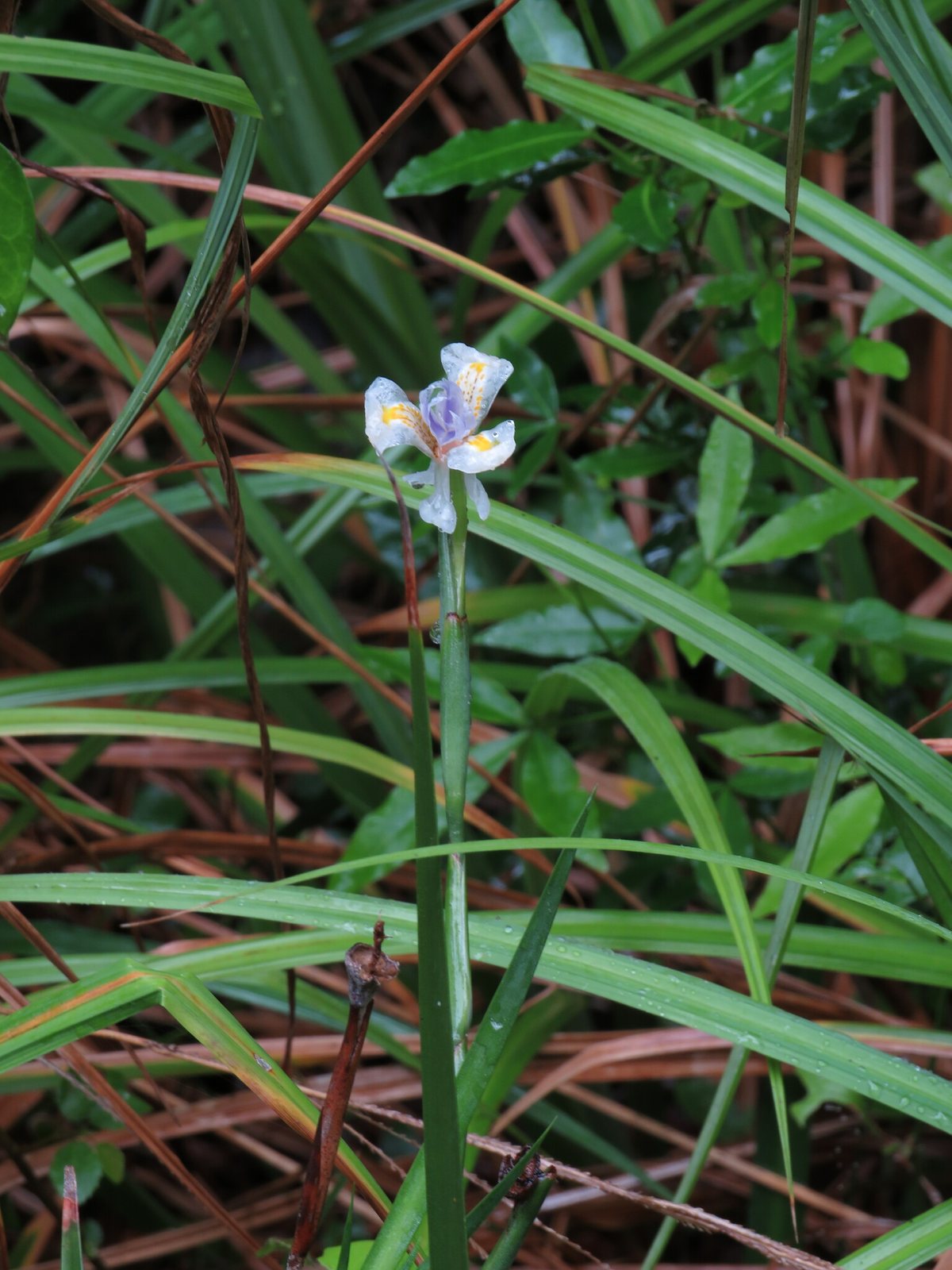
African iris is a clump-forming, rhizomatous perennial with upright, sword-shaped leaves and white, iris-like flowers marked with yellow and violet. Gardeners grow it for evergreen structure and repeated flowering in warm climates; in colder areas, grow it in a container that can overwinter under cover.
At a glance
- Sun
- Full sun to partial shade; flowering is usually best with several hours of direct sun.
- Water
- Water regularly while establishing. Established clumps tolerate dry spells, but flower better with occasional deep watering during dry weather.
- Soil
- Well-drained loam, sand or clay improved with organic matter; tolerates a range of soil pH levels. Avoid persistently waterlogged ground.
- Height
- 2-3 ft (0.6-0.9 m)
- Spread
- 2-3 ft (0.6-0.9 m)
- Flowers
- White flowers with yellow patches and violet markings, mainly spring through autumn in warm climates. Individual flowers usually last one day, with more opening on the same stems.
- Foliage
- Evergreen. Narrow, upright to arching, dark green, sword-shaped leaves arranged in fans.
- Growth
- Moderate; gradually expands into a dense clump.
- Care needed
- Low
The year at a glance
- Pollinators
- Drought tolerant
- Heat tolerant
- Low allergen
| J | F | M | A | M | J | J | A | S | O | N | D | |
|---|---|---|---|---|---|---|---|---|---|---|---|---|
| Flowers | ||||||||||||
| Plant |
Northern hemisphere months. In Australia, shift them by six.
- Difficulty
- Moderate
- Toughness
- Fairly tough
Will it suit your garden?
Pick your zone, country, light and whether you have pets.
Full sun is 6 or more hours of direct sun a day, part shade 3 to 6 hours, shade under 3.
How it grows
Planting day
1 ft (0.3 m)
After 1 year
1.5 ft (0.45 m)
After 2 years
2 ft (0.6 m)
After 3 years
2.5 ft (0.75 m)
full size
About 3 years to full size.
From a typical nursery size, at an average rate for this kind of plant. A rule of thumb, not a forecast.
Good to know
- Cats and dogs
- Toxic
- Invasive in
- Australia
- In the garden
- Spreads vigorously: plan to contain it.
- Growth rate
- Moderate
Care
Jobs through the year
- WaterApr–May, Sep, every 14 days
- Deep-water established outdoor clumps during dry spells; newly planted clumps need more frequent watering.
- WaterJun–Aug, every 14 days
- Deep-water established clumps in dry weather for better flowering, letting the surface dry slightly.
- WaterJan–Mar, Nov–Dec, every 28 days
- Check frost-free overwintering pots and water sparingly only when nearly dry.
- FeedApr–May
- Apply a light balanced feed only if growth is weak.
- MulchMay
- Mulch around the clump without covering the crown.
- DivideApr–May
- Divide congested clumps as growth resumes if flowering declines or the centre becomes crowded.
- PruneApr–May
- Remove dead leaves at the base, retaining green stems that can flower again.
- DeadheadJul–Oct, every 14 days
- Remove developing seed capsules if seedlings are unwanted; leave green flowering stems intact.
- ProtectJan–Apr, Oct–Dec
- In zones 6–7, overwinter containers in bright frost-free shelter rather than relying on outdoor mulch.
- Water deeply during the first growing season, allowing the surface soil to dry slightly between waterings.
- Apply a light dressing of balanced fertiliser in spring if growth is weak; avoid heavy feeding.
- Mulch around the clump, keeping mulch clear of the crown.
- Divide crowded clumps in spring when flowering declines or the centre becomes congested.
- In zone 8, use a sheltered position and winter mulch; foliage may be killed by frost even where the rhizomes survive.
- In colder regions, overwinter containers in a bright, frost-free place and water sparingly.
Pruning. Remove dead or frost-damaged leaves at the base in spring, and pull or cut out individual brown leaves as needed. Keep green flowering stems because they can flower again; remove them when brown, or remove developing seed capsules to limit self-seeding.
Through the year
- Spring
- Remove winter-damaged leaves and divide crowded clumps as new growth begins.
- Late spring
- Plant out after damaging frosts have passed and water new plants thoroughly.
- Summer
- Water during prolonged dry spells and retain green flowering stems for repeat blooms.
- Late summer
- Remove developing seed capsules where seedlings are unwanted or nearby bushland could be affected.
- Autumn
- Move containers under cover before frost in cold climates.
- Winter
- Keep sheltered container plants barely moist and check that outdoor crowns are not sitting in wet soil.
In the garden
- Repeat clumps along paths or driveways for a consistent rhythm of upright foliage.
- Plant in groups beneath open-canopied trees where dappled light allows flowering.
- Combine with rounded shrubs and fine-textured grasses to contrast leaf shapes.
- Use in large, well-drained courtyard containers where evergreen foliage provides year-round structure.
Garden styles it suits: Modern, Architectural minimal, Modern Mediterranean, Modern tropical, Modern courtyard and Low-maintenance.
Plant it with: Agapanthus, Lomandra, Society garlic, Salvia, Lavender and Dwarf pittosporum.
Wildlife: Flowers provide pollen and nectar for visiting insects, including bees. Dense clumps can shelter small garden animals, but the plant is not a major food source for wildlife outside its native range.
Problems to watch for
- Crown or rhizome rot in waterlogged soil: improve drainage, reduce watering and discard badly rotted sections.
- Brown, collapsed foliage after frost: leave protective growth through cold weather, then remove damaged leaves in spring.
- Slugs and snails damaging young growth: remove hiding places, hand-pick or use an appropriately labelled bait.
- Poor flowering in deep shade or congested clumps: move to a brighter position or divide in spring.
Safety
Reported harmful if eaten, particularly the rhizomes, with possible vomiting, abdominal pain or diarrhoea. Keep children, cats and dogs from chewing it; sap may also irritate sensitive skin. Species-specific information on poisoning in horses is limited, so do not treat it as safe forage.
Where it spreads. Can escape gardens and self-seed into bushland in eastern Australia, including parts of New South Wales and south-eastern Queensland. Remove seed capsules near natural areas and check local weed advice before planting.
Easily confused with
Large wild iris (Dietes grandiflora)
Usually has larger flowers with more conspicuous violet markings; individual flowers commonly last several days rather than the single day typical of African iris.
Yellow wild iris (Dietes bicolor)
Has pale yellow flowers with three conspicuous dark brown spots, rather than white flowers with violet markings.
Walking iris (Neomarica gracilis)
Has broader, softer leaves and ornate blue-and-white flowers; flowering stems can form plantlets that bend down and root.
The name
The epithet iridioides means 'resembling an iris', while African iris refers to the plant's African origin and iris-like flowers.
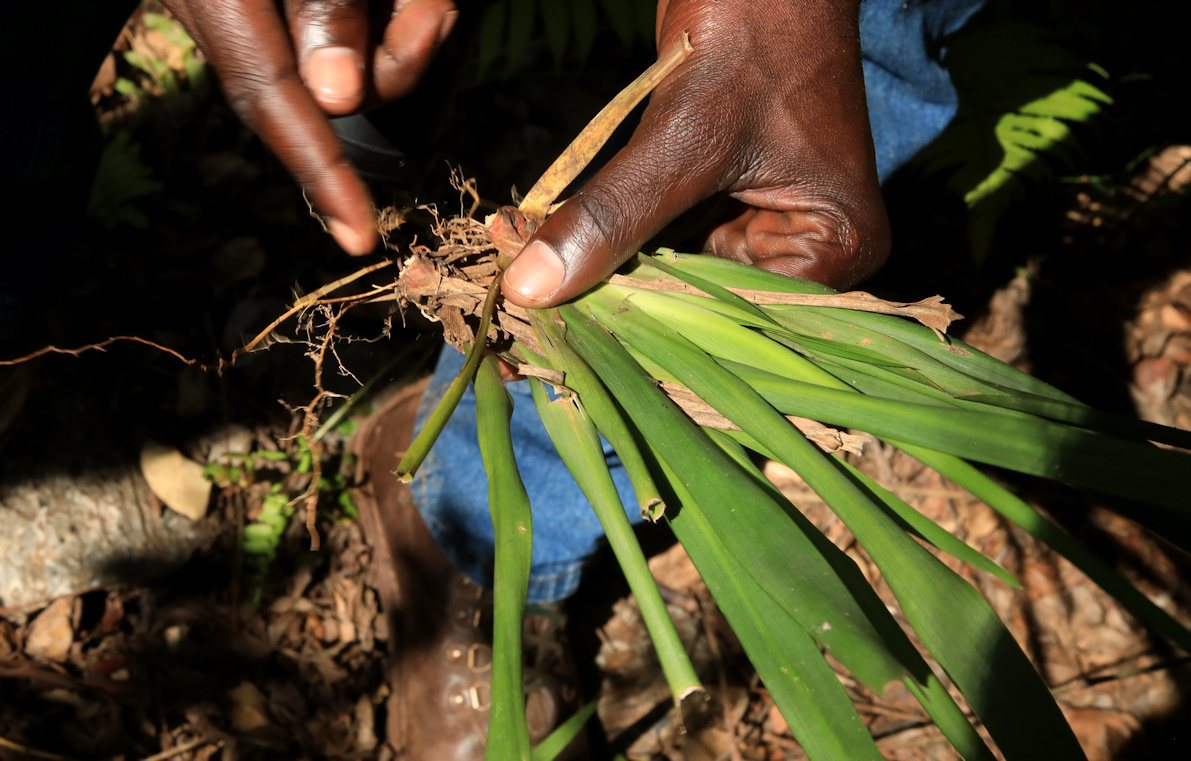
Propagation. Divide rhizomes in spring, keeping several healthy leaf fans and roots on each section. Seed can also be sown in warmth, but seedlings take longer to reach flowering size.
Checked against open data
- Accepted botanical name
- Dietes iridioides
- Native range
- Angola, Cape Provinces, Ethiopia, Kenya, KwaZulu-Natal, Lesotho, Malawi, Mozambique, Northern Provinces, Swaziland, Tanzania and Uganda.
Sources: GBIF (CC BY 4.0) and Trefle (CC BY 4.0). The care and design notes are LandscapeGPT's own.
See it in your own yard.
Upload a photo of your yard and see it redesigned with plants that suit your climate, each checked against your zone.