Almond
Prunus amygdalus. Family Rosaceae. Tree.
Also called Sweet almond, Prunus dulcis.
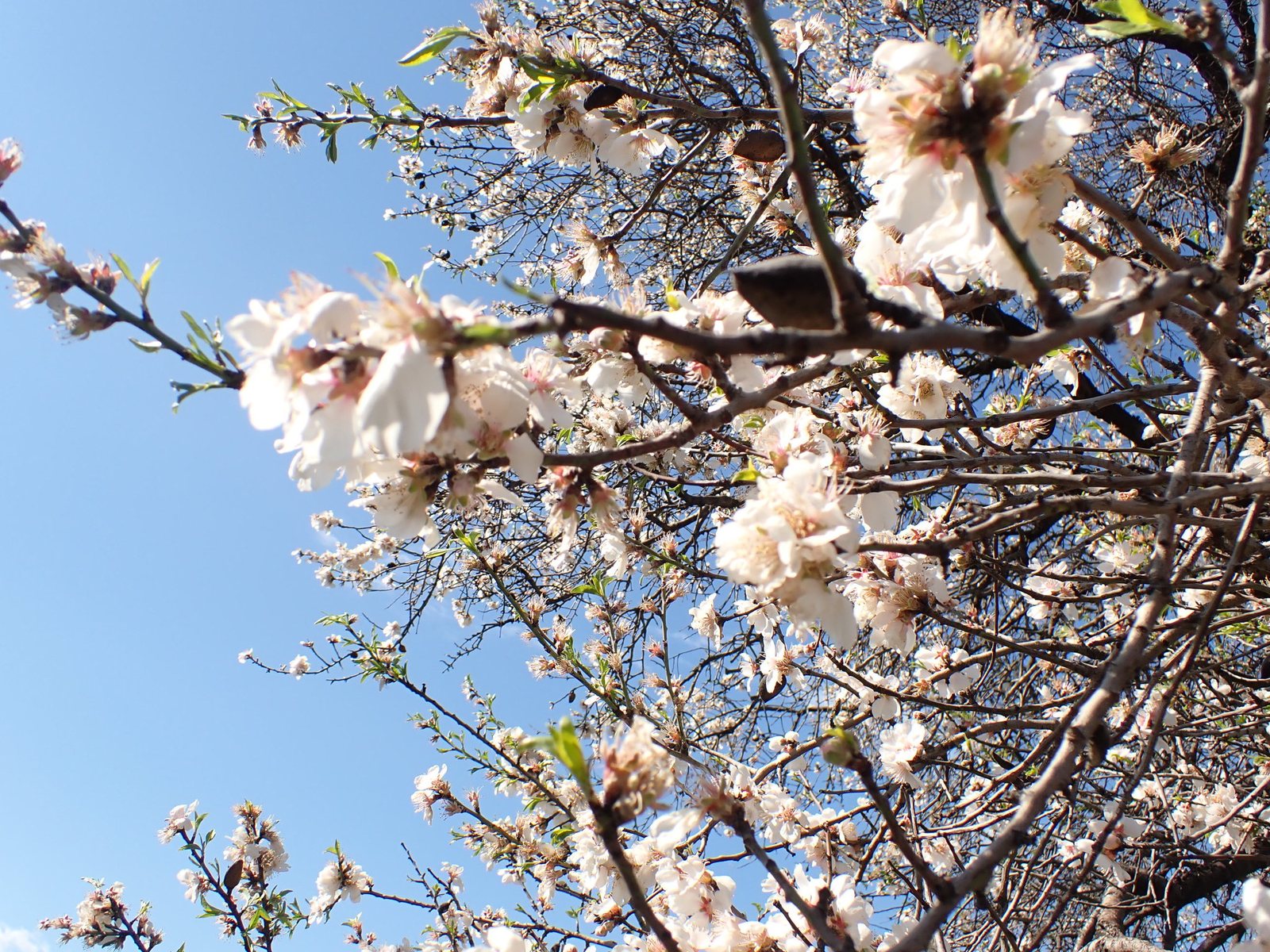
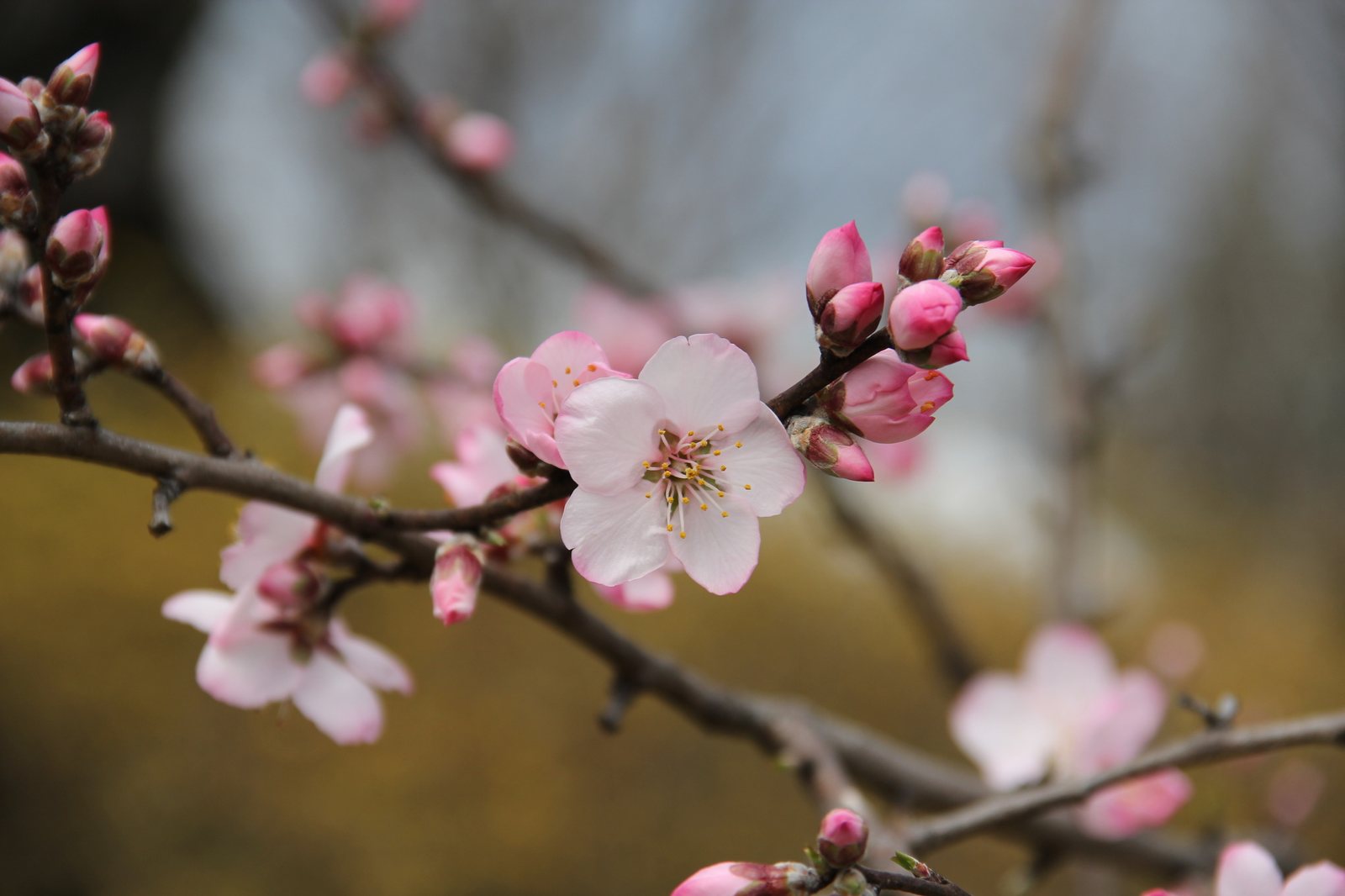
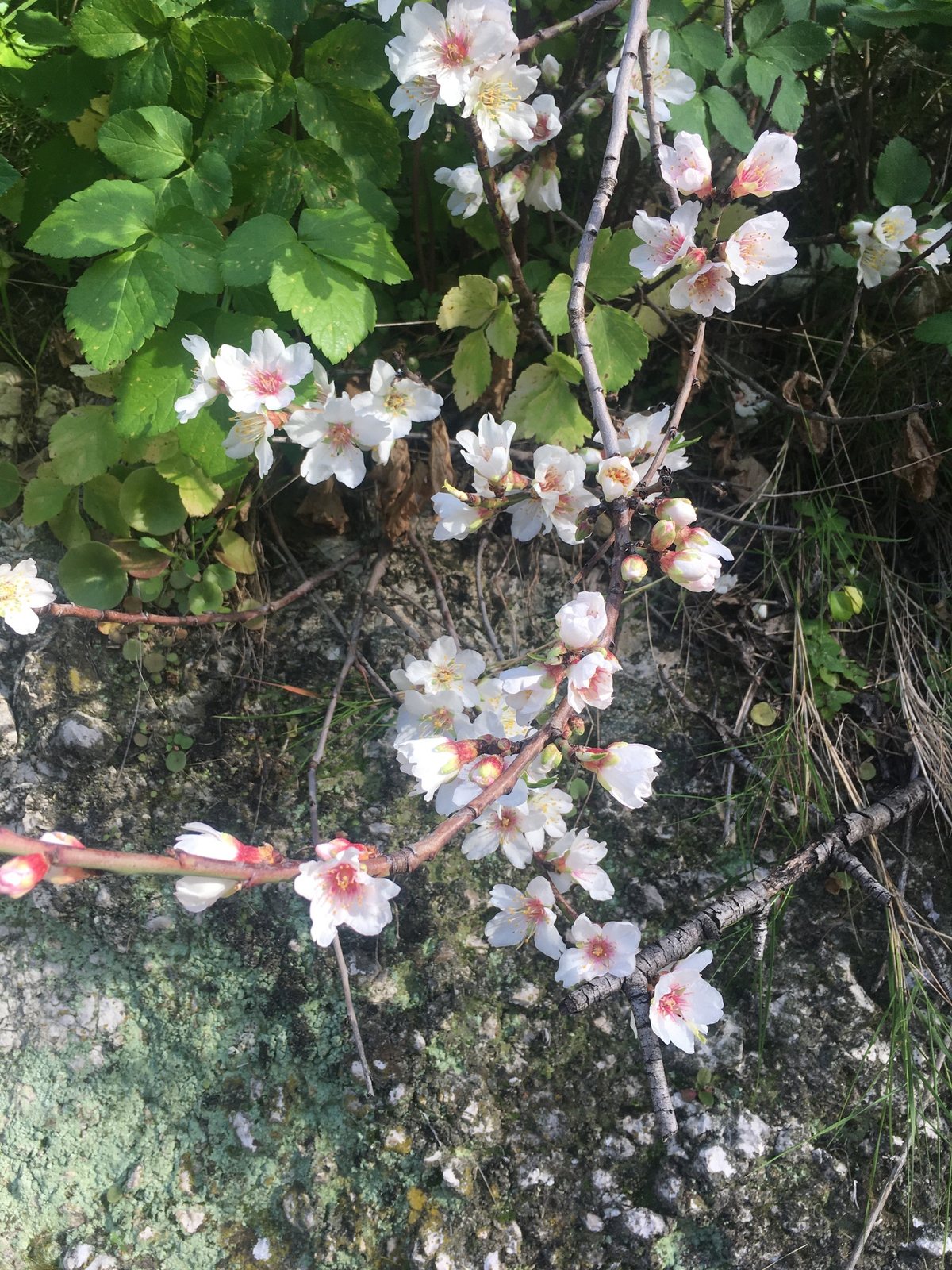
Almond is a deciduous fruit tree grown for its pale pink or white blossom and edible kernels from sweet-almond cultivars. It crops best where summers are long, hot and dry; the tree can survive colder conditions than its early flowers, so late frosts often prevent a harvest. Most cultivars need a compatible almond nearby for pollination, although some are self-fertile.
At a glance
- Sun
- Full sun, preferably in a warm, sheltered position away from frost pockets.
- Water
- Water young trees deeply during dry spells. Established trees tolerate some drought, but need reliable moisture during kernel development for a good crop; avoid saturated soil.
- Soil
- Deep, well-drained loam or sandy loam; tolerates chalky and moderately alkaline soil. Unsuitable for persistently wet or poorly drained ground.
- Height
- 15-30 ft (4.5-9 m)
- Spread
- 15-25 ft (4.5-7.5 m)
- Flowers
- Late winter to early spring; pale pink to white flowers open before the leaves.
- Foliage
- Narrow, pointed green leaves with finely toothed edges; sometimes yellow in autumn before falling.
- Growth
- Moderate; final size depends strongly on rootstock and pruning.
- Care needed
- Medium
The year at a glance
- Pollinators
- Drought tolerant
- Heat tolerant
- Wildlife
- Low allergen
- Edible
| J | F | M | A | M | J | J | A | S | O | N | D | |
|---|---|---|---|---|---|---|---|---|---|---|---|---|
| Flowers | ||||||||||||
| Fruit | ||||||||||||
| Plant |
Northern hemisphere months. In Australia, shift them by six.
- Difficulty
- Hard
- Toughness
- Fairly tough
Will it suit your garden?
Pick your zone, country, light and whether you have pets.
Full sun is 6 or more hours of direct sun a day, part shade 3 to 6 hours, shade under 3.
How it grows
Planting day
7 ft (2 m)
After 1 year
7 ft (2.2 m)
After 2 years
8 ft (2.5 m)
After 3 years
9 ft (2.7 m)
After 5 years
10 ft (3.2 m)
About 20 years to full size.
From a typical nursery size, at an average rate for this kind of plant. A rule of thumb, not a forecast.
Good to know
- Cats and dogs
- Toxic
- Growth rate
- Moderate
Care
Jobs through the year
- WaterApr–May, Sep, every 14 days
- Water established trees deeply during dry spells; young trees need more frequent watering.
- WaterJun–Aug, every 7 days
- During dry weather, soak the root zone to support kernel development without saturating the soil.
- ProtectFeb–Apr
- Cover small flowering trees with fleece on frosty nights and uncover by day for pollinators.
- MulchMar–Apr
- Refresh organic mulch over the root area, leaving the trunk and graft union clear.
- FeedMar–Apr
- Feed lightly only if growth is weak; avoid excessive nitrogen.
- PruneJun–Aug
- In dry weather, train young trees to an open centre and lightly remove dead, damaged or crossing branches.
- HarvestAug–Oct, every 7 days
- Harvest named sweet almonds when hulls split; remove hulls and dry nuts thoroughly before storage.
- ProtectOct–Nov
- Remove fallen diseased leaves and mummified fruit, and check drainage before winter.
- Choose a named sweet-almond cultivar suited to your climate, and check its pollination requirements before buying.
- Plant with the graft union above soil level; stake young trees only where needed for stability.
- Water deeply through dry periods during establishment and while nuts are developing.
- Apply organic mulch over the root area, keeping it clear of the trunk.
- Feed lightly in spring if growth is weak; avoid heavy nitrogen feeding that encourages soft shoots.
- Harvest when the outer hulls split, then remove the hulls and dry the nuts thoroughly before storage.
Pruning. Train young trees to an open-centred framework with well-spaced main branches. Prune established trees lightly in dry summer weather, removing dead, damaged and crossing growth; avoid wet-weather and winter pruning where bacterial canker or silver leaf is a risk.
Harvest
Harvest almonds in their shells, usually August–October in the US, September–October in the UK and suitable warm parts of Canada, and February–April in Australia. Pick or gently shake them down when the outer hulls dry and split open to expose hard shells, then remove the hulls and dry the nuts in a sheltered, well-ventilated place until the kernels are crisp.
Through the year
- Late autumn
- Remove fallen leaves and mummified fruit; check drainage before the wet season.
- Winter
- Plant dormant bare-root trees when soil is workable and not waterlogged or frozen.
- Late winter
- Check flower buds for frost risk; cover a small tree with horticultural fleece during cold nights and uncover it by day.
- Spring
- Refresh mulch, feed lightly if needed, and avoid insecticides while flowers attract pollinating insects.
- Summer
- Water during prolonged dry spells and prune lightly in dry weather.
- Late summer to early autumn
- Harvest as hulls split; remove hulls promptly and dry nuts in a sheltered, well-ventilated place.
In the garden
- Use as an early-flowering specimen in a sunny lawn or gravel garden, allowing room for its spreading crown.
- Include in a home orchard with compatible almond cultivars for pollination.
- Train as a fan against a sunny, sheltered wall in cooler districts to improve warmth and ripening.
- Combine with lavender, thyme and other sun-loving plants around the outer edge of a Mediterranean-style planting.
Garden styles it suits: Mediterranean, Backyard orchard, Edible landscape, Homestead, Potager (kitchen garden) and Dry gravel garden.
Plant it with: Lavender, Thyme, Rosemary, Catmint, Yarrow and Chives.
Wildlife: Early flowers provide pollen and nectar for bees when mild weather allows them to fly. Squirrels, birds and rodents may take the nuts.
Problems to watch for
- Late frost kills flowers or young fruit: choose a late-flowering cultivar, avoid frost pockets and protect small trees during frosty nights.
- Brown rot and blossom blight cause dead flowers, shoot dieback and rotting fruit: remove affected shoots and mummified fruit, and keep the crown open to air.
- Bacterial canker causes sunken bark lesions, gum and branch dieback: prune affected wood in dry summer weather, disinfect tools between cuts and improve drainage.
- Peach leaf curl distorts and reddens young leaves: remove fallen foliage and, where the disease recurs, seek local advice on an approved dormant-season treatment.
Safety
Leaves, stems and bitter kernels contain cyanogenic compounds and can poison people, cats, dogs and horses; wilted or damaged foliage is especially hazardous to grazing animals. Bitter almonds can cause severe or fatal poisoning if eaten raw. Kernels from named sweet-almond cultivars are normally edible for people, but almonds can cause serious allergic reactions; hard shells and whole nuts also pose choking or obstruction risks to pets.
Easily confused with
Peach (Prunus persica)
Leaves and flowers are very similar, but peaches develop a fleshy fruit; almond has a thin, leathery hull that dries and splits around the shell.
Dwarf flowering almond (Prunus glandulosa)
A small, often suckering shrub rather than a substantial tree; garden forms commonly have double pink or white flowers and are not grown for edible almonds.
Russian almond (Prunus tenella)
A low, suckering shrub with pink flowers and small fruits, rather than the larger orchard tree grown for sweet kernels.
The name
The epithet amygdalus comes from the ancient Greek name for the almond.
Propagation. Usually propagated by budding or grafting a named cultivar onto a suitable Prunus rootstock. Seed-grown trees vary in cropping, flavour and kernel bitterness, so do not rely on seedlings for edible nuts.
Checked against open data
- Accepted botanical name
- Prunus amygdalus
- In the US and Canada
- Introduced in the lower 48 states.
- Native range
- Transcaucasus.
- Measured
- Average height 600 cm.
Sources: GBIF (CC BY 4.0), USDA PLANTS and Trefle (CC BY 4.0). The care and design notes are LandscapeGPT's own.
See it in your own yard.
Upload a photo of your yard and see it redesigned with plants that suit your climate, each checked against your zone.