Alpine sea holly
Eryngium alpinum. Family Apiaceae. Perennial.
Also called Alpine eryngo.
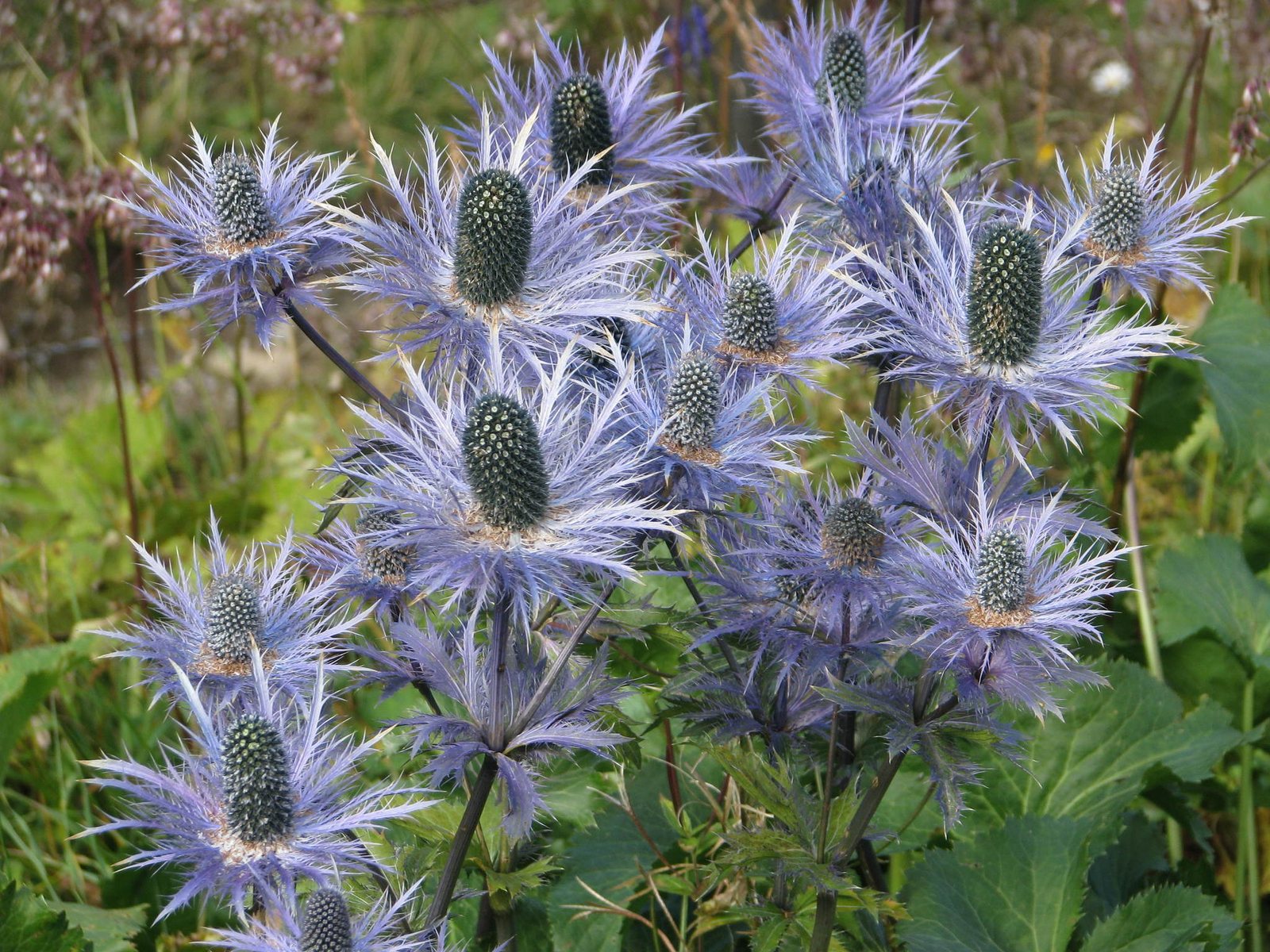
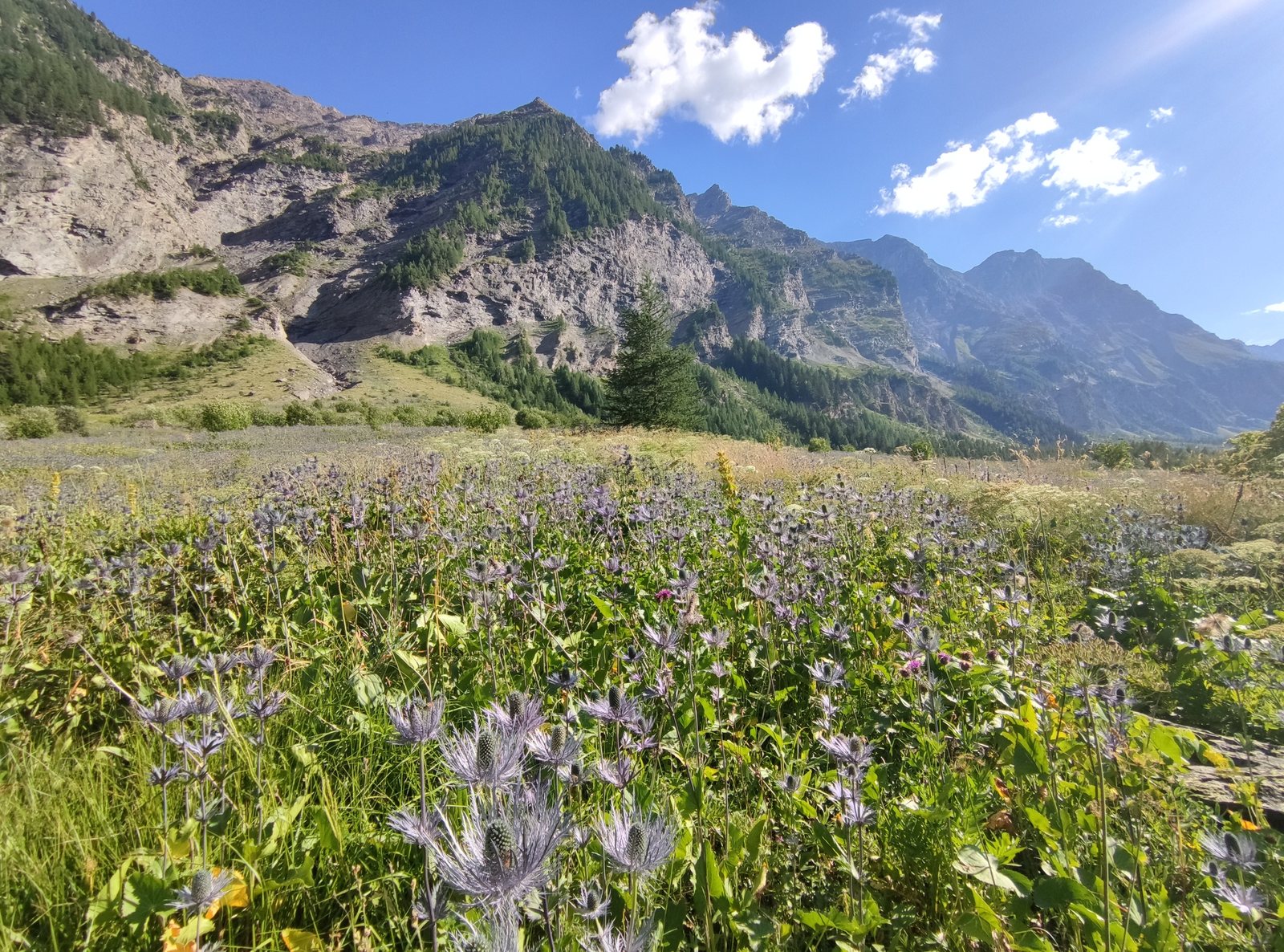
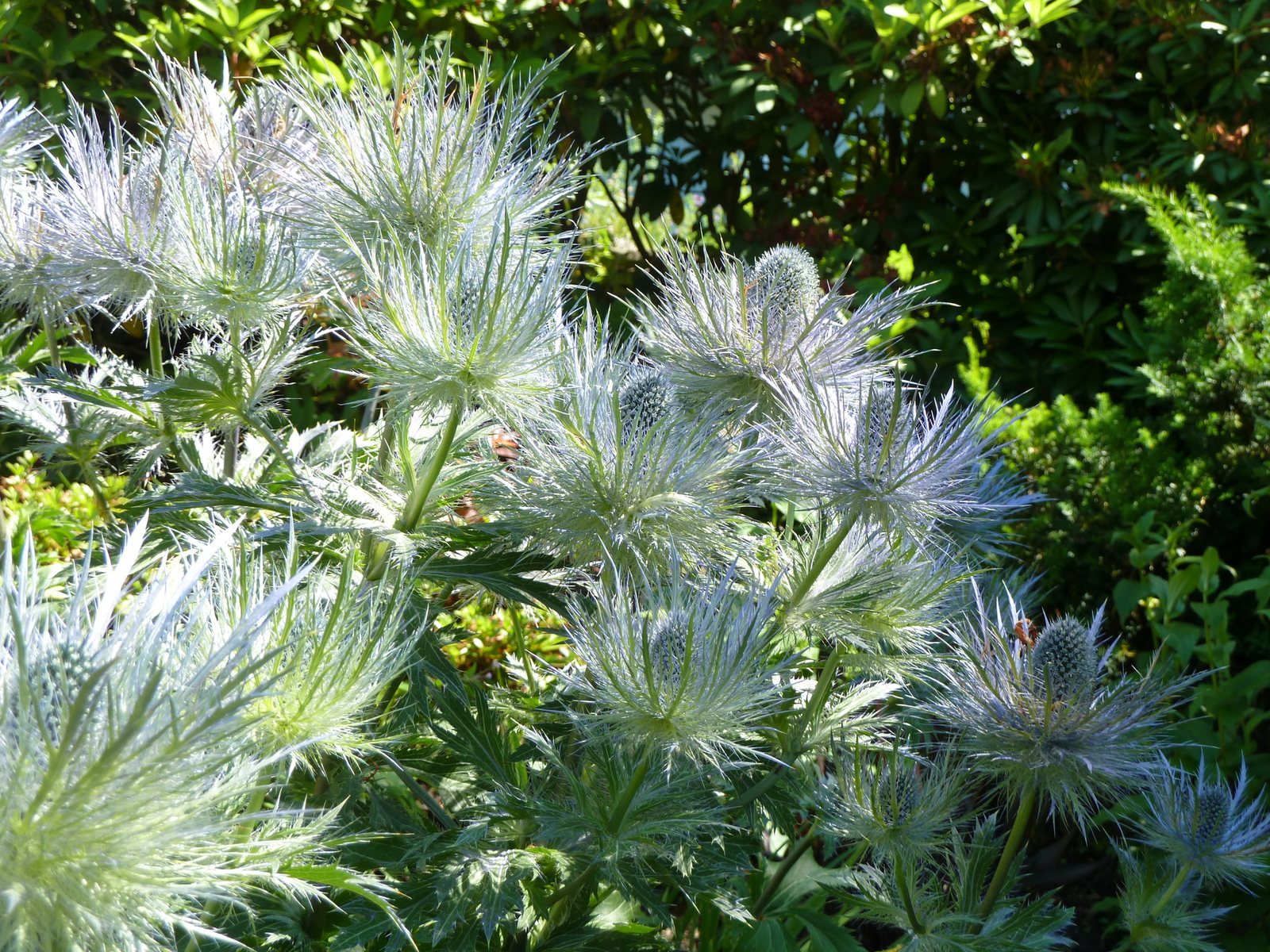
Alpine sea holly is a clump-forming perennial from European mountain grasslands, grown for its blue flower heads and finely divided, spiny blue bracts. It brings strong summer structure to sunny borders and provides flowers for fresh or dried arrangements. It performs best in cooler climates with well-drained soil, rather than hot, humid conditions.
At a glance
- Sun
- Full sun; flowering and blue colouring are strongest in an open position.
- Water
- Water regularly during establishment. Once established, water during prolonged dry spells; this mountain species appreciates more summer moisture than many other sea hollies, but cannot tolerate waterlogged soil.
- Soil
- Well-drained, moderately fertile soil, preferably neutral to alkaline. Avoid heavy, wet ground, especially in winter.
- Height
- 2-3 ft (0.6-0.9 m)
- Spread
- 1-2 ft (0.3-0.6 m)
- Flowers
- Early to midsummer, sometimes continuing into late summer; small blue flowers form elongated heads surrounded by conspicuous, feathery steel-blue to violet-blue bracts.
- Foliage
- Green, broad, heart-shaped basal leaves with toothed margins; upper leaves are smaller, more divided and spiny. The foliage dies back in winter.
- Growth
- Moderate; may take two or three growing seasons to form a substantial clump.
- Care needed
- Low
The year at a glance
- Pollinators
- Deer resistant
- Drought tolerant
- Cold hardy
- Wildlife
- Low allergen
| J | F | M | A | M | J | J | A | S | O | N | D | |
|---|---|---|---|---|---|---|---|---|---|---|---|---|
| Flowers | ||||||||||||
| Fruit | ||||||||||||
| Plant |
Northern hemisphere months. In Australia, shift them by six.
- Difficulty
- Easy
- Toughness
- Fairly tough
Will it suit your garden?
Pick your zone, country, light and whether you have pets.
Full sun is 6 or more hours of direct sun a day, part shade 3 to 6 hours, shade under 3.
How it grows
Planting day
1 ft (0.3 m)
After 1 year
1.5 ft (0.45 m)
After 2 years
2 ft (0.6 m)
After 3 years
2.5 ft (0.75 m)
full size
About 3 years to full size.
From a typical nursery size, at an average rate for this kind of plant. A rule of thumb, not a forecast.
Good to know
- Cats and dogs
- Safe
- Growth rate
- Moderate
Care
Jobs through the year
- WaterApr–May, Sep, every 21 days
- Water established plants during prolonged dry weather; young plants need more frequent watering.
- WaterJun–Aug, every 14 days
- During dry spells, soak established plants deeply and let excess water drain away.
- MulchApr
- Use a light gravel mulch; on poor soil add a little compost away from the crown.
- PruneFeb–Mar
- Cut weathered stems to the base before new basal growth develops.
- ProtectMar–May
- Check emerging shoots for slugs and snails and remove pests.
- ProtectMay
- Add discreet twiggy supports if the site is exposed or stems are lax.
- DeadheadAug–Sep
- Remove heads only to limit seeding; otherwise leave upright heads for winter structure.
- ProtectOct–Nov
- Clear fallen leaves from the crown and keep winter drainage unobstructed.
- Plant in spring in cold or winter-wet regions, keeping the crown at soil level.
- Water deeply during establishment and prolonged summer drought, allowing excess water to drain away.
- Apply a light compost dressing in spring if soil is poor; avoid heavy nitrogen feeding, which encourages floppy stems.
- Keep thick organic mulch away from the crown; a light gravel surface helps keep it dry.
- Support stems early with discreet twiggy stakes if the site is exposed or growth becomes lax.
- Avoid moving established plants unnecessarily; their deep roots resent disturbance.
Pruning. Leave the flower heads standing through autumn and winter if they remain upright, then cut dead stems to the base in late winter or early spring. Remove spent heads earlier if you want to limit self-seeding.
Through the year
- Late winter
- Cut down weathered stems before new basal growth develops.
- Spring
- Plant young plants in a sunny, freely draining position and water them in well.
- Spring
- Check emerging growth for slugs and snails; add discreet supports before stems become tall.
- Summer
- Water during prolonged dry spells and cut stems for arrangements once the bracts have developed their blue colour.
- Late summer
- Remove fading heads to reduce seeding, or retain selected heads for seed and winter structure.
- Autumn
- Clear fallen leaves away from the crown and check that winter rain can drain freely.
In the garden
- Plant in small groups through a sunny mixed border, where the blue bracts contrast with softer flowers.
- Combine with ornamental grasses for upright summer accents and lasting seed-head structure.
- Use in a cool-coloured border with violet salvias, catmint and white yarrow.
- Grow in a well-drained gravel border with enough soil moisture to support summer growth.
- Include in a cutting garden for fresh flowers and stems that retain their shape when dried.
Garden styles it suits: Cottage garden, New perennial (prairie), Dry gravel garden, Blues and silvers, Pollinator garden and Mountain lodge.
Plant it with: Catmint, Meadow sage, Yarrow, Feather reed grass, Hardy geranium and Lady's mantle.
Wildlife: The flowers attract bees, hoverflies and other nectar-feeding insects. Standing stems provide some shelter for small invertebrates.
Problems to watch for
- Crown and root rot in waterlogged soil: improve drainage or move young plants to a raised position; avoid burying the crown.
- Slugs and snails damaging spring shoots: inspect young growth and use hand-picking or other targeted controls.
- Weak or leaning stems in shade or rich soil: provide full sun, reduce feeding and support stems early.
- Poor performance in hot, humid summers: choose an airy site with freely draining soil; in persistently hot regions, a more heat-tolerant sea holly is a better choice.
Safety
Not known to be toxic to people, cats, dogs or horses. The spiny bracts and leaves can scratch skin or irritate the mouth if chewed; it is not a food plant.
Easily confused with
Flat sea holly (Eryngium planum)
Has many smaller, rounded blue flower heads on branching stems, with much shorter and less feathery bracts.
Amethyst sea holly (Eryngium amethystinum)
Has more deeply divided basal leaves and narrow, stiff, star-like bracts rather than the broad, finely cut ruff of alpine sea holly.
Globe thistle (Echinops ritro)
Produces nearly spherical blue flower heads without a conspicuous surrounding ruff of bracts, and has lobed leaves with pale undersides.
The name
The species name alpinum means 'of the Alps', while 'sea holly' refers to the holly-like spines shared with coastal members of the genus.
Propagation. Sow fresh seed in autumn in pots outdoors; germination can be slow and may require a period of winter cold. Seedlings may differ from named cultivars. Root cuttings taken during dormancy can preserve a cultivar; division is less suitable because the deep roots dislike disturbance.
Checked against open data
- Accepted botanical name
- Eryngium alpinum
- Native range
- Austria, France, Italy, Switzerland and Yugoslavia.
- Measured
- Soil pH 7 to 7.5. Average height 73 cm.
Sources: GBIF (CC BY 4.0) and Trefle (CC BY 4.0). The care and design notes are LandscapeGPT's own.
See it in your own yard.
Upload a photo of your yard and see it redesigned with plants that suit your climate, each checked against your zone.