Alpine water fern
Austroblechnum penna-marina. Family Blechnaceae. Fern.
Also called Antarctic hard fern, Little hard fern, Blechnum penna-marina.
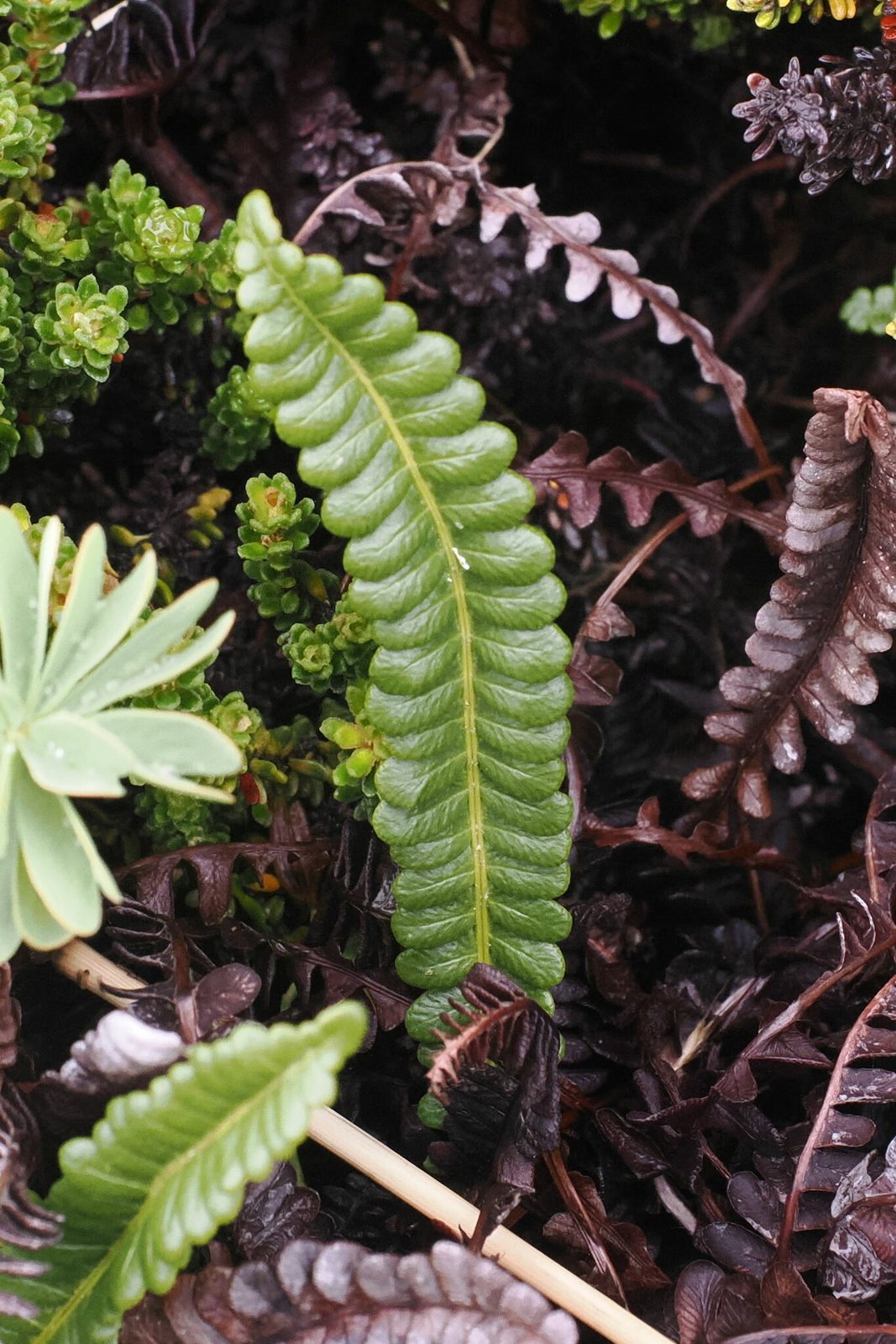
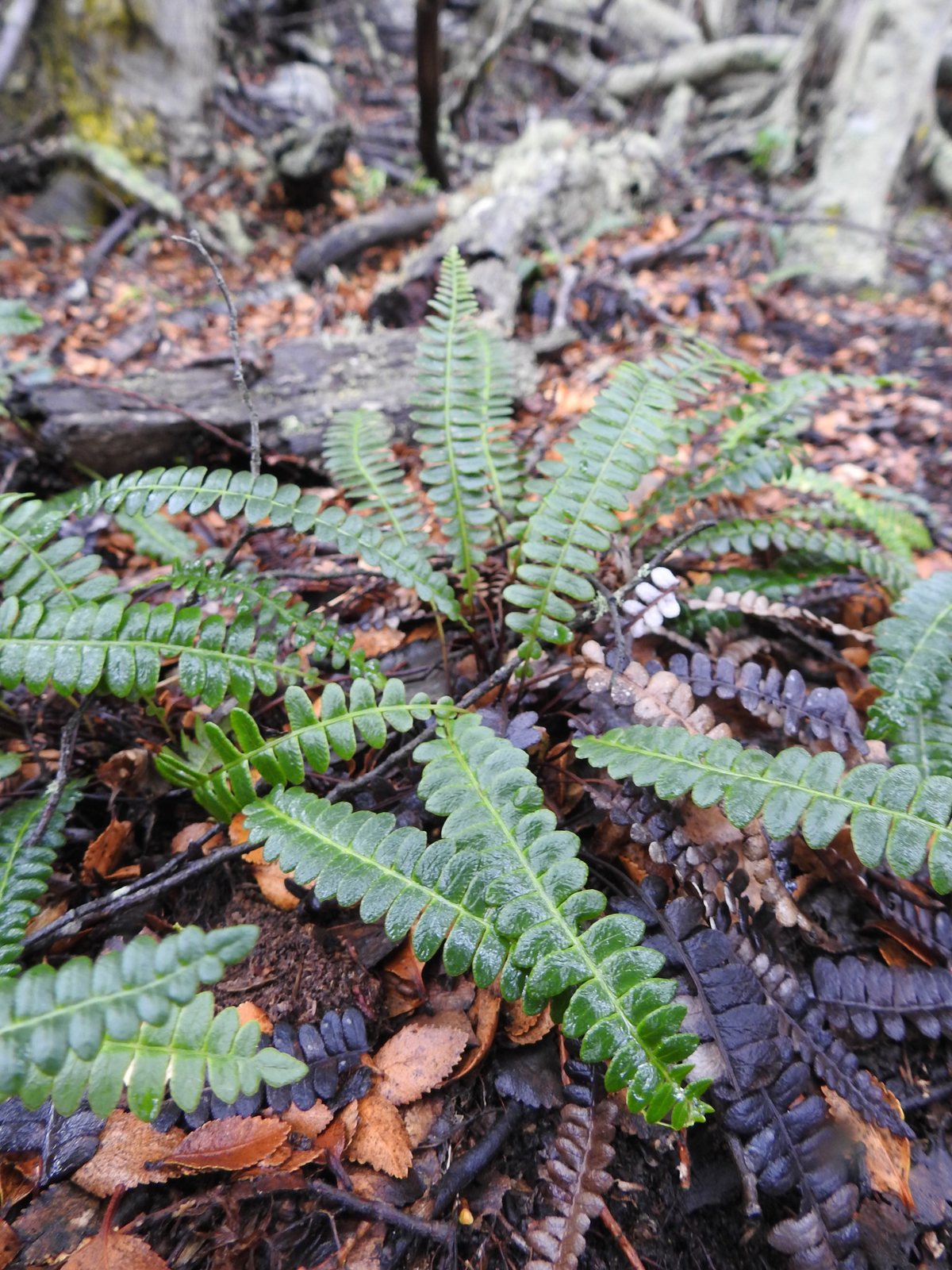
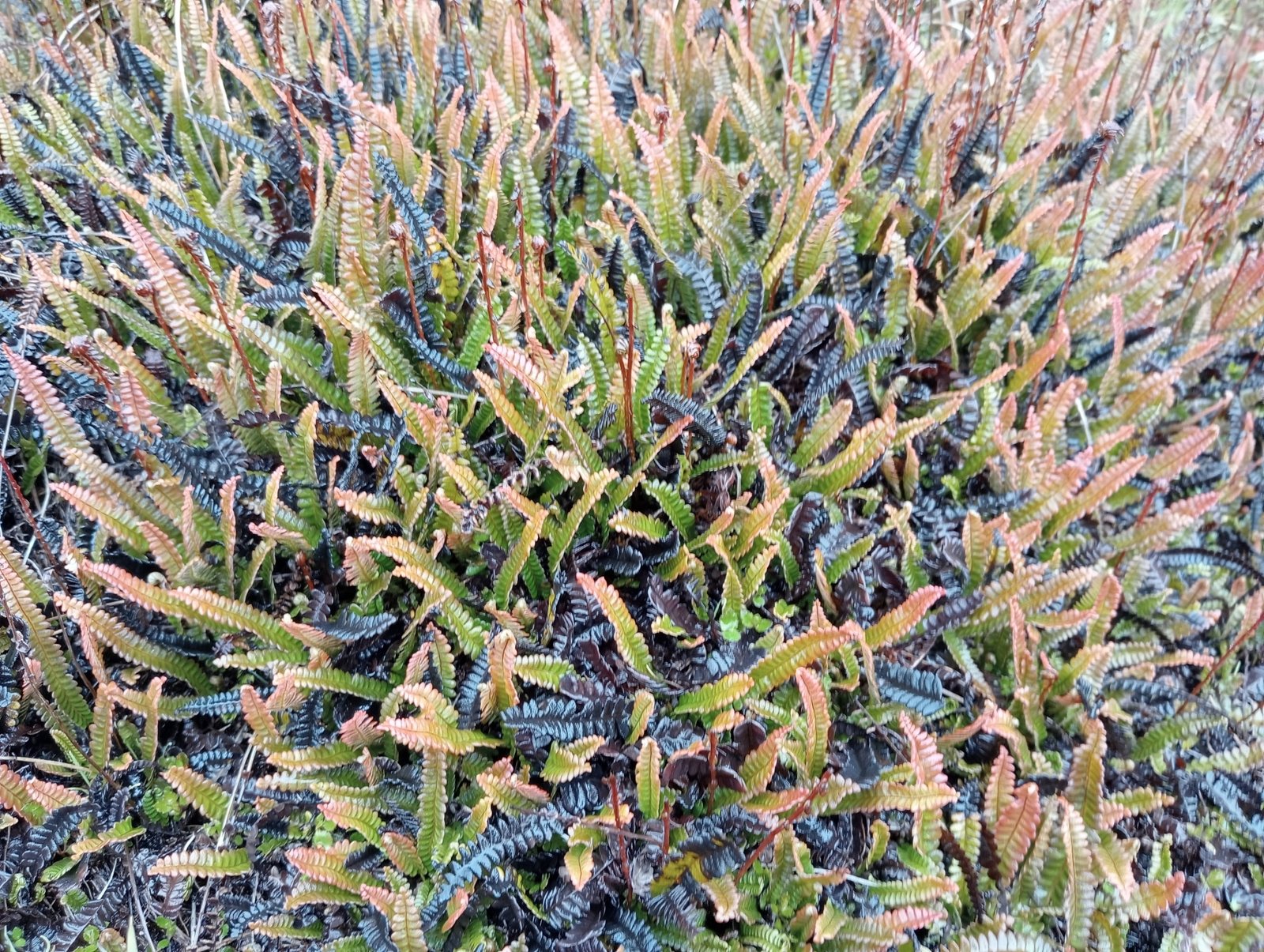
Alpine water fern is a small, creeping fern from cool regions of the Southern Hemisphere. Gardeners grow it for its neat, feather-shaped evergreen fronds, often coppery pink when young, and its ability to form low carpets in moist, partly shaded places. Despite its name, it is not an aquatic plant.
At a glance
- Sun
- Partial shade is best; tolerates deeper shade or some sun where the soil stays moist and summers are cool.
- Water
- Keep evenly moist, especially during establishment; avoid prolonged drought and stagnant, waterlogged soil.
- Soil
- Humus-rich, moist but well-drained soil, preferably acidic to neutral.
- Height
- 0.25-1 ft (0.08-0.3 m)
- Spread
- 1-3 ft (0.3-0.9 m), eventually wider through creeping rhizomes
- Foliage
- Evergreen. Narrow, leathery, dark green fronds with small, closely spaced leaflets; new growth is often pinkish bronze. Spore-bearing fronds are taller and more upright, with much narrower leaflets.
- Growth
- Moderate in cool, moist conditions; slow in dry or hot sites.
- Care needed
- Low
The year at a glance
- Deer resistant
- Wildlife
- Low allergen
| J | F | M | A | M | J | J | A | S | O | N | D | |
|---|---|---|---|---|---|---|---|---|---|---|---|---|
| Plant |
Northern hemisphere months. In Australia, shift them by six.
- Difficulty
- Easy
- Toughness
- Fairly tough
Will it suit your garden?
Pick your zone, country, light and whether you have pets.
Full sun is 6 or more hours of direct sun a day, part shade 3 to 6 hours, shade under 3.
How it grows
Planting day
0.6 ft (0.19 m)
full size
About 4 years to full size.
From a typical nursery size, at an average rate for this kind of plant. A rule of thumb, not a forecast.
Good to know
- Cats and dogs
- Safe
- In the garden
- Spreads vigorously: plan to contain it.
- Growth rate
- Slow
Care
Jobs through the year
- WaterApr–May, Sep–Oct, every 7 days
- Water established patches when rain is insufficient; young plants need closer moisture checks.
- WaterJun–Aug, every 4 days
- Water during dry weather before soil dries out, especially beneath trees; avoid saturation.
- PruneFeb–Mar
- Remove dead or damaged fronds at their bases, retaining healthy evergreen growth.
- MulchApr–May
- Apply a thin layer of leaf mould or compost without covering crowns.
- DivideMar–Apr
- Divide only if patches need reducing or more plants are wanted.
- PruneSep–Oct
- Trim back rhizomes spreading into paths or neighbouring plants.
- ProtectJan–Feb, Nov–Dec
- Keep drainage clear and remove dense, wet leaf piles from crowns.
- Water during dry spells before the soil dries out completely.
- Mulch lightly with leaf mould or fine compost, keeping the crowns uncovered.
- Avoid heavy feeding; a thin spring dressing of compost is usually sufficient.
- Provide afternoon shade in warmer climates and shelter from drying winds.
- Divide spreading patches in spring if they outgrow their space.
Pruning. In late winter or early spring, snip off dead or badly damaged fronds at their bases before new growth expands. Leave healthy evergreen fronds in place.
Through the year
- Spring
- Remove winter-damaged fronds before the new fronds unfurl.
- Spring
- Plant or divide into moist, prepared soil and water thoroughly.
- Late spring
- Apply a thin layer of leaf mould around the plants without burying their crowns.
- Summer
- Check soil moisture regularly and water during dry spells, especially beneath trees.
- Autumn
- Trim back rhizomes that have spread into paths or neighbouring small plants.
- Winter
- Check that drainage remains clear and gently remove heavy piles of fallen leaves.
In the garden
- Carpet the front of a shaded border beneath shrubs, alongside small hostas and other ferns.
- Fill moist, shaded pockets between rocks for a low, finely textured alpine planting.
- Edge a woodland path where its spreading fronds can soften the boundary.
- Plant beside a pond above the waterline, where the soil stays moist but does not remain submerged.
- Use in a shaded container with drainage holes, paired with small sedges.
Garden styles it suits: Woodland, Moss and fern garden, Alpine rock garden, Japanese, Pacific Northwest woodland and Green on green.
Plant it with: Hostas, Japanese painted fern, Hardy cyclamen, Primroses, Japanese forest grass and Siberian bugloss.
Wildlife: Dense patches provide damp shelter for small invertebrates. As a fern, it produces no flowers, nectar or fruit.
Problems to watch for
- Brown, crisp fronds usually indicate drought, hot sun or drying wind; water deeply and provide a cooler, sheltered position.
- Crown or rhizome rot can follow stagnant winter wet; improve drainage and avoid burying the crowns under soil or mulch.
- Slugs and snails may damage emerging fronds; inspect at dusk, remove them by hand and clear nearby hiding places.
- Severe frost can scorch evergreen fronds; leave damaged growth until late winter, then remove it as new growth approaches.
Safety
Not known to be toxic to people, cats, dogs or horses. Species-specific safety information is limited, so do not treat the fronds or rhizomes as edible.
Easily confused with
Deer fern (Blechnum spicant)
Also has separate leafy and narrow spore-bearing fronds, but forms larger, more distinct clumps rather than a low, creeping carpet.
New Zealand hard fern (Blechnum novae-zelandiae)
Has much larger, broader fronds and a coarser appearance; its new fronds can also be reddish, so colour alone is not a reliable distinction.
The name
The species name penna-marina means 'sea feather', referring to the feather-like form of its fronds.
Propagation. Divide established patches in spring, taking sections with roots, rhizome and healthy fronds; replant promptly and keep moist. It can also be raised from spores, but this is slower and requires consistently humid, clean conditions.
Checked against open data
- Accepted botanical name
- Austroblechnum penna-marina
Sources: GBIF (CC BY 4.0). The care and design notes are LandscapeGPT's own.
See it in your own yard.
Upload a photo of your yard and see it redesigned with plants that suit your climate, each checked against your zone.