Amanogawa cherry
Prunus serrulata 'Amanogawa'. Family Rosaceae. Tree.
Also called Flagpole cherry, Japanese flowering cherry 'Amanogawa'.
Amanogawa is a deciduous flowering cherry with strongly upright branches and a narrow crown, grown for its lightly fragrant, pale pink spring blossom. It brings height to small gardens without a broad canopy, although its roots still need space and its crown gradually widens with age.
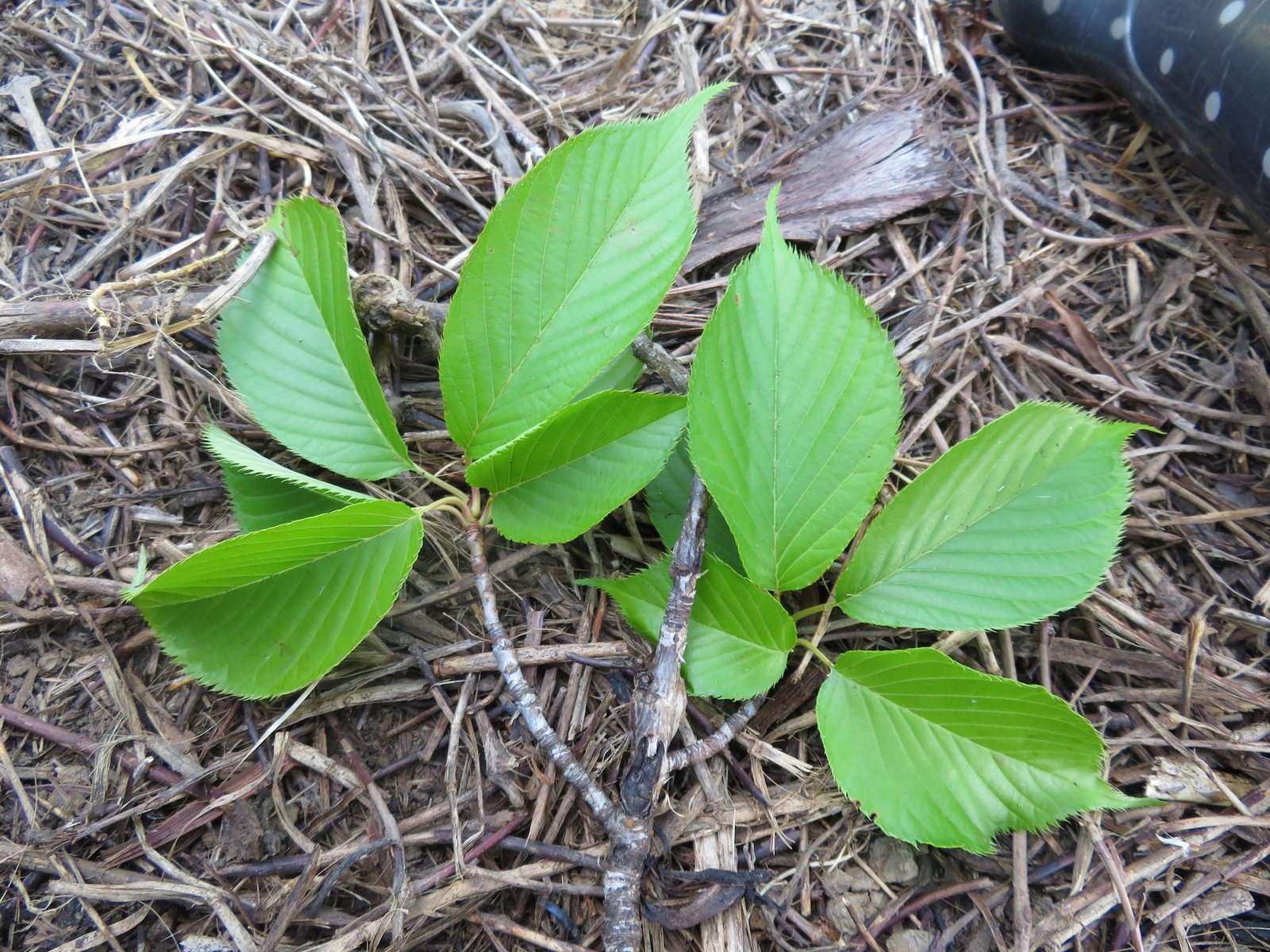
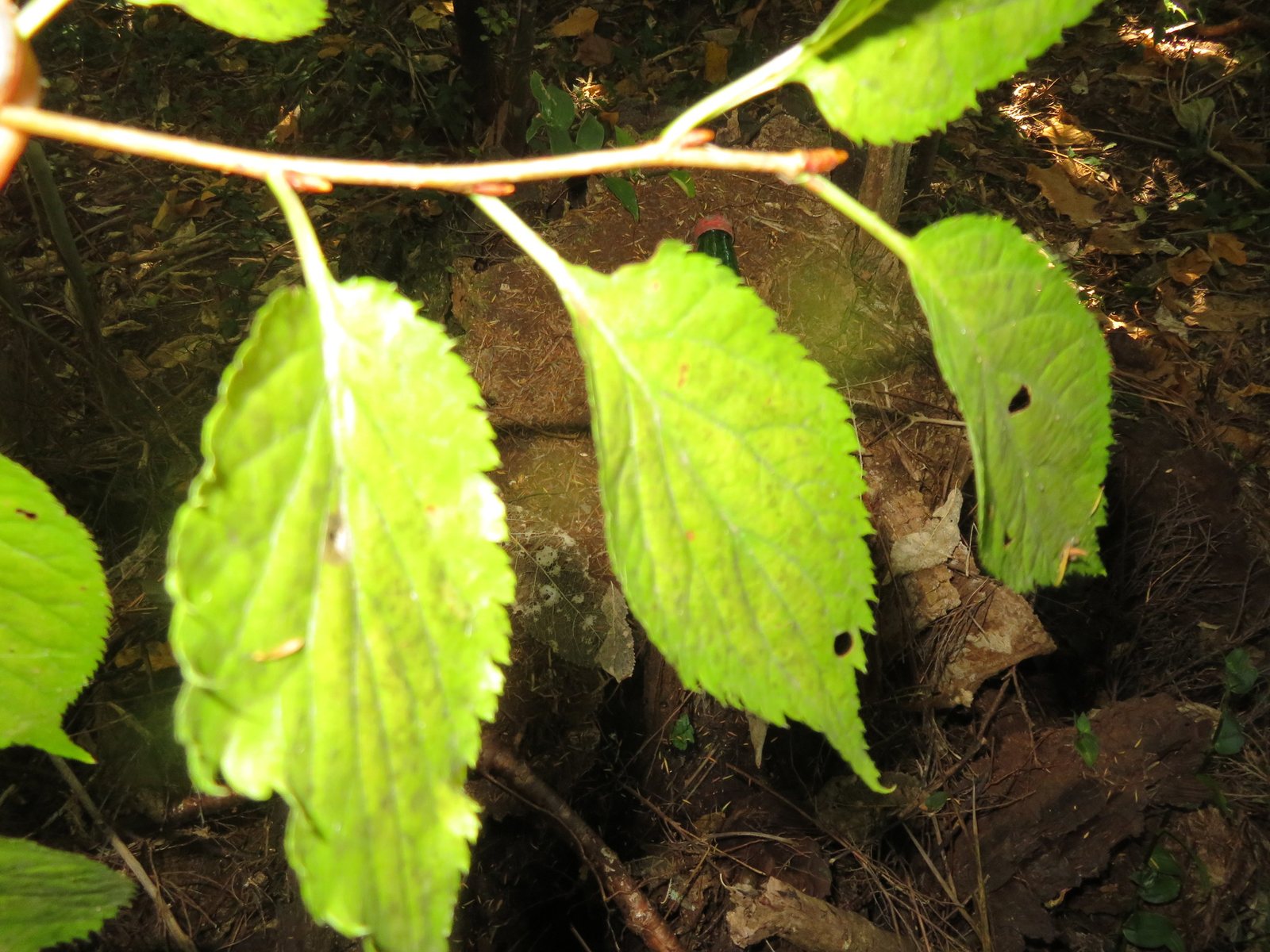
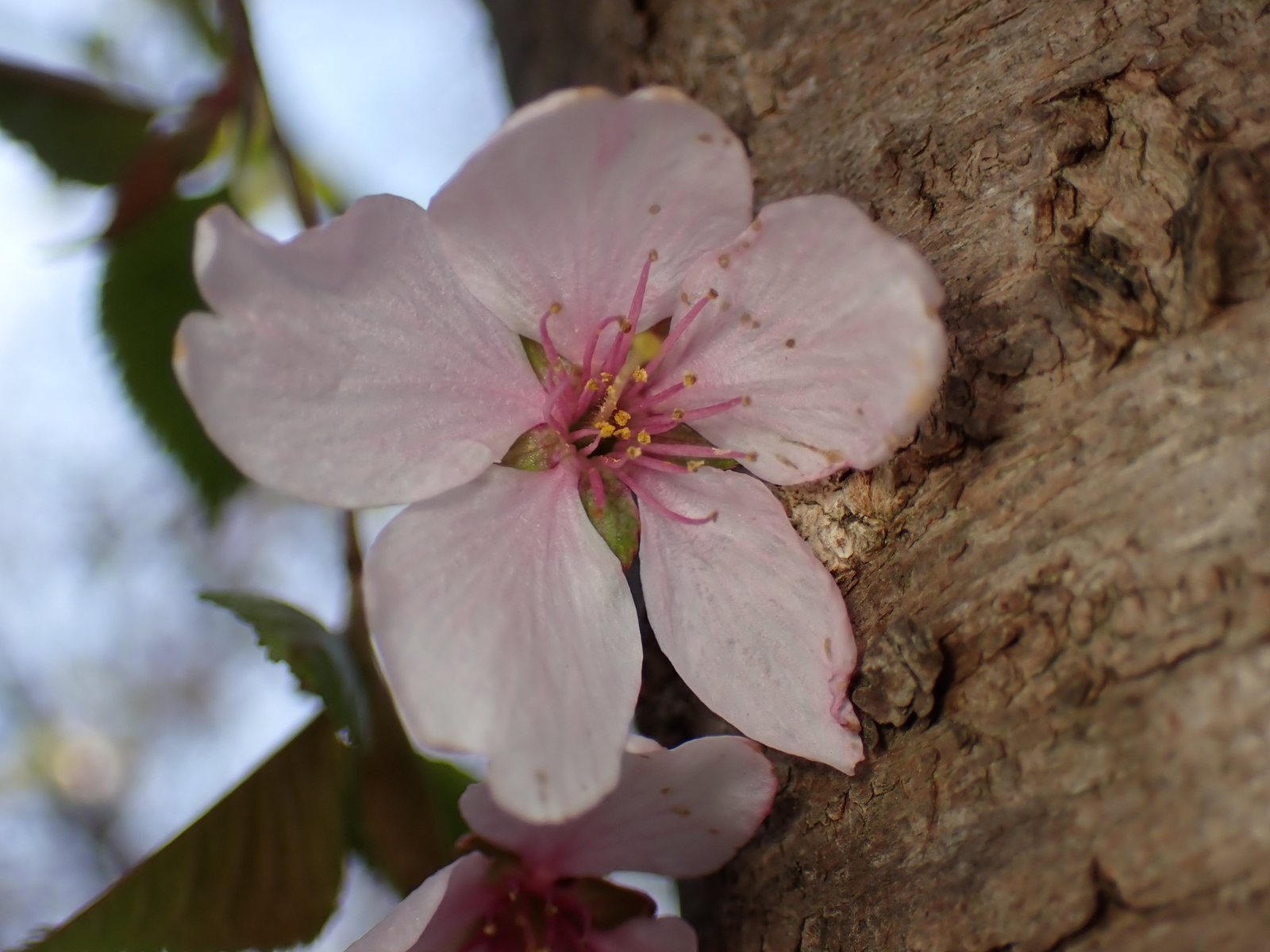
At a glance
- Sun
- Full sun gives the best flowering; tolerates light partial shade.
- Water
- Keep the root zone evenly moist while establishing. Once established, water deeply during prolonged dry spells; avoid waterlogged ground.
- Soil
- Moderately fertile, moisture-retentive but well-drained soil. Tolerates clay, loam and sandy soil if drainage and moisture are adequate, and grows in mildly acidic to alkaline conditions.
- Height
- 15-25 ft (4.5-7.5 m)
- Spread
- 4-8 ft (1.2-2.4 m), sometimes wider with age
- Flowers
- Mid- to late spring; clusters of pale pink, semi-double, lightly fragrant flowers, often fading almost white.
- Foliage
- Bronze-tinted young leaves mature to green, then turn orange and red in autumn; autumn colour varies with conditions.
- Growth
- Moderate
- Care needed
- Medium
The year at a glance
- Pollinators
- Wildlife
- Low allergen
- Fragrant
| J | F | M | A | M | J | J | A | S | O | N | D | |
|---|---|---|---|---|---|---|---|---|---|---|---|---|
| Flowers | ||||||||||||
| Plant |
Northern hemisphere months. In Australia, shift them by six.
- Difficulty
- Moderate
- Toughness
- Fairly tough
Will it suit your garden?
Pick your zone, country, light and whether you have pets.
Full sun is 6 or more hours of direct sun a day, part shade 3 to 6 hours, shade under 3.
How it grows
Planting day
7 ft (2 m)
After 1 year
7 ft (2.2 m)
After 2 years
8 ft (2.4 m)
After 3 years
9 ft (2.6 m)
After 5 years
10 ft (3 m)
About 20 years to full size.
From a typical nursery size, at an average rate for this kind of plant. A rule of thumb, not a forecast.
Good to know
- Cats and dogs
- Toxic
- Growth rate
- Moderate
Care
Jobs through the year
- WaterApr–May, Sep–Oct, every 14 days
- Water established trees if the root zone is drying; check young trees more frequently for two years.
- WaterJun–Aug, every 7 days
- Water established trees deeply during prolonged dry spells; avoid keeping the ground saturated.
- MulchMar–Apr
- Maintain 5-8 cm of organic mulch over the root zone, clear of the trunk.
- PruneJul–Aug
- Only if needed, remove damaged or rubbing branches in dry weather; keep cuts small and never top.
- PruneMay–Sep
- Remove shoots arising below the graft union promptly.
- ProtectApr, Sep
- Check ties for rubbing and remove supports once the roots hold firmly.
- ProtectOct–Nov
- Collect fallen leaves if leaf spot or shot-hole disease has been troublesome.
- Plant with the root flare at soil level and any graft union above the soil; leave room for roots beyond the narrow canopy.
- Water deeply through the first two growing seasons whenever the root zone starts to dry.
- Apply 2-3 in (5-8 cm) of organic mulch over the root zone, keeping it clear of the trunk.
- Stake only if the tree is unstable in wind; use a flexible tie, check it regularly and remove the support once roots hold firmly.
- Feed in spring only if growth is weak or soil is poor; avoid heavy nitrogen feeding.
- Remove shoots arising below the graft union promptly.
Pruning. Prune only when necessary, in dry weather in summer, to reduce the risk of silver leaf and bacterial canker. Remove dead, damaged or rubbing branches with small cuts, preserving the upright framework; do not top the tree or shear it into a column.
Through the year
- Autumn
- Plant while soil is workable and not waterlogged; in very cold regions, wait until spring.
- Early spring
- Refresh mulch, check stakes and ties, and plant in cold-winter regions once the ground is workable.
- Spring
- Check emerging shoots for aphids and remove any rootstock suckers.
- Summer
- Carry out essential pruning during a dry spell, keeping cuts small.
- Summer
- Water young trees deeply during dry weather and keep grass away from the trunk.
- Autumn
- Collect fallen leaves if leaf spot or shot-hole symptoms have been troublesome.
In the garden
- Use as a vertical focal point in a small lawn or planting bed, with adequate unpaved rooting space.
- Plant a repeated line along a broad path or boundary for a formal spring-flowering rhythm.
- Set against a dark evergreen backdrop to make the pale blossom stand out.
- Underplant with spring bulbs and low perennials that leave the trunk visible.
Garden styles it suits: Japanese, Formal, Urban city garden, Small-space, Romantic rose garden and Cottage garden.
Plant it with: Snowdrops, Daffodils, Crocuses, Hardy geraniums, Epimediums and Japanese forest grass.
Wildlife: Bees may visit the flowers, although semi-double blooms generally provide less accessible food than single-flowered cherries. The branches offer perches and potential nesting cover for birds; this cultivar is not a dependable source of fruit.
Problems to watch for
- Bacterial canker: sunken bark, gum and dying shoots can indicate infection. Prune affected branches back to healthy wood in dry summer weather, disinfect tools between cuts and avoid unnecessary wounds.
- Silver leaf: persistent silvery foliage with branch dieback needs investigation. Remove affected branches in dry summer weather; seek professional advice if the trunk or major limbs are involved.
- Aphids: colonies can curl young leaves and leave sticky honeydew. Encourage natural predators and wash accessible colonies off with water; avoid routine insecticide spraying.
- Poor drainage: waterlogged roots cause weak growth, yellowing and decline. Choose a freely draining site before planting; do not keep adding water to already wet soil.
Safety
Leaves, stems and seed kernels contain cyanogenic compounds and can poison cats, dogs, horses and people if eaten. Chewed kernels and wilted leaves are particular concerns; substantial ingestion can be fatal, especially in grazing animals. Fruit flesh is not generally considered toxic, but this ornamental cherry is not grown for eating.
Easily confused with
Kanzan cherry (Prunus serrulata 'Kanzan')
Has a broad, spreading crown and densely double, deeper pink flowers rather than Amanogawa's narrow upright crown and paler semi-double flowers.
Cheal's weeping cherry (Prunus serrulata 'Kiku-shidare-zakura')
Has arching, weeping branches and densely double pink flowers, unlike Amanogawa's ascending branches.
The name
The Japanese cultivar name 'Amanogawa' means 'River of Heaven', a name for the Milky Way, while serrulata refers to the finely toothed leaf edges.
Propagation. Usually propagated by budding or grafting onto a compatible cherry rootstock, best done by an experienced propagator or nursery. Seedlings will not reliably retain its narrow habit or flower characteristics.
Checked against open data
- Accepted botanical name
- Prunus serrulata
- In the US and Canada
- Introduced in the lower 48 states.
- Native range
- China South-Central, China Southeast, Korea and Manchuria.
- Measured
- Average height 700 cm.
Sources: GBIF (CC BY 4.0), USDA PLANTS and Trefle (CC BY 4.0). The care and design notes are LandscapeGPT's own.
See it in your own yard.
Upload a photo of your yard and see it redesigned with plants that suit your climate, each checked against your zone.