Amethyst Falls American wisteria
Wisteria frutescens 'Amethyst Falls'. Family Fabaceae. Climber.
Also called Wisteria 'Amethyst Falls', American wisteria 'Amethyst Falls'.
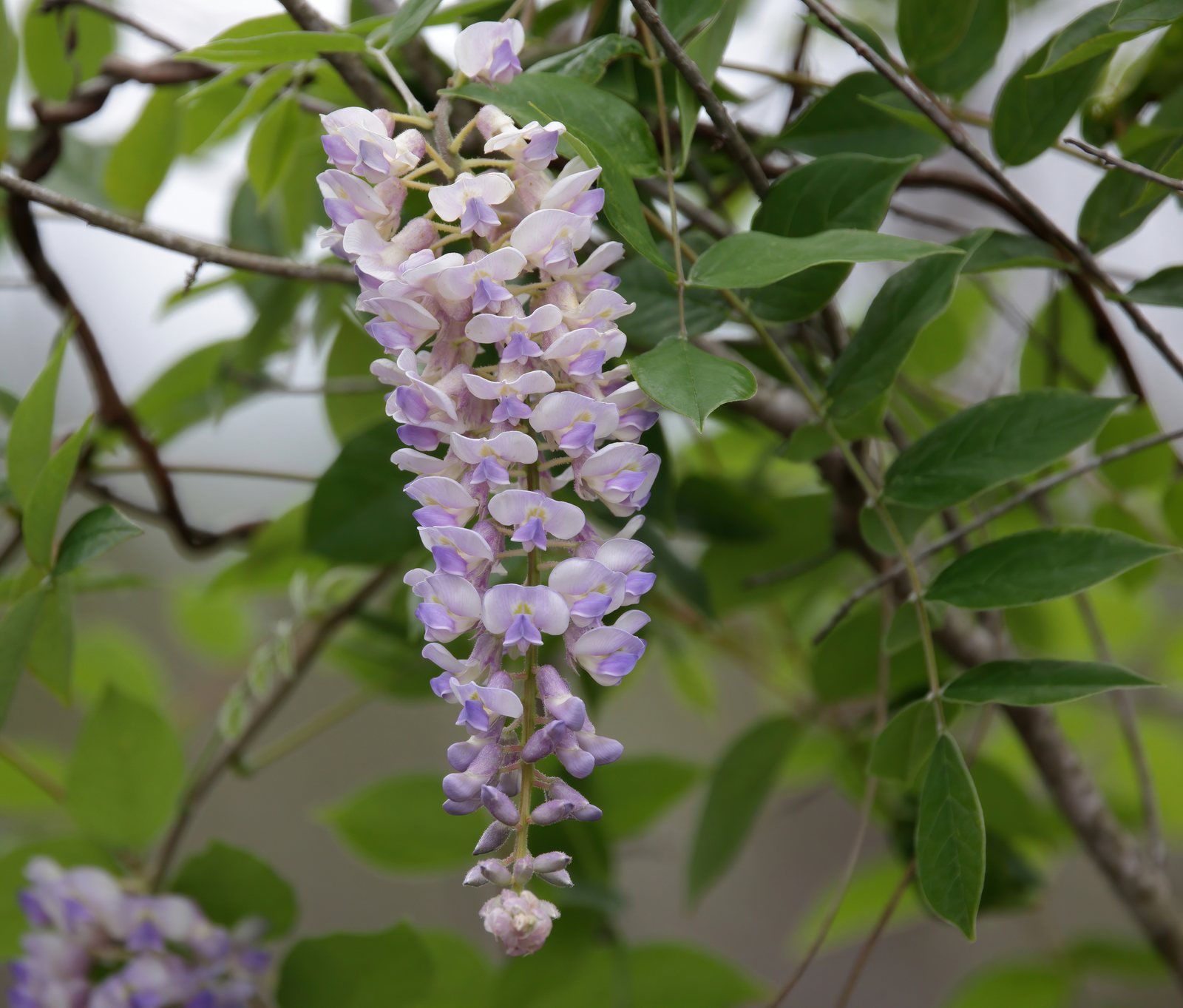
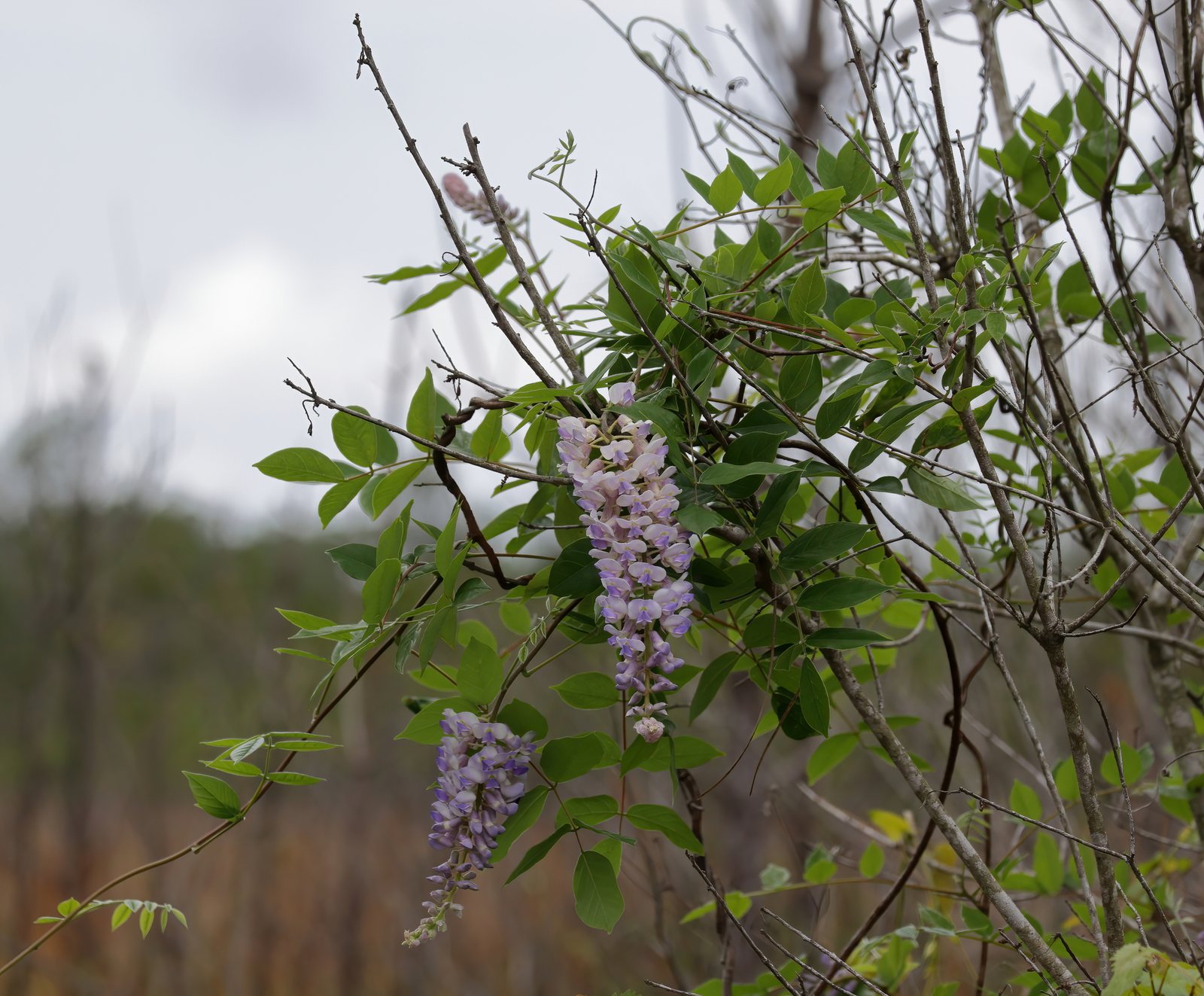
A deciduous, woody climber grown for its short, dense clusters of lavender-purple flowers, which open after the leaves in late spring or early summer. 'Amethyst Falls' flowers younger and grows less vigorously than Chinese or Japanese wisteria, making it easier to manage on a sturdy garden structure, though it still needs regular training.
At a glance
- Sun
- Full sun gives the best flowering; tolerates partial shade but produces fewer flowers.
- Water
- Keep evenly moist while establishing. Once established, water deeply during prolonged dry spells, especially beside walls or in containers.
- Soil
- Moderately fertile, moist but well-drained soil; tolerates clay if it does not remain waterlogged. Strongly alkaline soil can cause yellowing leaves.
- Height
- 10-20 ft (3-6 m), depending on support and pruning
- Spread
- 4-6 ft (1.2-1.8 m) when trained; can spread farther if left unmanaged
- Flowers
- Dense, hanging clusters of lavender-purple flowers in late spring to early summer, sometimes followed by lighter repeat flowering in summer.
- Foliage
- Green, pinnate leaves made up of oval leaflets; leaves fall in autumn.
- Growth
- Moderate; slower and less vigorous than Asian wisterias
- Care needed
- Medium
The year at a glance
- Pollinators
- Deer resistant
- Heat tolerant
- Wildlife
- Low allergen
| J | F | M | A | M | J | J | A | S | O | N | D | |
|---|---|---|---|---|---|---|---|---|---|---|---|---|
| Flowers | ||||||||||||
| Fruit | ||||||||||||
| Plant |
Northern hemisphere months. In Australia, shift them by six.
- Difficulty
- Moderate
- Toughness
- Very tough
Will it suit your garden?
Pick your zone, country, light and whether you have pets.
Full sun is 6 or more hours of direct sun a day, part shade 3 to 6 hours, shade under 3.
How it grows
Planting day
2 ft (0.6 m)
After 1 year
3 ft (0.9 m)
After 2 years
4 ft (1.2 m)
After 3 years
5 ft (1.5 m)
After 5 years
6 ft (1.8 m)
full size
About 4 years to full size.
From a typical nursery size, at an average rate for this kind of plant. A rule of thumb, not a forecast.
Good to know
- Cats and dogs
- Toxic
- Native to
- the US
- Growth rate
- Moderate
Care
Jobs through the year
- WaterApr–May, Sep–Oct, every 14 days
- Water established plants during extended dry spells; water new plants more often.
- WaterJun–Aug, every 10 days
- Water deeply during prolonged dry weather, especially beside walls.
- MulchMar–Apr
- Apply 5–8 cm of organic mulch, keeping the main stem clear.
- PruneFeb–Mar
- Remove dead, damaged and crossing stems without unnecessarily cutting the permanent framework.
- PruneJun–Jul
- After the main flowering flush, shorten unwanted shoots but leave some new growth for repeat flowers.
- ProtectApr–Aug, every 21 days
- Tie selected shoots loosely to strong supports and keep growth away from gutters.
- ProtectSep–Nov
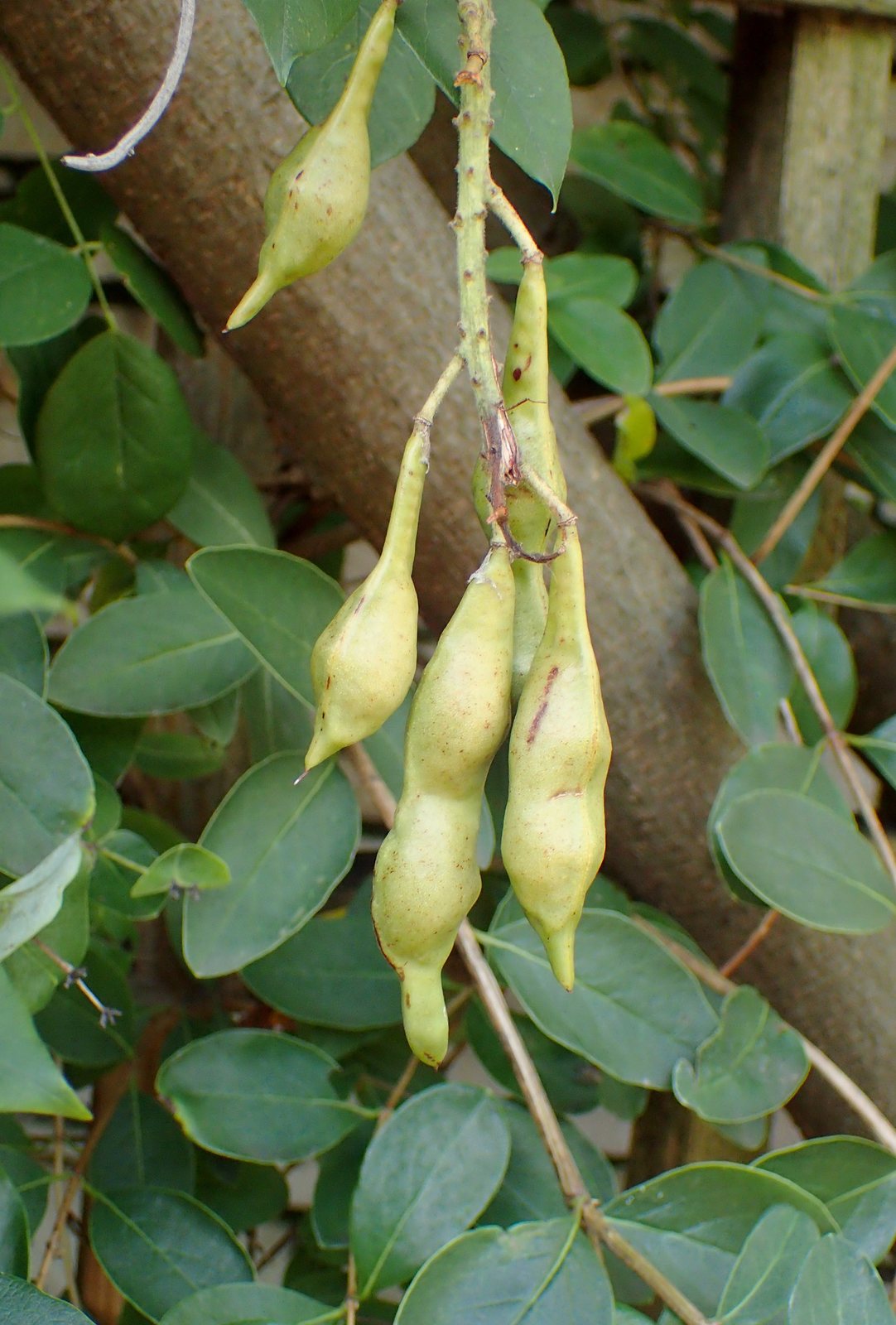
- Collect fallen poisonous seedpods where children or pets could reach them.
- Provide a strong pergola, arbor or wall-mounted wire system before planting; keep stems away from gutters and roof spaces.
- Tie young shoots loosely to the support and select a few main stems to form the permanent framework.
- Water deeply through the first growing season and during extended dry periods thereafter.
- Apply a 2-3 in (5-8 cm) organic mulch in spring, keeping it clear of the main stem.
- Avoid high-nitrogen fertilizer, which encourages leafy growth at the expense of flowers.
Pruning. After the main flowering flush, shorten unwanted side shoots to keep the plant within its allotted space, leaving some new growth if you want repeat flowers. In late winter, remove dead, damaged or crossing stems and thin crowded growth without cutting back the permanent framework unnecessarily.
Through the year
- Late winter
- Remove dead or crossing growth and check that supports and ties can accommodate thickening stems.
- Spring
- Plant when the soil is workable, water thoroughly and mulch around the root zone.
- Late spring
- Guide new shoots onto the support and check developing flower clusters for aphids.
- Early summer
- After the main flowers fade, shorten unwanted shoots and remove growth heading toward gutters or nearby trees.
- Summer
- Water during prolonged dry spells and tie in selected replacement shoots.
- Autumn
- Collect fallen seedpods where children or pets could reach them, and check the stability of the support.
In the garden
- Train over a sturdy garden arch to frame a path with hanging spring flowers.
- Grow on wall-mounted wires beside a sunny patio, leaving space between the stems and the building.
- Cover a modest pergola where a less vigorous alternative to Asian wisteria is needed.
- Train as a narrow flowering backdrop behind catmint, hardy geraniums or ornamental alliums.
Garden styles it suits: Cottage garden, Romantic rose garden, Traditional, Southern, Modern courtyard and Pollinator garden.
Plant it with: Catmint, Hardy geranium, Ornamental allium, Salvia and Daylily.
Wildlife: Flowers attract bees. American wisteria also supports some native moth and butterfly caterpillars in its North American range.
Problems to watch for
- Few flowers: provide more sun, stop high-nitrogen feeding and avoid repeatedly removing all new shoots; recently planted vines may need time to establish.
- Yellow leaves with green veins: alkaline soil can restrict iron uptake; check soil pH and use an appropriate chelated iron treatment if needed.
- Aphids on young shoots: rinse off small colonies with water and encourage ladybirds and other predators.
- Root rot or dieback in wet ground: improve drainage and avoid planting in a site that stays saturated.
Safety
Toxic to people, cats, dogs and horses if eaten. All parts should be treated as poisonous, especially the seeds and pods; ingestion can cause abdominal pain, vomiting and diarrhea, sometimes severe. Seek medical or veterinary advice promptly after ingestion.
Easily confused with
Chinese wisteria (Wisteria sinensis)
Usually flowers before or as the leaves emerge, has longer flower clusters and produces velvety seedpods; American wisteria flowers after leafing out and has smooth pods.
Japanese wisteria (Wisteria floribunda)
Usually has much longer, looser flower clusters and more leaflets per leaf, although counts overlap; its seedpods are velvety rather than smooth.
The name
Wisteria honors the American physician Caspar Wistar, while frutescens means becoming shrubby or woody.
Propagation. Propagate by layering a low shoot or taking softwood cuttings in early summer. Seed-grown plants will not reliably retain the characteristics of 'Amethyst Falls'.
Checked against open data
- Accepted botanical name
- Wisteria frutescens
- In the US and Canada
- Native in the lower 48 states.
- Native range
- Alabama, Arkansas, Connecticut, Delaware, Florida, Georgia, Illinois, Indiana, Iowa, Kentucky, Louisiana and Maryland.
- Measured
- Soil pH 4 to 7. Average height 1524 cm.
Sources: GBIF (CC BY 4.0), USDA PLANTS and Trefle (CC BY 4.0). The care and design notes are LandscapeGPT's own.
See it in your own yard.
Upload a photo of your yard and see it redesigned with plants that suit your climate, each checked against your zone.