Amistad sage
Salvia 'Amistad'. Family Lamiaceae. Perennial.
Also called Friendship sage.
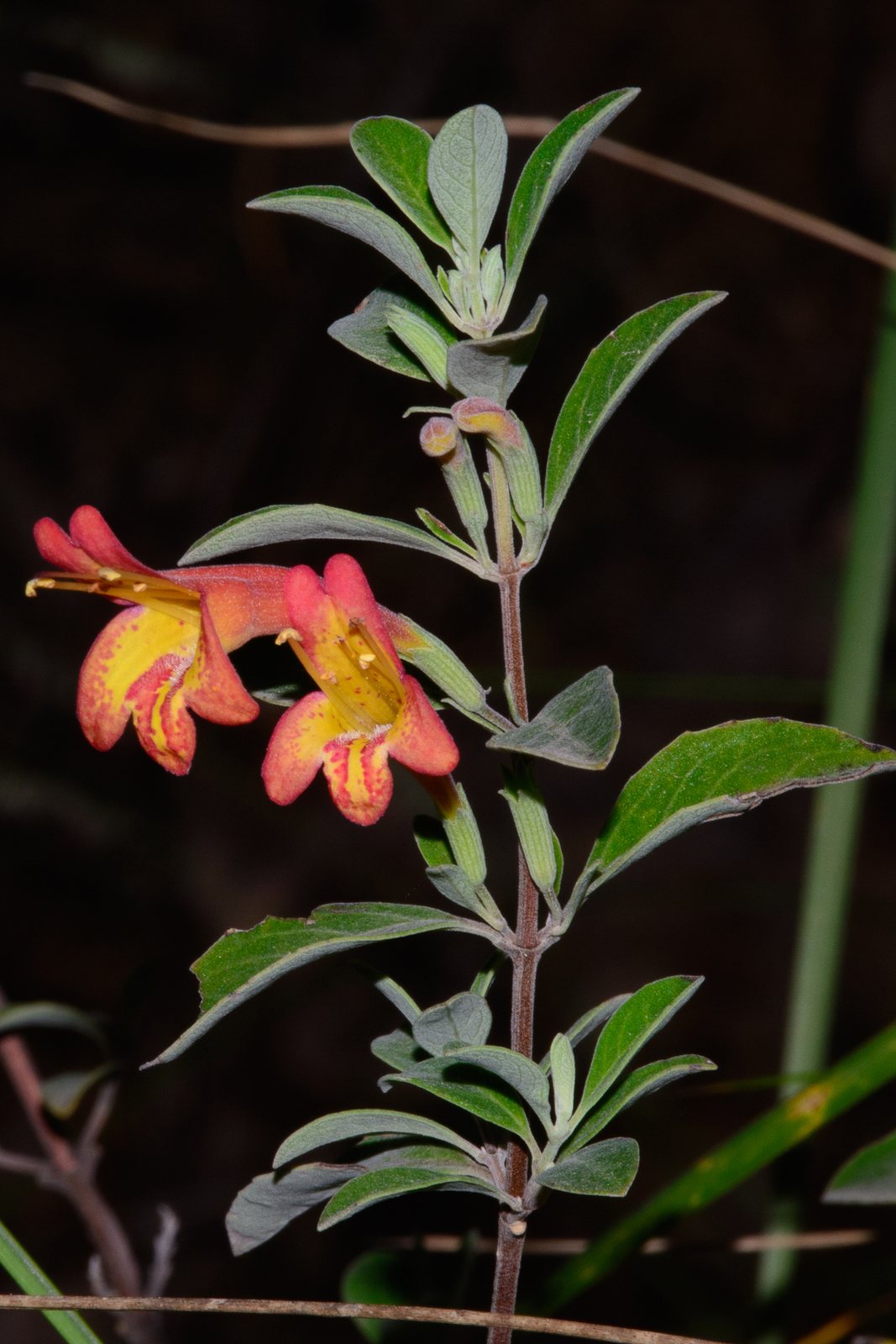
Amistad sage is a tall, bushy, tender perennial with deep purple tubular flowers held in nearly black calyces. Gardeners grow it for its long flowering season and its attraction to bees and hummingbirds. In cold-winter regions, it is grown as an annual or overwintered under cover.
At a glance
- Sun
- Full sun to light partial shade; afternoon shade can help in very hot climates.
- Water
- Water regularly while establishing, then when the upper soil dries. Established plants tolerate short dry spells but flower better with consistent moisture.
- Soil
- Fertile, well-drained soil; tolerates a range of soil textures and pH levels but dislikes winter waterlogging.
- Height
- 3-5 ft (0.9-1.5 m)
- Spread
- 2-3 ft (0.6-0.9 m)
- Flowers
- Deep purple flowers with nearly black calyces from early summer until frost; potentially longer in frost-free climates.
- Foliage
- Green, pointed oval leaves with toothed edges and a lightly textured surface; aromatic when crushed.
- Growth
- Fast
- Care needed
- Medium
The year at a glance
- Pollinators
- Deer resistant
- Heat tolerant
- Wildlife
- Low allergen
| J | F | M | A | M | J | J | A | S | O | N | D | |
|---|---|---|---|---|---|---|---|---|---|---|---|---|
| Flowers | ||||||||||||
| Plant |
Northern hemisphere months. In Australia, shift them by six.
- Difficulty
- Moderate
- Toughness
- Fairly tough
Will it suit your garden?
Pick your zone, country, light and whether you have pets.
Full sun is 6 or more hours of direct sun a day, part shade 3 to 6 hours, shade under 3.
How it grows
Planting day
1 ft (0.3 m)
After 1 year
2.5 ft (0.76 m)
After 2 years
4 ft (1.2 m)
full size
About 2 years to full size.
From a typical nursery size, at an average rate for this kind of plant. A rule of thumb, not a forecast.
Good to know
- Cats and dogs
- Safe
- Growth rate
- Fast
Care
Jobs through the year
- WaterMay, Sep–Oct, every 14 days
- Water established ground-grown plants if the upper soil dries; newly planted specimens need more frequent watering.
- WaterJun–Aug, every 7 days
- Water deeply during dry weather to maintain flowering; container plants need more frequent checks.
- WaterJan–Apr, Nov–Dec, every 14 days
- Check frost-free overwintered pots and water sparingly, keeping compost barely moist rather than wet.
- FeedApr–May
- Top-dress with compost as growth resumes; avoid high-nitrogen feeding.
- PruneApr–May
- Cut old stems back to healthy new growth after severe frost risk; pinch young tips for bushiness.
- DeadheadJun–Oct, every 7 days
- Remove spent flower spikes to encourage continued flowering.
- MulchOct–Nov
- Where outdoor overwintering is feasible, insulate roots with mulch kept away from the crown.
- ProtectJan–Apr, Oct–Dec
- In zones 6–7, overwinter a potted plant frost-free; mulch alone is not reliable winter protection.
- Plant after the danger of frost has passed, in a sheltered position with good drainage.
- Water deeply during prolonged dry weather; check container plants more frequently.
- Apply compost in spring and avoid heavy nitrogen feeding, which encourages floppy growth.
- Mulch the root zone before winter where it remains outdoors, keeping wet material away from the crown.
- Use discreet supports in windy gardens, or pinch young shoots to encourage bushier growth.
- In colder regions, overwinter a potted plant or rooted cuttings in a bright, frost-free place.
Pruning. Pinch young shoots in spring for branching and remove spent flower spikes during the growing season. Where overwintering outdoors, leave the stems standing through winter and cut back to healthy new growth in spring after severe frost risk has passed.
Through the year
- Early spring
- Check overwintered plants and water sparingly until growth resumes.
- Spring
- Cut back winter-damaged stems once new growth appears; add compost around the plant.
- Late spring
- Plant out after frost, water thoroughly and pinch young shoots if a bushier shape is needed.
- Summer
- Water during dry spells, support exposed stems and remove spent flower spikes.
- Late summer
- Where propagation rights allow, take non-flowering cuttings as insurance against winter losses.
- Autumn
- Before frost, move container plants under cover in cold regions; mulch outdoor plants where winters are mild enough.
In the garden
- Place toward the back of a sunny mixed border, where its upright flower spikes rise above lower plants.
- Combine with ornamental grasses for an open, informal planting with movement and late-season colour.
- Pair with orange dahlias or yellow coneflowers for a strong warm-and-purple contrast.
- Grow in a large patio container where the dark calyces and visiting pollinators can be seen closely.
Garden styles it suits: Cottage garden, English country, Pollinator garden, Hot border, Blues and silvers and Modern courtyard.
Plant it with: Dahlias, Black-eyed Susans, Purple coneflowers, Switchgrass, Verbena bonariensis and Catmint.
Wildlife: Flowers attract bees and, in the Americas, hummingbirds. Butterflies may also visit.
Problems to watch for
- Slugs and snails can damage emerging shoots; inspect new growth and use barriers, hand-picking or an appropriate labelled bait.
- Aphids may cluster on soft tips; wash them off with water and encourage natural predators.
- Whiteflies can build up on plants overwintered under cover; inspect leaf undersides and use an appropriate labelled treatment if needed.
- Cold, waterlogged soil can kill the crown; improve drainage and overwinter plants under cover where winters are too cold or wet.
Safety
Not known to be toxic to people, cats, dogs or horses, and no part is established as poisonous. Cultivar-specific safety information is limited; grow it as an ornamental rather than a culinary sage.
Easily confused with
Black and Blue sage (Salvia guaranitica 'Black and Blue')
Also has dark calyces, but its flowers are vivid blue rather than the deep purple of Amistad.
Mexican bush sage (Salvia leucantha)
Has narrower, grey-green leaves and conspicuously velvety flower spikes, often with white flowers emerging from purple calyces.
The name
The cultivar name 'Amistad' means 'friendship' in Spanish.
Propagation. Usually propagated from softwood or semi-ripe, non-flowering cuttings in spring or summer. Seed is not a reliable way to reproduce this cultivar. Plant patents or breeders' rights may restrict propagation in your country.
Checked against open data
- Accepted botanical name
- Salvia
Sources: GBIF (CC BY 4.0). The care and design notes are LandscapeGPT's own.
See it in your own yard.
Upload a photo of your yard and see it redesigned with plants that suit your climate, each checked against your zone.