Angelina stonecrop
Petrosedum rupestre 'Angelina'. Family Crassulaceae. Succulent.
Also called Sedum rupestre 'Angelina', Sedum reflexum 'Angelina', Golden stonecrop.
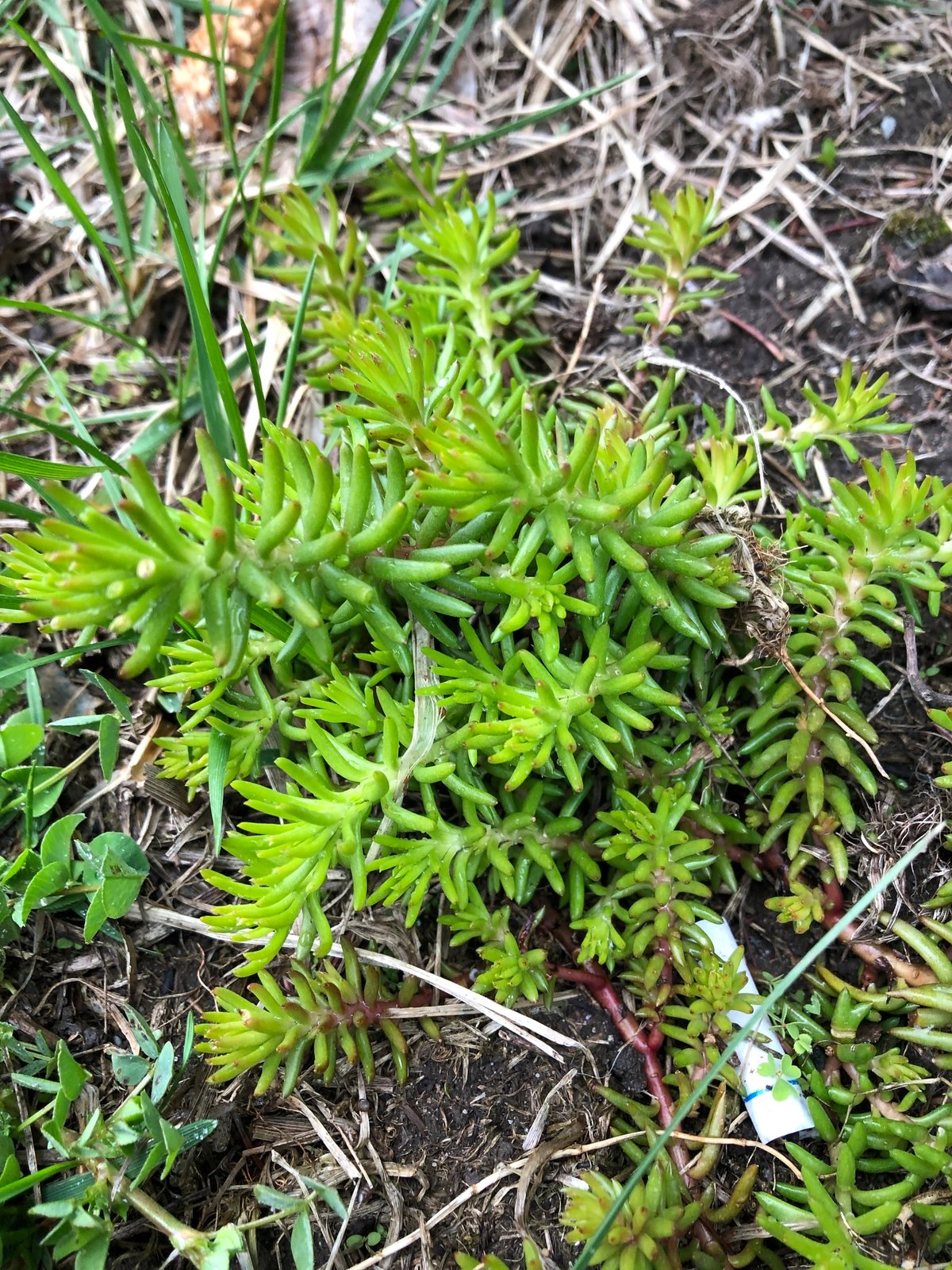
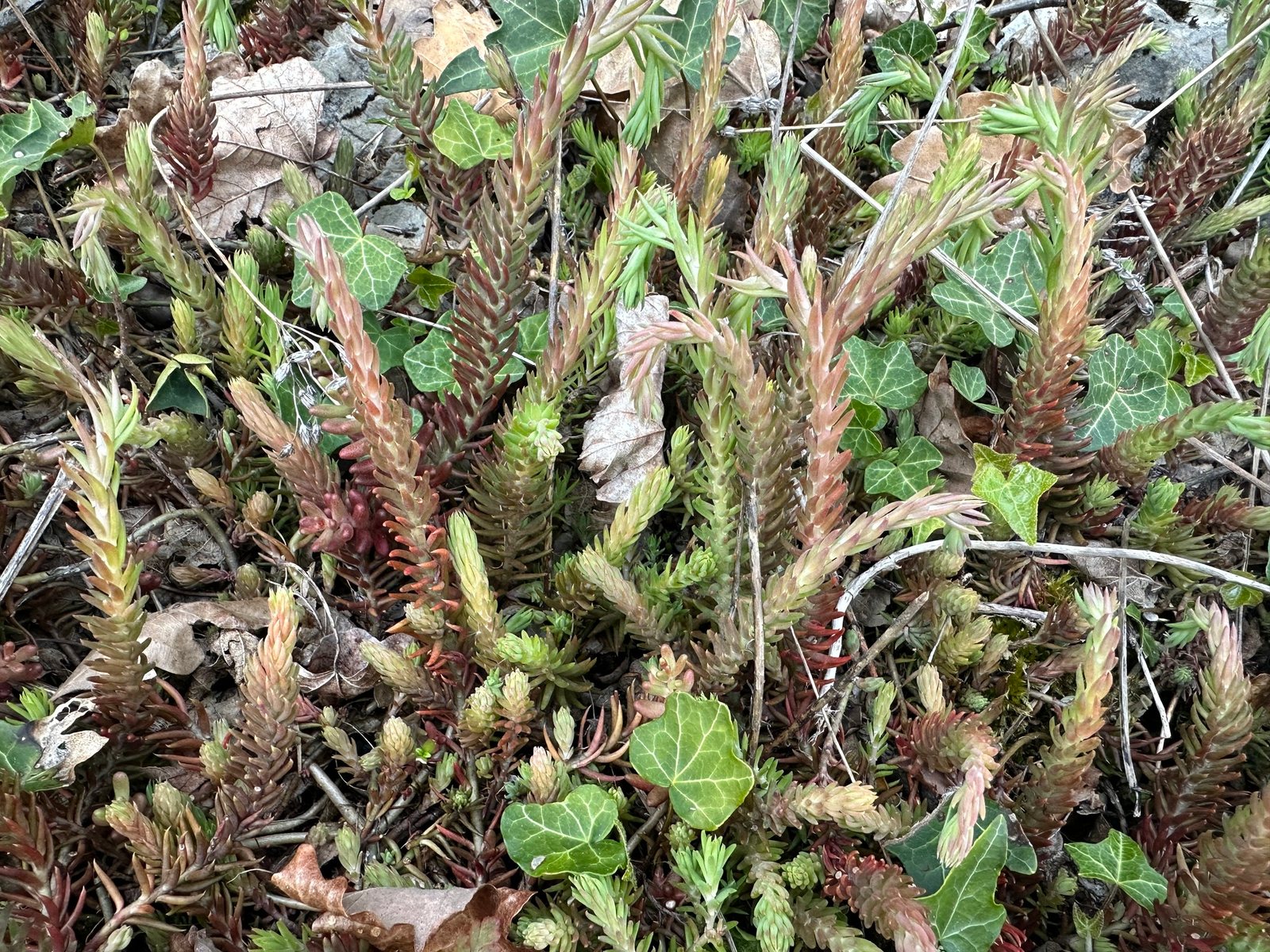
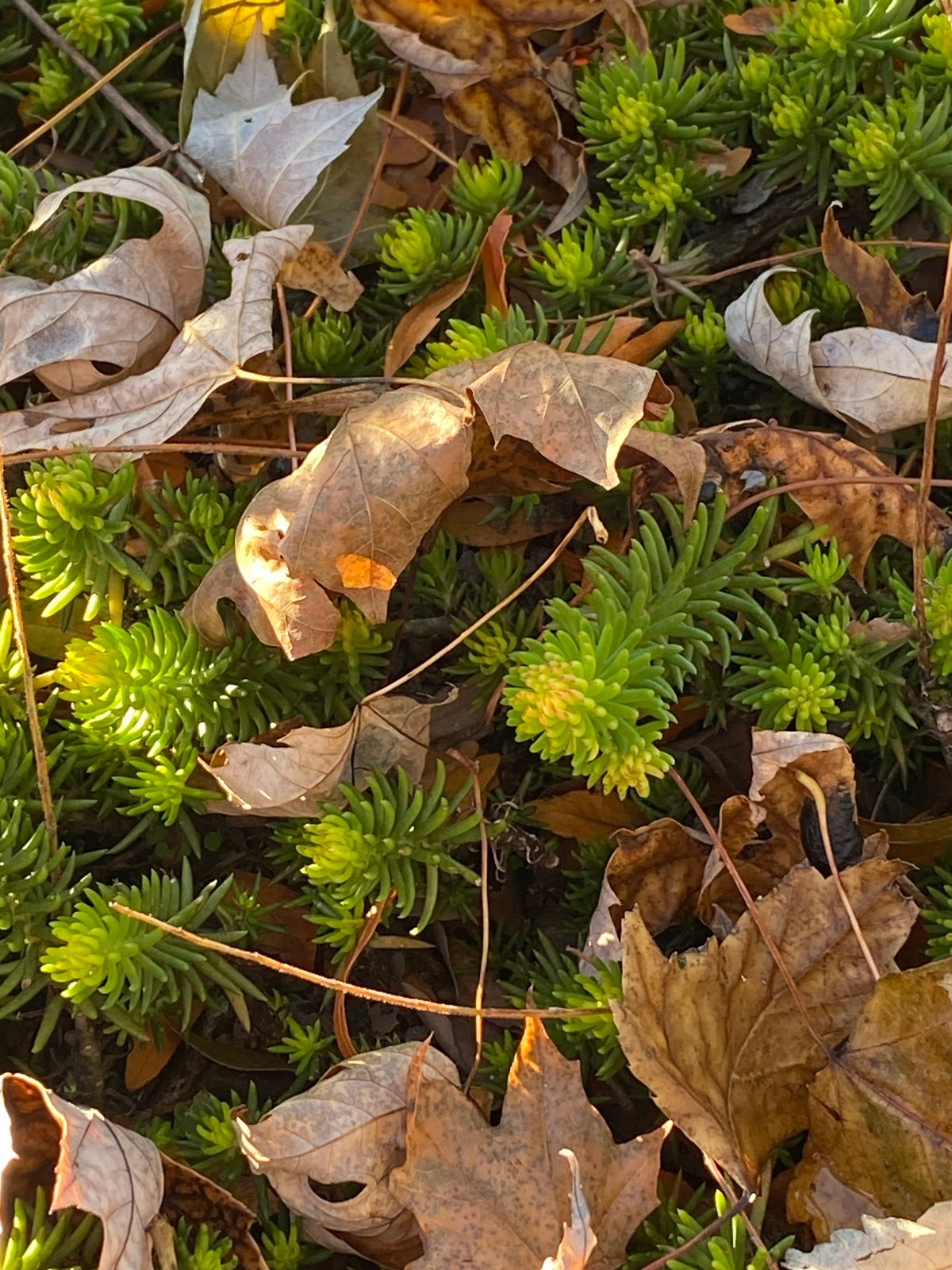
Angelina stonecrop is a low, spreading perennial succulent grown for its needle-like golden foliage, which often turns orange or copper in cold weather. It makes a bright groundcover for sunny, well-drained places and trails over pots, rocks and low walls, but struggles in persistently wet soil.
At a glance
- Sun
- Full sun gives the strongest gold colour; tolerates light shade, where foliage becomes greener.
- Water
- Water regularly while establishing, allowing the soil to dry between waterings. Once established, water during prolonged drought; containers need checking more often.
- Soil
- Well-drained sandy, gritty or gravelly soil; tolerates poor soil and a broad pH range. Avoid waterlogged clay and sites that stay wet in winter.
- Height
- 0.25-0.5 ft (0.08-0.15 m), with flower stems reaching about 0.75 ft (0.23 m)
- Spread
- 1-2 ft (0.3-0.6 m), eventually wider where stems root
- Flowers
- Small, star-shaped yellow flowers in early to midsummer.
- Foliage
- Evergreen. Fleshy, needle-like leaves form low mats; yellow to chartreuse during growth, often becoming orange, bronze or copper in cold weather.
- Growth
- Fast in sunny, well-drained conditions
- Care needed
- Low
The year at a glance
- Pollinators
- Deer resistant
- Drought tolerant
- Heat tolerant
- Low allergen
| J | F | M | A | M | J | J | A | S | O | N | D | |
|---|---|---|---|---|---|---|---|---|---|---|---|---|
| Flowers | ||||||||||||
| Plant |
Northern hemisphere months. In Australia, shift them by six.
- Difficulty
- Easy
- Toughness
- Very tough
Will it suit your garden?
Pick your zone, country, light and whether you have pets.
Full sun is 6 or more hours of direct sun a day, part shade 3 to 6 hours, shade under 3.
How it grows
Planting day
0.4 ft (0.12 m)
full size
About 4 years to full size.
From a typical nursery size, at an average rate for this kind of plant. A rule of thumb, not a forecast.
Good to know
- Cats and dogs
- Safe
- In the garden
- Spreads vigorously: plan to contain it.
- Growth rate
- Fast
Care
Jobs through the year
- WaterApr–May, Sep, every 21 days
- Established mats need water only in prolonged drought; water new plants more often, letting soil dry between.
- WaterJun–Aug, every 14 days
- Water established mats only if prolonged drought leaves the soil thoroughly dry; avoid routine soaking.
- PruneMar–Apr
- Remove winter-damaged stems and any shoots reverting to plain green.
- DivideApr–May
- Lift and replant rooted pieces only if the centre is sparse or more plants are wanted.
- MulchApr
- Use a light gravel dressing around crowns if needed; avoid moisture-retaining organic mulch.
- DeadheadJul–Aug
- Trim off spent flower stems if a tidier mat is wanted.
- PruneMay–Aug
- Trim spreading edges as needed and remove fragments before they root.
- ProtectJan–Feb, Oct–Dec
- Clear fallen leaves and maintain free drainage to prevent winter rot.
- Plant with the crown at soil level in a site that drains freely.
- Let the soil dry between waterings; do not keep pots standing in water.
- Avoid routine feeding in the ground; rich soil encourages loose, floppy growth.
- Use gravel rather than moisture-retaining mulch around the crowns.
- Lift and replant rooted pieces in spring if the centre becomes sparse.
Pruning. Trim off spent flower stems after flowering if you want a tidier mat. Cut back spreading edges in spring or summer, and remove any shoots that revert to plain green.
Through the year
- Spring
- Remove winter-damaged stems and check that drainage is clear.
- Spring
- Plant, divide or replant rooted pieces once the soil is workable.
- Early summer
- Check new plants and containers for dryness; water deeply when needed.
- Late summer
- Remove spent flower stems and trim growth that has crossed edging or smothered smaller plants.
- Autumn
- Clear fallen leaves from the mat to prevent damp patches and decay.
- Winter
- Keep containers freely drained and avoid watering already damp compost.
In the garden
- Plant between rocks in sunny gravel gardens for a low carpet of gold.
- Trail it over container rims or low retaining walls to soften hard edges.
- Pair it with blue fescue or blue-leaved succulents for foliage contrast.
- Use it along sunny path edges where it will not receive regular foot traffic.
- Repeat small patches among drought-tolerant perennials to link the planting together.
Garden styles it suits: Dry gravel garden, Desert / xeriscape, Alpine rock garden, Low-maintenance, Modern Mediterranean and Small-space.
Plant it with: Blue fescue, Creeping thyme, Hens and chicks, Lavender, Dianthus and Sea thrift.
Wildlife: The flowers provide nectar and pollen for bees and other small pollinating insects. Usually little browsed by deer or rabbits, though damage is still possible.
Problems to watch for
- Root and crown rot in wet soil: improve drainage, reduce watering and replant healthy pieces in a drier position.
- Sparse, green or stretched growth in shade: move to a sunnier site and trim back loose stems.
- Vine weevil larvae in containers: inspect roots of suddenly wilting plants and treat with suitable beneficial nematodes according to local instructions.
- Unwanted spread from rooting stems: trim the edges and remove fragments before they establish.
Safety
Not known to be toxic to cats, dogs, horses or people. No part is established as a serious poisoning hazard, but it is not a food plant, and eating substantial amounts may cause digestive upset; species-specific toxicity information is limited.
Easily confused with
Goldmoss stonecrop (Sedum acre)
Has much shorter, plump, triangular leaves packed along the stems rather than Angelina's longer, needle-like leaves.
Blue spruce stonecrop (Petrosedum rupestre 'Blue Spruce')
Has a similar needle-leaved habit but blue-grey foliage rather than yellow-gold foliage.
Lemon Coral stonecrop (Sedum mexicanum 'Lemon Coral')
Also has fine chartreuse foliage, but generally makes a softer, more upright mound and is much less cold-hardy; check the plant label because young plants can look very similar.
The name
Petrosedum refers to a stonecrop of rocky places, rupestre means rock-dwelling, and the common name stonecrop reflects its ability to grow in thin soil among stones.
Propagation. Divide rooted mats in spring or take short stem cuttings in spring or summer. Insert cuttings into gritty, freely draining compost and keep only lightly moist until rooted. Seed does not reliably reproduce the cultivar.
Checked against open data
- Accepted botanical name
- Petrosedum rupestre
- Native range
- Albania, Austria, Belgium, Bulgaria, Corse, Czechoslovakia, Denmark, East Aegean Is., France, Germany, Hungary and Italy.
- Measured
- Average height 18 cm.
Sources: GBIF (CC BY 4.0) and Trefle (CC BY 4.0). The care and design notes are LandscapeGPT's own.
See it in your own yard.
Upload a photo of your yard and see it redesigned with plants that suit your climate, each checked against your zone.