Angel's fishing rod
Dierama pulcherrimum. Family Iridaceae. Perennial.
Also called Fairy wand, Fairy fishing rod.
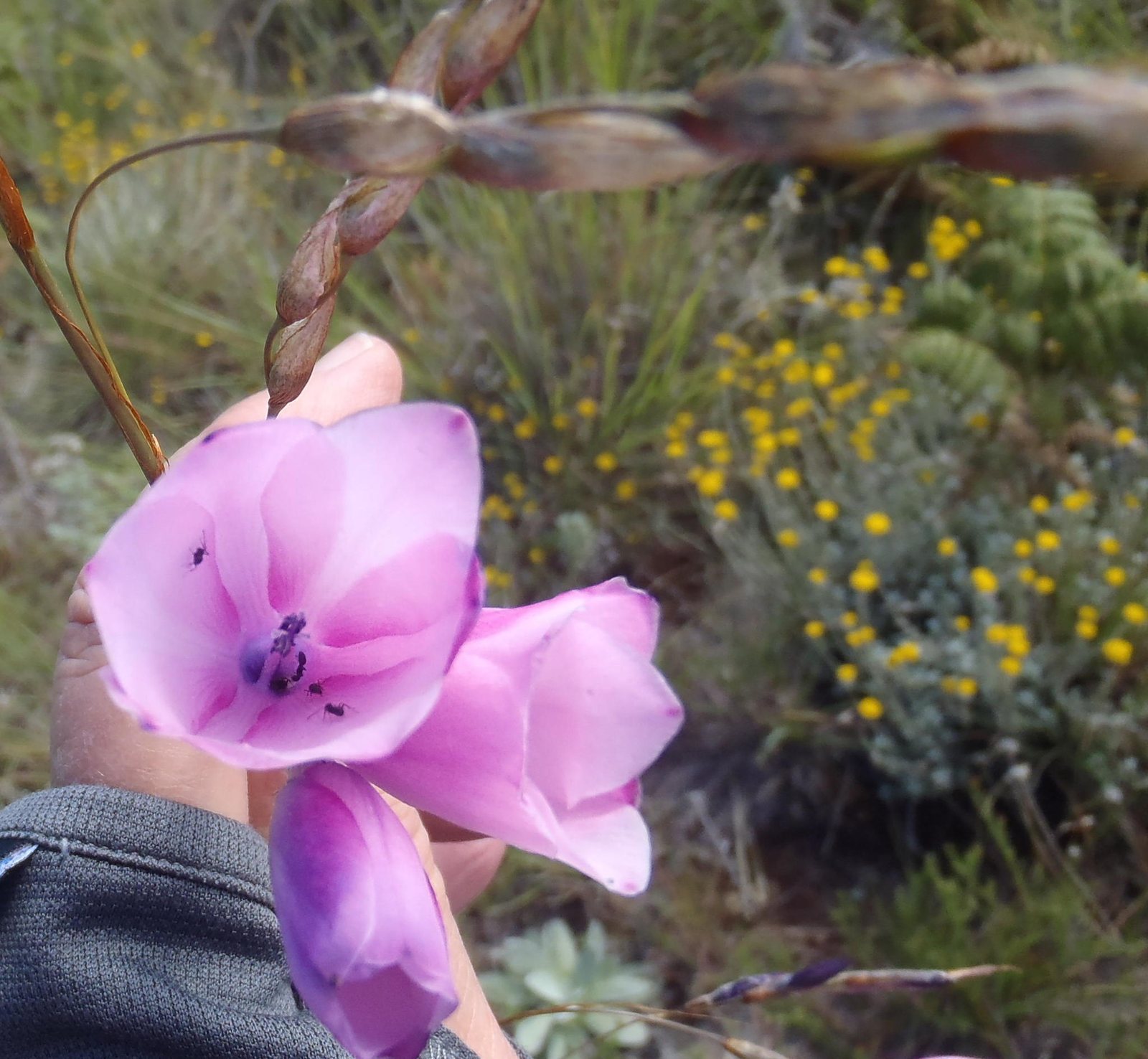
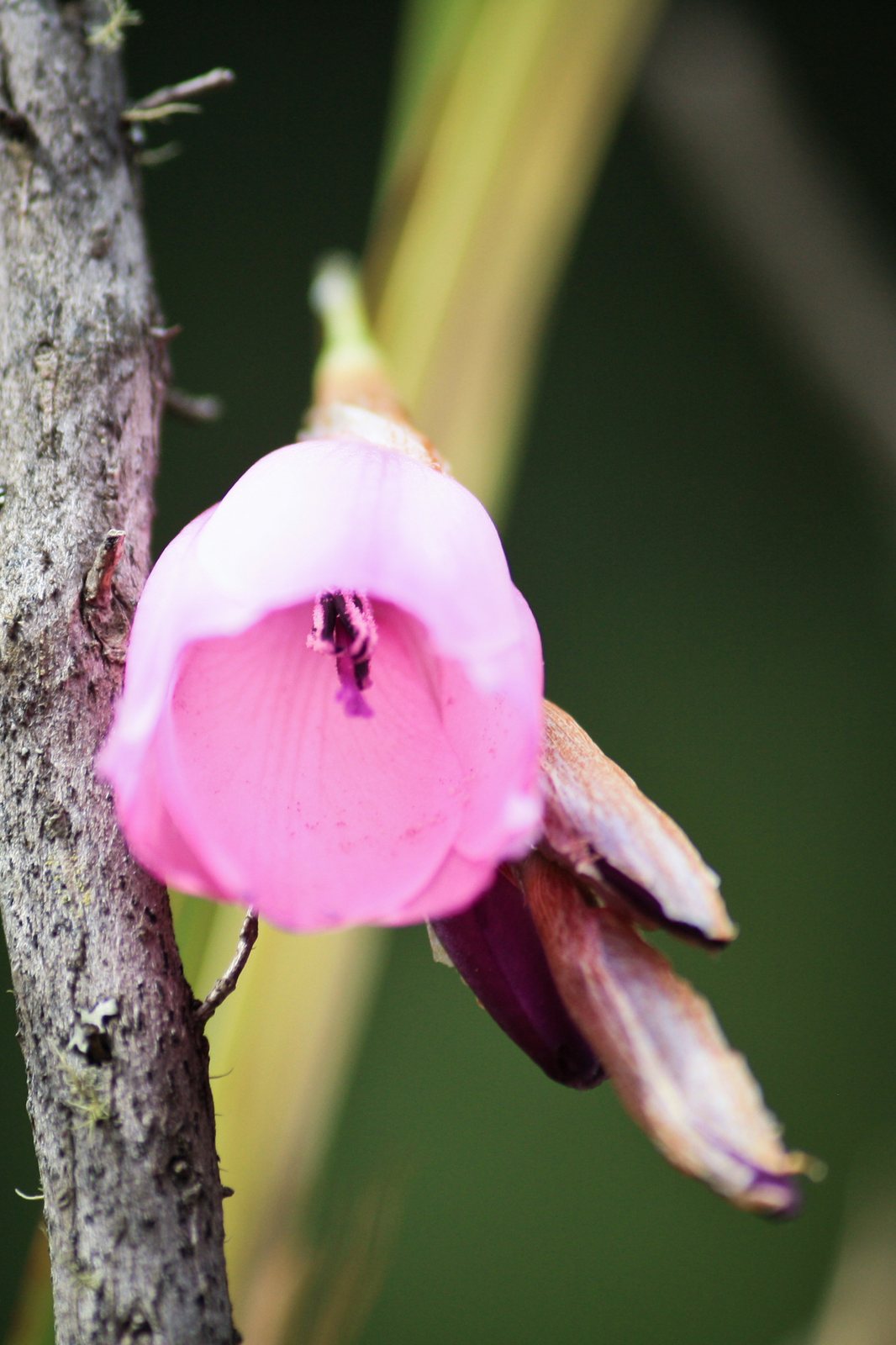
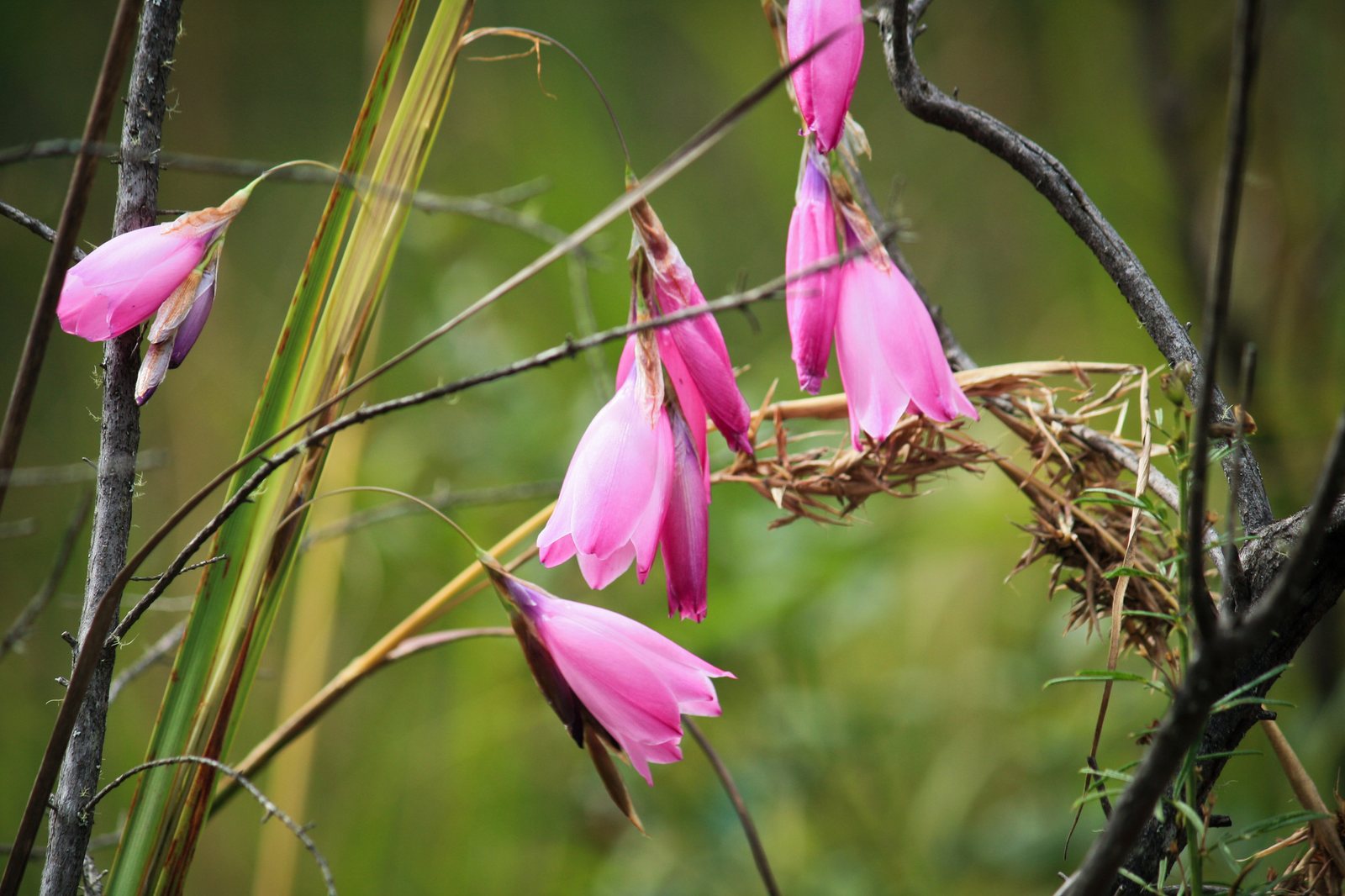
Dierama pulcherrimum is a South African, corm-forming perennial with narrow leaves and tall, arching stems carrying dangling pink bells. Gardeners grow it for the movement of its flowers above borders and gravel plantings; it flowers best in sun and dislikes being moved.
At a glance
- Sun
- Full sun; choose a warm position sheltered from strong winds.
- Water
- Water regularly while establishing and during dry spells in spring and summer. Established clumps tolerate some drought, but prolonged dryness can reduce flowering; avoid waterlogged soil, especially in winter.
- Soil
- Fertile, well-drained soil that retains some summer moisture. Improve heavy clay or use a raised bed; avoid sites where winter rain collects.
- Height
- 4-6 ft (1.2-1.8 m), including flowering stems
- Spread
- 2-3 ft (0.6-0.9 m)
- Flowers
- Early to midsummer, sometimes continuing into late summer; pendant, bell-shaped flowers in shades of pink to purplish pink.
- Foliage
- Evergreen. Narrow, arching, grass-like green leaves forming a dense clump; some leaves brown naturally as they age.
- Growth
- Slow to establish, then moderate; young plants may take several years to flower well.
- Care needed
- Medium
The year at a glance
- Pollinators
- Heat tolerant
- Wildlife
- Low allergen
| J | F | M | A | M | J | J | A | S | O | N | D | |
|---|---|---|---|---|---|---|---|---|---|---|---|---|
| Flowers | ||||||||||||
| Fruit | ||||||||||||
| Plant |
Northern hemisphere months. In Australia, shift them by six.
- Difficulty
- Moderate
- Toughness
- Fairly tough
Will it suit your garden?
Pick your zone, country, light and whether you have pets.
Full sun is 6 or more hours of direct sun a day, part shade 3 to 6 hours, shade under 3.
How it grows
Planting day
1 ft (0.3 m)
After 1 year
2 ft (0.61 m)
After 2 years
3 ft (0.92 m)
After 3 years
4 ft (1.2 m)
After 5 years
5 ft (1.5 m)
full size
About 4 years to full size.
From a typical nursery size, at an average rate for this kind of plant. A rule of thumb, not a forecast.
Good to know
- Cats and dogs
- Safe
- Growth rate
- Slow
Care
Jobs through the year
- WaterApr–May, every 14 days
- Water established clumps deeply during dry spells; young plants need more frequent checks.
- WaterJun–Aug, every 7 days
- Water during dry spells to support flowering, allowing excess water to drain.
- FeedApr
- Apply a light dressing of balanced fertilizer; avoid high-nitrogen feeding.
- PruneMar–Apr
- Cut individual dead or badly damaged leaves at the base; do not shear the clump.
- DeadheadAug–Sep
- Remove finished flower stems unless retaining seed heads.
- DivideApr–May
- Divide only when essential; disturbed plants can take years to flower well again.
- ProtectNov–Dec
- Mulch roots without covering the crown; in zone 6, use frost-protected container growing.
- Plant in spring, allowing room for the flowering stems to arch without crossing a busy path.
- Water deeply during dry spring and summer weather, particularly while plants are establishing.
- Apply a light dressing of balanced fertiliser in spring; avoid heavy nitrogen feeding.
- In colder gardens, mulch around the clump for winter protection without packing wet material over its centre.
- Leave established clumps undisturbed; divide only when necessary, as recovery and flowering can be slow.
Pruning. In spring, cut out individual dead or badly damaged leaves at the base rather than shearing the whole clump. Remove spent flower stems after flowering unless you want seed.
Through the year
- Spring
- Remove dead leaves and check that winter mulch is not trapping moisture against the clump.
- Spring
- Plant new specimens and apply a light dressing of balanced fertiliser.
- Late spring
- Water during dry spells as flowering stems develop.
- Summer
- Maintain moisture during prolonged drought and keep surrounding plants from smothering the foliage.
- Late summer
- Remove faded stems to limit self-seeding, or collect ripe seed for sowing.
- Late autumn
- Protect the root area in colder gardens and clear drainage routes before winter rain.
In the garden
- Plant beside a broad path or terrace where the arching stems and hanging bells can be seen close up.
- Combine with ornamental grasses and airy perennials for movement in a sunny border.
- Use in a gravel garden with moisture-retentive soil beneath the gravel, rather than an extremely dry planting pocket.
- Place above a pond edge or low wall so the flowers hang freely, keeping the roots out of saturated ground.
Garden styles it suits: Cottage garden, Romantic rose garden, New perennial (prairie), Dry gravel garden, Coastal and Pastel border.
Plant it with: Catmint, Hardy geranium, Salvia, Gaura, Agapanthus and Tufted hair grass.
Wildlife: The flowers provide nectar and pollen for visiting insects, including bees. Dense foliage offers some shelter for small garden animals.
Problems to watch for
- Winter rot: avoid waterlogged soil and wet mulch over the centre; improve drainage before planting.
- Poor flowering: provide full sun, avoid excessive nitrogen and allow several years for young or divided plants to settle.
- Cold damage: grow in a sheltered position and protect the root area in winter; severe or prolonged freezes can kill plants.
- Red spider mites in hot, dry conditions, particularly under cover: inspect yellowing leaves, improve growing conditions and use a labelled treatment if needed.
Safety
Not known to be toxic to people, cats, dogs or horses. Species-specific information is limited, especially for livestock, so do not treat the leaves, flowers or underground corms as edible.
Where it spreads. Can self-seed and has naturalised in parts of south-eastern Australia, including Victoria. Remove seed heads near bushland and check local weed advice before planting.
Easily confused with
Crocosmia (Crocosmia spp.)
Crocosmia usually has broader, sword-shaped leaves and orange, red or yellow flowers arranged along arching spikes, rather than pink bells dangling on fine stalks.
Bugle lily (Watsonia spp.)
Watsonias have broader, stiffer leaves and upright spikes of trumpet-shaped flowers; dierama has wiry, nodding stems and hanging bells.
The name
Dierama comes from a Greek word for a funnel, referring to the flower shape, pulcherrimum means 'most beautiful', and the common name describes the long stems bending like fishing rods.
Propagation. Sow fresh seed in containers of free-draining seed compost; seedlings usually take several years to flower and may differ from the parent. Divide established clumps carefully in spring only when necessary, keeping several corms together and minimising root disturbance.
Checked against open data
- Accepted botanical name
- Dierama pulcherrimum
- Native range
- Cape Provinces.
Sources: GBIF (CC BY 4.0) and Trefle (CC BY 4.0). The care and design notes are LandscapeGPT's own.
See it in your own yard.
Upload a photo of your yard and see it redesigned with plants that suit your climate, each checked against your zone.