Anglojap yew
Taxus × media. Family Taxaceae. Shrub.
Also called Anglo-Japanese yew, Hybrid yew.
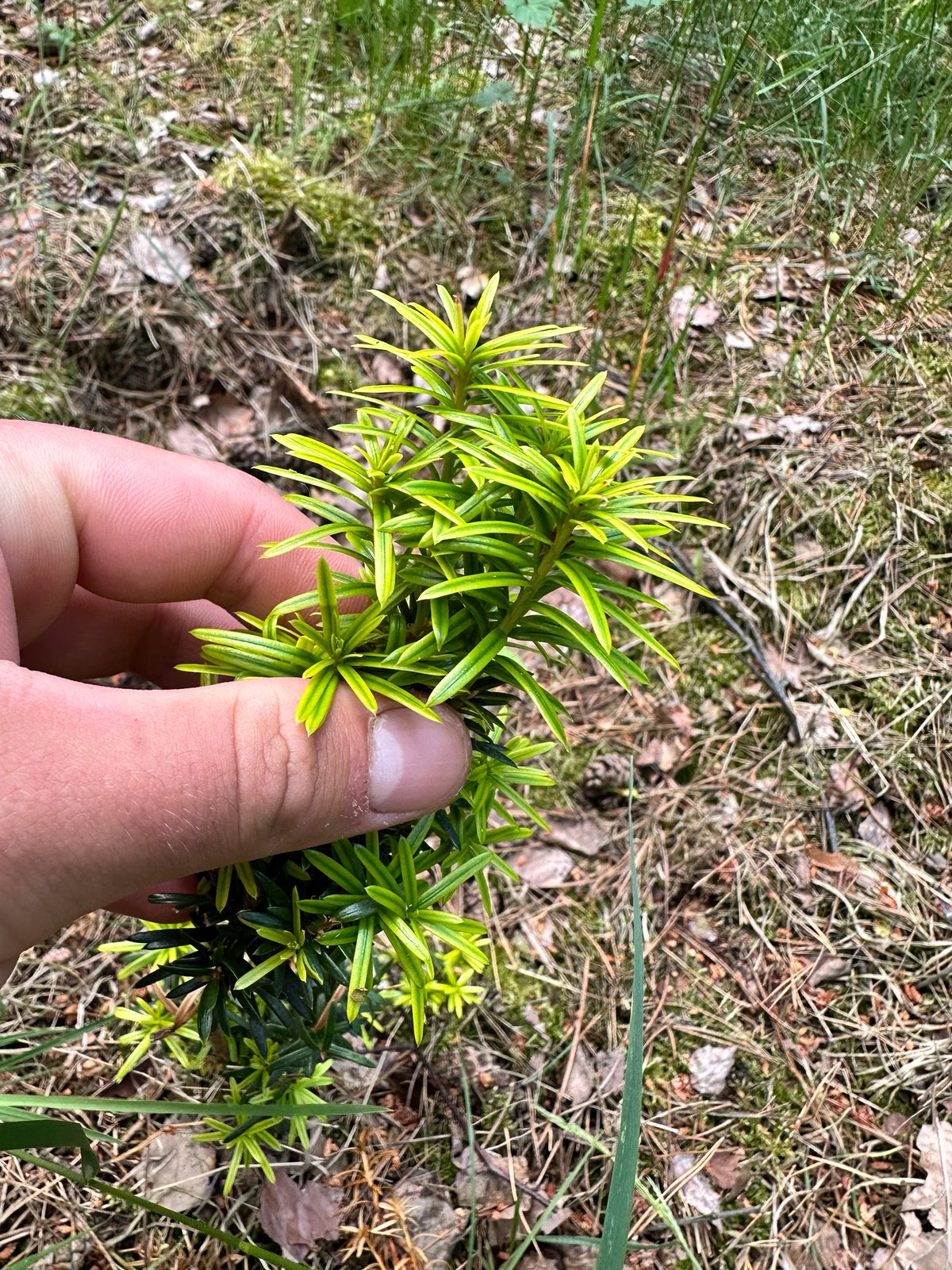
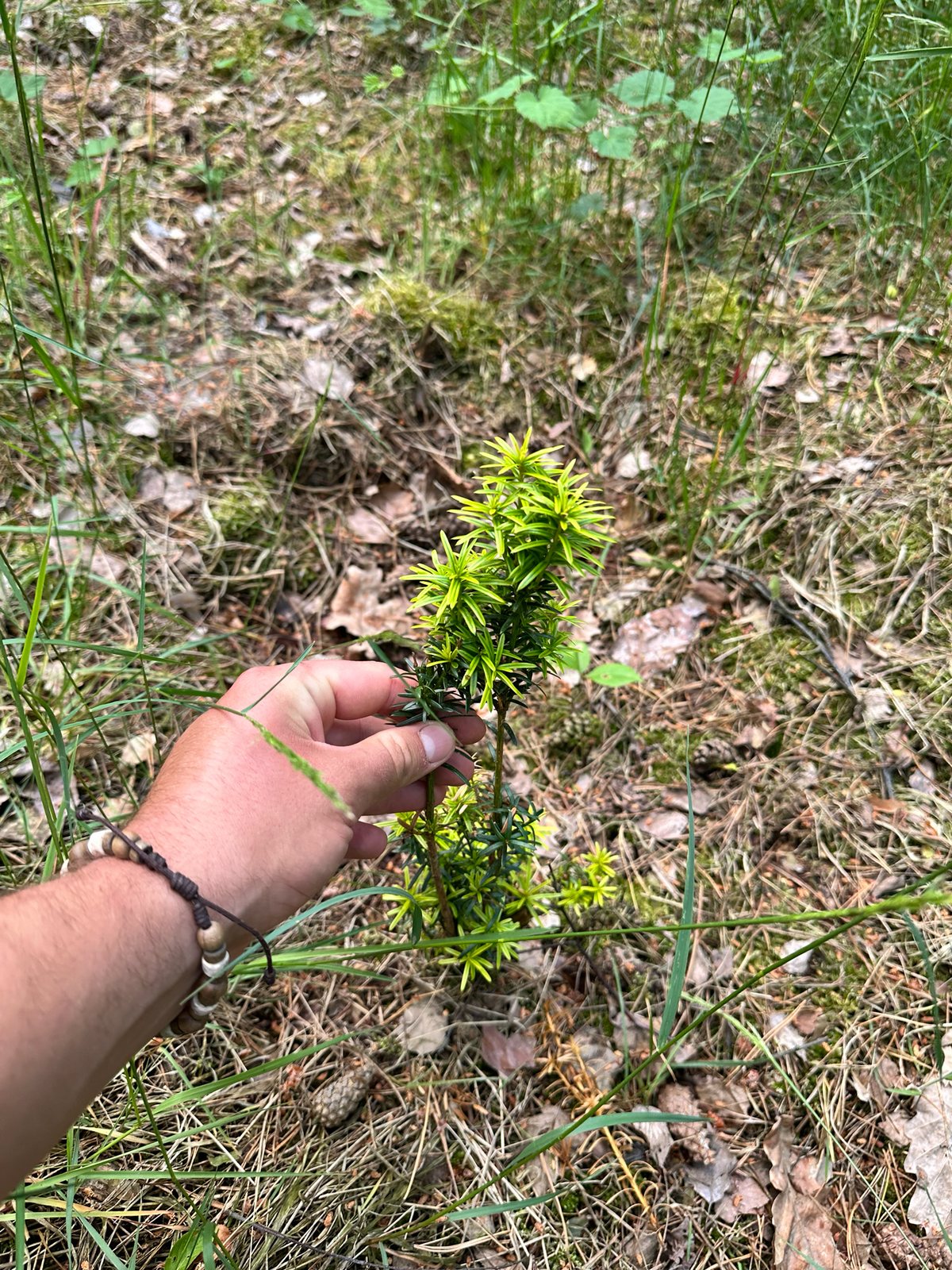
Anglojap yew is an evergreen hybrid of English yew and Japanese yew, grown for its dense, dark foliage and ability to tolerate shade and repeated clipping. Cultivars range from spreading shrubs to upright hedge plants, so check the mature shape and size before buying. It needs good drainage, and its highly poisonous foliage and seeds make siting important.
At a glance
- Sun
- Full sun to full shade; light shade or shelter from drying winter winds helps prevent foliage scorch.
- Water
- Water regularly during establishment, allowing the soil surface to begin drying between waterings. Established plants tolerate some drought but not prolonged waterlogging.
- Soil
- Well-drained loam, clay or sandy soil; tolerates acidic to alkaline conditions. Avoid compacted soil and sites that stay wet.
- Height
- 5-20 ft (1.5-6 m), depending on cultivar and pruning
- Spread
- 4-12 ft (1.2-3.7 m), depending on cultivar and pruning
- Foliage
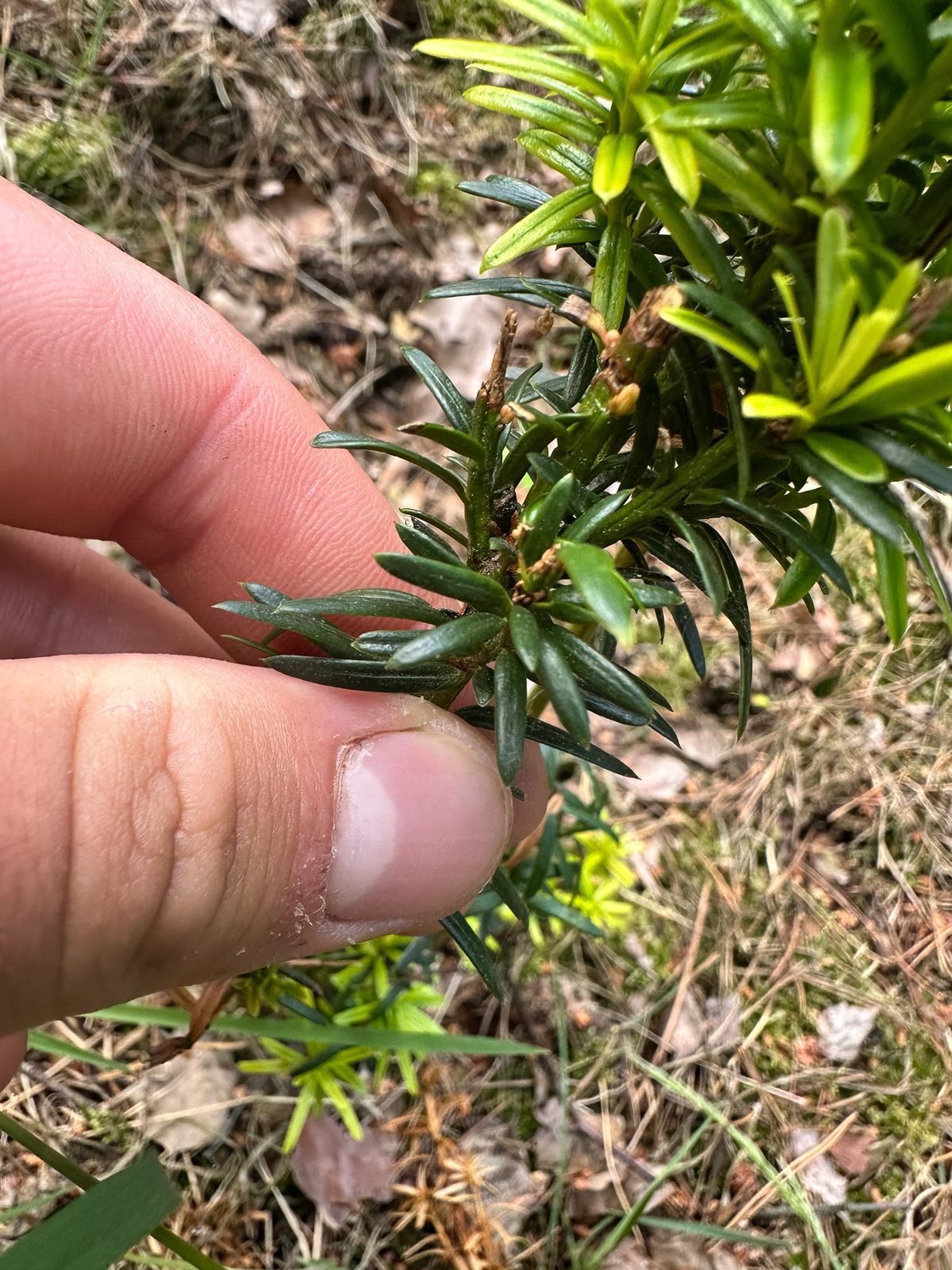
- Evergreen. Flat, soft-looking, dark green needles with paler undersides. Female plants may carry red, fleshy arils surrounding exposed seeds when a male yew is nearby.
- Growth
- Slow to moderate, depending on cultivar and growing conditions.
- Care needed
- Medium
The year at a glance
- Drought tolerant
- Cold hardy
- Wildlife
| J | F | M | A | M | J | J | A | S | O | N | D | |
|---|---|---|---|---|---|---|---|---|---|---|---|---|
| Fruit | ||||||||||||
| Plant |
Northern hemisphere months. In Australia, shift them by six.
- Difficulty
- Easy
- Toughness
- Very tough
Will it suit your garden?
Pick your zone, country, light and whether you have pets.
Full sun is 6 or more hours of direct sun a day, part shade 3 to 6 hours, shade under 3.
How it grows
Planting day
1.6 ft (0.5 m)
After 1 year
3 ft (1 m)
After 2 years
5 ft (1.5 m)
After 3 years
7 ft (2 m)
After 5 years
10 ft (3 m)
About 7 years to full size.
From a typical nursery size, at an average rate for this kind of plant. A rule of thumb, not a forecast.
Good to know
- Cats and dogs
- Toxic
- Growth rate
- Slow
Care
Jobs through the year
- WaterApr–May, Sep–Nov, every 14 days
- Water established shrubs only if soil is dry and unfrozen; young plants need more frequent watering.
- WaterJun–Aug, every 14 days
- Deep-water established shrubs during prolonged dry spells; never water saturated soil.
- MulchMar
- Maintain 5–8 cm of organic mulch, keeping the root flare and stems clear.
- FeedMar–Apr
- Feed lightly only where growth is weak and soil fertility is low.
- PruneFeb–Mar
- Remove damaged branches; renovate overgrown plants in stages only if needed.
- PruneMay–Jun
- Clip formal hedges after the first flush, keeping the base wider than the top.
- PruneAug
- Give formal hedges a light final trim only if needed; dispose of poisonous clippings safely.
- ProtectJan–Feb, Nov–Dec
- Shield young exposed plants from drying winds and deer; keep all plant material away from animals and children.
- Plant with the root flare at soil level; choose another site if water collects around the roots.
- Water deeply during dry spells for the first two growing seasons.
- Apply 2-3 in (5-8 cm) of organic mulch, keeping it clear of the stems.
- Feed lightly in spring only if growth is weak and soil fertility is low.
- Keep plants and all clippings away from livestock, pets and children who may eat plant material.
Pruning. Clip hedges in late spring or early summer after the first flush, keeping the base wider than the top; make a light second trim in late summer if needed. Renovate overgrown plants in late winter or early spring, preferably in stages, as yews can regrow from old wood.
Through the year
- Late winter
- Remove damaged branches and begin any staged renovation before new growth starts.
- Spring
- Plant when soil is workable and not waterlogged; refresh mulch without covering the root flare.
- Late spring
- Check new growth for scale insects and clip established hedges after their first flush.
- Summer
- Water young plants deeply during dry weather and inspect declining plants for drainage problems.
- Late summer
- Give formal hedges a light final trim if needed, leaving time for growth to harden before frost.
- Autumn
- Water before the ground freezes if conditions are dry, and remove fallen clippings from areas accessible to animals.
In the garden
- Clip into a dense boundary hedge or evergreen screen, choosing an upright cultivar for narrow spaces.
- Use spreading cultivars beneath taller trees where their dark foliage provides year-round structure.
- Shape into simple topiary or formal edging to frame paths and garden rooms.
- Place behind pale flowers, ferns or variegated foliage to create a quiet, contrasting backdrop.
Garden styles it suits: Formal, Topiary garden, English country, Woodland, Architectural minimal and Winter interest.
Plant it with: Hostas, Hellebores, Japanese painted ferns, Epimediums, Snowdrops and Japanese forest grass.
Wildlife: Birds eat the red arils and may disperse the seeds. Dense growth provides nesting cover, but deer can browse the foliage heavily.
Problems to watch for
- Root rot: yellowing, wilting or dieback often follows waterlogging; correct drainage and replace badly affected plants rather than watering more.
- Vine weevil: larvae can destroy roots, particularly in containers; inspect root balls and use an appropriate locally approved biological control.
- Scale insects: inspect stems and needle undersides; prune small infestations and use a labelled horticultural oil when appropriate.
- Winter scorch: exposed foliage may bronze or brown in drying winds; water during dry autumn weather and provide a sheltered position.
Safety
Highly poisonous to people, cats, dogs and horses if eaten; ingestion can cause fatal heart disturbances. Needles, bark and seeds are toxic, including dried clippings. The red aril flesh is not toxic, but it surrounds a poisonous seed and must not be treated as edible. Seek urgent medical or veterinary help after suspected ingestion.
Easily confused with
English yew (Taxus baccata)
Often has needles arranged in flatter, two-ranked sprays, but cultivated forms overlap strongly with the hybrid. A nursery label or known parentage is more reliable than appearance alone.
Japanese yew (Taxus cuspidata)
Typically has needles ending in a more abrupt, pointed tip. The hybrid is intermediate, so this feature alone cannot reliably identify every cultivar.
Japanese plum yew (Cephalotaxus harringtonia)
Usually has noticeably longer, broader needles and larger, plum-like reproductive structures rather than the small red, open-ended arils of true yews.
The name
Anglo-Japanese refers to its English and Japanese yew parents, while the Latin epithet media means intermediate.
Propagation. Take semi-ripe cuttings in late summer or early autumn; rooting can be slow. Use cuttings to preserve a named cultivar, as seedlings are variable and seeds may take more than a year to germinate.
Checked against open data
- Accepted botanical name
- Taxus media
Sources: GBIF (CC BY 4.0). The care and design notes are LandscapeGPT's own.
See it in your own yard.
Upload a photo of your yard and see it redesigned with plants that suit your climate, each checked against your zone.