Anise-scented sage
Salvia guaranitica. Family Lamiaceae. Perennial.
Also called Blue anise sage, Brazilian sage.
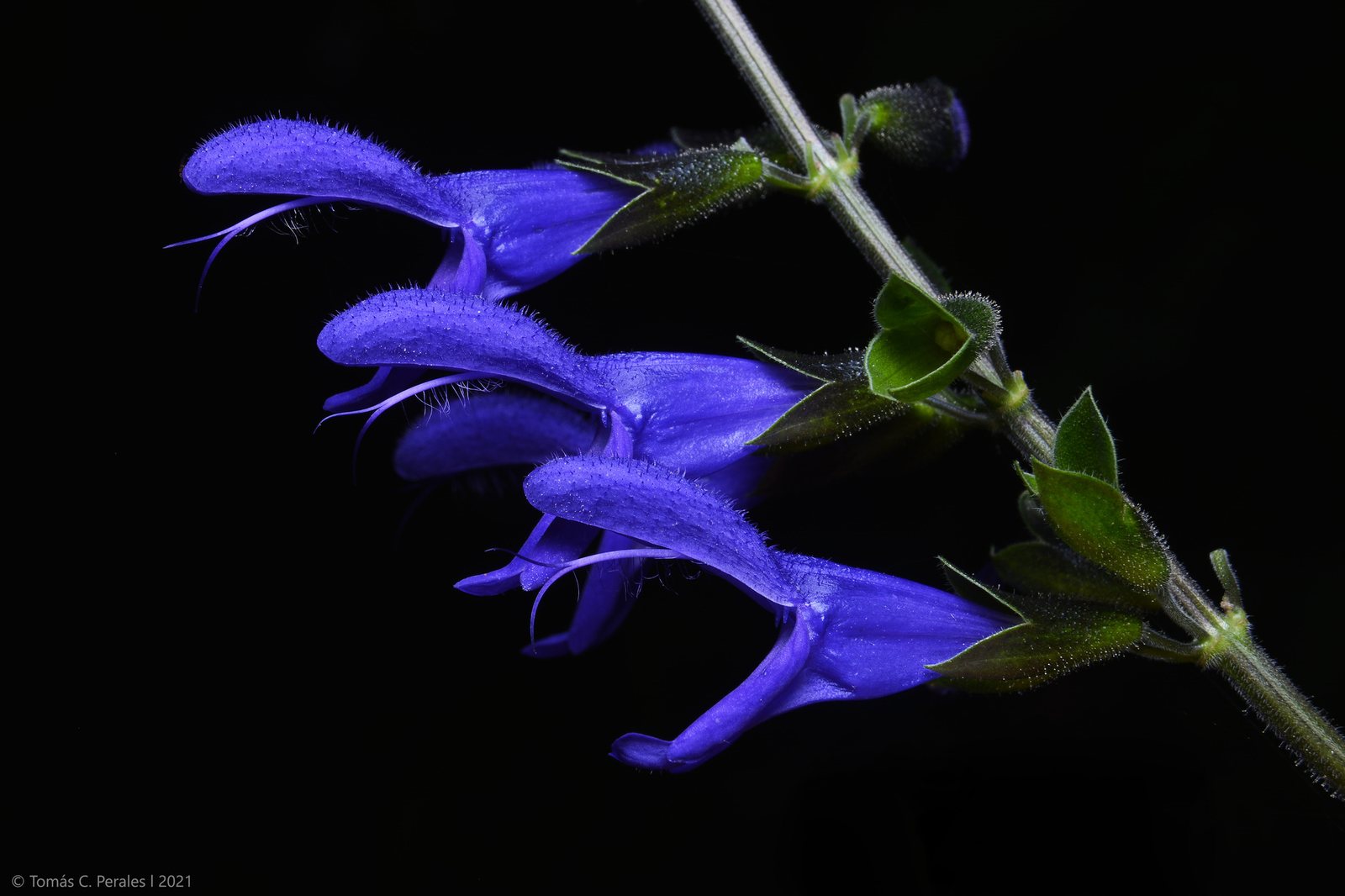
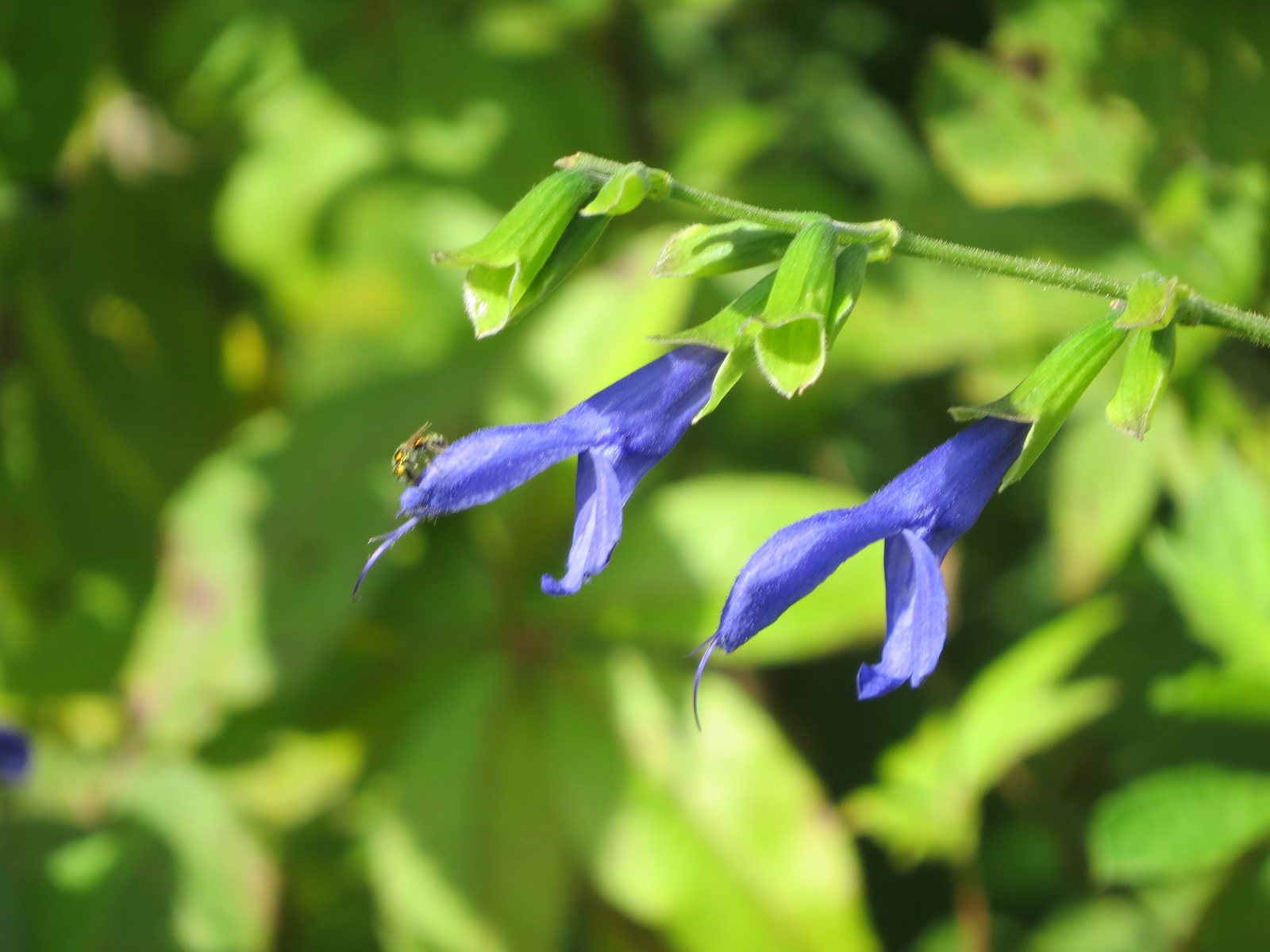
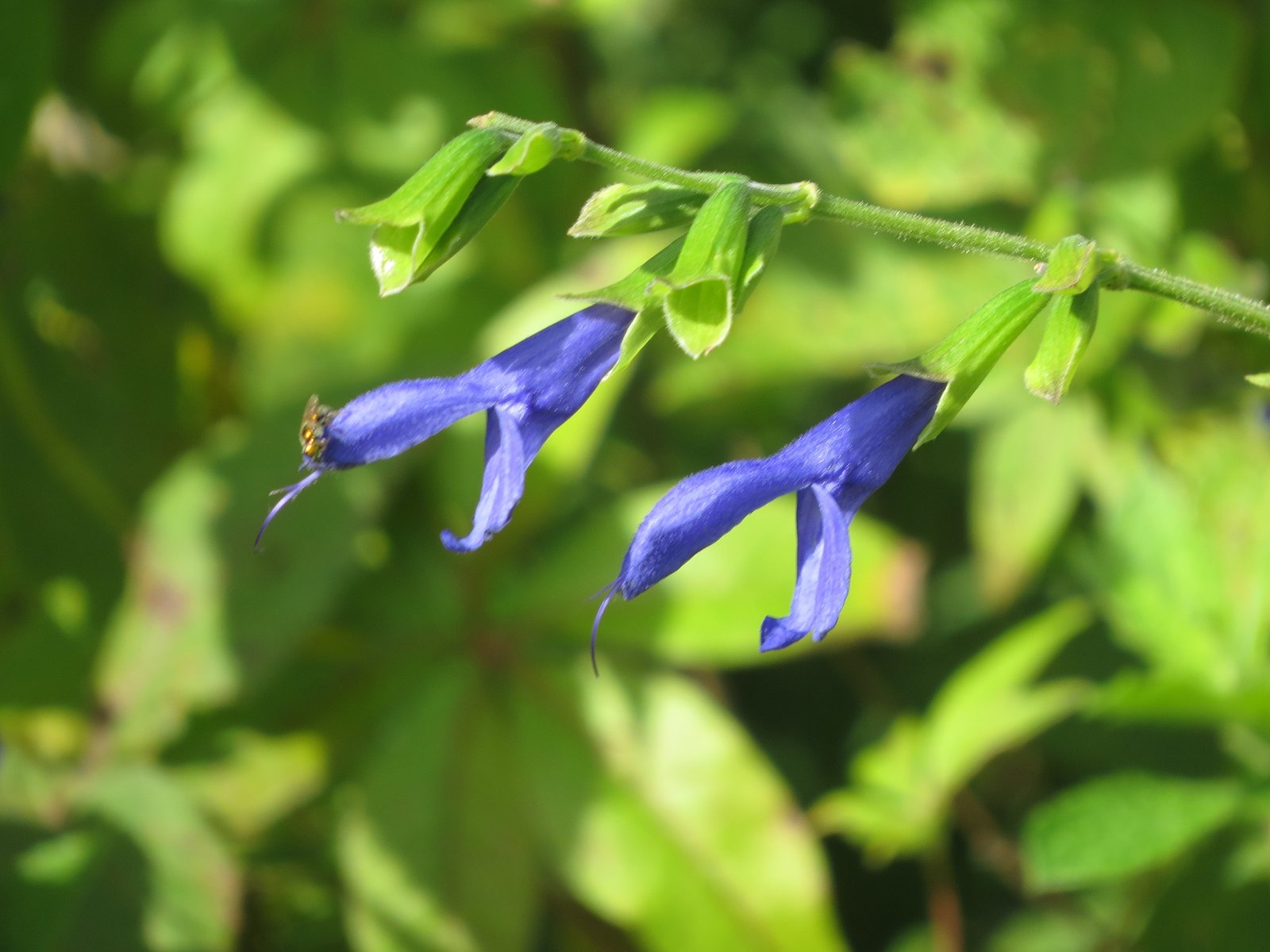
Anise-scented sage is a tall, clump-forming perennial grown for its deep blue tubular flowers from summer into autumn. Its leafy stems fill the middle or back of a border and attract nectar-feeding wildlife; in cold climates, it is grown as an annual or overwintered under cover.
At a glance
- Sun
- Full sun to partial shade; flowers best in sun, with afternoon shade helpful in very hot climates.
- Water
- Moderate; water during dry spells, allowing the soil surface to dry slightly between waterings. Avoid waterlogged soil, especially in winter.
- Soil
- Fertile, well-drained soil enriched with compost; tolerates a range of soil textures and pH levels if drainage is good.
- Height
- 3-6 ft (0.9-1.8 m)
- Spread
- 2-3 ft (0.6-0.9 m), widening over time through underground rhizomes
- Flowers
- Summer until the first frosts; deep blue tubular flowers, often with dark calyces.
- Foliage
- Opposite, pointed, mid-green leaves with toothed edges; crushed foliage may have a faint anise scent, though its strength varies.
- Growth
- Fast in warm weather
- Care needed
- Medium
The year at a glance
- Pollinators
- Deer resistant
- Heat tolerant
- Wildlife
- Low allergen
- Fragrant
| J | F | M | A | M | J | J | A | S | O | N | D | |
|---|---|---|---|---|---|---|---|---|---|---|---|---|
| Flowers | ||||||||||||
| Plant |
Northern hemisphere months. In Australia, shift them by six.
- Difficulty
- Moderate
- Toughness
- Needs looking after
Will it suit your garden?
Pick your zone, country, light and whether you have pets.
Full sun is 6 or more hours of direct sun a day, part shade 3 to 6 hours, shade under 3.
How it grows
Planting day
1 ft (0.3 m)
After 1 year
2.8 ft (0.84 m)
After 2 years
4 ft (1.4 m)
full size
About 2 years to full size.
From a typical nursery size, at an average rate for this kind of plant. A rule of thumb, not a forecast.
Good to know
- Cats and dogs
- Safe
- In the garden
- Spreads vigorously: plan to contain it.
- Growth rate
- Fast
Care
Jobs through the year
- WaterMay, Sep–Oct, every 14 days
- Water established outdoor clumps during dry spells; new plants need more frequent watering.
- WaterJun–Aug, every 7 days
- Water established clumps deeply when dry, allowing the surface to dry slightly between waterings.
- MulchApr–May
- Apply compost around growing plants without covering the crown.
- PruneApr–May
- Cut old stems close to ground level as new shoots appear.
- PruneMay–Jun
- Pinch young shoot tips to encourage bushier growth.
- DivideApr–May
- Divide congested clumps as growth starts and remove unwanted spreading rhizomes.
- ProtectMay–Jun
- Support tall stems in exposed sites and protect emerging shoots from slugs.
- DeadheadJun–Oct, every 7 days
- Remove faded flower spikes back to a leafy side shoot.
- ProtectSep–Oct
- Before frost, lift plants or save potted divisions under bright, frost-free cover; mulch alone is unreliable in zones 6–7.
- WaterJan–Mar, Nov–Dec, every 21 days
- For frost-free overwintered pots only, water sparingly if compost is drying; never leave roots waterlogged.
- Water new plants regularly through their first growing season, then water established clumps during prolonged dry spells.
- Apply compost in spring; avoid heavy nitrogen feeding, which encourages floppy growth.
- Mulch the root area before winter in colder parts of its range, without piling wet material against the crown.
- Support tall stems early in exposed gardens, or pinch young shoots to encourage branching.
- Divide congested clumps in spring and remove unwanted rhizomes to limit their spread.
- Where winters are too cold, keep a potted division or rooted cutting in a bright, frost-free place.
Pruning. Pinch shoot tips in late spring for bushier, shorter plants, and remove spent flower spikes to a leafy side shoot during the flowering season. Leave frost-killed stems through winter in colder gardens, then cut them close to ground level in spring as new shoots appear.
Through the year
- Early spring
- Cut back old stems as new growth starts, divide crowded clumps and add compost.
- Late spring
- Plant outside after frost risk has passed; pinch young shoots and install supports if needed.
- Early summer
- Take softwood cuttings from healthy, non-flowering shoots.
- Summer
- Water during dry spells and remove faded flower spikes to encourage further bloom.
- Early autumn
- Move rooted cuttings or potted divisions under cover before frost if outdoor survival is doubtful.
- Late autumn
- Mulch outdoor clumps in colder gardens and check that winter rain drains away from the crown.
In the garden
- Plant behind shorter perennials so the blue flowers rise above the border without hiding smaller plants.
- Combine with ornamental grasses for a loose, late-season planting with contrasting flower and leaf shapes.
- Pair with orange or yellow flowers for strong colour contrast, or with purples and silvers for a cooler scheme.
- Grow in a large container near a seating area where the flowers and visiting wildlife are easy to watch.
Garden styles it suits: Cottage garden, English country, Pollinator garden, Blues and silvers, Modern tropical and Sensory garden.
Plant it with: Coneflower, Black-eyed Susan, Verbena, Feather reed grass, Dahlia and Catmint.
Wildlife: Flowers provide nectar for bees and butterflies, and are particularly attractive to hummingbirds where these occur in the Americas.
Problems to watch for
- Slugs and snails can damage emerging shoots; protect new growth with barriers, hand-picking or locally approved iron-phosphate bait.
- Spider mites may cause pale, stippled leaves in hot, dry conditions, especially under cover; rinse leaf undersides and improve growing conditions.
- Winter wet can rot the crown and roots; improve drainage or overwinter a container-grown plant under cover.
- Too much shade or nitrogen can produce weak, floppy stems and fewer flowers; increase sunlight, reduce feeding and support stems early.
Safety
Not known to be toxic to people, cats, dogs or horses, and no particular part is established as poisonous. Species-specific safety information is limited, so do not treat it as an edible sage or allow pets to eat large quantities.
Where it spreads. Can spread aggressively by underground rhizomes in mild-winter gardens, including parts of the southern United States. Keep clumps away from small, delicate plants and remove shoots that spread beyond their allotted space.
Easily confused with
Anise hyssop (Agastache foeniculum)
Has dense spikes of many small lavender-purple flowers and strongly anise-scented foliage, rather than the larger, widely spaced blue tubes of anise-scented sage.
Mealycup sage (Salvia farinacea)
Usually has narrower leaves and upright spikes of smaller flowers with pale, mealy-looking calyces and stems.
Bog sage (Salvia uliginosa)
Has slender stems, narrower leaves and small sky-blue flowers with conspicuous white lower lips; it also tolerates wetter soil.
The name
The epithet guaranitica refers to the Guaraní people of South America, while anise-scented sage describes the scent sometimes released by its crushed leaves.
Propagation. Divide established clumps in spring or take softwood cuttings in late spring or early summer. Seed is possible, but named cultivars may not come true from seed.
Checked against open data
- Accepted botanical name
- Salvia guaranitica
- Native range
- Argentina Northeast, Argentina Northwest, Brazil South, Brazil West-Central, Paraguay and Uruguay.
Sources: GBIF (CC BY 4.0) and Trefle (CC BY 4.0). The care and design notes are LandscapeGPT's own.
See it in your own yard.
Upload a photo of your yard and see it redesigned with plants that suit your climate, each checked against your zone.