Arizona Sun blanket flower
Gaillardia × grandiflora 'Arizona Sun'. Family Asteraceae. Perennial.
Also called Gaillardia 'Arizona Sun'.
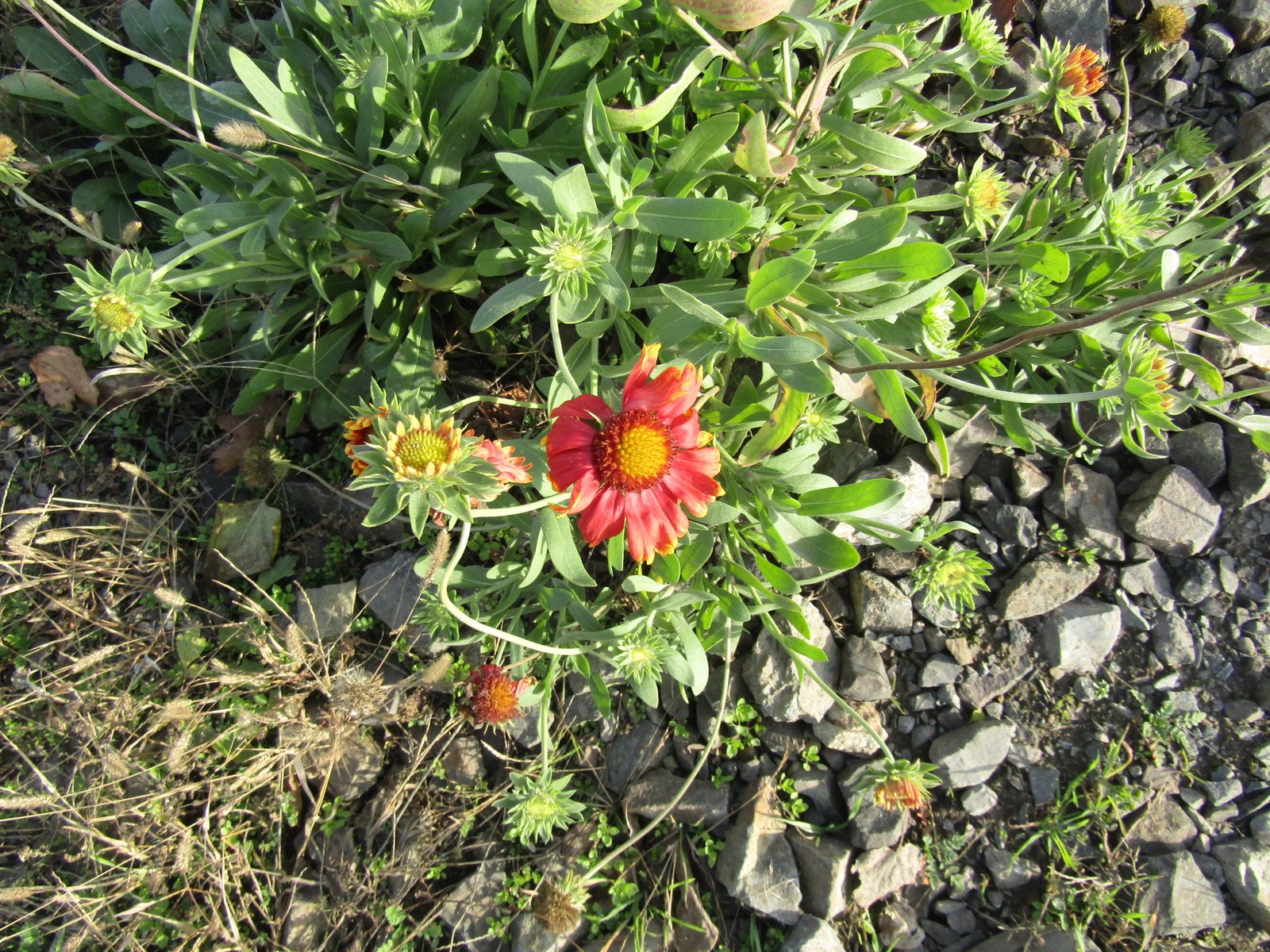
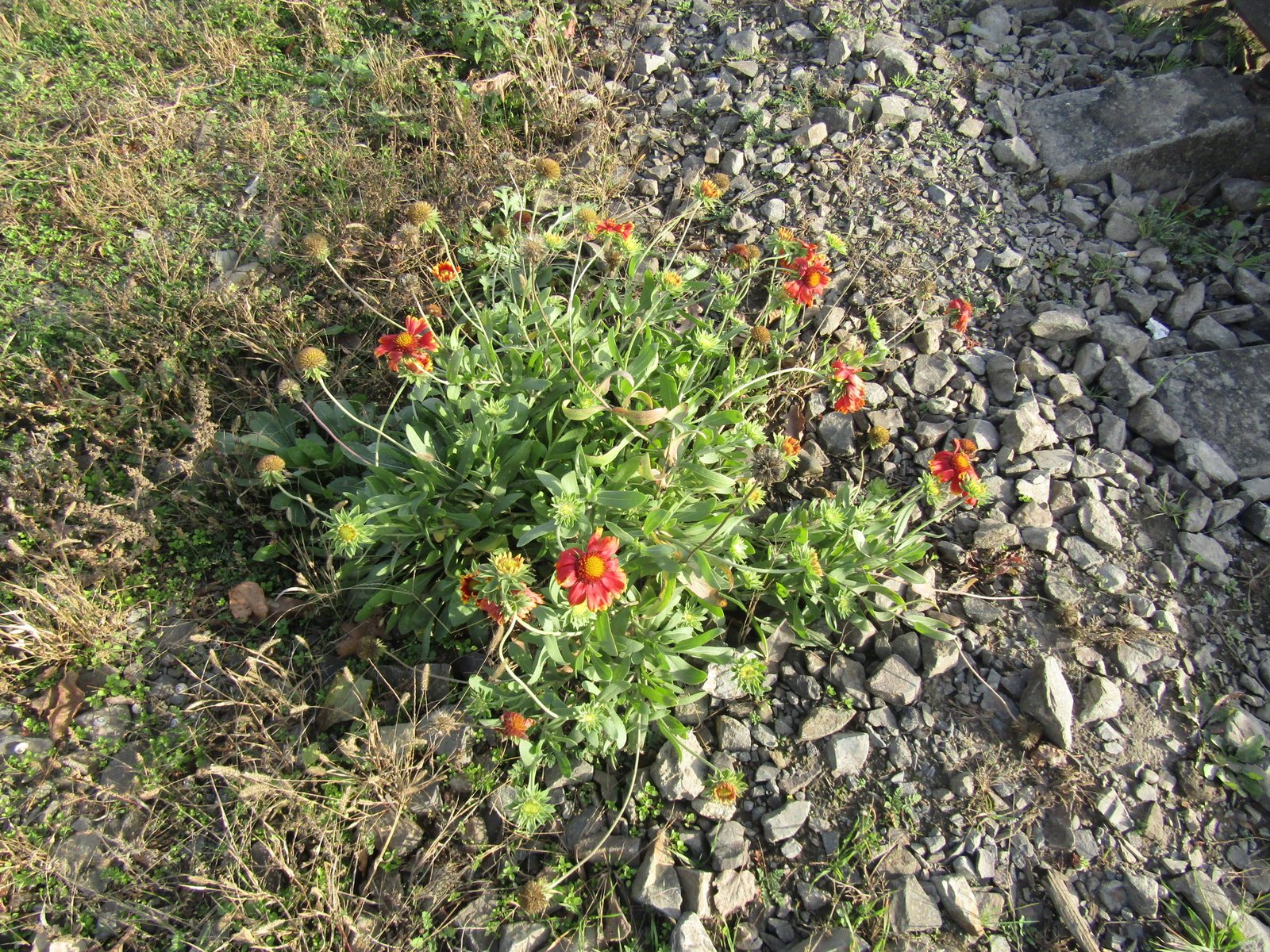
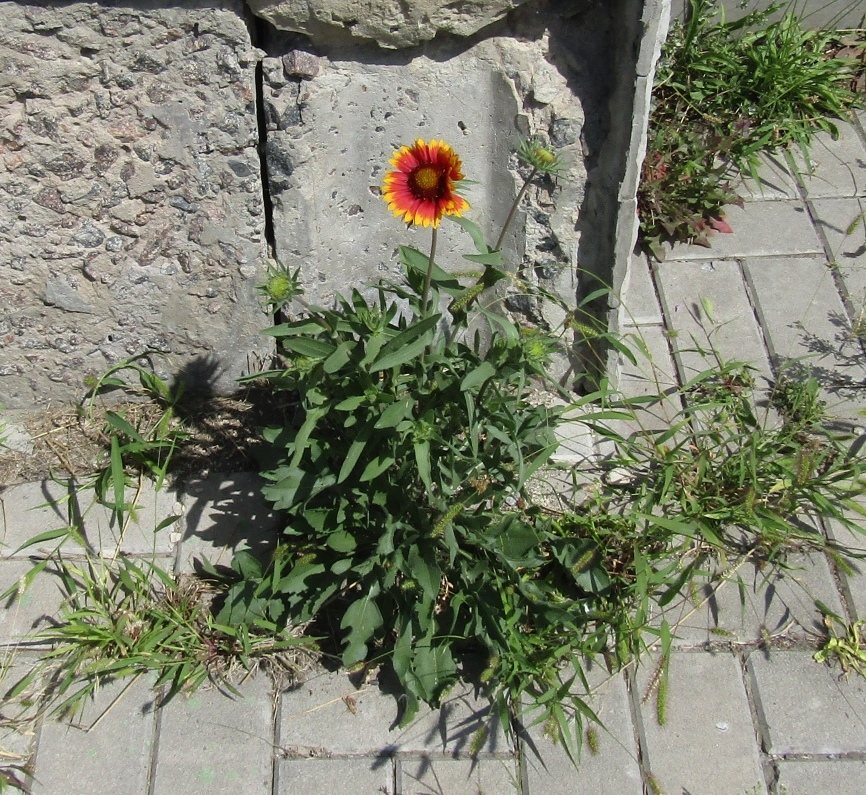
A compact, short-lived perennial with red daisy-like flowers tipped in golden yellow, grown for its long summer display and attraction to pollinators. It suits sunny borders, gravel gardens and containers, but needs excellent drainage, especially through winter.
At a glance
- Sun
- Full sun; flowering and stem strength decline in shade.
- Water
- Water regularly while establishing, then during prolonged dry spells. Let the soil dry between waterings; established plants tolerate drought.
- Soil
- Well-drained sandy, gravelly or loamy soil, preferably of low to moderate fertility. Avoid wet clay and sites that stay damp through winter.
- Height
- 0.75-1 ft (0.23-0.3 m)
- Spread
- 0.75-1 ft (0.23-0.3 m)
- Flowers
- Early summer into autumn, often until frost; brick-red petals with golden-yellow tips around a reddish-brown central disc.
- Foliage
- Hairy, grey-green, lance-shaped leaves, sometimes with shallow lobes, forming a low clump.
- Growth
- Fast; can flower in its first year from an early sowing.
- Care needed
- Low
The year at a glance
- Pollinators
- Deer resistant
- Drought tolerant
- Cold hardy
- Heat tolerant
- Wildlife
| J | F | M | A | M | J | J | A | S | O | N | D | |
|---|---|---|---|---|---|---|---|---|---|---|---|---|
| Flowers | ||||||||||||
| Fruit | ||||||||||||
| Plant |
Northern hemisphere months. In Australia, shift them by six.
- Difficulty
- Easy
- Toughness
- Fairly tough
Will it suit your garden?
Pick your zone, country, light and whether you have pets.
Full sun is 6 or more hours of direct sun a day, part shade 3 to 6 hours, shade under 3.
How it grows
Planting day
0.9 ft (0.27 m)
full size
About 2 years to full size.
From a typical nursery size, at an average rate for this kind of plant. A rule of thumb, not a forecast.
Good to know
- Cats and dogs
- Safe
- Growth rate
- Fast
Care
Jobs through the year
- WaterApr–May, Sep, every 21 days
- Water established plants only if soil is dry; water new plants more often until rooted.
- WaterJun–Aug, every 14 days
- Water established plants deeply during extended drought, allowing soil to dry between waterings.
- MulchApr–May
- Use a light gravel mulch rather than rich or moisture-retentive organic material.
- DivideMar–Apr
- Divide healthy clumps every two to three years if flowering or vigour declines.
- DeadheadJun–Oct, every 7 days
- Remove faded heads for continued bloom, leaving a few late heads for birds if desired.
- PruneOct–Nov
- After the main display, cut spent stems to healthy basal foliage.
- ProtectJan–Feb, Nov–Dec
- Keep wet leaves off the crown and ensure prompt drainage.
- Plant with the crown at soil level in a sunny spot with free drainage.
- Water new plants deeply, then allow the surface soil to dry before watering again.
- Avoid rich compost and heavy feeding; excess fertility encourages floppy growth.
- Keep damp organic mulch away from the crown; a light gravel mulch suits this plant.
- Divide healthy clumps in spring every two or three years if growth or flowering declines.
Pruning. Remove faded flower heads regularly to encourage more blooms. After the main autumn display, cut flowering stems back to the basal foliage, leaving healthy basal leaves intact.
Through the year
- Late winter
- Sow purchased cultivar seed indoors in bright light if you want plants to flower in their first summer.
- Spring
- Remove dead foliage and divide established clumps as new growth begins.
- Late spring
- Plant hardened-off seedlings after severe frost risk has passed, spacing them about 1 ft (0.3 m) apart.
- Summer
- Deadhead regularly and water during extended drought, especially in containers.
- Autumn
- Cut spent flowering stems back to the basal leaves after the main display finishes.
- Winter
- Keep the crown free of wet leaves and check that water drains away promptly.
In the garden
- Edge a sunny border with compact clumps for a long ribbon of red and yellow.
- Plant among gravel with blue fescue and low stonecrops for contrasting textures and drought-tolerant cover.
- Combine with purple-flowered catmint or salvia to balance the warm flower colours.
- Use in containers with drainage holes where its low growth can be seen close up.
- Repeat small groups through a pollinator border to provide summer and autumn flowers.
Garden styles it suits: Cottage garden, Pollinator garden, Dry gravel garden, Desert / xeriscape, Hot border and Low-maintenance.
Plant it with: Catmint, Perennial salvia, Yarrow, Coreopsis, Blue fescue and Low-growing stonecrop.
Wildlife: The flowers provide nectar and pollen for bees and other pollinating insects, and attract butterflies. Seed heads left standing may feed seed-eating birds.
Problems to watch for
- Crown and root rot in wet soil: improve drainage or move plants to a raised bed; discard badly rotted plants.
- Powdery mildew: provide full sun and good spacing, water at soil level and remove badly affected foliage.
- Aphids on young shoots: wash them off with water and encourage ladybirds and other predators.
- Aster yellows, causing green, distorted flowers and stunted growth: remove and discard infected plants; there is no cure.
Safety
Not known to be toxic to cats, dogs, horses or people. The hairy foliage or sap can cause skin irritation in sensitive people; wear gloves if you react to daisy-family plants.
Easily confused with
Annual blanket flower (Gaillardia pulchella)
Its red-and-yellow flowers are very similar, but it is usually taller and looser in growth and normally completes its life cycle in one season; flower colour alone does not distinguish it.
Lanceleaf blanket flower (Gaillardia aristata)
Usually taller and less compact, with larger leaves and flowers that may be yellow or red-and-yellow; 'Arizona Sun' forms a much shorter mound.
Plains coreopsis (Coreopsis tinctoria)
Has finer, divided foliage and usually yellow flowers with a dark red central patch, rather than the broad hairy leaves and predominantly red petals of 'Arizona Sun'.
The name
Gaillardia honours the French botanical patron Gaillard de Charentonneau, and grandiflora means large-flowered.
Propagation. Sow purchased 'Arizona Sun' seed in late winter or spring, or divide healthy clumps in spring. Garden-saved seed may produce plants that differ from the parent, especially where other blanket flowers grow nearby.
Checked against open data
- Accepted botanical name
- Gaillardia grandiflora
Sources: GBIF (CC BY 4.0). The care and design notes are LandscapeGPT's own.
See it in your own yard.
Upload a photo of your yard and see it redesigned with plants that suit your climate, each checked against your zone.