Armenian cranesbill
Geranium psilostemon. Family Geraniaceae. Perennial.
Also called Armenian geranium, Black-eyed cranesbill.
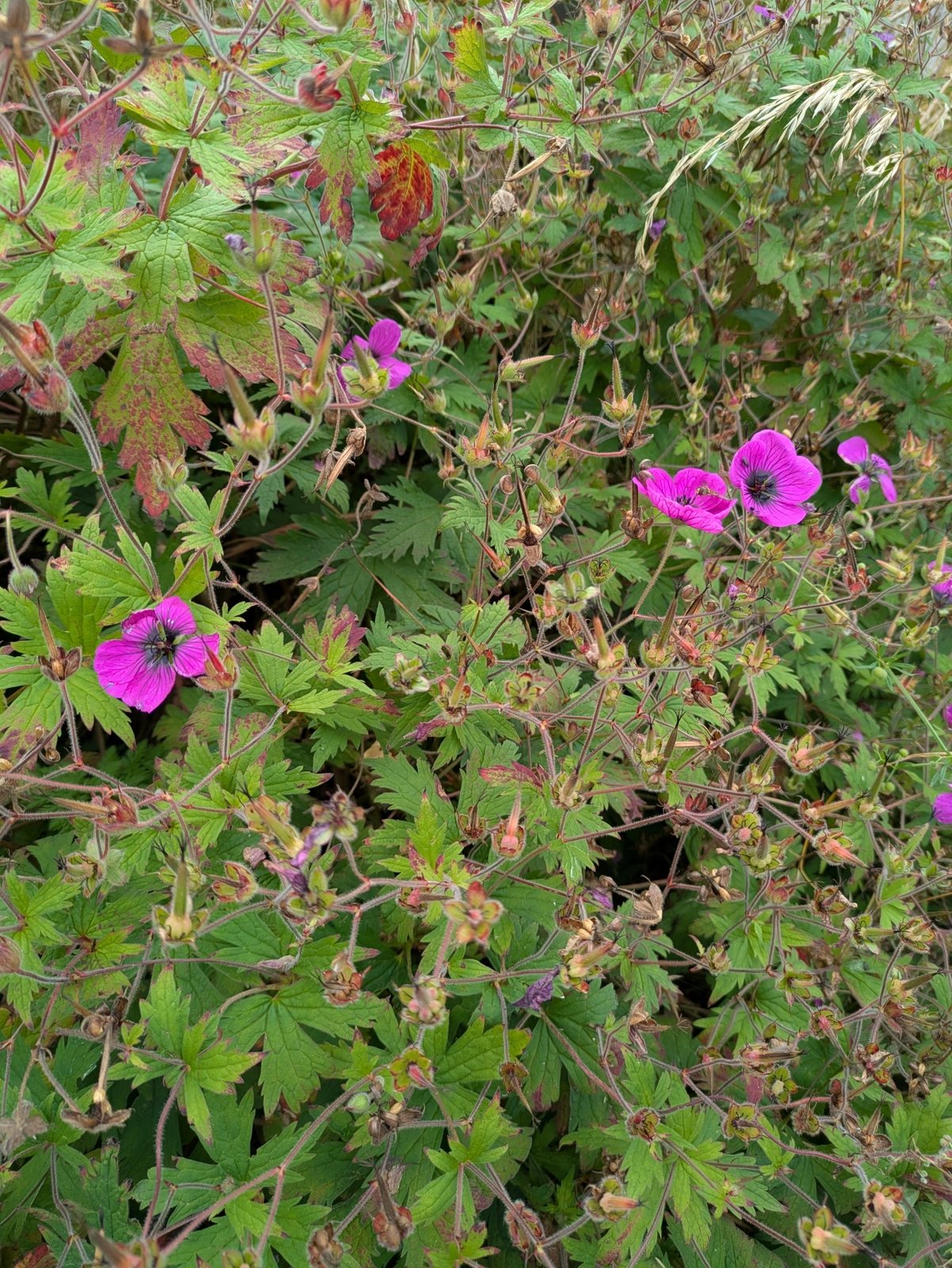
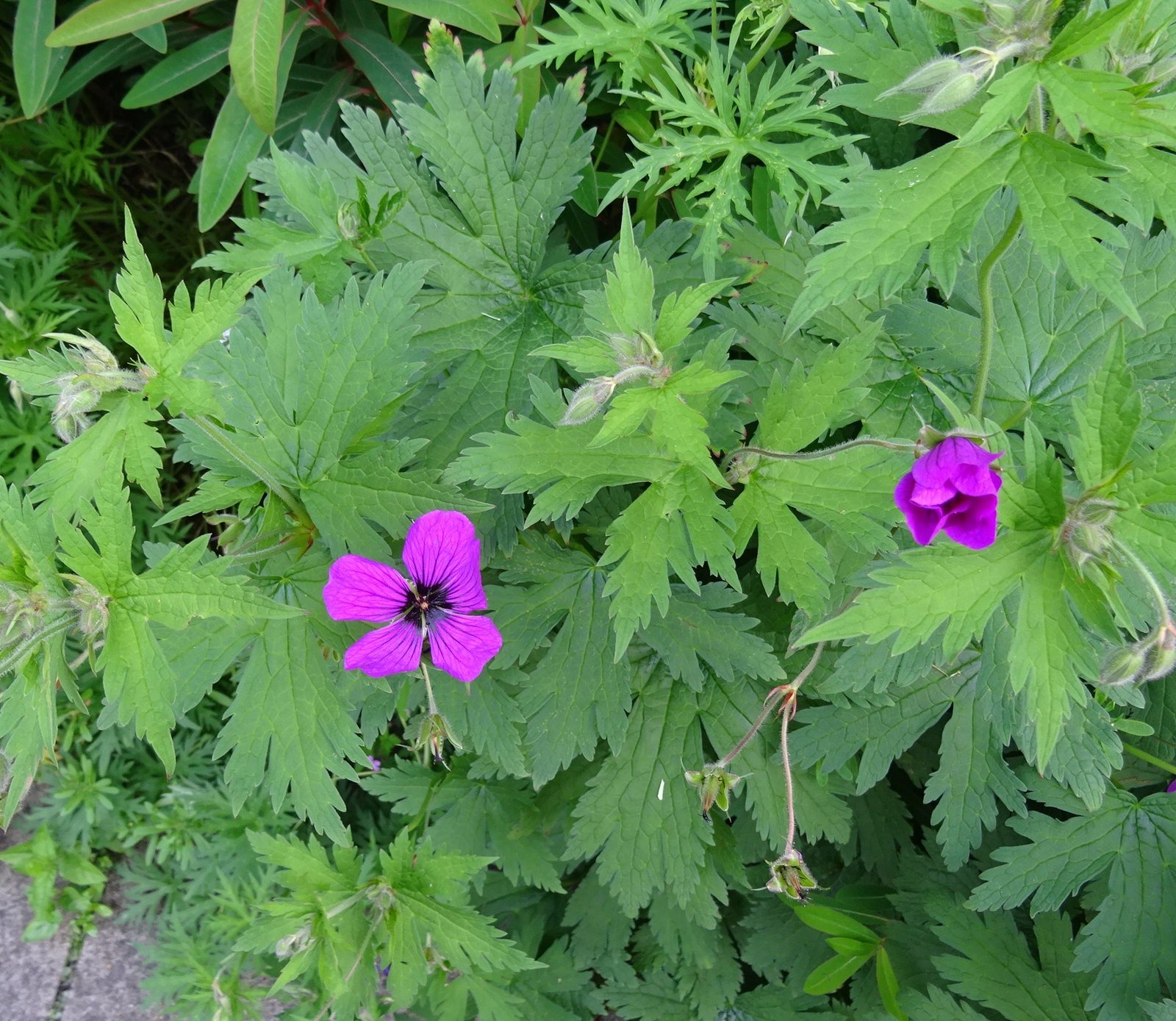
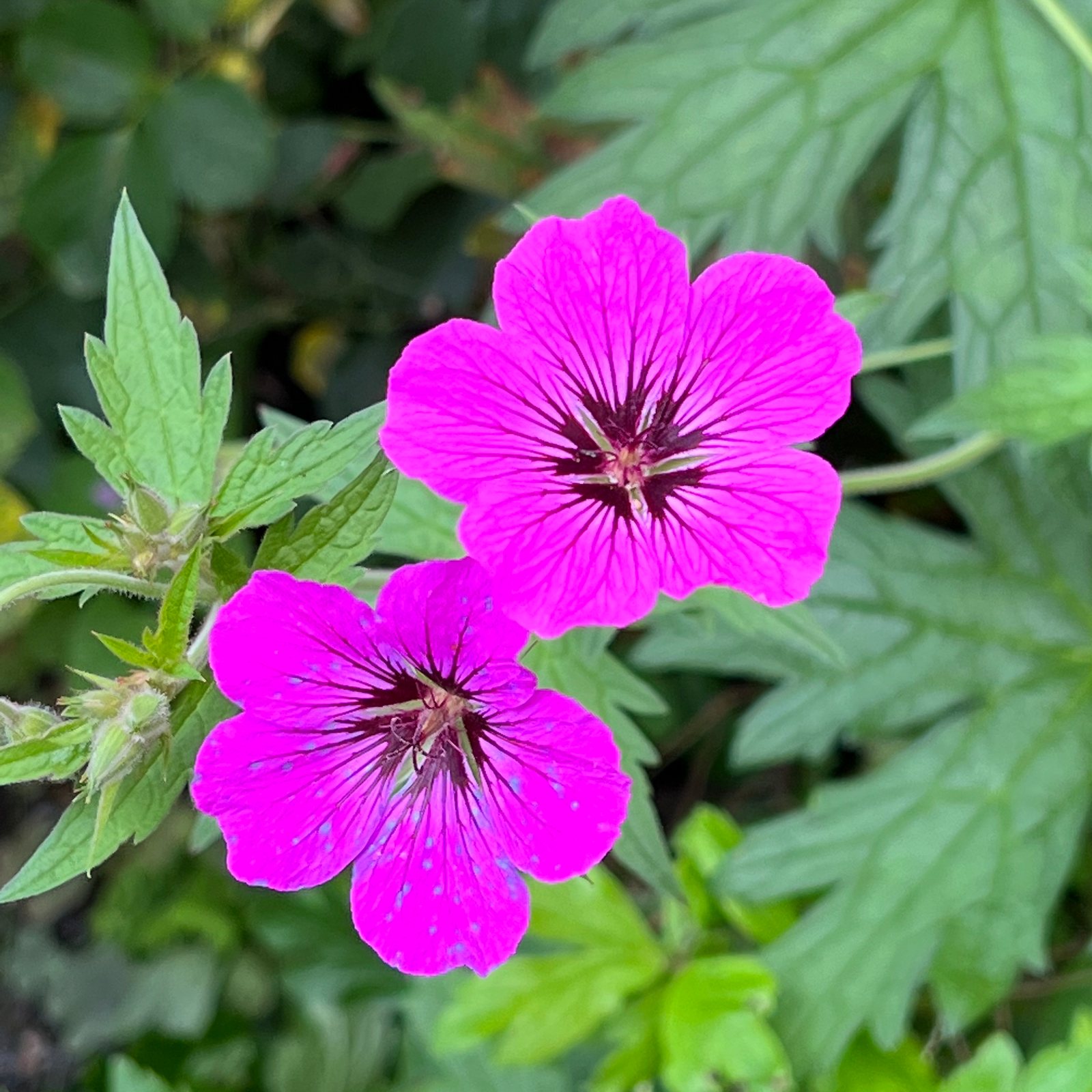
Armenian cranesbill is a tall, clump-forming hardy geranium grown for vivid magenta flowers with black centres above deeply divided leaves. It brings strong colour to summer borders, but needs room and may need support to keep its flowering stems from sprawling.
At a glance
- Sun
- Full sun to partial shade; give afternoon shade in hot climates.
- Water
- Moderate; keep evenly moist while establishing and water during prolonged dry spells. Established plants tolerate brief dry periods but flower best with adequate moisture.
- Soil
- Moderately fertile, moisture-retentive but well-drained soil; tolerates clay, loam and chalk if drainage is adequate.
- Height
- 3-4 ft (0.9-1.2 m)
- Spread
- 2-3 ft (0.6-0.9 m)
- Flowers
- Early to midsummer, sometimes continuing into late summer; bright magenta flowers with black centres and dark veins.
- Foliage
- Large, deeply lobed green leaves form a broad mound; some turn red or orange in autumn before dying back.
- Growth
- Moderate to fast; forms a substantial clump within a few growing seasons.
- Care needed
- Medium
The year at a glance
- Pollinators
- Deer resistant
- Cold hardy
- Low allergen
| J | F | M | A | M | J | J | A | S | O | N | D | |
|---|---|---|---|---|---|---|---|---|---|---|---|---|
| Flowers | ||||||||||||
| Plant |
Northern hemisphere months. In Australia, shift them by six.
- Difficulty
- Moderate
- Toughness
- Fairly tough
Will it suit your garden?
Pick your zone, country, light and whether you have pets.
Full sun is 6 or more hours of direct sun a day, part shade 3 to 6 hours, shade under 3.
How it grows
Planting day
1 ft (0.3 m)
After 1 year
2 ft (0.61 m)
After 2 years
3 ft (0.93 m)
After 3 years
3 ft (1.1 m)
full size
About 2 years to full size.
From a typical nursery size, at an average rate for this kind of plant. A rule of thumb, not a forecast.
Good to know
- Cats and dogs
- Safe
- Growth rate
- Fast
Care
Jobs through the year
- WaterApr–May, Sep–Oct, every 14 days
- Water established clumps if soil is dry; water new plants more frequently.
- WaterJun–Aug, every 7 days
- Soak established clumps during dry spells; young plants need closer moisture checks.
- MulchMar–Apr
- Apply a thin compost mulch, keeping the crown clear and avoiding rich nitrogen feeds.
- DivideMar–Apr, Sep
- Divide congested clumps if growth or flowering declines.
- ProtectApr–May
- Install a plant ring or twiggy supports before stems lengthen; check shoots for slugs.
- PruneFeb–Mar
- Remove dead top growth before new shoots develop.
- PruneJul–Aug
- After the main flush, cut tired growth back to fresh basal leaves and water if dry.
- Water new plants regularly through their first growing season, soaking the root area rather than wetting the leaves.
- Apply a thin layer of compost in spring; avoid heavy nitrogen feeding, which encourages floppy growth.
- Mulch in spring to conserve moisture, keeping mulch away from the crown.
- Put twiggy supports or a plant ring in place before the flowering stems lengthen.
- Divide congested clumps in spring or early autumn if flowering declines.
Pruning. After the main flowering flush, cut spent stems and tired foliage back to fresh basal growth; water if the soil is dry to encourage new leaves and possibly a smaller repeat bloom. Remove dead top growth in late winter or early spring before new shoots develop.
Through the year
- Early spring
- Remove dead stems and divide established clumps if needed.
- Spring
- Plant in prepared soil, water thoroughly and mulch with compost.
- Late spring
- Install discreet supports before stems become tall and tangled.
- Summer
- Water during dry spells and cut back after the main flowering flush if the plant looks untidy.
- Early autumn
- Plant or divide where soil remains warm and moist; allow time for rooting before severe frost.
- Late autumn
- Leave sound dead stems for winter shelter, or remove collapsed foliage if it is smothering nearby plants.
In the garden
- Plant through the middle or back of a mixed border, allowing its flowering stems to mingle with neighbouring perennials.
- Pair with blue salvias or catmint for a strong magenta-and-blue summer combination.
- Use among shrub roses to soften bare lower stems and extend the border's flowering interest.
- Repeat in informal drifts with ornamental grasses, leaving space for its broad leafy clumps.
Garden styles it suits: Cottage garden, English country, Arts and Crafts, New perennial (prairie), Pollinator garden and Romantic rose garden.
Plant it with: Shrub roses, Catmint, Meadow sage, Lady's mantle, Peonies and Feather reed grass.
Wildlife: Open flowers provide pollen and nectar for bees and other visiting insects.
Problems to watch for
- Flopping stems: install supports early and avoid excessive fertiliser; too much shade can also weaken growth.
- Powdery mildew: improve air circulation, water the soil during drought and remove badly affected foliage.
- Slugs and snails on young shoots: check emerging growth and use hand-picking or an approved iron phosphate bait as directed.
- Crown or root rot in wet soil: improve drainage or move the plant; avoid sites that remain waterlogged in winter.
Safety
Not known to be toxic to people, cats, dogs or horses; no part is recognised as a significant poisoning hazard. It is not a food plant. Do not confuse hardy Geranium species with Pelargonium, also commonly called geranium, which can be toxic to pets.
Easily confused with
Ann Folkard geranium (Geranium 'Ann Folkard')
Has similar black-centred magenta flowers, but its young leaves are conspicuously yellow-green and its long stems scramble through neighbouring plants.
Bloody cranesbill (Geranium sanguineum)
Forms a much lower mound with smaller, more finely divided leaves; its flowers lack the conspicuous black centre of Armenian cranesbill.
The name
Geranium comes from the Greek for crane, referring to the beak-shaped fruit, while psilostemon means bare stamen, referring to its hairless staminal filaments.
Propagation. Divide clumps in spring or early autumn, or take basal cuttings in spring. The species can also be raised from seed, though seedlings near other geraniums may be hybrids.
Checked against open data
- Accepted botanical name
- Geranium psilostemon
- Native range
- North Caucasus, Transcaucasus and Turkey.
Sources: GBIF (CC BY 4.0) and Trefle (CC BY 4.0). The care and design notes are LandscapeGPT's own.
See it in your own yard.
Upload a photo of your yard and see it redesigned with plants that suit your climate, each checked against your zone.