Asian pear
Pyrus pyrifolia. Family Rosaceae. Tree.
Also called Nashi pear, Japanese pear, Sand pear, Apple pear.
Asian pear is a deciduous fruit tree grown for crisp, juicy pears that ripen on the tree, usually with a rounded shape and yellow-green or russet skin. White spring blossom and autumn foliage add ornamental value, but reliable cropping needs suitable winter chilling, protection from spring frost and usually a compatible pollination partner.
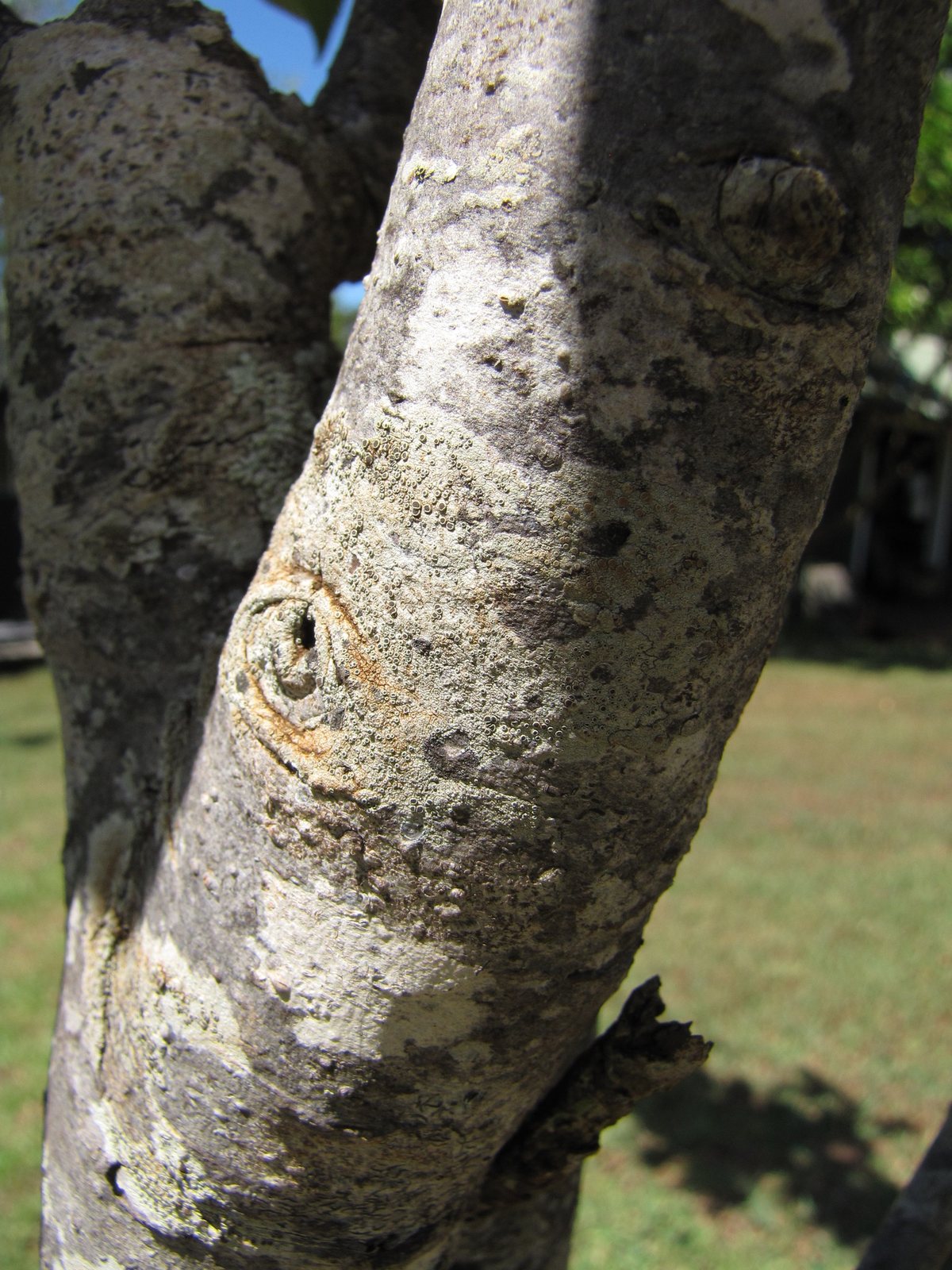
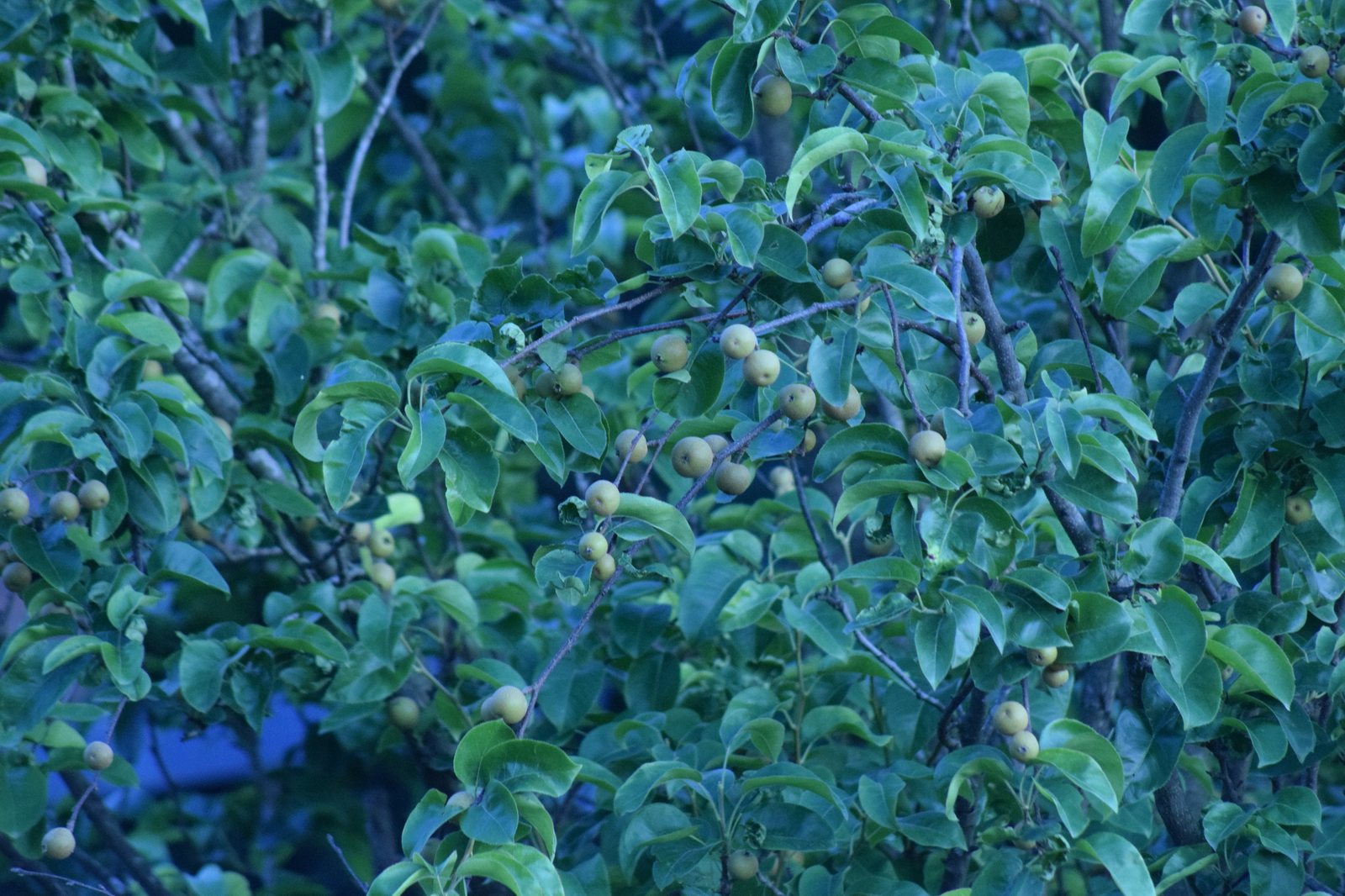
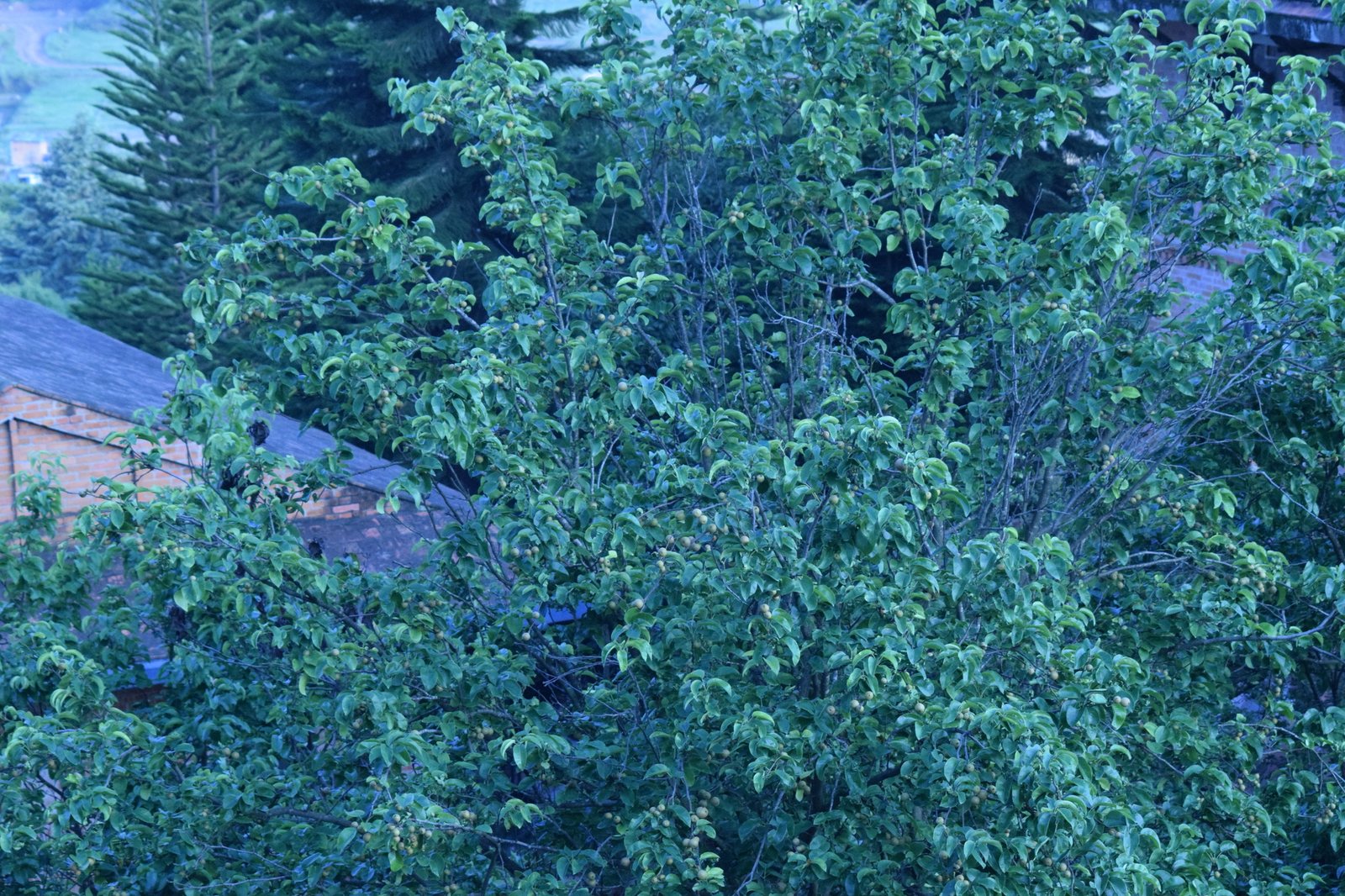
At a glance
- Sun
- Full sun, ideally at least 6-8 hours daily; choose a sheltered position outside frost pockets.
- Water
- Moderate; water deeply during establishment and dry spells, especially while fruit is swelling. Avoid waterlogged soil.
- Soil
- Deep, fertile, well-drained loam is ideal; tolerates some clay if drainage is good. Slightly acidic to neutral soil is preferred.
- Height
- 30-40 ft (9-12 m) on vigorous roots; commonly 10-20 ft (3-6 m) on size-controlling rootstocks with pruning.
- Spread
- 20-30 ft (6-9 m) on vigorous roots; commonly 8-15 ft (2.4-4.6 m) on size-controlling rootstocks.
- Flowers
- White flowers in clusters in spring, often early enough to be vulnerable to frost.
- Foliage
- Glossy green, oval leaves with finely toothed edges; autumn colour ranges from yellow to orange or red.
- Growth
- Moderate.
- Care needed
- High
The year at a glance
- Pollinators
- Heat tolerant
- Wildlife
- Low allergen
- Edible
| J | F | M | A | M | J | J | A | S | O | N | D | |
|---|---|---|---|---|---|---|---|---|---|---|---|---|
| Flowers | ||||||||||||
| Fruit | ||||||||||||
| Plant |
Northern hemisphere months. In Australia, shift them by six.
- Difficulty
- Moderate
- Toughness
- Fairly tough
Will it suit your garden?
Pick your zone, country, light and whether you have pets.
Full sun is 6 or more hours of direct sun a day, part shade 3 to 6 hours, shade under 3.
How it grows
Planting day
7 ft (2 m)
After 1 year
8 ft (2.4 m)
After 2 years
9 ft (2.8 m)
After 3 years
11 ft (3.3 m)
After 5 years
14 ft (4.1 m)
About 20 years to full size.
From a typical nursery size, at an average rate for this kind of plant. A rule of thumb, not a forecast.
Good to know
- Cats and dogs
- Toxic
- Growth rate
- Moderate
Care
Jobs through the year
- WaterApr–May, Oct, every 14 days
- Deep-water during dry spells; young trees need more frequent checks for two years.
- WaterJun–Sep, every 7 days
- Maintain even moisture as fruit swells; omit watering when rainfall is sufficient.
- FeedMar
- Feed modestly only if weak growth or a soil test indicates need.
- MulchMar–Apr
- Renew organic mulch over the root zone, keeping the trunk and graft union clear.
- PruneFeb–Mar
- Prune lightly in dry weather before bud break, retaining fruiting spurs and a balanced framework.
- PruneMay–Jun
- Thin fruit after natural drop to one per cluster, roughly 15 cm apart.
- ProtectMar–Apr
- Fleece small trees on frosty blossom nights, uncovering by day; provide a compatible pollinating pear.
- ProtectJul–Sep
- Support heavily laden branches and use taut wildlife-safe netting if fruit losses require it.
- HarvestAug–Oct, every 7 days
- Taste-test and pick when sweet, juicy and crisp; ripen on the tree rather than waiting for softness.
- ProtectOct–Nov
- Remove fallen and mummified fruit, check ties and fit guards against browsing animals.
- Plant a grafted cultivar suited to your local winter chilling and summer warmth, keeping the graft union above soil level.
- Provide a different, compatible pear cultivar flowering at the same time; even partly self-fertile varieties usually crop better with cross-pollination.
- Water deeply through the first two growing seasons and during prolonged dry weather once established.
- Spread organic mulch over the root zone, keeping it clear of the trunk; feed in spring only if growth or soil testing indicates a need.
- Thin young fruit soon after the natural fruit drop, leaving one fruit per cluster and roughly 6 in (15 cm) between fruits.
- Stake young trees where needed, using flexible ties and checking them regularly; some dwarfing rootstocks need permanent support.
Pruning. In late winter, during dry weather, train a central leader or an open framework suited to the rootstock, removing crossing, damaged and strongly upright shoots. Retain short fruiting spurs and avoid heavy pruning, which encourages excessive leafy growth.
Harvest
Grafted trees usually give their first worthwhile crop about 3-5 years after planting, depending on rootstock and growing conditions. Pick from late summer into autumn when the cultivar's expected skin colour develops and a sample tastes sweet, juicy and crisp; lift and twist gently rather than pulling. Unlike most European pears, these ripen on the tree and should not be left to become soft.
Through the year
- Winter
- Plant bare-root trees when soil is workable and not waterlogged; check rootstock size and pollination compatibility.
- Late winter
- Prune lightly to maintain the framework and remove damaged or crossing branches.
- Spring
- Renew mulch, water if dry and protect blossom on small trees with frost fleece during cold nights; remove it during the day for pollinators.
- Late spring
- Thin fruit after the natural drop and inspect shoots and leaves for pests or disease.
- Summer
- Maintain even soil moisture and support heavily laden branches if necessary.
- Late summer to autumn
- Taste-test and harvest ripe fruit in several passes; collect fallen and damaged fruit.
- Late autumn
- Remove mummified fruit, check tree ties and fit trunk guards where rabbits or other browsing animals are a problem.
In the garden
- Use as a small orchard tree alongside compatible pear cultivars, allowing room for picking and pruning.
- Train on a sunny fence or wire framework as an espalier, using a suitable rootstock to control size.
- Place in an edible lawn or kitchen garden for spring blossom, summer fruit and autumn colour.
- Use a restrained underplanting of low herbs and flowering perennials outside the clear, mulched trunk area.
Garden styles it suits: Backyard orchard, Edible landscape, Potager (kitchen garden), Homestead, Japanese and Family-friendly.
Plant it with: Chives, Thyme, Yarrow, Calendula and Sweet alyssum.
Wildlife: Flowers provide pollen and nectar for bees and other insects. Birds, wasps and mammals may feed on ripe or fallen fruit; use wildlife-safe, taut netting if protection is needed.
Problems to watch for
- Fire blight, where present: blackened blossoms and hooked, dying shoots need prompt attention. Choose locally recommended resistant cultivars, avoid excessive nitrogen and prune infected wood well below visible damage according to local guidance.
- Pear psylla: sap-feeding insects cause sticky honeydew and sooty mould. Inspect young growth, conserve beneficial insects and use a locally approved treatment if infestations persist.
- Codling moth: larvae tunnel into fruit. Remove infested and fallen fruit promptly, use monitoring traps and follow locally timed control advice.
- Poor fruit set: spring frost, inadequate winter chilling or incompatible pollination can prevent cropping. Avoid frost pockets and match both cultivar chilling needs and flowering times to your site.
Safety
The ripe flesh is not known to be toxic to people, cats, dogs or horses. Seeds contain cyanogenic compounds and should not be deliberately eaten or fed to animals; substantial amounts of crushed or chewed seed can cause serious poisoning. Swallowed whole seeds are much less likely to cause poisoning, while whole fruit and cores can be choking hazards.
Easily confused with
European pear (Pyrus communis)
Most cultivars have necked, pear-shaped fruit that is picked mature and ripened off the tree to a softer texture; Asian pears are usually round and remain crisp when ripe.
Callery pear (Pyrus calleryana)
An ornamental pear with small, hard fruits rather than large dessert pears; many forms have a dense upright crown. It is invasive in parts of the United States.
Apple (Malus domestica)
Round Asian pears can resemble apples, but their flesh has the characteristic gritty stone cells of pears; apple flowers also usually show more pink, especially in bud.
The name
Pyrus is the Latin name for pear, and pyrifolia means pear-leaved; nashi is the Japanese word for pear.
Propagation. Usually propagated by budding or grafting named cultivars onto compatible pear rootstocks. Seedlings vary in fruit quality and size, take longer to crop and do not come true to the parent.
Checked against open data
- Accepted botanical name
- Pyrus pyrifolia
- In the US and Canada
- Introduced in the lower 48 states.
- Native range
- China South-Central, China Southeast, Laos and Vietnam.
- Measured
- Average height 1100 cm.
Sources: GBIF (CC BY 4.0), USDA PLANTS and Trefle (CC BY 4.0). The care and design notes are LandscapeGPT's own.
See it in your own yard.
Upload a photo of your yard and see it redesigned with plants that suit your climate, each checked against your zone.