Asiatic jasmine
Trachelospermum asiaticum. Family Apocynaceae. Groundcover.
Also called Asian jasmine, Yellow star jasmine.
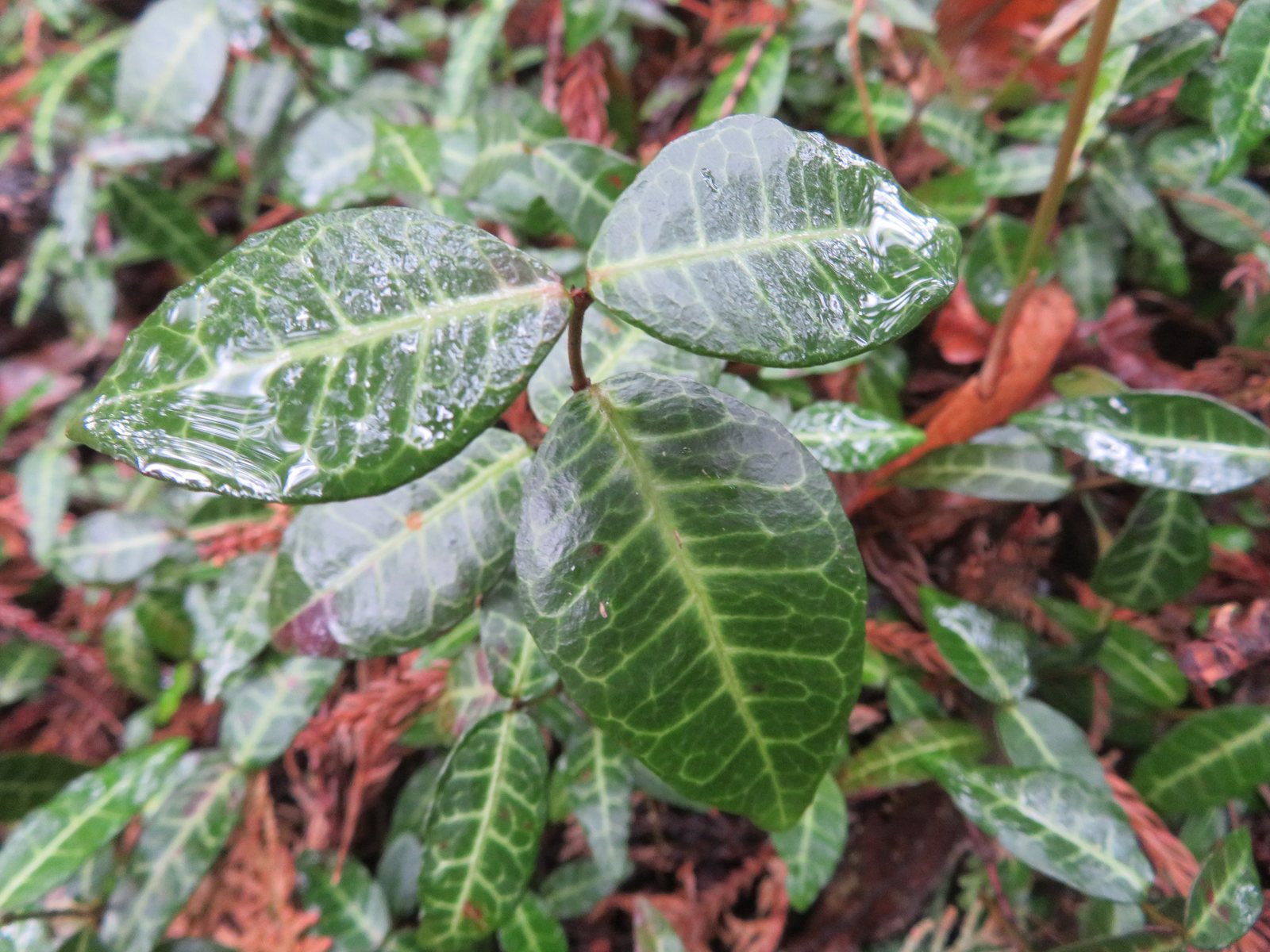
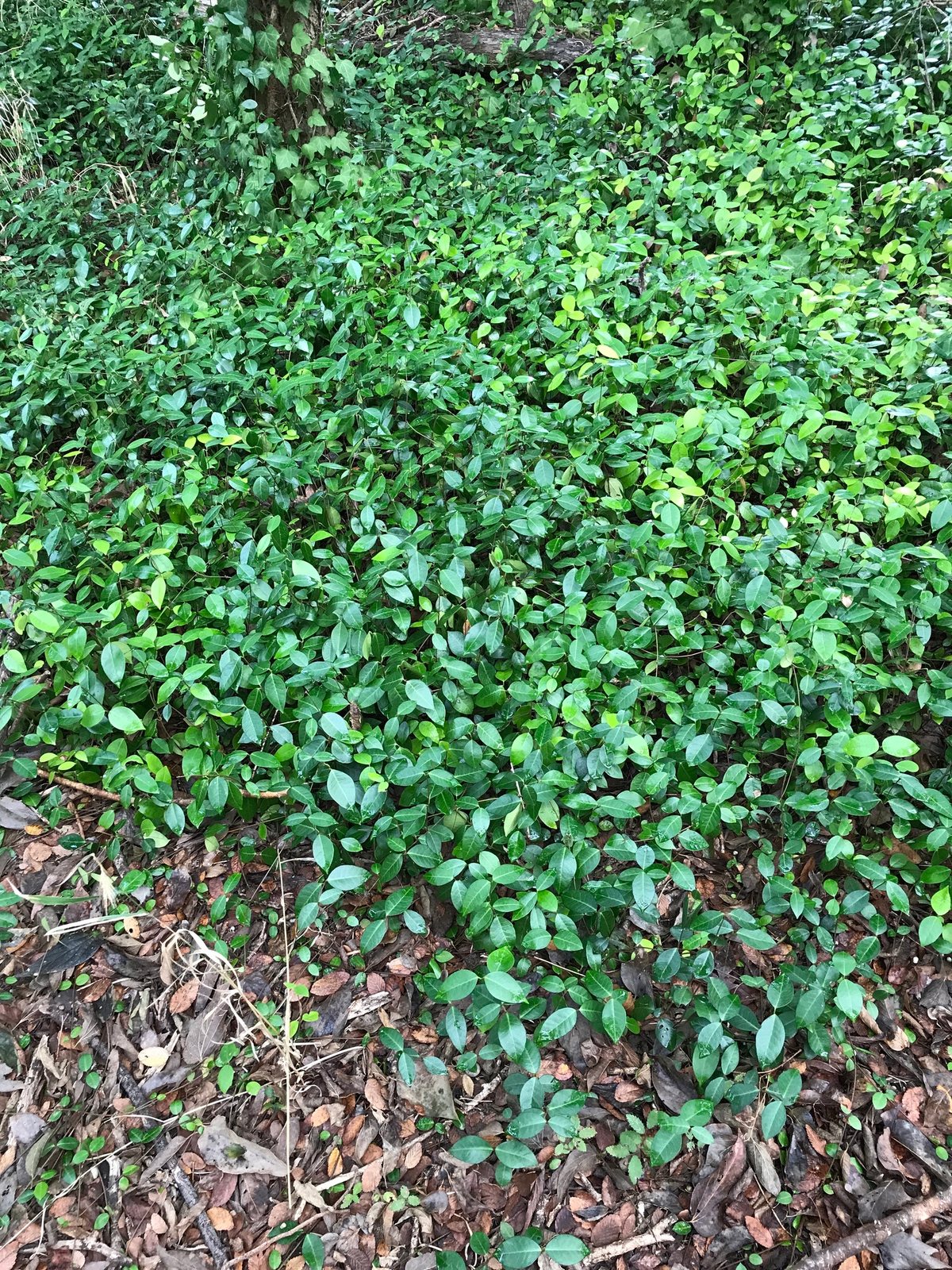
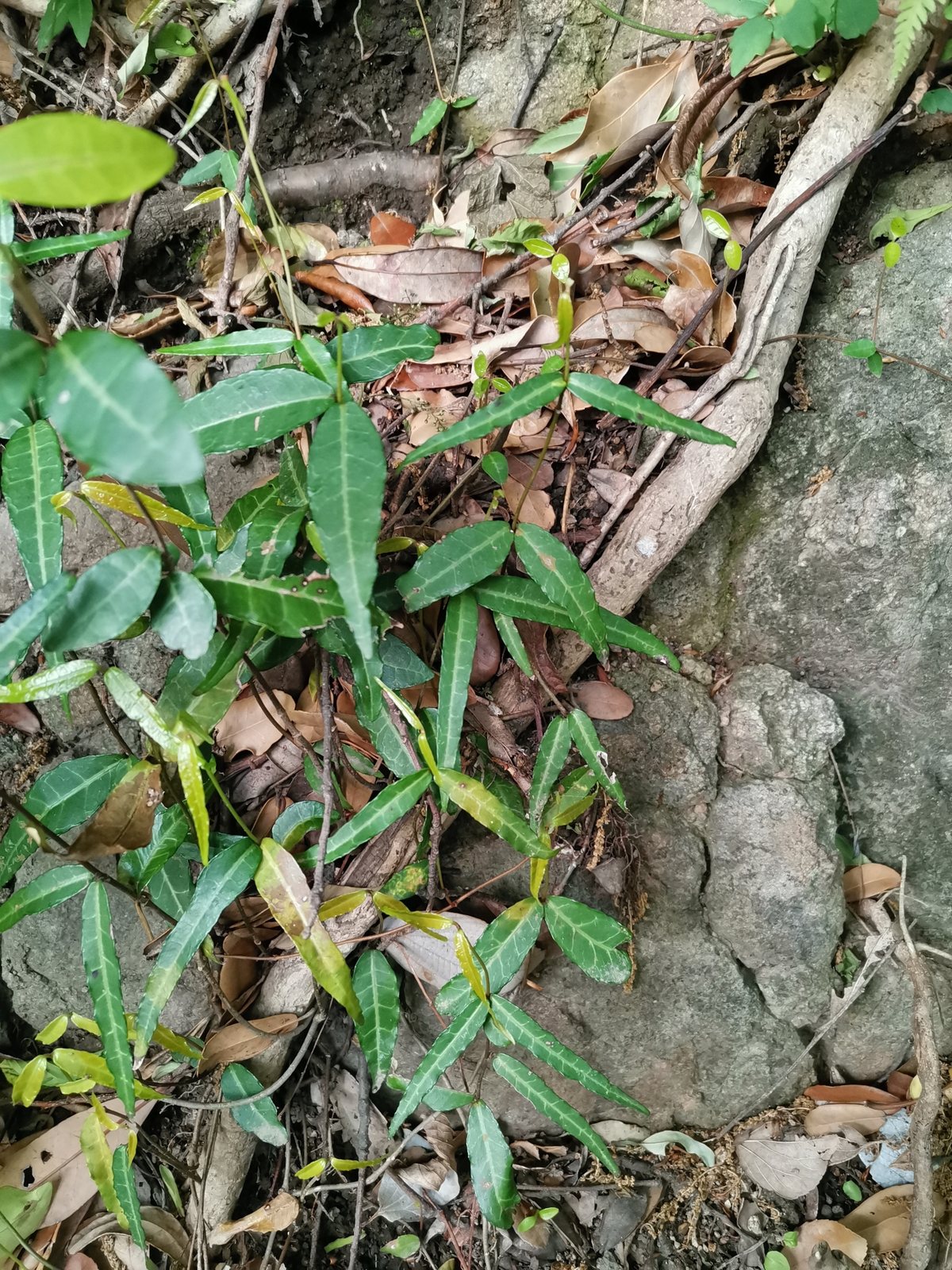
Asiatic jasmine is an evergreen, woody groundcover with trailing stems that root where they touch soil; it can also climb a support. Gardeners grow it mainly for its dense, glossy foliage beneath trees, along banks and in shaded beds, although established climbing plants may produce fragrant flowers.
At a glance
- Sun
- Full sun to shade; partial shade is best in hot, dry gardens. Dense shade reduces flowering.
- Water
- Water regularly while establishing, then during prolonged dry spells. Established plants tolerate some drought but dislike waterlogged soil.
- Soil
- Well-drained soil enriched with organic matter; tolerates clay, loam or sand if drainage is adequate.
- Height
- 6-18 in (0.15-0.45 m) as groundcover; may climb 10-20 ft (3-6 m) with support
- Spread
- 6-10 ft (1.8-3 m) or more through trailing, rooting stems
- Flowers
- Small, fragrant, pinwheel-shaped flowers, creamy white ageing to pale yellow, in late spring and summer. Flowering is often sparse on clipped groundcover and in cool climates.
- Foliage
- Evergreen. Small, opposite, leathery, glossy dark-green leaves; some turn bronze or reddish in cold weather.
- Growth
- Moderate initially, becoming fast once established in warm climates
- Care needed
- Medium
The year at a glance
- Pollinators
- Deer resistant
- Drought tolerant
- Heat tolerant
- Wildlife
- Low allergen
- Fragrant
| J | F | M | A | M | J | J | A | S | O | N | D | |
|---|---|---|---|---|---|---|---|---|---|---|---|---|
| Flowers | ||||||||||||
| Plant |
Northern hemisphere months. In Australia, shift them by six.
- Difficulty
- Moderate
- Toughness
- Fairly tough
Will it suit your garden?
Pick your zone, country, light and whether you have pets.
Full sun is 6 or more hours of direct sun a day, part shade 3 to 6 hours, shade under 3.
How it grows
Planting day
0.2 ft (0.08 m)
After 1 year
0.6 ft (0.19 m)
After 2 years
1 ft (0.3 m)
full size
About 2 years to full size.
From a typical nursery size, at an average rate for this kind of plant. A rule of thumb, not a forecast.
Good to know
- Cats and dogs
- Safe
- In the garden
- Spreads vigorously: plan to contain it.
- Growth rate
- Fast
Care
Jobs through the year
- WaterApr–May, Sep–Oct, every 14 days
- Water established plants during prolonged dry spells; water new plants more frequently.
- WaterJun–Aug, every 10 days
- Water deeply in dry weather, allowing the surface to dry between waterings.
- FeedApr
- Apply a light balanced feed only if growth is weak or soil is poor.
- MulchApr–May
- Mulch between plants without covering stem bases.
- PruneApr–May
- After severe frosts, remove dead stems and lightly trim groundcover.
- PruneJun–Sep, every 30 days
- Lift rooted runners escaping the bed; shorten climbing shoots after flowering.
- ProtectJan–Mar, Nov–Dec
- Shelter from drying winds and fleece during severe freezes; outdoor survival is unreliable in zone 6.
- Water deeply during the first growing season, allowing the surface soil to dry slightly between waterings.
- Mulch between young plants, keeping mulch away from their stem bases.
- Apply a light, balanced fertiliser in spring only if growth is weak or the soil is poor.
- Guide and tie young stems onto a trellis if growing it as a climber.
- Check bed edges regularly and lift rooted runners before they enter lawns or neighbouring beds.
- In colder gardens, choose a sheltered position protected from drying winter winds.
Pruning. Trim groundcover in spring after frost damage is clear, removing dead stems and shortening growth that crosses bed edges. For climbing plants, prune after flowering to shorten wayward shoots and keep the support accessible.
Through the year
- Spring
- Remove winter-damaged growth and lightly trim established groundcover.
- Spring
- Plant in colder regions once severe frosts have passed; water thoroughly and mulch.
- Late spring
- Tie climbing shoots to their support and check that ties are not constricting stems.
- Summer
- Water young plants during dry weather and remove runners spreading beyond the bed.
- Late summer
- Take semi-ripe cuttings from healthy, non-flowering shoots.
- Autumn
- Plant in mild climates while the soil is warm; avoid heavy pruning before winter.
- Winter
- Check container drainage and protect pots from prolonged freezing in colder regions.
In the garden
- Use beneath established trees to form a continuous evergreen carpet where digging space is limited.
- Cover banks with rooted plants to knit the surface together, keeping runners clear of adjoining natural vegetation.
- Edge paths with a clipped band of foliage, allowing enough room to prevent stems becoming a trip hazard.
- Train onto a courtyard trellis or low fence for evergreen cover and occasional fragrant flowers.
- Pair with camellias, ferns and mondo grass for contrasting leaf sizes in a shaded planting.
Garden styles it suits: Japanese, Woodland, Southern, Modern courtyard, Green on green and Formal.
Plant it with: Camellia, Japanese maple, Mondo grass, Lilyturf, Cast-iron plant and Autumn fern.
Wildlife: Flowers provide nectar for visiting insects when present, and dense foliage offers shelter for small animals. Frequently clipped groundcover has limited value for pollinators.
Problems to watch for
- Root rot in wet soil: improve drainage, reduce watering and replace badly affected plants rather than replanting into the same waterlogged conditions.
- Scale insects: inspect stems and leaf undersides; prune heavily infested shoots and use a labelled horticultural oil when appropriate.
- Leaf scorch or winter bronzing: provide shelter, water during dry spells and wait until spring before removing apparently damaged growth.
- Overrunning nearby plants: cut back at the boundary and dig out rooted stems; repeated trimming without removing roots may not stop regrowth.
Safety
Not known to be toxic to cats, dogs, horses or people, but species-specific safety information is limited. Its milky sap may irritate skin or eyes; wear gloves when pruning and do not treat any part as edible.
Where it spreads. Can spread aggressively in gardens in the southeastern United States, including Florida and the Gulf Coast, by rooting along its stems. Keep it away from woodland margins and other natural areas; local invasive status varies.
Easily confused with
Star jasmine (Trachelospermum jasminoides)
Usually has larger leaves and more conspicuous, predominantly white flowers. Asiatic jasmine generally has smaller leaves and flowers that become distinctly creamy yellow; foliage alone can be difficult to distinguish.
Common jasmine (Jasminum officinale)
Has leaves divided into several leaflets and a lighter, more open climbing habit. Asiatic jasmine has simple, leathery leaves and milky sap.
Carolina jessamine (Gelsemium sempervirens)
Produces yellow trumpet-shaped flowers rather than small pinwheel flowers. Carolina jessamine is highly poisonous and should not be confused with Asiatic jasmine.
The name
The epithet asiaticum refers to its Asian origin, while the common name jasmine describes its resemblance and fragrance rather than membership of the true jasmine genus.
Propagation. Root semi-ripe cuttings in summer, or lift and replant rooted runners in spring or autumn. Layering a stem into a pot of compost is another straightforward method.
Checked against open data
- Accepted botanical name
- Trachelospermum asiaticum
- Native range
- Assam, Bangladesh, Borneo, China South-Central, China Southeast, Hainan, India, Japan, Korea, Laos, Malaya and Myanmar.
- Measured
- Average height 1000 cm.
Sources: GBIF (CC BY 4.0) and Trefle (CC BY 4.0). The care and design notes are LandscapeGPT's own.
See it in your own yard.
Upload a photo of your yard and see it redesigned with plants that suit your climate, each checked against your zone.