Asparagus 'Mary Washington'
Asparagus officinalis 'Mary Washington'. Family Asparagaceae. Perennial.
Also called Mary Washington asparagus, Garden asparagus.
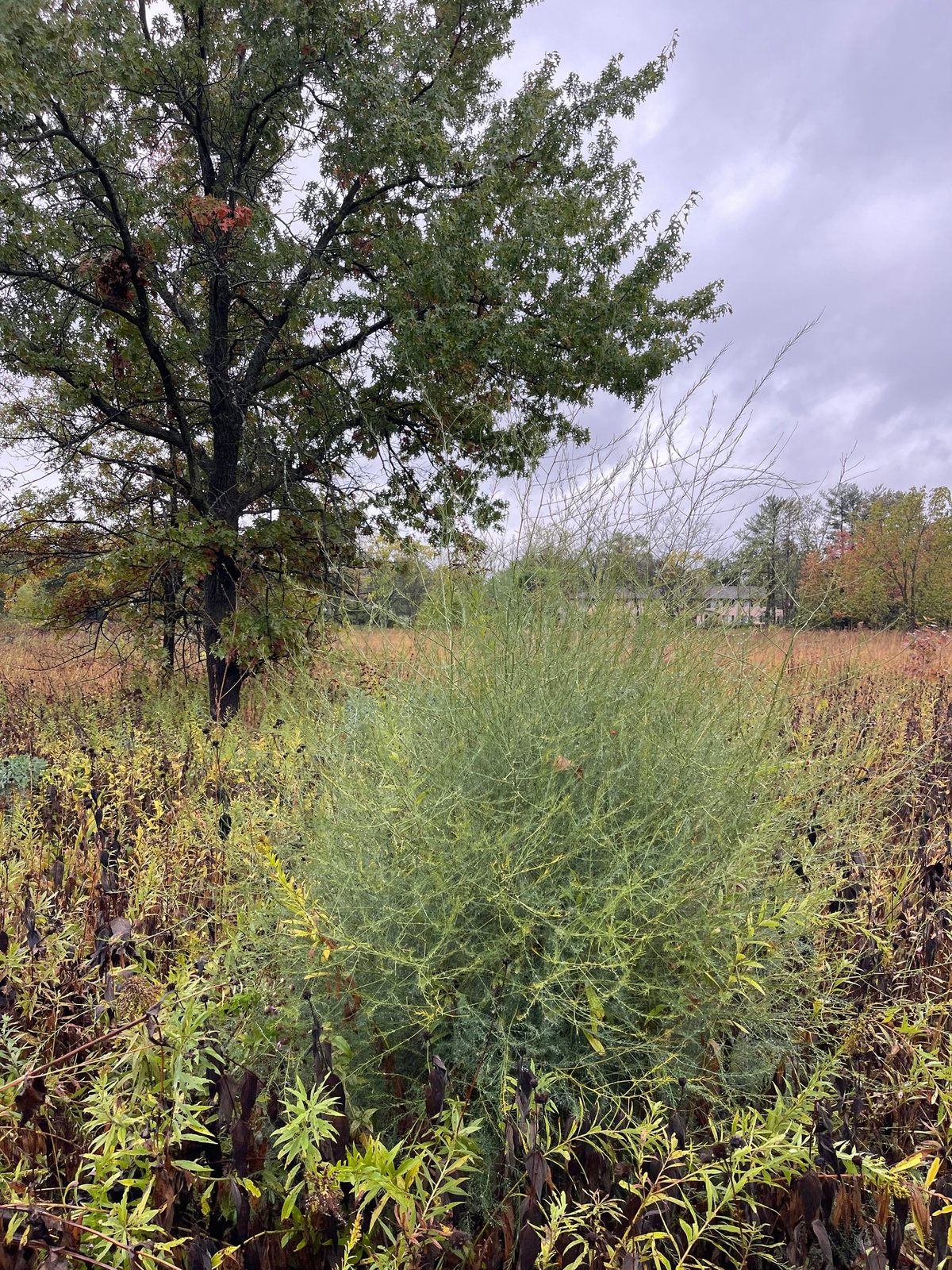
'Mary Washington' is a long-lived asparagus grown for its green spring spears, followed by tall, finely divided summer foliage. This traditional, open-pollinated variety produces both male and female plants and needs a permanent bed with good drainage and several years to establish before regular harvesting.
At a glance
- Sun
- Full sun; light shade is tolerated but usually reduces the crop.
- Water
- Keep evenly moist while establishing and during fern growth. Established plants tolerate brief dry spells, but prolonged drought weakens the following year's crop; avoid waterlogged soil.
- Soil
- Deep, fertile, well-drained soil, ideally pH 6.5-7.5. Use raised beds where winter drainage is poor.
- Height
- 4-5 ft (1.2-1.5 m)
- Spread
- 2-3 ft (0.6-0.9 m)
- Flowers
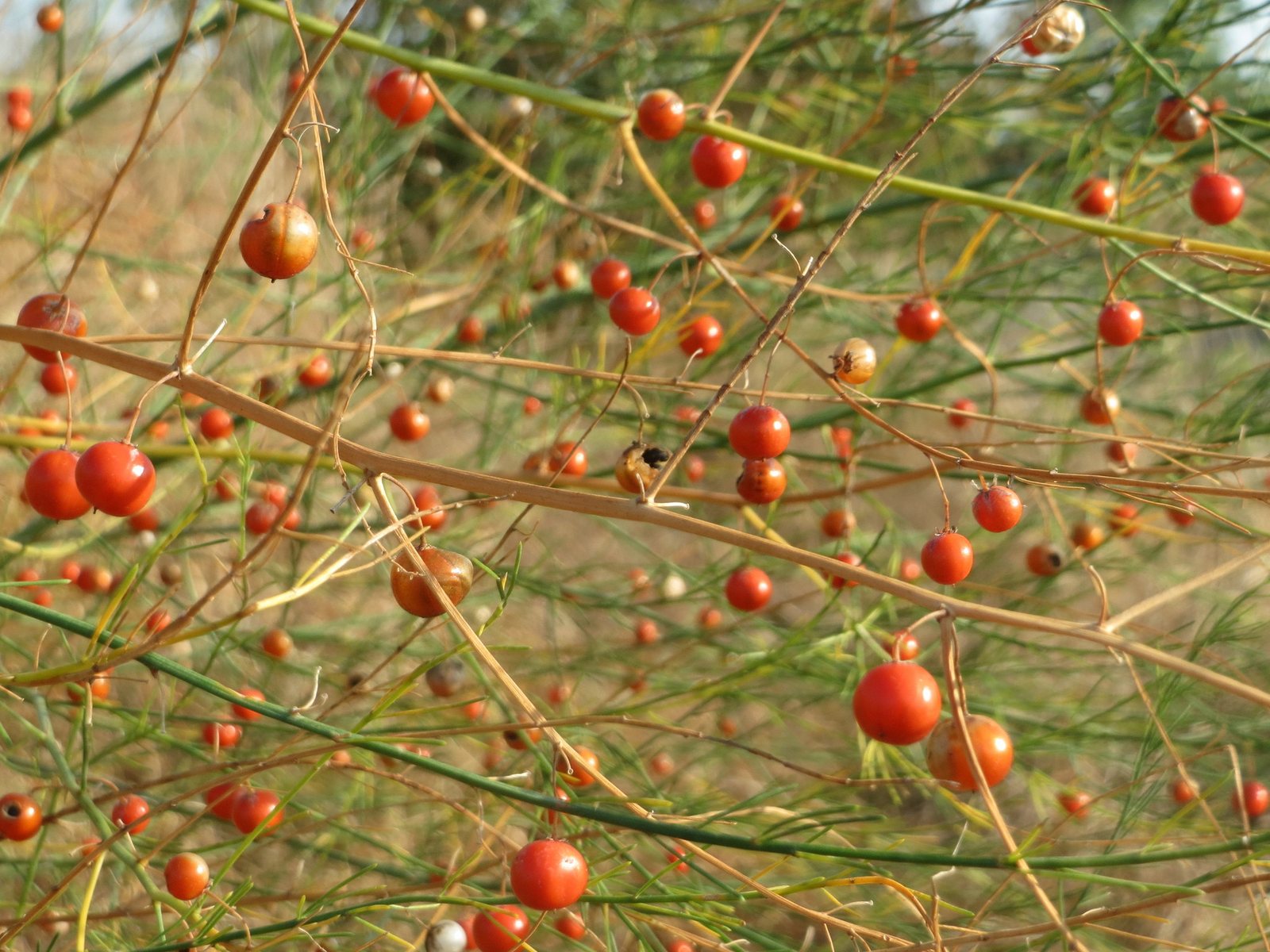
- Late spring to early summer; small, hanging, yellow-green flowers, followed by red berries on female plants.
- Foliage
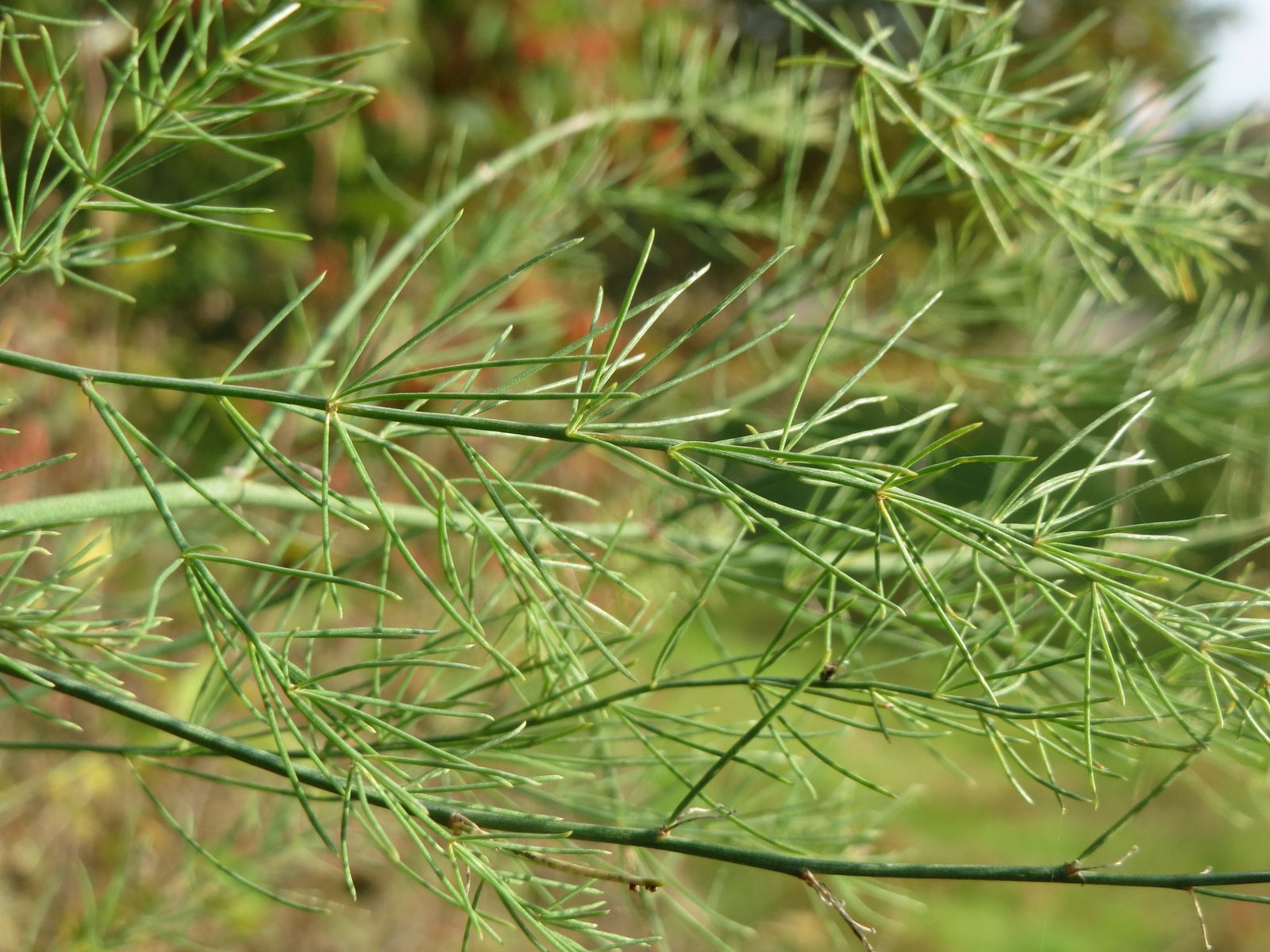
- Upright, branching stems with fine, needle-like green branchlets, turning yellow before dying back in autumn.
- Growth
- Slow to establish; vigorous seasonal growth once established.
- Care needed
- Medium
The year at a glance
- Pollinators
- Cold hardy
- Disease resistant
- Wildlife
- Edible
| J | F | M | A | M | J | J | A | S | O | N | D | |
|---|---|---|---|---|---|---|---|---|---|---|---|---|
| Flowers | ||||||||||||
| Fruit | ||||||||||||
| Plant |
Northern hemisphere months. In Australia, shift them by six.
- Difficulty
- Moderate
- Toughness
- Fairly tough
Will it suit your garden?
Pick your zone, country, light and whether you have pets.
Full sun is 6 or more hours of direct sun a day, part shade 3 to 6 hours, shade under 3.
How it grows
Planting day
1 ft (0.3 m)
After 1 year
2.1 ft (0.65 m)
After 2 years
3 ft (1 m)
After 3 years
4 ft (1.4 m)
full size
About 3 years to full size.
From a typical nursery size, at an average rate for this kind of plant. A rule of thumb, not a forecast.
Good to know
- Cats and dogs
- Mildly toxic: may upset a stomach
- Invasive in
- Australia
- Growth rate
- Moderate
Care
Jobs through the year
- WaterApr–May, Sep, every 14 days
- Deep-water established beds if dry; keep newly planted crowns more consistently moist.
- WaterJun–Aug, every 7 days
- Deep-water during dry weather to sustain fern growth and next year's crop.
- FeedMar–Apr
- Apply a balanced fertiliser as growth begins.
- FeedJun
- Feed again after harvest only if growth is weak.
- MulchMar–Apr
- Add compost or well-rotted manure, leaving emerging shoots clear.
- HarvestApr–Jun
- From the third spring, cut tight-tipped spears 15–20 cm tall for no more than 6–8 weeks.
- ProtectMay–Aug, every 7 days
- Hand-pick asparagus beetles and larvae; support tall fern in windy sites.
- PruneNov–Dec
- Cut fully yellowed fern near ground level and remove debris; leave green fern intact.
- Plant dormant crowns in early spring, spacing them 12-18 in (30-45 cm) apart in a permanent, weed-free bed.
- Water deeply during dry weather, especially while plants establish and after harvesting ends.
- Apply compost and a balanced fertiliser in early spring; feed again after the harvest if growth is weak.
- Mulch with compost or well-rotted manure, keeping the emerging shoots clear.
- Remove weeds by hand or hoe shallowly to avoid damaging the crowns and fleshy roots.
- Support the summer foliage with stakes and string in windy gardens, and remove unwanted seedlings.
Pruning. Leave all green fern growth intact after harvesting so it can replenish the crowns. Once the stems have yellowed and died in late autumn or winter, cut them close to ground level and remove the debris.
Harvest
Allow two full growing seasons without harvesting after planting crowns; seed-grown plants may need an additional year. From the third spring, cut or snap firm spears when they are 6-8 in (15-20 cm) tall and their tips are still tightly closed. Harvest established beds for about 6-8 weeks, stopping sooner if most new spears are thinner than a pencil, then let all shoots develop into fern.
Through the year
- Late winter
- Prepare a sunny, well-drained planting bed and remove perennial weeds.
- Early spring
- Plant dormant crowns, feed established beds and renew the compost mulch.
- Spring
- Harvest suitable established plants frequently while spear tips remain tightly closed.
- Early summer
- End harvesting and allow every remaining shoot to develop into fern.
- Summer
- Water during dry spells, support tall stems and inspect for asparagus beetles where present.
- Late autumn
- Cut down fully yellowed stems, clear debris and remove unwanted berry-bearing stems before seeds spread.
In the garden
- Give it a permanent row along the sunny edge of a vegetable garden, away from beds that are dug annually.
- Use its tall summer fern as a light, airy backdrop to lower vegetables and edible flowers.
- Plant in a dedicated raised bed where heavy soil would otherwise keep crowns too wet.
- Include in a spacious potager, with paths that allow easy harvesting without stepping on the crowns.
Garden styles it suits: Potager (kitchen garden), Edible landscape, Homestead, Cottage garden, Farmhouse and Traditional.
Plant it with: Parsley, Chives, Calendula, Sweet alyssum and Nasturtium.
Wildlife: The small flowers attract bees and other insects. Birds may eat the berries and spread seed beyond the garden.
Problems to watch for
- Asparagus beetles, where present: inspect shoots and fern for beetles, eggs and larvae; hand-pick them and remove dead stems after dieback.
- Fusarium crown and root rot: avoid poorly drained ground and stressed plants; remove declining crowns and establish a replacement bed elsewhere.
- Asparagus rust: remove affected debris, allow good airflow and avoid wetting the foliage when watering. 'Mary Washington' has some resistance, but it is not immune.
- Thin spears and weak growth: stop harvesting, control weeds, water during drought and allow a full season of healthy fern growth; divide only if a mature clump is genuinely overcrowded.
Safety
Young spears are edible for people. The red berries are mildly poisonous and can cause vomiting, abdominal pain or diarrhoea if eaten by people, cats or dogs; sap may irritate sensitive skin. Toxicity to horses is not well established, so do not offer berries or garden trimmings as feed.
Where it spreads. Can escape by seed and establish outside gardens. It is regarded as an environmental weed in parts of Australia, including Victoria and South Australia; remove berries and check local weed guidance before planting near native vegetation.
Easily confused with
Asparagus fern (Asparagus setaceus)
A climbing or scrambling ornamental with flattened, lace-like sprays and dark berries, rather than upright edible spears and red berries.
Foxtail asparagus fern (Asparagus densiflorus)
Forms dense, arching or upright plumes of foliage and is usually evergreen in frost-free conditions; garden asparagus has taller, open, seasonally dying stems.
Horsetail (Equisetum arvense)
Has distinctly jointed, ridged stems with branches arranged in regular whorls; it has no flowers or berries and spreads through persistent underground rhizomes.
The name
Asparagus comes through Latin from the Greek word for asparagus, while officinalis indicates a plant historically associated with medicinal use.
Propagation. Grow from seed sown in spring, or plant purchased dormant crowns. Seedlings vary because this is an open-pollinated variety. Established crowns can be divided while dormant, but division damages roots and delays cropping.
Checked against open data
- Accepted botanical name
- Asparagus officinalis
- In the US and Canada
- Introduced in Canada, the lower 48 states and St. Pierre and Miquelon.
- Native range
- Afghanistan, Albania, Altay, Austria, Belarus, Bulgaria, Central European Rus, Corse, Czechoslovakia, France, Germany and Greece.
- Measured
- Soil pH 7 to 7.5. Average height 90 cm.
Sources: GBIF (CC BY 4.0), USDA PLANTS and Trefle (CC BY 4.0). The care and design notes are LandscapeGPT's own.
See it in your own yard.
Upload a photo of your yard and see it redesigned with plants that suit your climate, each checked against your zone.