Aster 'Mönch'
Aster × frikartii 'Mönch'. Family Asteraceae. Perennial.
Also called Frikart's aster 'Mönch', Aster × frikartii 'Mönch', Aster 'Monch'.
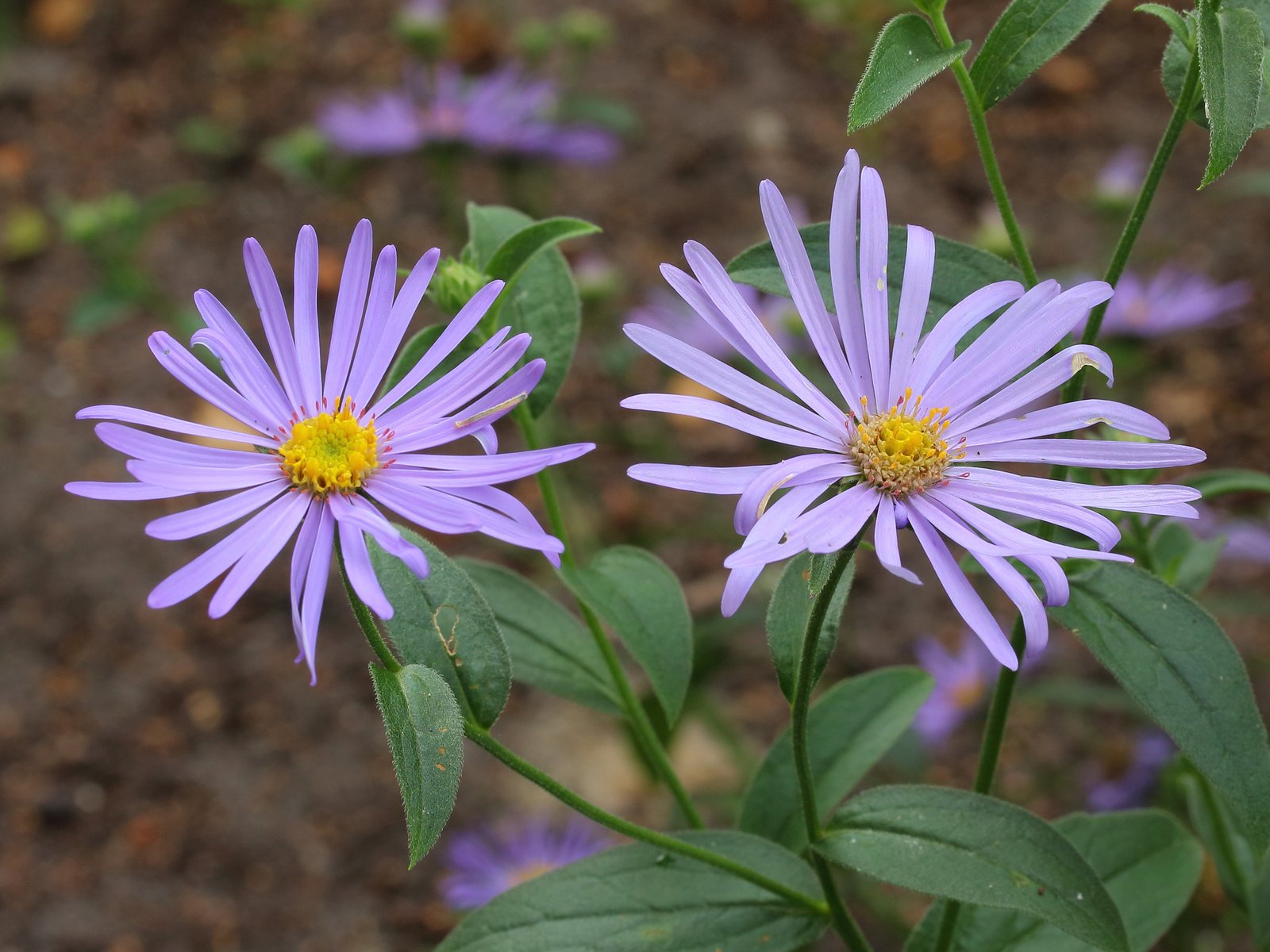
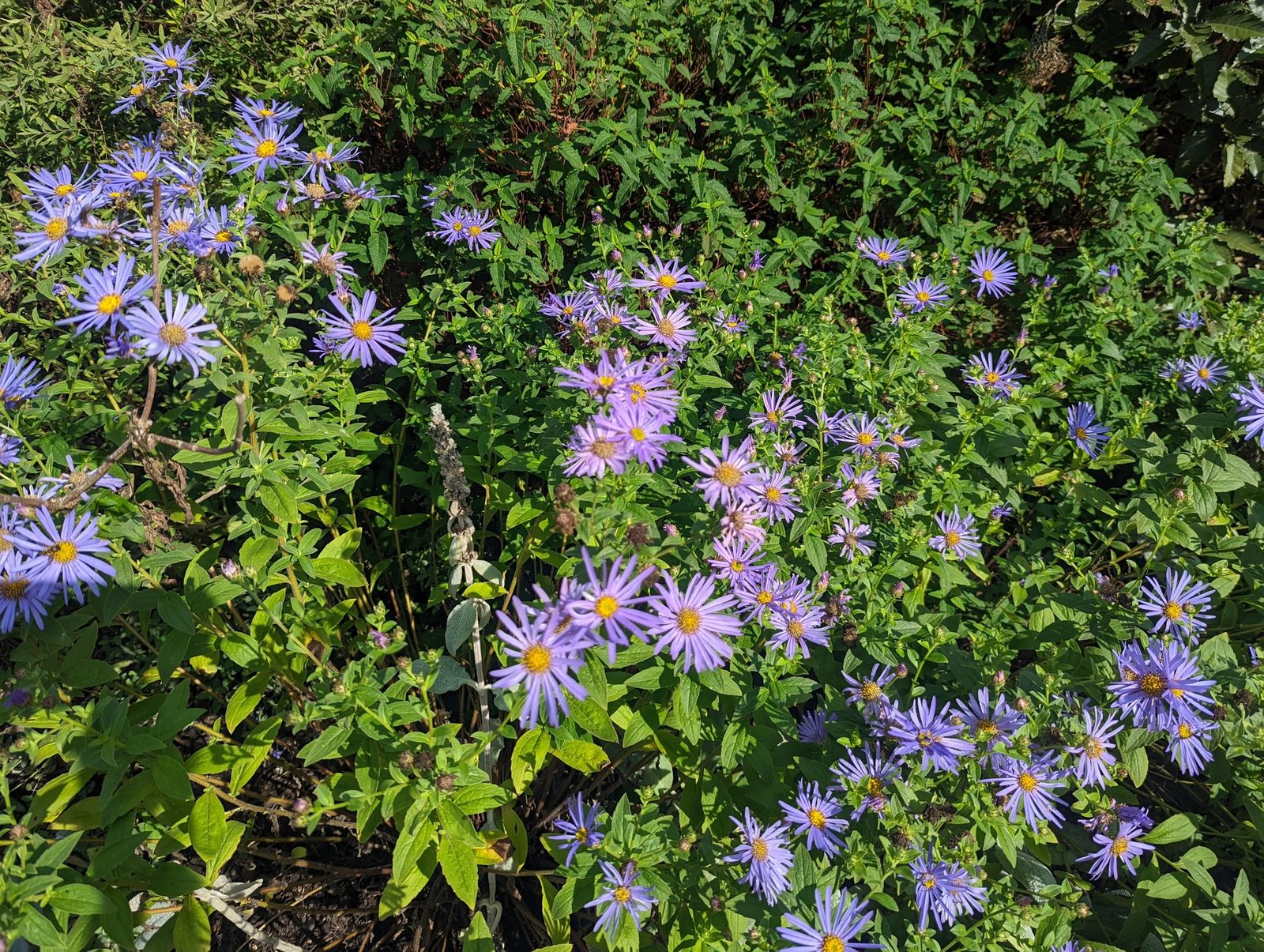
Aster 'Mönch' is a clump-forming perennial grown for its long display of lavender-blue daisies with golden-yellow centres. It flowers from midsummer into autumn, attracting pollinators, and is generally less troubled by powdery mildew than many autumn-flowering asters.
At a glance
- Sun
- Full sun; tolerates light shade but may flower less and lean.
- Water
- Moderate; water during establishment and prolonged dry spells. Avoid persistently wet soil, especially in winter.
- Soil
- Well-drained, moderately fertile soil; tolerates chalk and a range of soil pH. Improve drainage in heavy clay before planting.
- Height
- 2-3 ft (0.6-0.9 m)
- Spread
- 1.5-2 ft (0.45-0.6 m)
- Flowers
- Midsummer to autumn; lavender-blue daisy flowers with golden-yellow centres.
- Foliage
- Green, slightly rough, lance-shaped leaves on branching stems; dies back in winter.
- Growth
- Moderate
- Care needed
- Low
The year at a glance
- Pollinators
- Heat tolerant
- Disease resistant
| J | F | M | A | M | J | J | A | S | O | N | D | |
|---|---|---|---|---|---|---|---|---|---|---|---|---|
| Flowers | ||||||||||||
| Plant |
Northern hemisphere months. In Australia, shift them by six.
- Difficulty
- Easy
- Toughness
- Fairly tough
Will it suit your garden?
Pick your zone, country, light and whether you have pets.
Full sun is 6 or more hours of direct sun a day, part shade 3 to 6 hours, shade under 3.
How it grows
Planting day
1 ft (0.3 m)
After 1 year
1.5 ft (0.45 m)
After 2 years
2 ft (0.6 m)
After 3 years
2.5 ft (0.75 m)
full size
About 3 years to full size.
From a typical nursery size, at an average rate for this kind of plant. A rule of thumb, not a forecast.
Good to know
- Cats and dogs
- Safe
- Growth rate
- Moderate
Care
Jobs through the year
- WaterApr–May, Sep–Oct, every 14 days
- Water established plants deeply only in dry spells; water new plants more often.
- WaterJun–Aug, every 7 days
- Water established plants deeply during prolonged drought; avoid saturated soil.
- PruneFeb–Mar
- Cut dead stems just above ground before new shoots lengthen.
- MulchApr
- Apply a thin compost layer, keeping the crown clear; avoid rich feeding.
- DivideMar–Apr
- Divide congested clumps every three to four years if flowering declines.
- ProtectApr–May
- Install low supports if exposed and protect emerging shoots from slugs if needed.
- DeadheadJul–Oct, every 14 days
- Snip off faded flowers if a tidier display is wanted.
- ProtectJan–Feb, Nov–Dec
- Keep wet debris off the crown and prevent winter waterlogging.
- Water deeply during the first growing season, then during prolonged dry weather.
- Apply a thin layer of compost in spring; avoid heavy feeding, which encourages floppy stems.
- Keep mulch clear of the crown and prevent winter waterlogging.
- Fit a low support in spring if the site is exposed or the soil is rich.
- Divide congested clumps in spring when flowering declines, usually every three to four years.
Pruning. Cut dead stems to just above ground level in late winter or early spring before new shoots lengthen. Snip off spent flowers during the growing season if you want a tidier display.
Through the year
- Late winter
- Cut down dead stems before new growth starts.
- Spring
- Plant or divide clumps once the soil is workable, keeping the crown at soil level.
- Mid-spring
- Apply a thin compost mulch and install discreet supports where needed.
- Summer
- Water during prolonged dry spells, directing water to the soil rather than the leaves.
- Midsummer to autumn
- Remove faded flowers if desired and check young growth for slugs and snails.
- Late autumn
- Leave stems standing if you like their winter structure, and check that water drains away from the crown.
In the garden
- Plant in repeated groups through the middle of a sunny mixed border for a long ribbon of lavender-blue.
- Combine with feather reed grass and stonecrop for contrasting flower shapes and late-season structure.
- Pair with yellow yarrow or coneflowers for a clear blue-and-yellow summer scheme.
- Use beside a sunny path or seating area where its flowers and visiting pollinators can be seen closely.
Garden styles it suits: English country, Cottage garden, New perennial (prairie), Pollinator garden, Blues and silvers and Dry gravel garden.
Plant it with: Feather reed grass, Stonecrop, Yarrow, Purple coneflower, Russian sage and Meadow sage.
Wildlife: The open flowers provide nectar and pollen for bees, butterflies and other flower-visiting insects over a long season.
Problems to watch for
- Crown or root rot in wet soil: improve drainage or move the plant to a raised bed; keep winter mulch away from the crown.
- Slugs and snails eating emerging shoots: inspect at dusk, remove pests and use labelled wildlife-conscious controls if necessary.
- Powdery mildew, although relatively uncommon on this cultivar: provide sun and airflow, water during drought and remove badly affected leaves.
- Flopping stems in shade or rich soil: move to a sunnier position, reduce feeding and add a low support early in the season.
Safety
Not known to be toxic to people, cats, dogs or horses. No part is recognised as poisonous, but it is an ornamental plant rather than a food plant.
Easily confused with
Italian aster (Aster amellus)
One of its parent species; usually forms a shorter, more compact plant with a more concentrated late-summer flowering period. Named cultivars can be difficult to distinguish without a label.
New York aster (Symphyotrichum novi-belgii)
Typically flowers later and has smoother leaves whose bases clasp the stems; many forms spread more vigorously than the clump-forming 'Mönch'.
New England aster (Symphyotrichum novae-angliae)
Usually taller, with conspicuously hairy stems and clasping leaves, and generally flowers later in the season.
The name
Aster comes from the Greek for 'star', referring to the flowers, while frikartii honours the Swiss breeder Frikart and 'Mönch' names a Swiss mountain.
Propagation. Divide established clumps in spring or take basal cuttings from young spring shoots. Seed will not reliably reproduce the named cultivar.
Checked against open data
- Accepted botanical name
- Aster frikartii
Sources: GBIF (CC BY 4.0). The care and design notes are LandscapeGPT's own.
See it in your own yard.
Upload a photo of your yard and see it redesigned with plants that suit your climate, each checked against your zone.