Auricula
Primula auricula. Family Primulaceae. Perennial.
Also called Bear's ear, Alpine auricula.
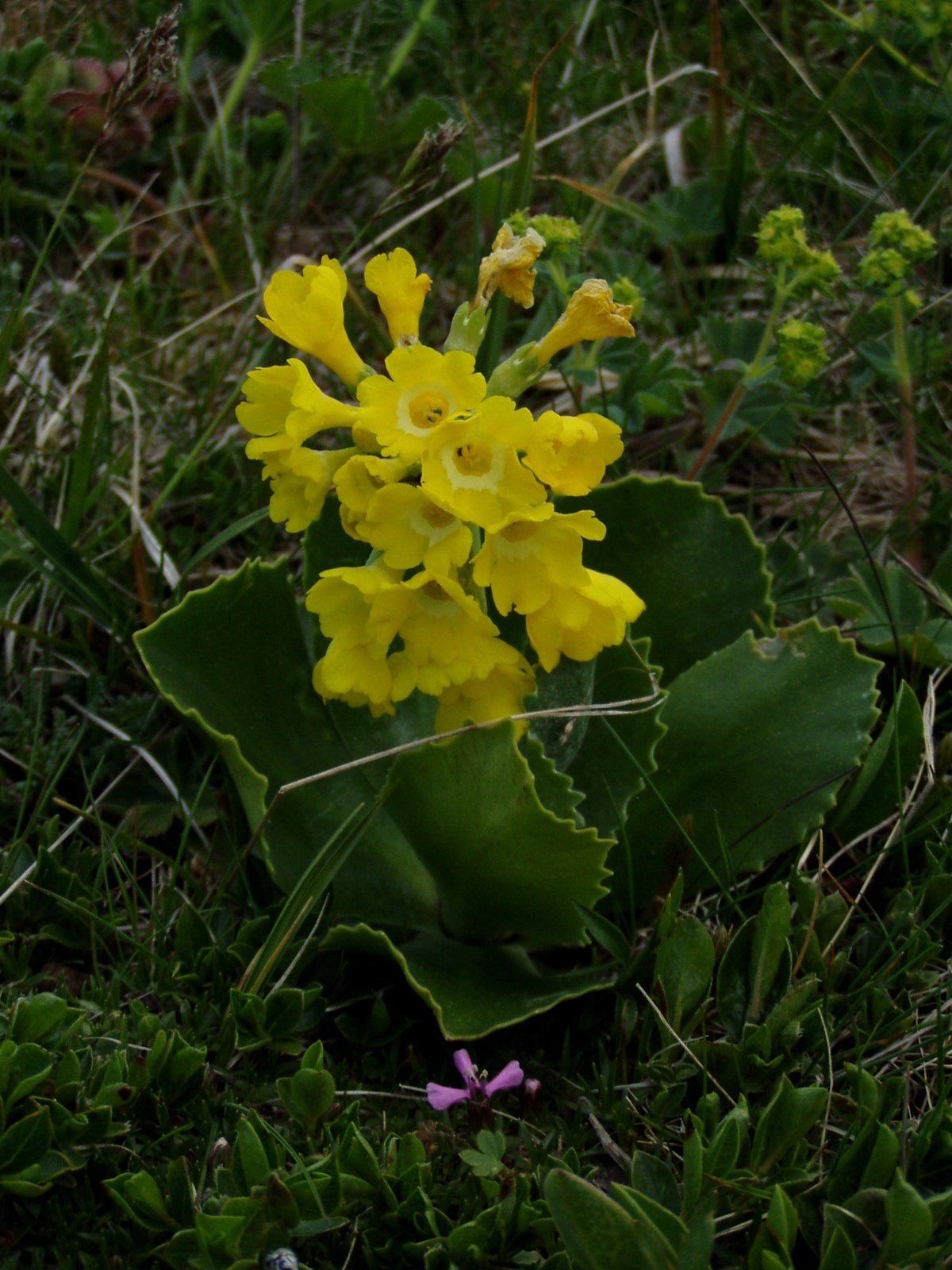
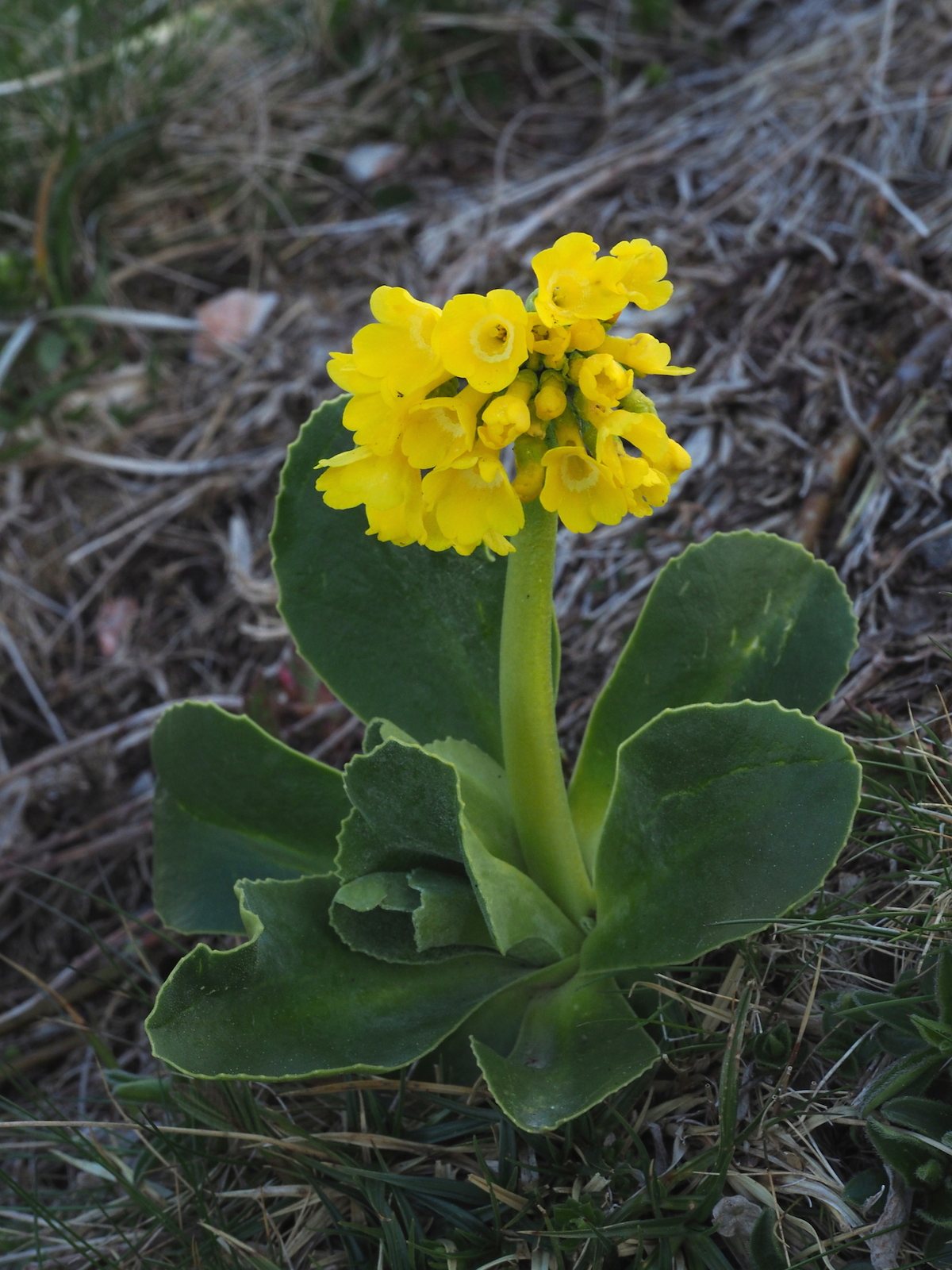
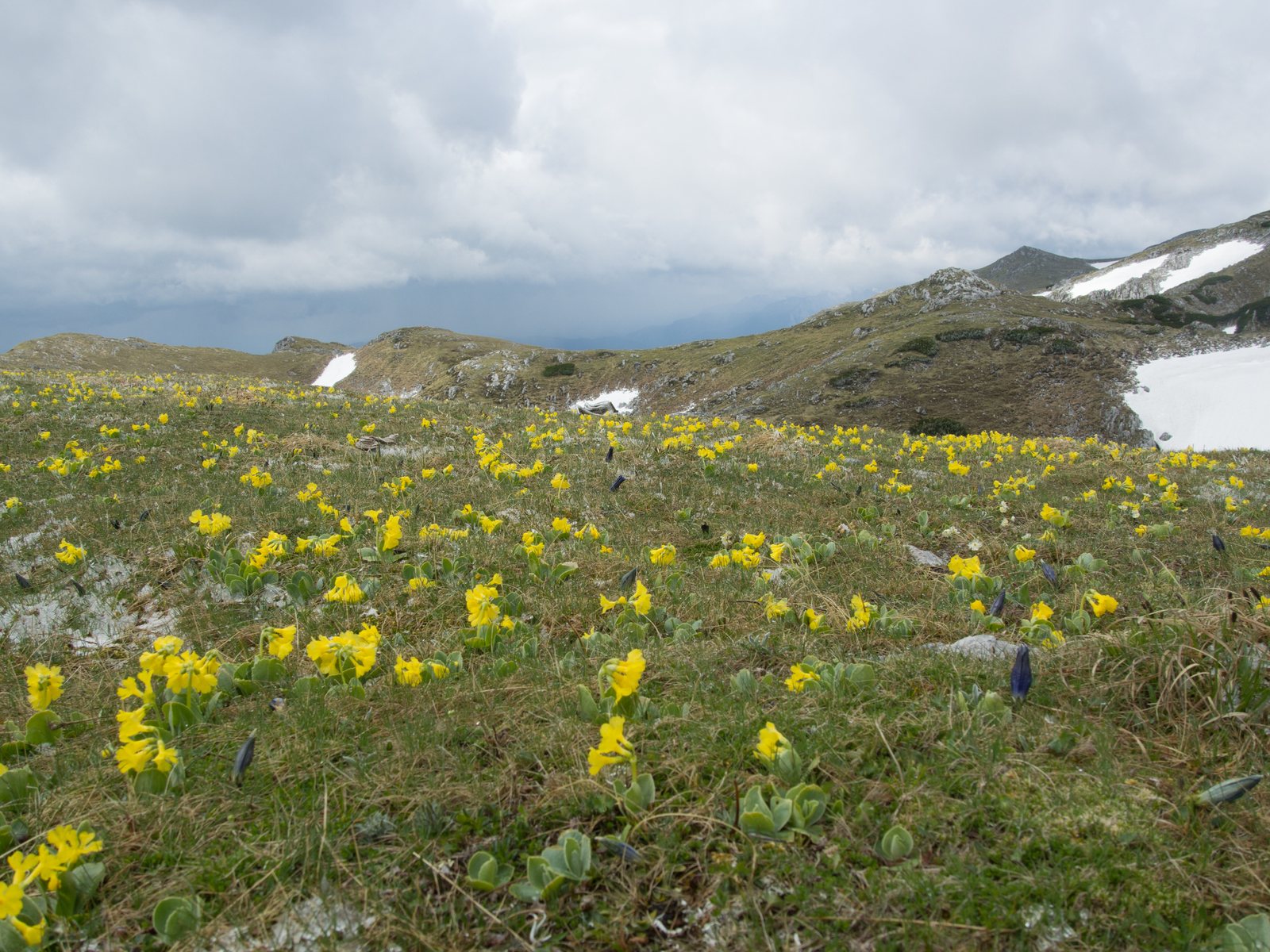
Auricula is a small alpine perennial grown for its spring clusters of fragrant yellow flowers above thick, rounded leaves. The wild species suits cool rock gardens and gritty containers; many colourful plants sold as auriculas are garden hybrids rather than pure Primula auricula.
At a glance
- Sun
- Partial shade or gentle morning sun; protect from hot afternoon sun, especially in warmer regions.
- Water
- Keep lightly moist during active growth, allowing excess water to drain freely. Water sparingly in winter without letting the root ball dry out completely.
- Soil
- Gritty, humus-containing, sharply drained soil, preferably neutral to alkaline. Avoid heavy, waterlogged ground.
- Height
- 0.5-0.75 ft (0.15-0.23 m)
- Spread
- 0.5-0.75 ft (0.15-0.23 m)
- Flowers
- Spring to early summer; fragrant yellow flowers, often with a pale, powdery centre, held in clusters above the leaves.
- Foliage
- Evergreen. Thick, rounded to spoon-shaped, grey-green leaves in basal rosettes, often dusted with a natural white powder.
- Growth
- Slow to moderate; gradually forms a clump of rosettes.
- Care needed
- Medium
The year at a glance
- Pollinators
- Cold hardy
- Low allergen
- Fragrant
| J | F | M | A | M | J | J | A | S | O | N | D | |
|---|---|---|---|---|---|---|---|---|---|---|---|---|
| Flowers | ||||||||||||
| Plant |
Northern hemisphere months. In Australia, shift them by six.
- Difficulty
- Moderate
- Toughness
- Needs looking after
Will it suit your garden?
Pick your zone, country, light and whether you have pets.
Full sun is 6 or more hours of direct sun a day, part shade 3 to 6 hours, shade under 3.
How it grows
Planting day
0.6 ft (0.19 m)
full size
About 4 years to full size.
From a typical nursery size, at an average rate for this kind of plant. A rule of thumb, not a forecast.
Good to know
- Cats and dogs
- Mildly toxic: may upset a stomach
- Growth rate
- Slow
Care
Jobs through the year
- WaterMar–May, every 7 days
- For established plants in free-draining ground, water if drying; keep new plants lightly moist.
- WaterJun–Aug, every 7 days
- Water the root zone if drying, never the rosettes; new plants and pots need closer checks.
- WaterSep–Oct, every 14 days
- Water established plants only if needed as growth slows; avoid saturated soil.
- WaterJan–Feb, Nov–Dec, every 28 days
- Water only if roots are becoming dry; outdoor plants usually need no extra winter water.
- FeedMar–May, every 28 days
- Apply a dilute balanced liquid feed during active spring growth.
- MulchMar–Apr
- Top-dress with thin grit, leaving the crown at soil level.
- DeadheadMay–Jun
- Cut finished flower stems to their base unless saving seed.
- DivideMay–Jun
- Divide crowded clumps after flowering, retaining roots on each rosette.
- PruneFeb–Mar
- Carefully remove dead or rotting leaves without damaging healthy rosettes.
- ProtectMar–May
- Protect fresh leaves and buds from slugs and inspect flower stems for aphids.
- ProtectJun–Aug
- Provide afternoon shade and keep roots cool.
- ProtectJan–Feb, Oct–Dec
- Maintain excellent drainage; shelter pots from persistent rain with good ventilation.
- Plant with the crown at the soil surface, using a gritty mix and a container with generous drainage holes.
- Water the compost rather than the rosettes, keeping it lightly moist while new leaves and flowers develop.
- Apply a dilute balanced liquid feed occasionally during spring growth; avoid heavy feeding.
- Use a thin grit mulch around the crown instead of moisture-retentive organic mulch.
- Shelter pots from persistent winter rain while keeping them cool and well ventilated.
- Divide crowded clumps after flowering, keeping roots attached to each healthy rosette.
Pruning. Cut spent flower stems back to their base after flowering unless you want seed. Remove dead or rotting leaves carefully, but leave healthy foliage intact.
Through the year
- Late winter
- Check drainage and remove decaying leaves; keep crowns out of standing water.
- Early spring
- Resume regular watering as growth starts and give a dilute balanced feed.
- Spring
- Watch developing flower stems for aphids and protect tender growth from slugs.
- Late spring
- Remove finished flower stems and divide crowded clumps after flowering.
- Summer
- Provide afternoon shade and keep roots cool; do not let containers bake dry.
- Autumn
- Move containers under an open-sided rain shelter where winters are wet, and reduce watering as growth slows.
In the garden
- Plant in limestone rock gardens or crevices where small spring flowers can be seen closely.
- Grow in shallow stone troughs with saxifrages and other compact alpines for contrasting leaf textures.
- Display individual terracotta pots on a sheltered shelf near a doorway, bringing flowers and scent closer to eye level.
- Use at the front of a cool, well-drained spring border with small bulbs, away from vigorous neighbours.
Garden styles it suits: Alpine rock garden, Cottage garden, Traditional, Modern courtyard, Small-space and English country.
Plant it with: Saxifrages, Dwarf irises, Crocuses, Snowdrops and Dwarf bellflowers.
Wildlife: Flowers provide spring pollen and nectar for visiting insects. The small plants offer little cover or food for larger wildlife.
Problems to watch for
- Crown or root rot: improve drainage, keep the crown at soil level and shelter containers from prolonged winter rain; discard badly rotted plants.
- Vine weevil: larvae eat roots and cause sudden collapse; inspect container root balls and use suitable biological controls according to local instructions.
- Slugs and snails: protect young leaves and flower buds with hand-picking or locally approved slug controls.
- Aphids: check flower stems and new growth, removing colonies by hand or treating with insecticidal soap labelled for ornamental plants.
Safety
Do not eat any part. Primulas are reported as harmful to cats and dogs if eaten, usually causing digestive upset, but evidence specific to Primula auricula is limited. In people, handling may cause skin irritation or an allergic rash; wear gloves if sensitive. Reliable species-specific information for horses is lacking, so keep it out of grazing areas.
Easily confused with
Garden auricula (Primula × pubescens)
These hybrids often have purple, red, pink or patterned flowers rather than the wild species' yellow flowers. Yellow-flowered hybrids can be difficult to distinguish without a reliable plant history.
Common primrose (Primula vulgaris)
Has thinner, wrinkled leaves and usually bears individual flowers on separate stalks, rather than a cluster on one upright stem.
Cowslip (Primula veris)
Has wrinkled, softly hairy leaves and nodding, bell-shaped yellow flowers, rather than auricula's fleshy leaves and flatter flower faces.
The name
Auricula comes from the Latin for 'little ear', referring to the rounded leaves, which also explain the name bear's ear.
Propagation. Divide established clumps or detach rooted offsets after flowering. Sow fresh seed in gritty compost; germination can be slow and may benefit from a period of cold. Seed from garden hybrids will not reliably reproduce the parent.
Checked against open data
- Accepted botanical name
- Primula auricula
- Native range
- Austria, Bulgaria, Czechoslovakia, France, Germany, Italy, Poland, Romania, Switzerland and Yugoslavia.
- Measured
- Average height 7 cm.
Sources: GBIF (CC BY 4.0) and Trefle (CC BY 4.0). The care and design notes are LandscapeGPT's own.
See it in your own yard.
Upload a photo of your yard and see it redesigned with plants that suit your climate, each checked against your zone.