Australian astroturf
Scleranthus biflorus. Family Caryophyllaceae. Groundcover.
Also called Cushion bush, Two-flowered knawel.
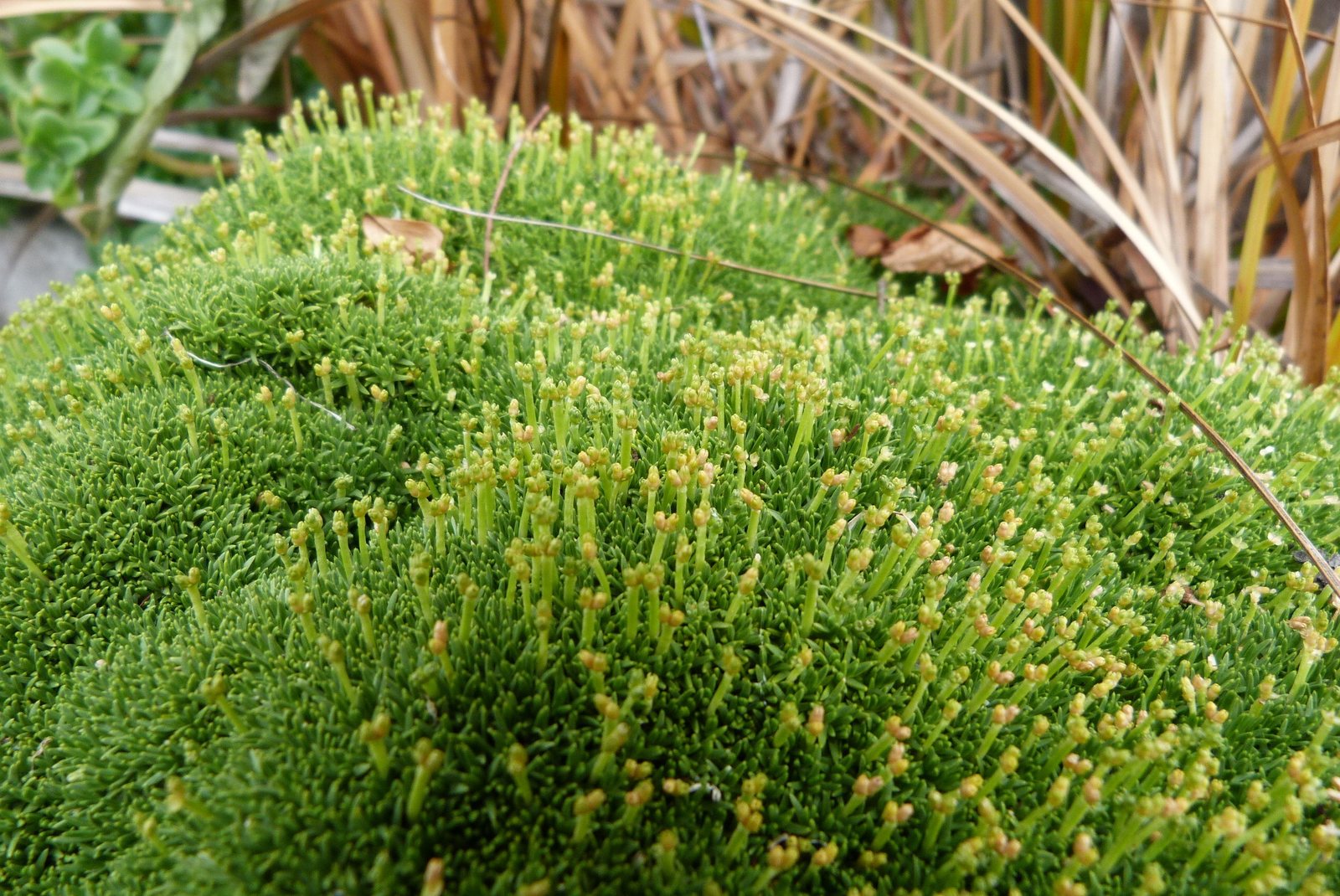
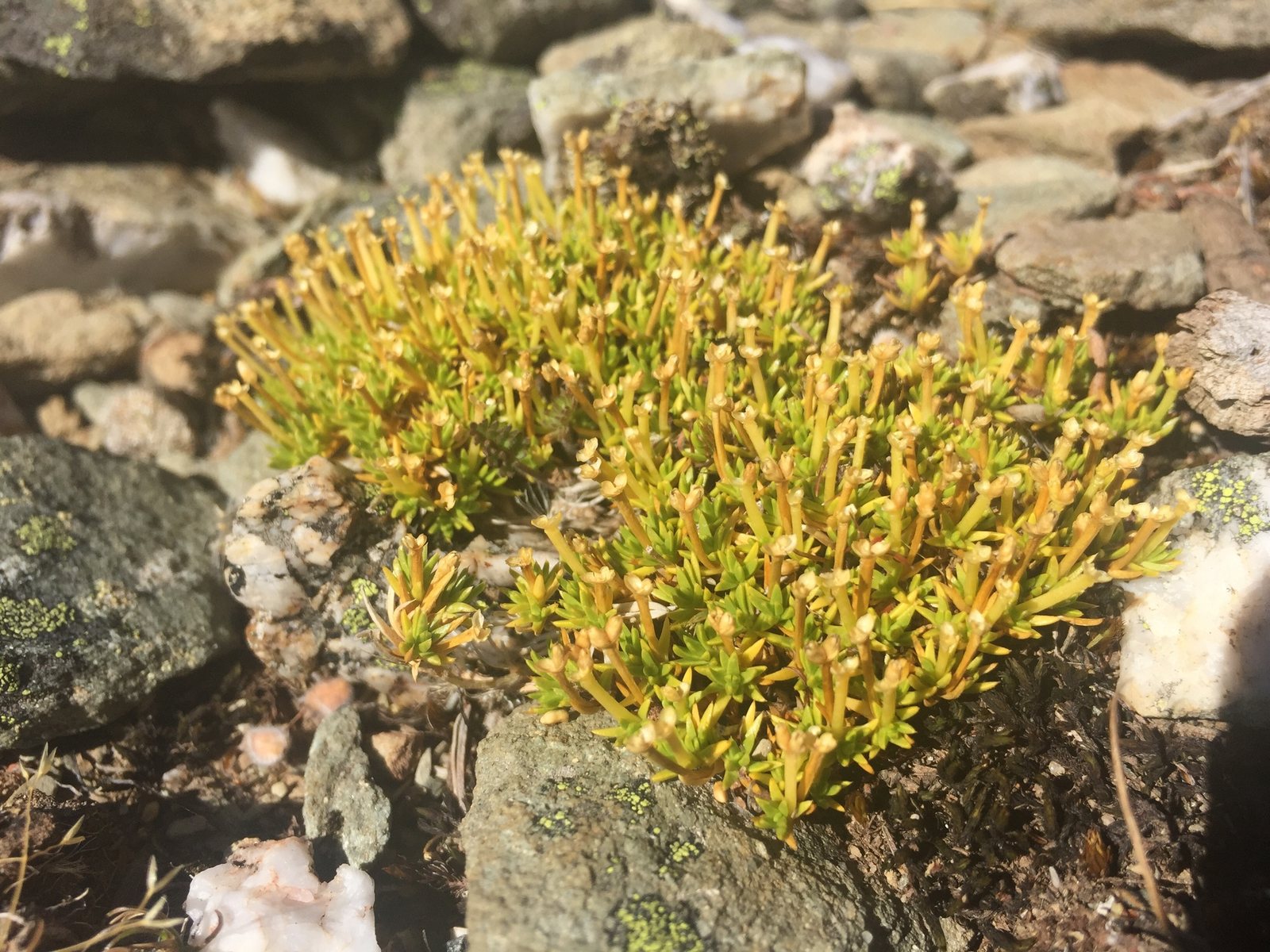
Australian astroturf is a low, evergreen perennial native to Australia and New Zealand that forms dense, moss-like green cushions. Grow it between rocks, beside paving or in shallow containers for its fine texture and rounded shape; despite its name, it is not a lawn substitute and does not tolerate regular foot traffic.
At a glance
- Sun
- Full sun in cool climates; light afternoon shade where summers are hot.
- Water
- Water moderately while establishing, then during dry spells. Keep the root zone lightly moist rather than constantly wet; established plants tolerate brief dry periods.
- Soil
- Lean to moderately fertile, gritty, sharply drained soil. Avoid heavy clay and sites that remain wet in winter.
- Height
- 0.1-0.3 ft (0.03-0.09 m)
- Spread
- 1-2 ft (0.3-0.6 m)
- Flowers
- Tiny, inconspicuous greenish flowers, usually in pairs, in late spring and summer.
- Foliage
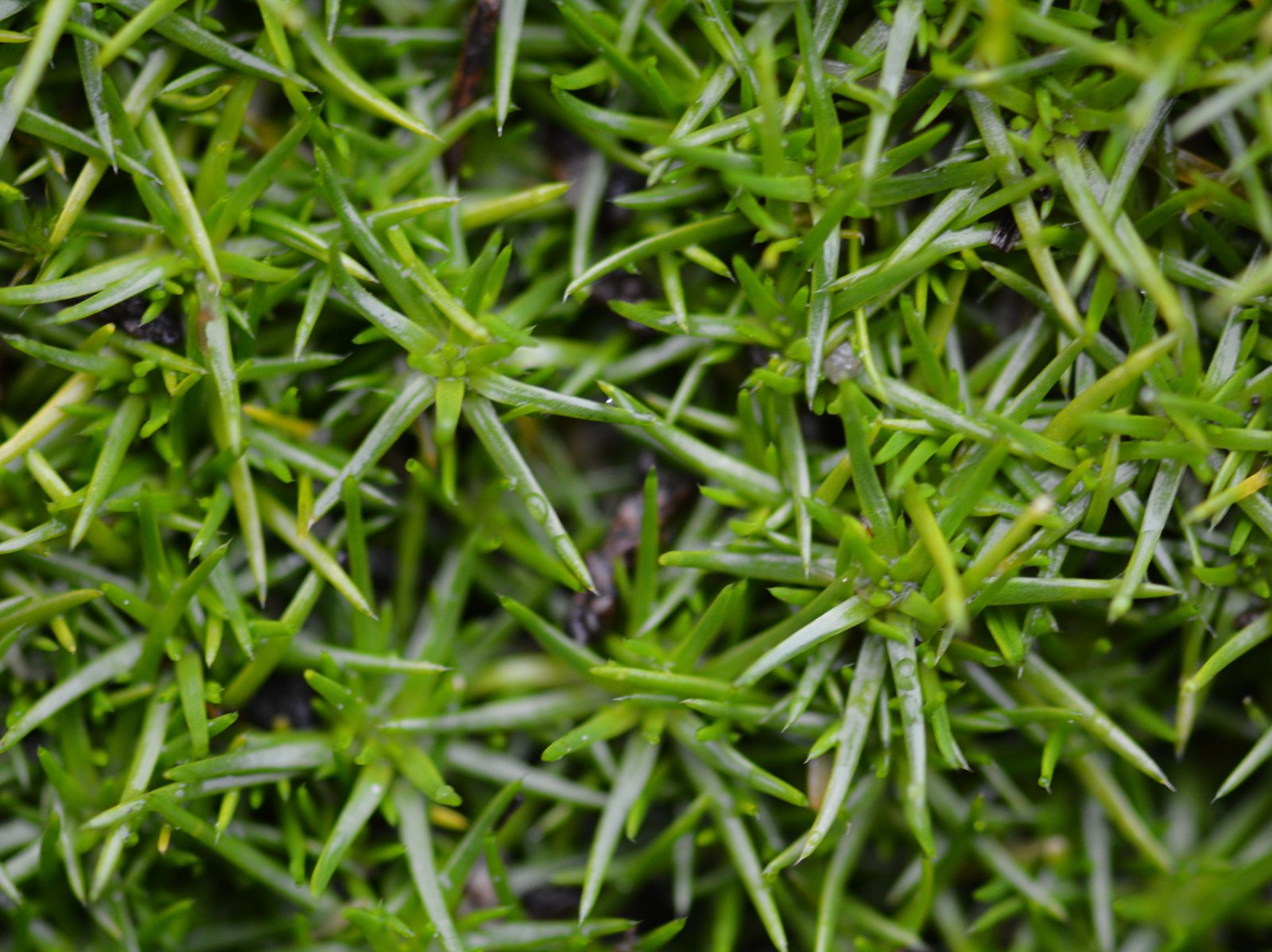
- Evergreen. Very small, narrow, bright green leaves packed tightly along branching stems, forming firm, uneven cushions.
- Growth
- Slow to moderate
- Care needed
- Medium
The year at a glance
- Low allergen
| J | F | M | A | M | J | J | A | S | O | N | D | |
|---|---|---|---|---|---|---|---|---|---|---|---|---|
| Flowers | ||||||||||||
| Plant |
Northern hemisphere months. In Australia, shift them by six.
- Difficulty
- Moderate
- Toughness
- Needs looking after
Will it suit your garden?
Pick your zone, country, light and whether you have pets.
Full sun is 6 or more hours of direct sun a day, part shade 3 to 6 hours, shade under 3.
How it grows
Planting day
0 ft (0.02 m)
After 1 year
0.1 ft (0.03 m)
After 2 years
0.1 ft (0.04 m)
After 3 years
0.2 ft (0.06 m)
After 5 years
0.2 ft (0.06 m)
full size
About 3 years to full size.
From a typical nursery size, at an average rate for this kind of plant. A rule of thumb, not a forecast.
Good to know
- Cats and dogs
- Safe
- Native to
- Australia
- Growth rate
- Slow
Care
Jobs through the year
- WaterApr–May, Sep–Oct, every 10 days
- Check container moisture and water when the upper soil dries; newly planted cushions need closer attention.
- WaterJun–Aug, every 5 days
- Water the soil as it begins drying, before cushions turn brittle; avoid saturation.
- WaterJan–Mar, Nov–Dec, every 21 days
- Under cool frost-free cover, water only enough to prevent complete drying.
- PruneApr–May
- Carefully snip out dead patches without cutting deeply into healthy cushions.
- DivideApr–May
- If more plants are wanted, gently divide healthy established clumps and keep divisions sheltered.
- MulchMay
- Place a thin gravel mulch around, not over, the cushions.
- ProtectSep–Oct
- Move containers into bright frost-free shelter before frost; do not rely on outdoor survival locally.
- ProtectMay–Jun
- Return outdoors after frost and protect cushions from foot traffic and intense afternoon heat.
- ProtectOct–Nov
- Remove fallen leaves and keep drainage holes clear.
- Plant with the crown level with the soil surface, in a position that drains freely.
- Water new plants whenever the upper soil begins to dry; avoid frequent light sprinkling.
- Use a thin gravel mulch around, rather than over, the cushions to keep wet soil away from the stems.
- Feed sparingly; rich compost and heavy fertilising encourage softer, less compact growth.
- Remove weeds by hand while they are small, and keep fallen leaves off the cushions.
Pruning. No routine pruning or mowing is needed. In spring, snip out dead or damaged patches carefully without cutting deeply into healthy cushions.
Through the year
- Spring
- Plant after severe frosts have passed, allowing space for the cushions to spread.
- Spring
- Remove dead growth and divide healthy established clumps if more plants are wanted.
- Summer
- Check moisture during dry weather and water the soil before cushions become brown and brittle.
- Autumn
- Clear fallen leaves and remove weeds before they become embedded in the cushions.
- Winter
- Check drainage after heavy rain; protect container plants from prolonged saturation and severe frost.
In the garden
- Plant among rocks in a sunny rock garden, where its cushions soften hard edges.
- Use beside stepping stones in places where feet will not land on the plants.
- Combine with dwarf conifers for contrasting fine green cushions and upright forms.
- Grow in shallow, well-drained troughs with small alpine plants.
- Use as a moss-like ground layer in an open, sunny Japanese-inspired garden rather than a shady, damp moss garden.
Garden styles it suits: Alpine rock garden, Australian native, Japanese, Zen dry garden, Dry gravel garden and Small-space.
Plant it with: Dwarf conifers, Creeping thyme, Alpine pinks, Saxifrages and Dwarf bearded irises.
Wildlife: Its small flowers offer little ornamental display, and it is not a major nectar or wildlife plant. Dense cushions provide some shelter for small invertebrates.
Problems to watch for
- Root and crown rot in wet soil: improve drainage, keep the crown exposed and replace badly rotted plants.
- Browning during drought or hot, drying weather: water deeply when needed and provide light afternoon shade in hot climates.
- Weeds growing through the cushions: pull seedlings promptly, easing roots out without tearing the plant apart.
- Flattened or bare patches from foot traffic: move stepping stones or redirect the route; this plant does not recover like turf grass.
Safety
Not known to be toxic to people, cats, dogs or horses. Specific toxicity information is limited, and no particular poisonous part is established; it is not an edible plant.
Easily confused with
Irish moss (Sagina subulata)
Irish moss has conspicuous small white, five-petalled flowers and usually forms a softer, flatter carpet; Australian astroturf has inconspicuous greenish flowers and firmer cushions.
New Zealand knawel (Scleranthus uniflorus)
This close relative generally has solitary flowers rather than the paired flowers typical of Scleranthus biflorus. Their foliage is very similar, so flowering material may be needed for identification.
The name
Scleranthus comes from Greek words meaning 'hard flower', referring to the hardened flower cup, while biflorus means 'two-flowered' and describes the paired flowers.
Propagation. Divide established cushions in spring, keeping roots attached to each piece, and replant promptly. It can also be raised from seed, although seed is not always readily available.
Checked against open data
- Accepted botanical name
- Scleranthus biflorus
- Native range
- New South Wales, New Zealand North, New Zealand South, Tasmania and Victoria.
Sources: GBIF (CC BY 4.0) and Trefle (CC BY 4.0). The care and design notes are LandscapeGPT's own.
See it in your own yard.
Upload a photo of your yard and see it redesigned with plants that suit your climate, each checked against your zone.