Bacopa
Chaenostoma cordatum. Family Scrophulariaceae. Annual.
Also called Trailing bacopa, Sutera, Sutera cordata.
Bacopa is a tender, trailing perennial from southern Africa, usually grown as an annual for its small flowers and spreading stems. It softens the edges of pots, hanging baskets and beds, flowering for a long season when kept evenly moist.
At a glance
- Sun
- Full sun to partial shade; provide afternoon shade in hot climates.
- Water
- Keep evenly moist but not waterlogged. Hanging baskets may need daily watering in warm, windy weather.
- Soil
- Fertile, moisture-retentive soil with good drainage; use a quality container potting mix in pots.
- Height
- 0.3-0.8 ft (0.1-0.25 m)
- Spread
- 1-2 ft (0.3-0.6 m)
- Flowers
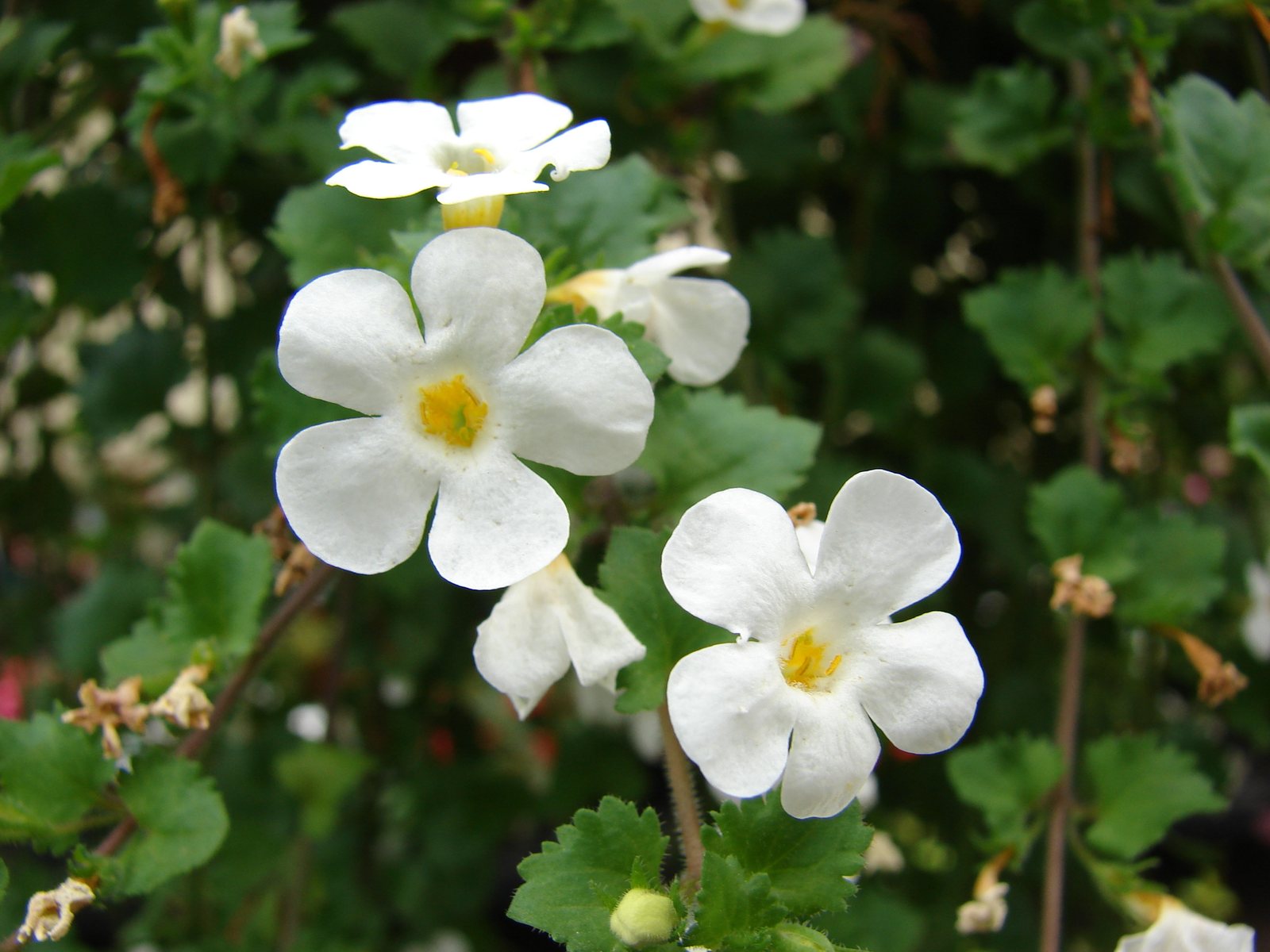
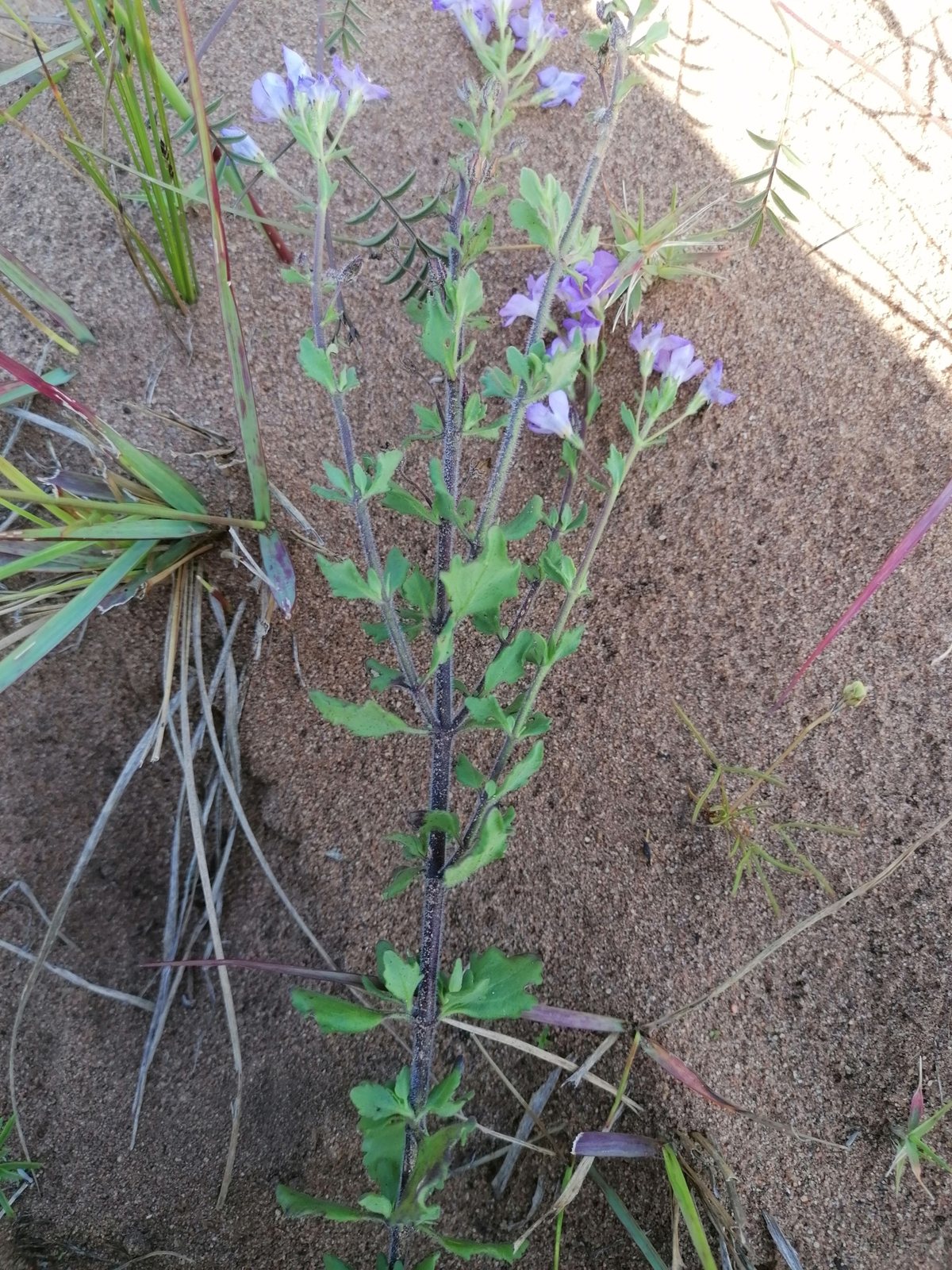
- Spring to autumn, often pausing in intense heat or after drying out; white in the species, with pink, lavender and purple forms sold as garden cultivars.
- Foliage
- Evergreen. Small, opposite green leaves with toothed edges, carried on slender trailing stems.
- Growth
- Fast during mild, frost-free weather.
- Care needed
- Medium
The year at a glance
- Pollinators
- Low allergen
| J | F | M | A | M | J | J | A | S | O | N | D | |
|---|---|---|---|---|---|---|---|---|---|---|---|---|
| Flowers | ||||||||||||
| Plant |
Northern hemisphere months. In Australia, shift them by six.
- Difficulty
- Moderate
- Toughness
- Needs looking after
Will it suit your garden?
Pick your zone, country, light and whether you have pets.
Full sun is 6 or more hours of direct sun a day, part shade 3 to 6 hours, shade under 3.
How it grows
Planting day
0.5 ft (0.15 m)
After 1 year
0.6 ft (0.18 m)
full size
Full size in one season.
From a typical nursery size, at an average rate for this kind of plant. A rule of thumb, not a forecast.
Good to know
- Cats and dogs
- Safe
- Growth rate
- Fast
Care
Jobs through the year
- WaterMay, Sep–Oct, every 7 days
- Check established beds and water if rain has not kept roots moist; young plants need more frequent checks.
- WaterJun–Aug, every 3 days
- Keep established beds evenly moist, adjusting for rain; check baskets daily and never let roots dry out.
- FeedMay–Sep, every 21 days
- Feed containers with balanced liquid fertiliser at label strength; fertile beds usually need no regular feed.
- PruneJun–Sep
- Lightly trim sparse or overlong stems to encourage branching.
- ProtectSep–Oct
- Before frost, move plants worth saving into bright, frost-free shelter; otherwise treat as annuals.
- Plant outdoors after frost danger has passed.
- Check container moisture daily in warm weather and water before the root ball dries out.
- Feed container plants every two to four weeks with a balanced liquid fertiliser at the label rate.
- Give afternoon shade where summers are hot.
- Keep drainage holes clear and do not leave pots standing in water.
Pruning. During the growing season, lightly trim overlong or sparse stems to encourage branching. Routine deadheading is unnecessary.
Through the year
- Early spring
- Start young plants under bright, frost-free conditions, or buy plants nearer planting time.
- Late spring
- After the last frost, gradually acclimatise plants to outdoor conditions and plant into beds or containers.
- Summer
- Check moisture frequently, feed container plants and lightly trim straggly growth.
- Late summer
- Take cuttings if you want to keep plants for next year.
- Autumn
- Before frost, move plants you want to save into a bright, frost-free place; compost those being treated as annuals.
- Winter
- Keep overwintered plants lightly moist and sheltered from frost; avoid feeding while growth is slow.
In the garden
- Trail over hanging baskets beneath upright fuchsias for a fine-textured flowering edge.
- Edge mixed containers with white flowers to link stronger pink, blue or purple blooms.
- Plant along the front of a summer border to soften the transition between taller plants and paving.
- Spill over low walls or raised beds where the soil can be kept reliably moist.
Garden styles it suits: Cottage garden, Modern courtyard, Romantic rose garden, White garden, Pastel border and Small-space.
Plant it with: Fuchsia, Petunia, Lobelia, Coleus, Impatiens and Verbena.
Wildlife: The small flowers attract bees and other flower-visiting insects.
Problems to watch for
- Flowering stops after drying out: water thoroughly, restore consistent moisture and allow time for new buds to develop.
- Root rot in saturated compost: improve drainage, stop leaving water in saucers and replace badly affected plants.
- Aphids on young shoots: wash off small colonies or use insecticidal soap labelled for the plant and pest.
- Whitefly, particularly under cover: inspect leaf undersides, remove heavily infested growth and use an appropriate labelled treatment if needed.
Safety
Chaenostoma cordatum is not known to be toxic to people, cats, dogs or horses. No part is recognised as poisonous, but specific safety information is limited; it is an ornamental plant, not a food or herbal bacopa.
Easily confused with
Water hyssop (Bacopa monnieri)
True Bacopa has fleshy, smooth-edged leaves and grows in wet or aquatic conditions; trailing garden bacopa has toothed leaves and needs well-drained soil.
Trailing lobelia (Lobelia erinus)
Lobelia has distinctly two-lipped flowers with three prominent lower lobes; bacopa flowers have five more evenly arranged lobes around a small central eye.
The name
The species name cordatum means heart-shaped, referring to the leaf shape.
Propagation. Take softwood or tip cuttings in spring or late summer and root them in moist, free-draining compost under bright, indirect light. Seed is available for some strains, but seedlings may not match named cultivars.
Checked against open data
- Accepted botanical name
- Chaenostoma cordatum
- Native range
- Cape Provinces.
Sources: GBIF (CC BY 4.0) and Trefle (CC BY 4.0). The care and design notes are LandscapeGPT's own.
See it in your own yard.
Upload a photo of your yard and see it redesigned with plants that suit your climate, each checked against your zone.