Ballerina cranesbill
Geranium cinereum 'Ballerina'. Family Geraniaceae. Perennial.
Also called Ashy cranesbill 'Ballerina', Geranium cinereum 'Ballerina'.
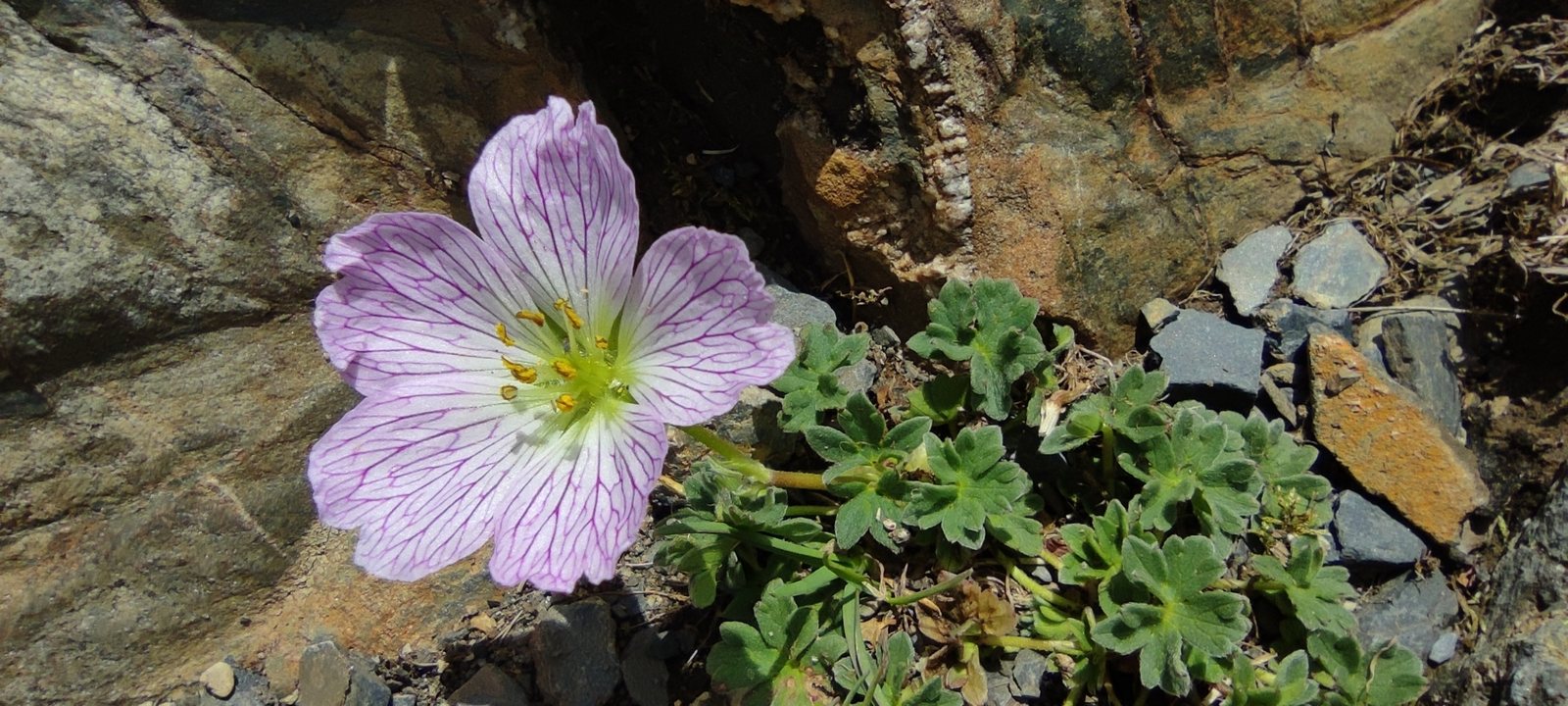
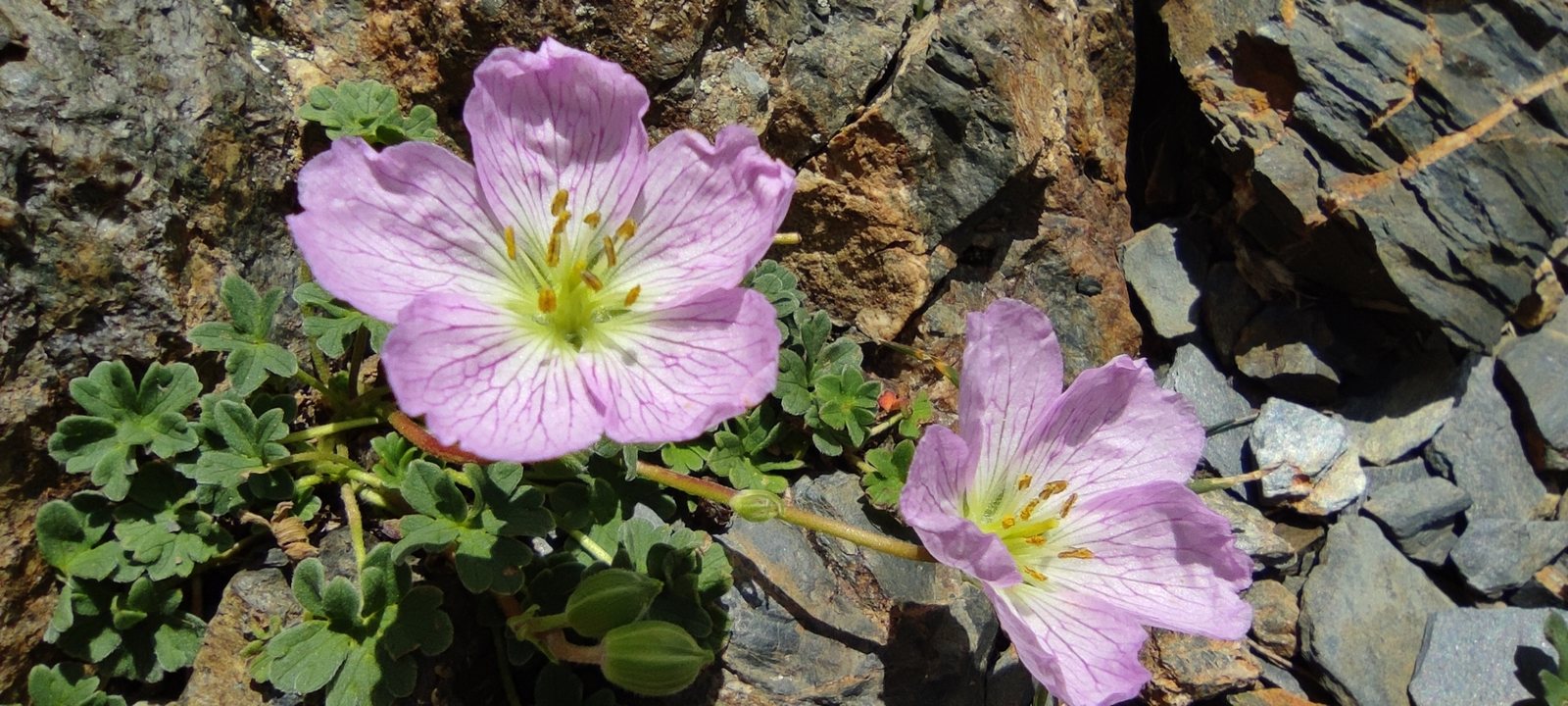
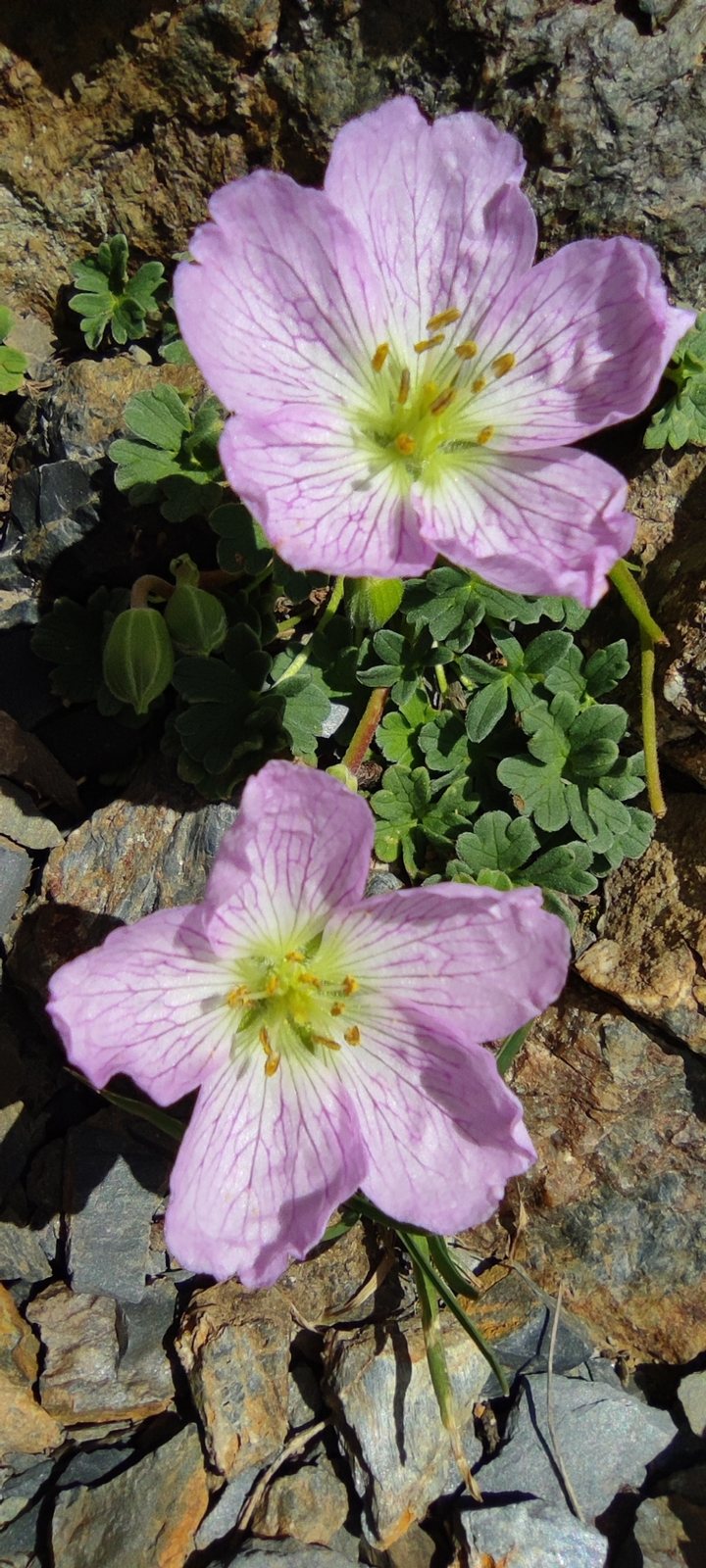
A compact hardy geranium with grey-green leaves and pale pink flowers marked by dark purple veins and centres. It makes neat, low cushions for rock gardens, gravel beds and sunny border edges, provided the soil drains freely, especially in winter.
At a glance
- Sun
- Full sun; light afternoon shade is helpful in hot summers.
- Water
- Water regularly while establishing, then during prolonged dry spells. Avoid constantly damp soil.
- Soil
- Well-drained, moderately fertile soil, preferably gritty or gravelly; tolerates acid, neutral and alkaline conditions.
- Height
- 0.3-0.5 ft (0.1-0.15 m)
- Spread
- 0.7-1 ft (0.2-0.3 m)
- Flowers
- Late spring through summer, sometimes repeating into early autumn; pale pink to lilac-pink flowers with dark purple veins and dark centres.
- Foliage
- Small, rounded, deeply lobed grey-green leaves form a low cushion. Foliage may persist in mild winters but usually dies back in cold climates.
- Growth
- Slow to moderate
- Care needed
- Low
The year at a glance
- Pollinators
- Deer resistant
- Drought tolerant
- Low allergen
| J | F | M | A | M | J | J | A | S | O | N | D | |
|---|---|---|---|---|---|---|---|---|---|---|---|---|
| Flowers | ||||||||||||
| Plant |
Northern hemisphere months. In Australia, shift them by six.
- Difficulty
- Easy
- Toughness
- Fairly tough
Will it suit your garden?
Pick your zone, country, light and whether you have pets.
Full sun is 6 or more hours of direct sun a day, part shade 3 to 6 hours, shade under 3.
How it grows
Planting day
0.4 ft (0.13 m)
full size
About 4 years to full size.
From a typical nursery size, at an average rate for this kind of plant. A rule of thumb, not a forecast.
Good to know
- Cats and dogs
- Safe
- Growth rate
- Slow
Care
Jobs through the year
- WaterApr–May, Sep–Oct, every 14 days
- Water established plants only if soil is dry; water new plants more often until rooted.
- WaterJun–Aug, every 10 days
- Water established plants during prolonged dry spells, letting the surface dry between soakings.
- FeedMar–Apr
- Only if growth is weak, add a light compost top-dressing away from the crown.
- MulchMar–Apr
- Use a thin gravel mulch rather than wet organic material around the crown.
- DivideMar–Apr
- Divide established clumps only when needed and keep divisions watered until rooted.
- PruneMar
- Trim dead leaves without cutting into the living crown.
- DeadheadMay–Sep, every 14 days
- Remove spent flower stems to encourage further bloom.
- PruneJun–Jul
- Lightly tidy untidy foliage after the first flowering flush.
- ProtectMar–May
- Inspect fresh growth for slugs and protect if necessary.
- ProtectJan–Feb, Nov–Dec
- Clear fallen leaves from the crown and prevent winter waterlogging.
- Plant with the crown at soil level in a position that drains freely.
- Water at soil level during establishment; let the surface dry between waterings once established.
- On heavy soil, use a raised bed or container rather than a planting hole filled with grit.
- Apply a light top-dressing of compost in spring only if growth is weak; avoid heavy feeding.
- Keep wet organic mulch away from the crown; a thin gravel mulch suits this plant.
Pruning. Remove spent flower stems to encourage further flowering. In early spring, trim away dead leaves without cutting into the living crown; lightly tidy untidy foliage after the first flush of flowers.
Through the year
- Early spring
- Remove dead foliage and check that the crown has not become buried under mulch or fallen leaves.
- Spring
- Plant or divide established clumps as growth begins; water divisions until rooted.
- Late spring
- Check young growth for slug damage and remove damaged leaves.
- Summer
- Remove spent flower stems and water during prolonged dry weather.
- Early autumn
- Plant in mild regions while the soil is warm, allowing time for roots to establish before winter.
- Winter
- Keep fallen leaves off the crown and check that containers drain freely.
In the garden
- Tuck into sunny rock gardens beside small sedums and dwarf dianthus for contrasting leaf shapes.
- Repeat along the front of a small border to create a low ribbon of pink flowers.
- Plant beside gravel paths or paving edges where its compact cushions will not obstruct the route.
- Grow in troughs or shallow alpine containers with drainage holes and a gritty potting mix.
Garden styles it suits: Alpine rock garden, Dry gravel garden, Cottage garden, Pastel border, Small-space and Pollinator garden.
Plant it with: Dwarf dianthus, Creeping thyme, Rock rose, Low-growing stonecrop, Dalmatian bellflower and Dwarf bearded iris.
Wildlife: The open flowers provide nectar and pollen for bees and other visiting insects.
Problems to watch for
- Crown or root rot in wet soil: improve drainage or move the plant to a raised bed; avoid wet mulch around the crown.
- Slugs and snails on fresh growth: inspect after dark, remove pests and use iron-phosphate bait according to the label if needed.
- Vine weevil larvae, particularly in pots: inspect roots if the plant wilts unexpectedly and use an appropriate biological control where available.
- Powdery mildew in dry, crowded conditions: improve airflow, water the root zone during drought and remove badly affected leaves.
Safety
Not known to be toxic to people, cats, dogs or horses; no parts are recognised as a significant poisoning hazard. This hardy Geranium is different from Pelargonium, also commonly called geranium, which can be toxic to pets.
Easily confused with
Bloody cranesbill (Geranium sanguineum)
Usually makes a larger, more spreading plant with more finely divided green leaves; most forms have stronger magenta flowers rather than the pale, heavily veined flowers of 'Ballerina'.
Biokovo cranesbill (Geranium × cantabrigiense 'Biokovo')
Forms a broader, spreading mat with aromatic green foliage and near-white, pink-tinged flowers lacking the bold dark veining and dark eye of 'Ballerina'.
The name
Geranium comes from the Greek word for crane, referring to the beak-like seed capsule, while cinereum means ash-grey, describing the foliage.
Propagation. Divide healthy clumps in spring, retaining roots and growing shoots on each piece, or take basal cuttings in spring. Seed-grown plants may differ from 'Ballerina', so use vegetative propagation to preserve the cultivar.
Checked against open data
- Accepted botanical name
- Geranium cinereum
- Native range
- France and Spain.
- Measured
- Soil pH 4 to 4.5.
Sources: GBIF (CC BY 4.0) and Trefle (CC BY 4.0). The care and design notes are LandscapeGPT's own.
See it in your own yard.
Upload a photo of your yard and see it redesigned with plants that suit your climate, each checked against your zone.