Balloon flower
Platycodon grandiflorus. Family Campanulaceae. Perennial.
Also called Chinese bellflower, Japanese bellflower.
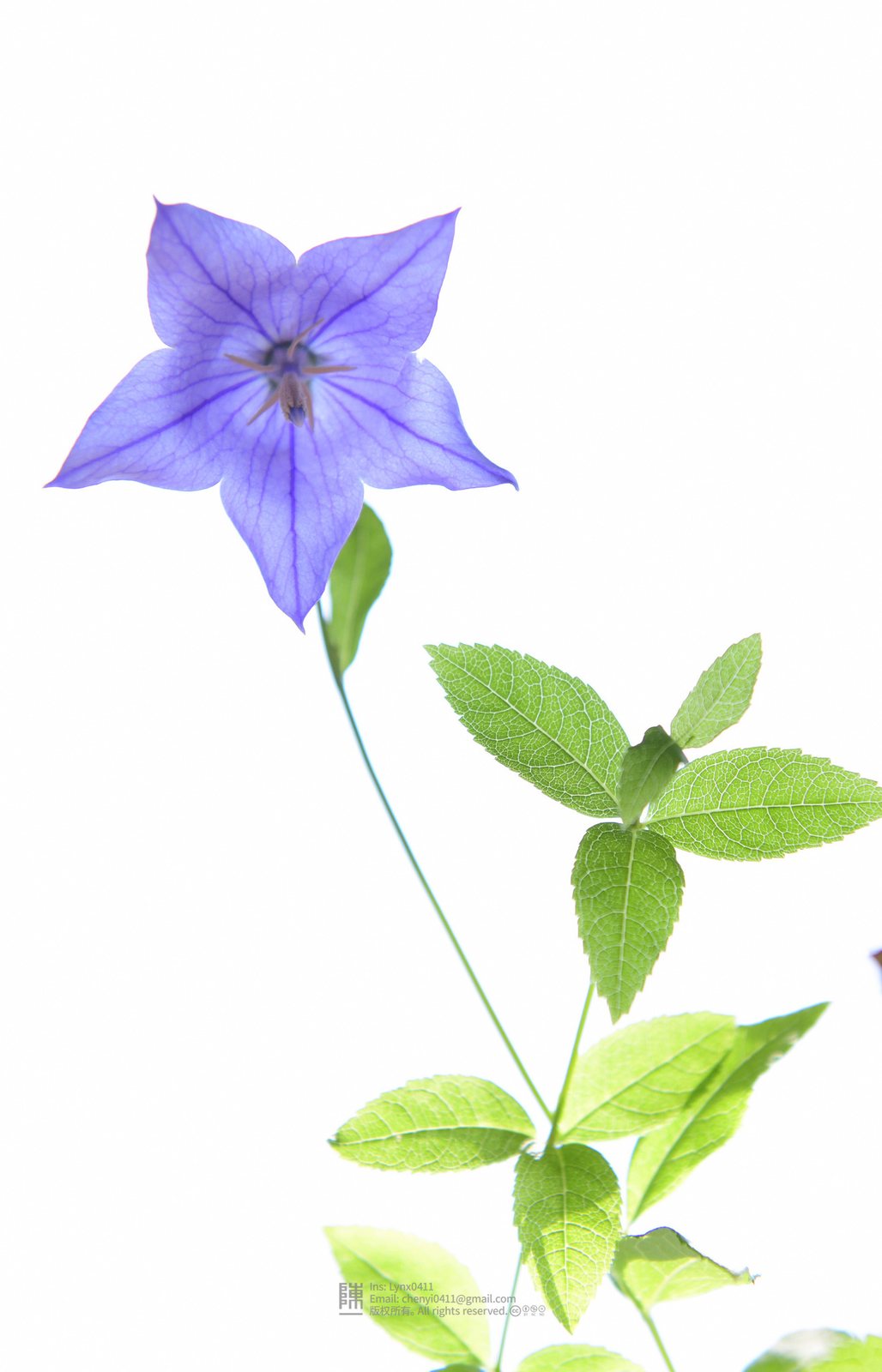
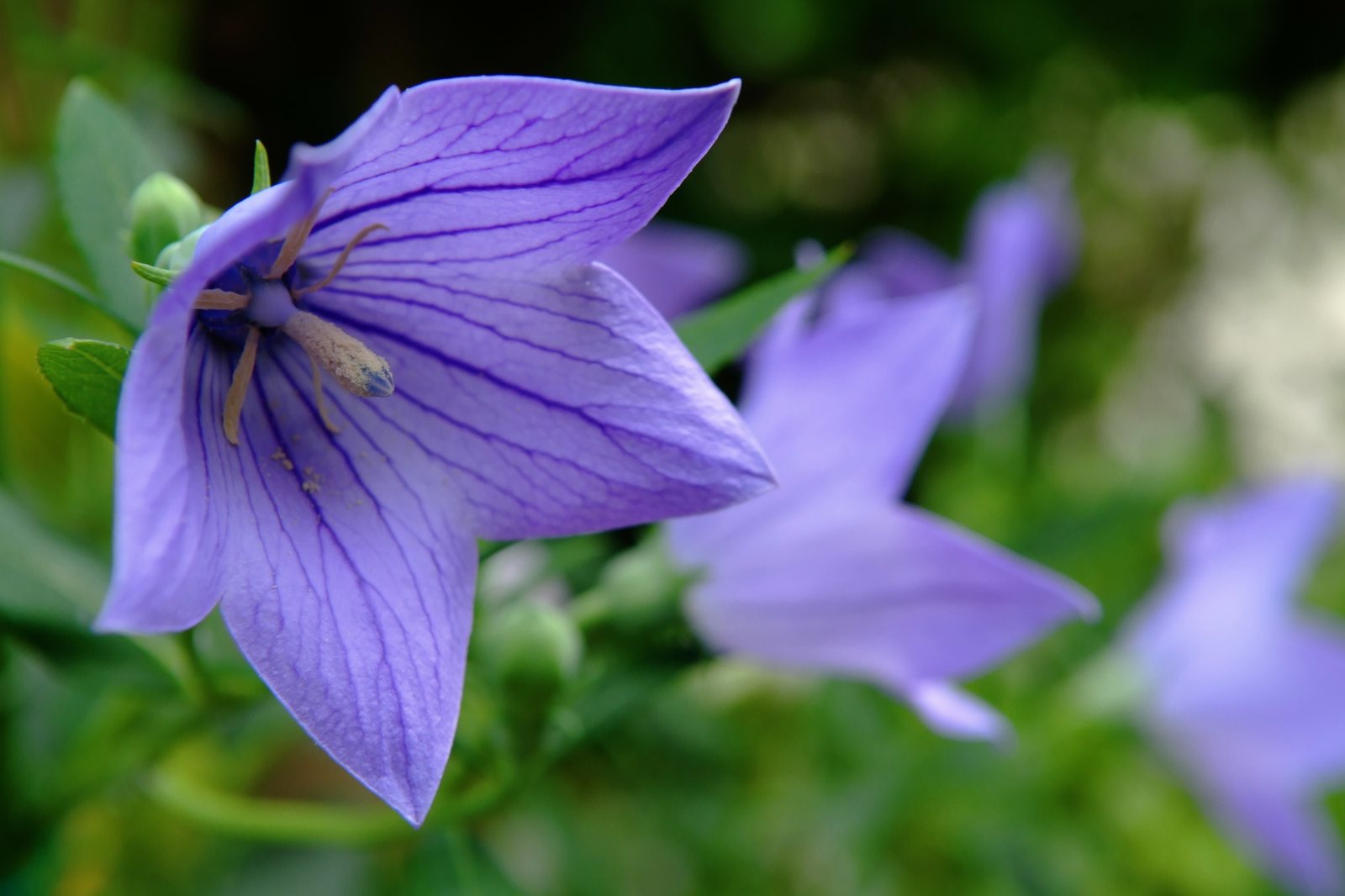
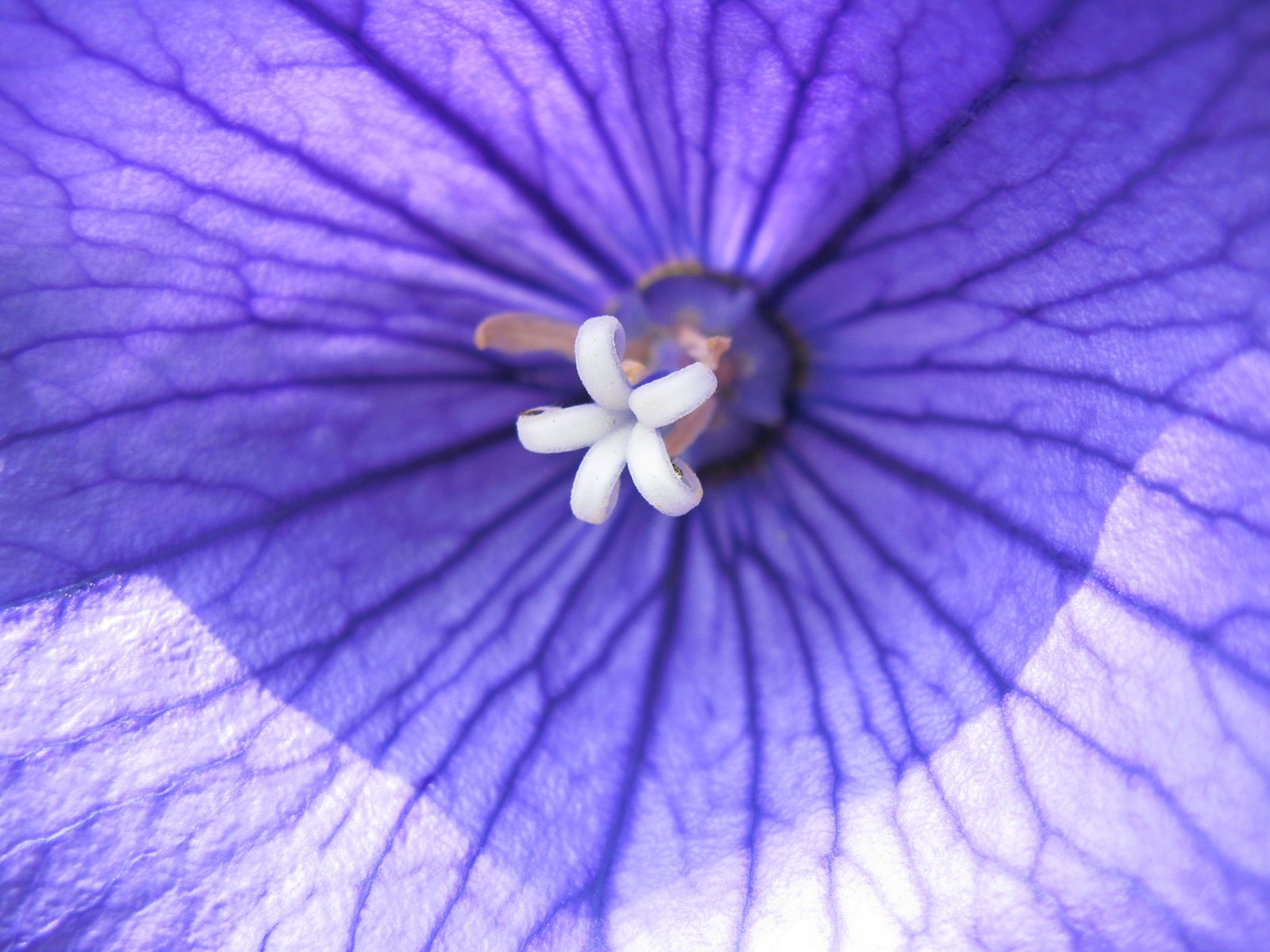
Balloon flower is a long-lived, clump-forming perennial with inflated buds that open into broad, star-shaped flowers. Gardeners grow it for its blue, white or pink summer flowers and tidy foliage, though taller forms may need support. It dies back in winter and is often slow to emerge in spring.
At a glance
- Sun
- Full sun to partial shade; afternoon shade helps in hot summers.
- Water
- Keep the soil evenly moist while establishing. Established plants tolerate brief dry spells, but flower better with watering during prolonged dry weather.
- Soil
- Well-drained, moderately fertile soil; tolerates a range of soil types but dislikes waterlogged ground, especially in winter.
- Height
- 1-3 ft (0.3-0.9 m), depending on cultivar
- Spread
- 1-1.5 ft (0.3-0.45 m)
- Flowers
- Summer into early autumn; usually violet-blue, with white and pink cultivars.
- Foliage
- Deciduous, toothed, oval to lance-shaped leaves, often with a blue-green tint; sometimes turns yellow in autumn.
- Growth
- Moderate; young plants may take two or three seasons to form substantial clumps.
- Care needed
- Low
The year at a glance
- Pollinators
- Deer resistant
- Cold hardy
- Low allergen
| J | F | M | A | M | J | J | A | S | O | N | D | |
|---|---|---|---|---|---|---|---|---|---|---|---|---|
| Flowers | ||||||||||||
| Fruit | ||||||||||||
| Plant |
Northern hemisphere months. In Australia, shift them by six.
- Difficulty
- Easy
- Toughness
- Fairly tough
Will it suit your garden?
Pick your zone, country, light and whether you have pets.
Full sun is 6 or more hours of direct sun a day, part shade 3 to 6 hours, shade under 3.
How it grows
Planting day
1 ft (0.3 m)
After 1 year
1.3 ft (0.4 m)
After 2 years
1.6 ft (0.5 m)
After 3 years
2 ft (0.6 m)
full size
About 3 years to full size.
From a typical nursery size, at an average rate for this kind of plant. A rule of thumb, not a forecast.
Good to know
- Cats and dogs
- Mildly toxic: may upset a stomach
- Growth rate
- Moderate
Care
Jobs through the year
- WaterApr–May, Sep, every 14 days
- Water established plants if soil is drying; keep new plants more consistently moist.
- WaterJun–Aug, every 7 days
- Deep-water established clumps during prolonged dry weather, allowing excess water to drain.
- FeedApr
- Top-dress lightly with compost; avoid heavy nitrogen feeding.
- MulchApr–May
- Apply a light moisture-conserving mulch without covering the crown.
- ProtectApr–May
- Mark late-emerging clumps and protect young shoots from slugs.
- ProtectMay–Jun
- Install twiggy supports or a discreet ring around taller forms before flowering.
- DeadheadJun–Sep, every 7 days
- Remove faded flowers, leaving some late seedheads if wanted.
- PruneFeb–Mar
- Cut remaining dead stems to ground level without disturbing the fleshy roots.
- Choose a permanent position; the thick, fleshy roots resent disturbance.
- Water at soil level during dry spells, allowing excess water to drain away.
- Apply a thin layer of compost in spring; avoid heavy nitrogen feeding, which encourages floppy stems.
- Mulch lightly to conserve moisture, keeping mulch clear of the crown.
- Support taller forms with twiggy sticks or a discreet ring before flower buds develop.
- Mark the planting position so you do not damage late-emerging shoots during spring digging.
Pruning. Remove faded flowers to encourage further bloom, leaving some seedheads if you want seed. Cut dead stems down to ground level in late autumn or late winter, without digging into the crown.
Through the year
- Late winter
- Remove any remaining dead stems and check that the crown is not sitting in wet soil.
- Spring
- Plant container-grown plants after the ground is workable; water well and mark their positions.
- Mid-spring
- Top-dress established clumps with compost and watch emerging shoots for slug damage.
- Late spring
- Put supports around taller forms before stems become heavy with flowers.
- Summer
- Deadhead regularly and water during prolonged dry weather.
- Autumn
- Collect ripe seed if wanted; leave healthy stems standing or cut them back once fully dead.
In the garden
- Plant in small groups through a sunny mixed border for blue flowers after many early perennials have finished.
- Combine with daylilies and yarrow for contrasting flower shapes and a long summer display.
- Use compact cultivars along path edges or at the front of cottage borders.
- Grow dwarf forms in well-drained containers where their inflated buds can be seen close up.
- Mix blue, white or pale pink forms with catmint and hardy geraniums in a cool-coloured border.
Garden styles it suits: Cottage garden, English country, Traditional, Blues and silvers, Pastel border and Small-space.
Plant it with: Daylily, Yarrow, Catmint, Hardy geranium, Shasta daisy and Salvia.
Wildlife: The open flowers attract bees. It is native to eastern Asia, so it is not a native host plant in the United States, United Kingdom, Canada or Australia.
Problems to watch for
- Slugs and snails can eat emerging shoots: inspect at dusk, remove them by hand and use iron-based slug bait according to its label if needed.
- Root and crown rot occur in persistently wet soil: improve drainage or move replacement plants to a raised position; avoid watering dormant crowns unnecessarily.
- Tall stems may flop in shade or rich soil: provide more sun, avoid high-nitrogen fertiliser and install supports early.
- Late spring emergence can be mistaken for plant death: mark the clump and wait until late spring before replacing it.
Safety
Roots contain saponins and may cause stomach upset in people if eaten raw; traditional food use requires appropriate preparation. Reliable poisoning information for cats, dogs and horses is limited, so do not assume it is safe for pets or livestock to eat. Keep children and animals from chewing the roots.
Easily confused with
Peach-leaved bellflower (Campanula persicifolia)
Its flowers are deeper, open bells carried along slender stems, and its leaves are narrower. Balloon flower has conspicuously inflated buds and broader, more outward-facing flowers.
Balloon plant (Gomphocarpus physocarpus)
Its balloons are large, bristly seedpods following small creamy flowers. Balloon flower has smooth, inflated flower buds that open into blue, pink or white blooms.
The name
Platycodon comes from Greek words meaning 'broad bell', grandiflorus means 'large-flowered', and balloon flower describes the inflated unopened buds.
Propagation. Sow seed in spring, pressing it onto the surface of seed compost and keeping it moist in good light. Seed-grown plants may differ from named cultivars. Basal cuttings in spring can preserve a cultivar; division is best avoided because the fleshy roots are easily damaged.
Checked against open data
- Accepted botanical name
- Platycodon grandiflorus
- In the US and Canada
- Introduced in the lower 48 states.
- Native range
- Amur, China North-Central, China South-Central, China Southeast, Chita, Inner Mongolia, Japan, Khabarovsk, Korea, Manchuria and Primorye.
- Measured
- Average height 5 cm.
Sources: GBIF (CC BY 4.0), USDA PLANTS and Trefle (CC BY 4.0). The care and design notes are LandscapeGPT's own.
See it in your own yard.
Upload a photo of your yard and see it redesigned with plants that suit your climate, each checked against your zone.