Banana
Musa acuminata. Family Musaceae. Perennial.
Also called Edible banana, Wild banana.
A large tropical perennial with paddle-shaped leaves and upright stems made from tightly wrapped leaf bases, not wood. Gardeners grow it for bold foliage and, in consistently warm climates, fruit; wild Musa acuminata has seeded fruit, while many cultivated selections are seedless. In cooler regions, grow it in a movable container and overwinter it under cover.
At a glance
- Sun
- Full sun to light partial shade, sheltered from strong winds; fruit production is best in full sun.
- Water
- Keep evenly moist during warm, active growth, but never waterlogged. Water much less in cool weather or during indoor overwintering.
- Soil
- Deep, fertile, moisture-retentive soil with good drainage; use a rich, free-draining potting mix in containers.
- Height
- 12-20 ft (3.7-6 m); dwarf cultivars are substantially shorter
- Spread
- 6-12 ft (1.8-3.7 m), widening as suckers form
- Flowers
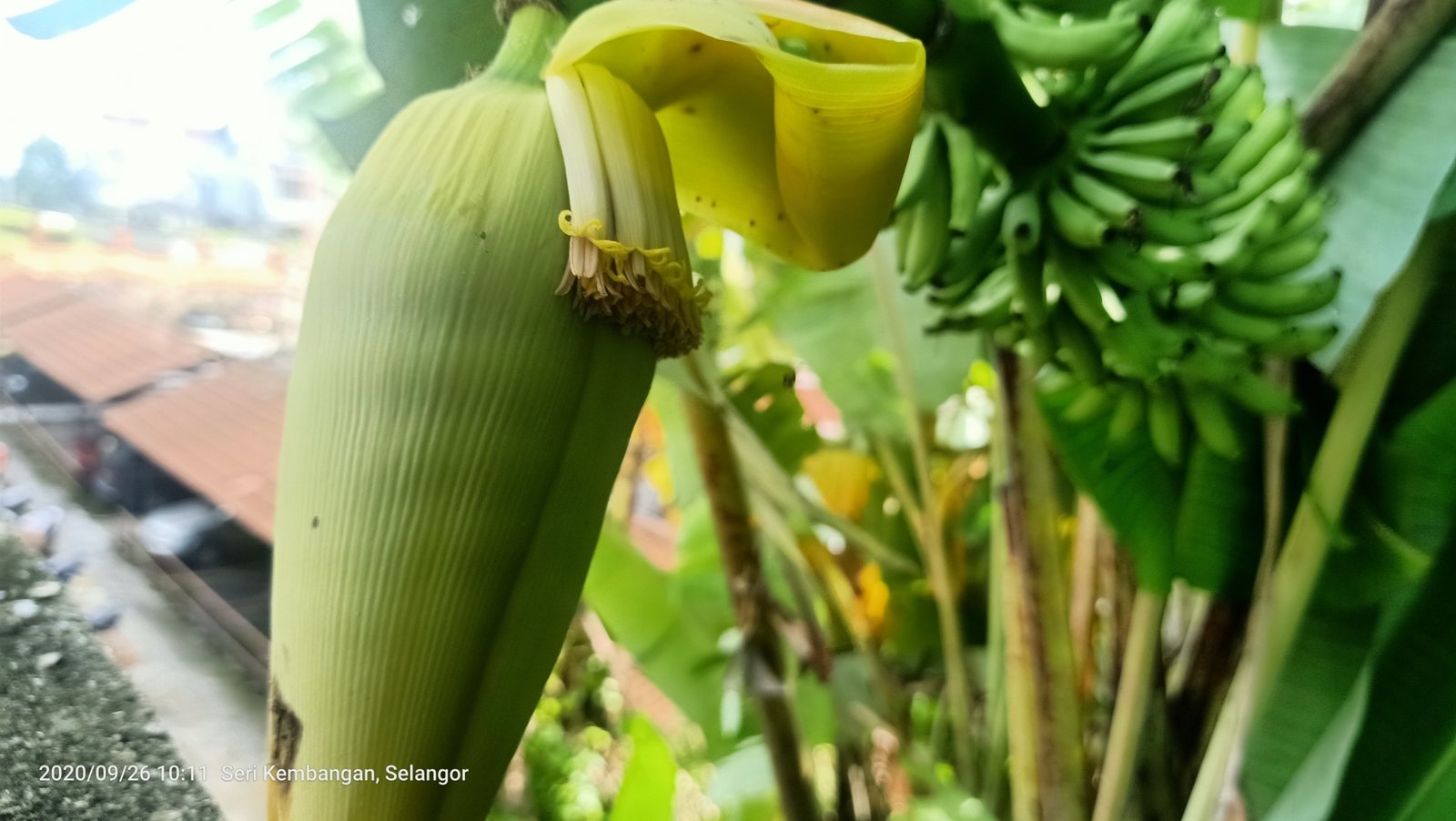
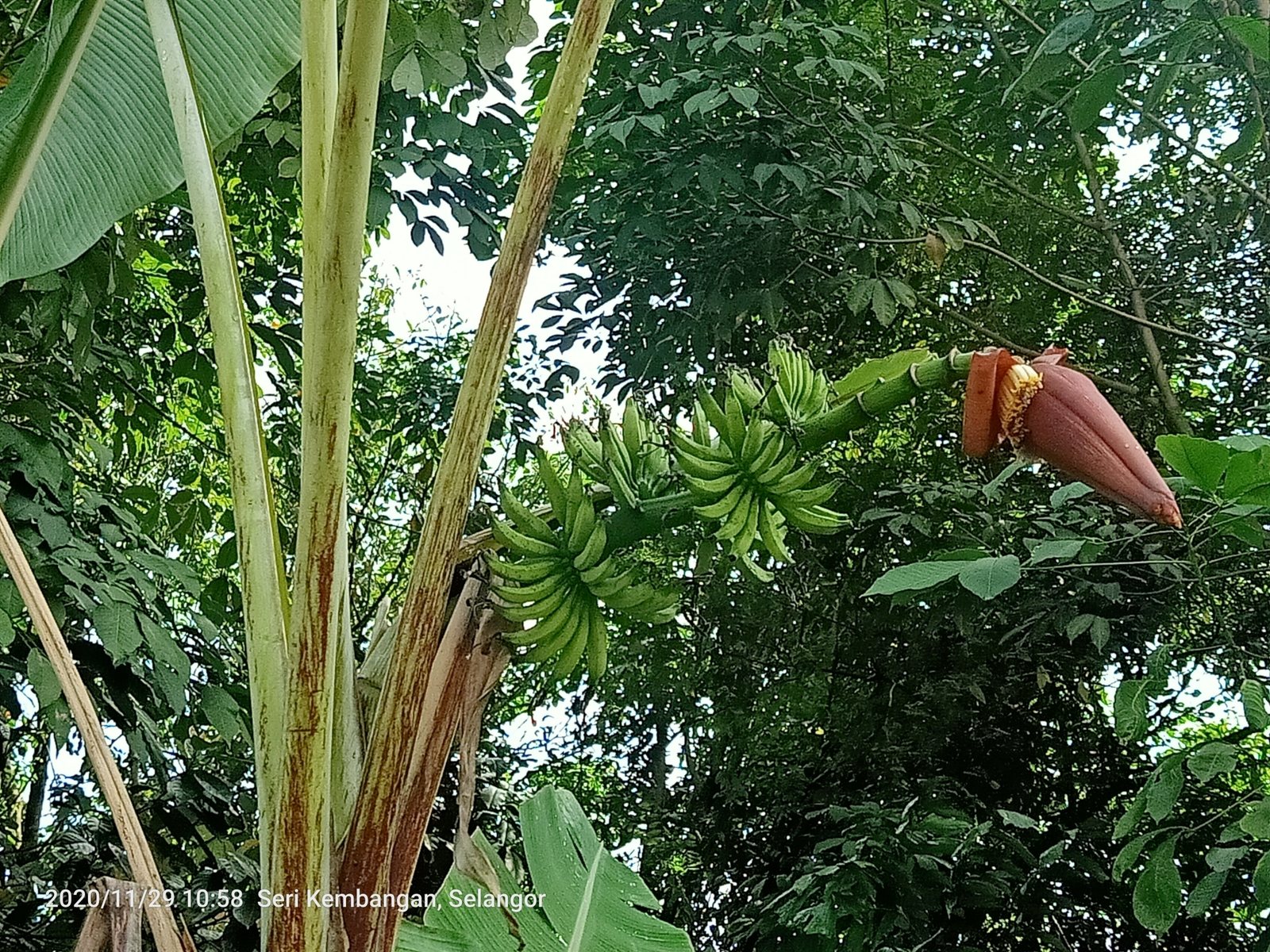
- Mature stems in frost-free conditions produce hanging flower clusters with purple-red bracts and cream to pale yellow flowers; timing depends on warmth and growing conditions.
- Foliage
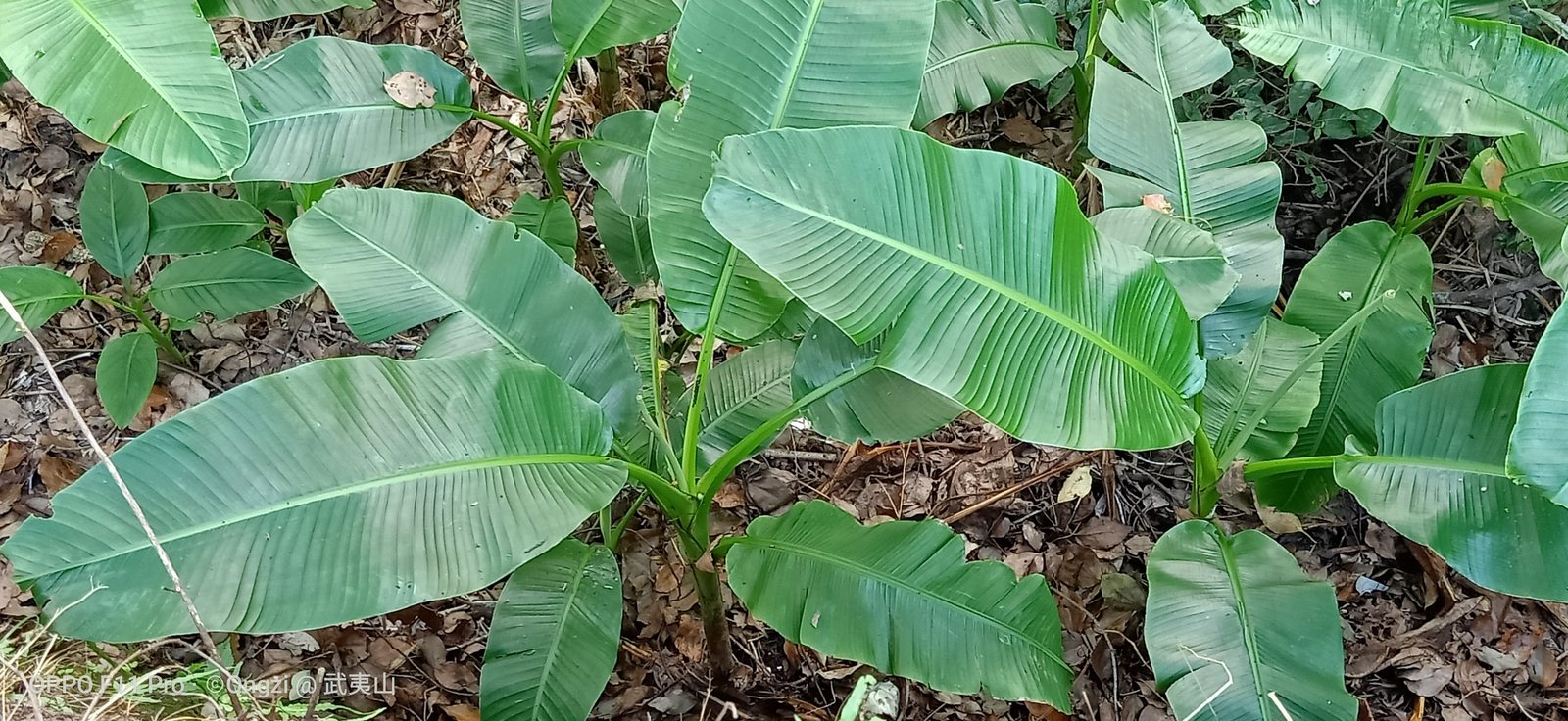
- Evergreen. Very large, bright green, paddle-shaped leaves; some selections have reddish markings. Leaves naturally split in wind.
- Growth
- Fast in warm weather with ample water and nutrients.
- Care needed
- High
The year at a glance
- Heat tolerant
- Low allergen
- Edible
| J | F | M | A | M | J | J | A | S | O | N | D | |
|---|---|---|---|---|---|---|---|---|---|---|---|---|
| Plant |
Northern hemisphere months. In Australia, shift them by six.
- Difficulty
- Hard
- Toughness
- Needs looking after
Will it suit your garden?
Pick your zone, country, light and whether you have pets.
Full sun is 6 or more hours of direct sun a day, part shade 3 to 6 hours, shade under 3.
How it grows
Planting day
1.9 ft (0.58 m)
After 1 year
9 ft (2.8 m)
After 2 years
16 ft (4.9 m)
full size
About 2 years to full size.
From a typical nursery size, at an average rate for this kind of plant. A rule of thumb, not a forecast.
Good to know
- Cats and dogs
- Safe
- In the garden
- Spreads vigorously: plan to contain it.
- Growth rate
- Fast
Care
Jobs through the year
- WaterApr–May, Sep, every 7 days
- Water established plants when the surface starts drying; check young plants and containers more often.
- WaterJun–Aug, every 3 days
- Keep established plants evenly moist, adjusting for rain; containers may need daily watering.
- WaterJan–Mar, Oct–Dec, every 14 days
- Check overwintering plants and water sparingly, keeping the root ball barely moist while growth is slow.
- FeedMay–Sep, every 14 days
- Feed during active growth with balanced fertilizer at the label rate; stop when growth slows.
- MulchJun
- Apply organic mulch over the roots without covering stem bases.
- PruneMay–Sep
- Remove dead leaves and surplus suckers, retaining one main stem and one replacement if fruit is wanted.
- ProtectMay–Jun
- Move outdoors only after frost risk passes and nights stay warm; acclimatize gradually and shelter from wind.
- ProtectJan–Apr, Sep–Dec
- Keep frost-free under cover; reliable flowering and fruiting generally require a heated greenhouse.
- HarvestJan–Dec
- Only if greenhouse fruit develops: cut the bunch when bananas are plump and the first fruit yellows; timing is unpredictable.
- Water deeply when the soil surface begins to dry during active growth; check containers frequently in hot weather.
- Feed regularly during warm growth with a balanced fertilizer, following the label rate; stop feeding when growth slows.
- Apply organic mulch over the root area, keeping it away from the stem bases.
- Shelter from strong winds and support heavy fruit bunches if necessary.
- Where fruit is wanted, retain one main stem and one strong replacement sucker, removing surplus suckers.
- In frost-prone areas, move containers into a bright, frost-free space before cold nights; keep the root ball only slightly moist while growth is slow.
Pruning. Remove dead or badly damaged leaves as needed, cutting the leaf stalk without injuring the main stem. After a stem finishes fruiting, cut that stem close to ground level and allow a replacement sucker to develop.
Harvest
Expect the first bunch 1–2 years after planting in frost-free warmth; in cooler areas, including most of the UK and Canada, fruiting usually needs a heated greenhouse and may take 2–3 years or longer. Harvest when the bananas are full-sized and plump, their sharp ridges have rounded off, and the first fruit begins to yellow.
Through the year
- Spring
- Repot crowded container plants and gradually increase watering as new growth starts.
- Late spring
- Move sheltered plants outdoors only after frost risk has passed and nights are consistently warm; acclimatize leaves gradually to direct sun.
- Summer
- Water generously, feed regularly and maintain mulch without covering the stem bases.
- Summer
- Remove unwanted suckers and check indoor or sheltered plants for spider mites.
- Autumn
- In cool climates, bring containers under cover before frost and reduce feeding as growth slows.
- Winter
- Keep protected plants frost-free, avoid saturated compost and inspect regularly for pests.
In the garden
- Use as a tall foliage focal point in a sheltered tropical border with cannas and elephant ears.
- Place a dwarf cultivar in a large courtyard container to create height without a woody canopy.
- Plant behind lower foliage plants to contrast its broad leaves with finer textures.
- Include fruiting selections in a frost-free edible garden, allowing room for replacement suckers.
Garden styles it suits: Tropical, Modern tropical, Luxury resort, Architectural minimal, Edible landscape and Balinese.
Plant it with: Canna, Elephant ears, Ginger lily, Coleus and Shell ginger.
Wildlife: In tropical regions, flowers can feed nectar-feeding birds, bats and insects, while ripe fruit attracts birds and mammals. It offers little floral food where cool conditions prevent flowering.
Problems to watch for
- Cold injury: leaves blacken and stems may collapse after frost. Move containers under cover before cold weather; do not rely on mulch to make this species reliably hardy.
- Spider mites: fine webbing and stippled leaves are common indoors. Rinse leaf undersides and use a labeled insecticidal soap if needed.
- Root rot: yellowing and collapse can follow waterlogged conditions, especially in cool weather. Improve drainage and reduce watering.
- Banana bunchy top virus: narrow, upright, crowded leaves may develop dark green streaks along veins. There is no cure; seek local plant-health advice, remove infected plants as directed and never propagate from them.
Safety
Not known to be toxic to cats, dogs, horses or people. Leaves, stems and fruit are not considered poisonous; the fruit is edible, although wild forms contain numerous hard seeds.
Easily confused with
Japanese banana (Musa basjoo)
Has similar green paddle-shaped leaves but is much more cold-tolerant at the root. Its fruit is generally small, seeded and unsuitable for eating;
Abyssinian banana (Ensete ventricosum)
Usually forms a single massive, swollen-based stem rather than a suckering clump; leaves often have a conspicuous red midrib.
White bird of paradise (Strelitzia nicolai)
Has tougher leaves arranged in distinct fans on long stalks, and produces white-and-blue bird-shaped flowers rather than hanging banana flower clusters.
The name
The species name acuminata means tapering to a point, referring to the pointed leaf tips.
Propagation. Divide healthy suckers with their own roots during warm, active growth, taking a portion of the underground corm with each. Seed-bearing wild forms can be raised from seed, but most edible selections are propagated vegetatively.
Checked against open data
- Accepted botanical name
- Musa acuminata
- In the US and Canada
- Introduced in the lower 48 states.
- Native range
- Bangladesh, Borneo, China South-Central, China Southeast, India, Jawa, Laos, Lesser Sunda Is., Malaya, Myanmar, Philippines and Sri Lanka.
Sources: GBIF (CC BY 4.0), USDA PLANTS and Trefle (CC BY 4.0). The care and design notes are LandscapeGPT's own.
See it in your own yard.
Upload a photo of your yard and see it redesigned with plants that suit your climate, each checked against your zone.