Banksia Birthday Candles
Banksia spinulosa 'Birthday Candles'. Family Proteaceae. Shrub.
Also called Banksia spinulosa 'Birthday Candles', Dwarf hairpin banksia.
This compact evergreen Australian shrub forms a low mound of narrow leaves, with upright golden flower spikes held above the foliage. Gardeners grow it for autumn and winter colour, nectar-feeding wildlife and its manageable size in small gardens and containers. It needs excellent drainage and suits mild climates; protect container plants from prolonged freezing.
At a glance
- Sun
- Full sun gives the best flowering; tolerates light partial shade.
- Water
- Water regularly while establishing, then deeply during extended dry spells. Container plants need more frequent watering, but must never stand in water.
- Soil
- Well-drained, preferably sandy or gravelly soil with an acidic to neutral pH. Avoid waterlogged ground, strongly alkaline soil and phosphorus-rich compost or fertiliser.
- Height
- 1-2 ft (0.3-0.6 m)
- Spread
- 2-4 ft (0.6-1.2 m)
- Flowers
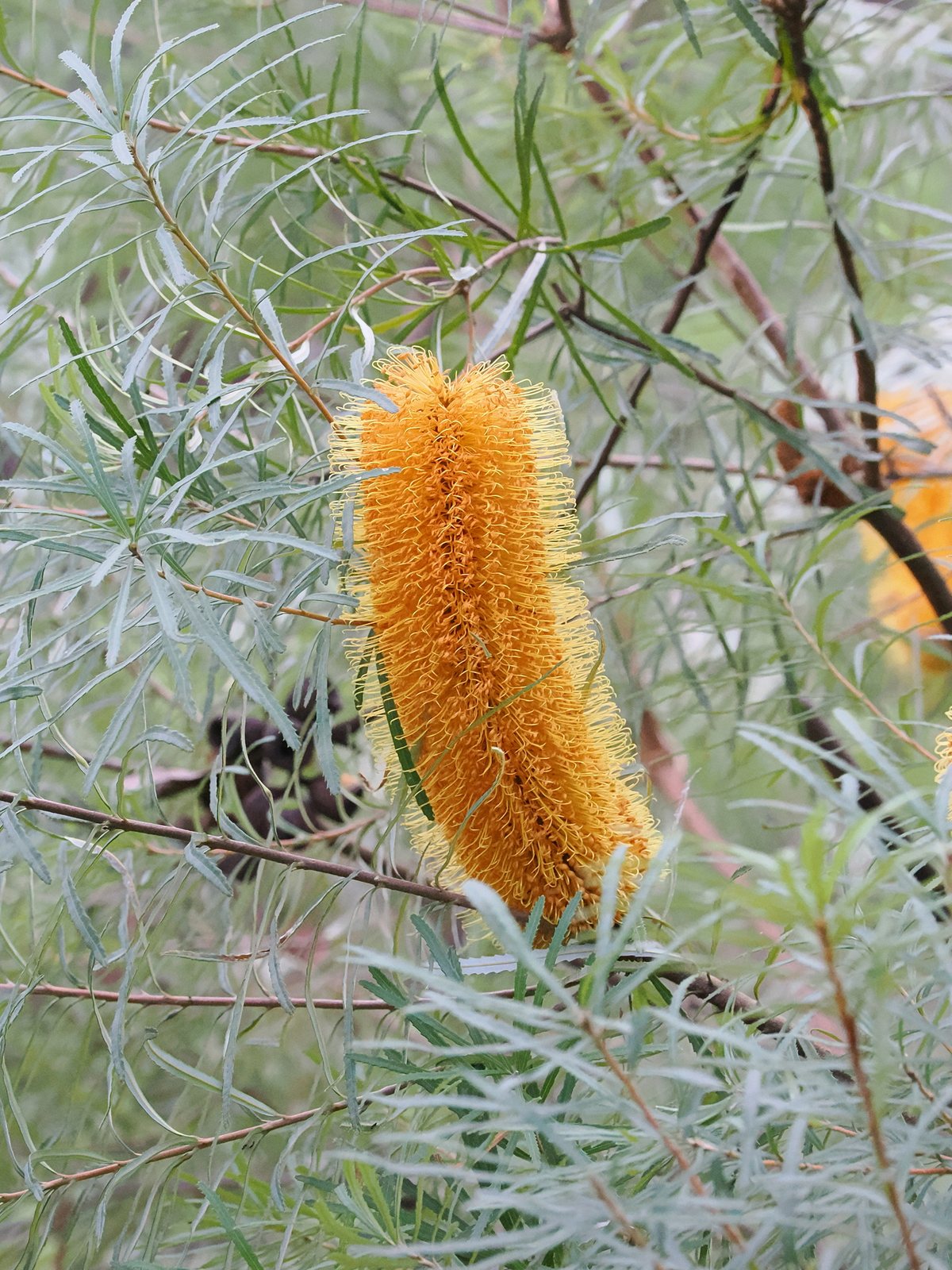
- Golden-yellow cylindrical spikes with reddish-brown styles, mainly from autumn through winter, sometimes continuing into spring.
- Foliage
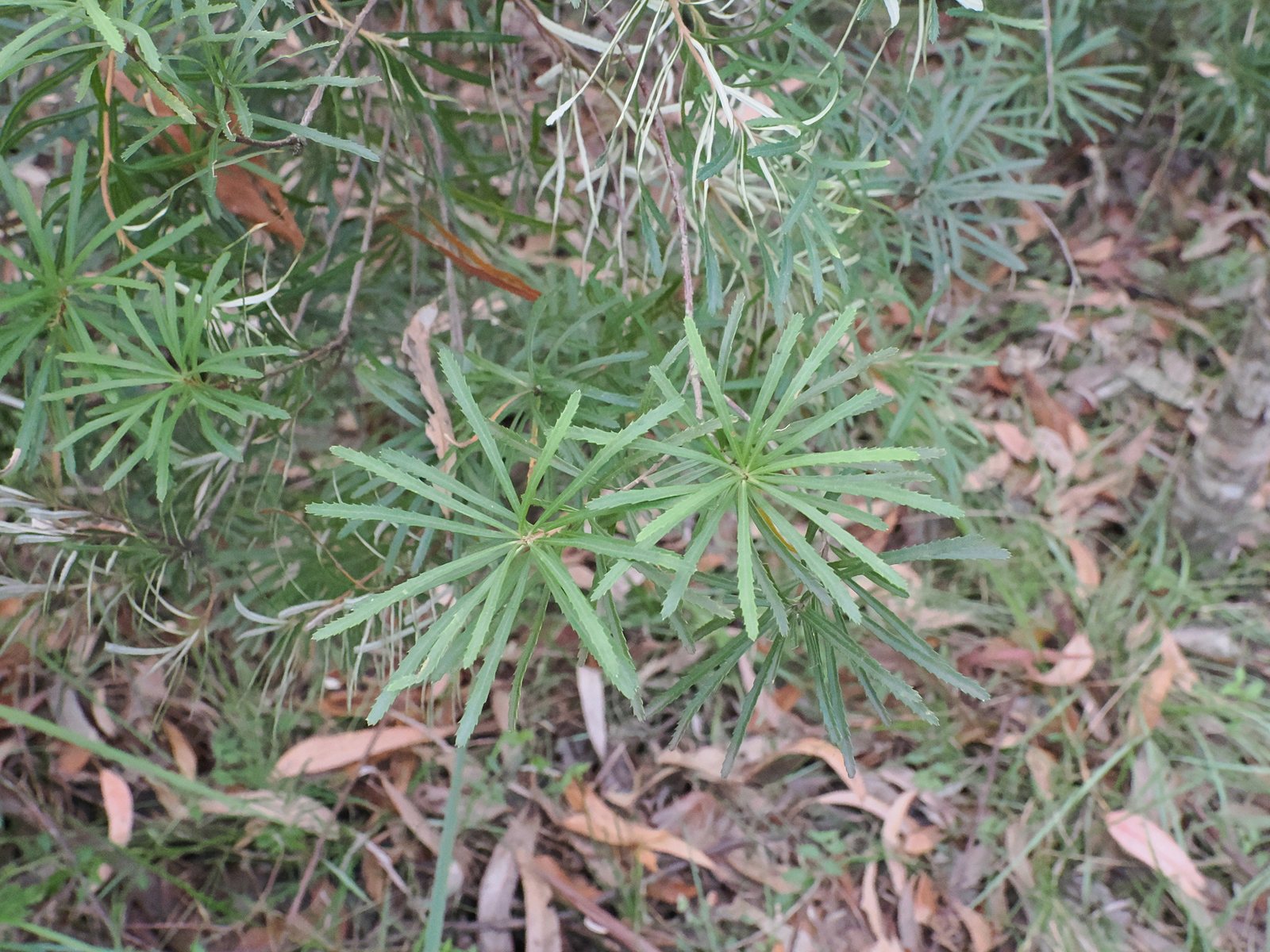
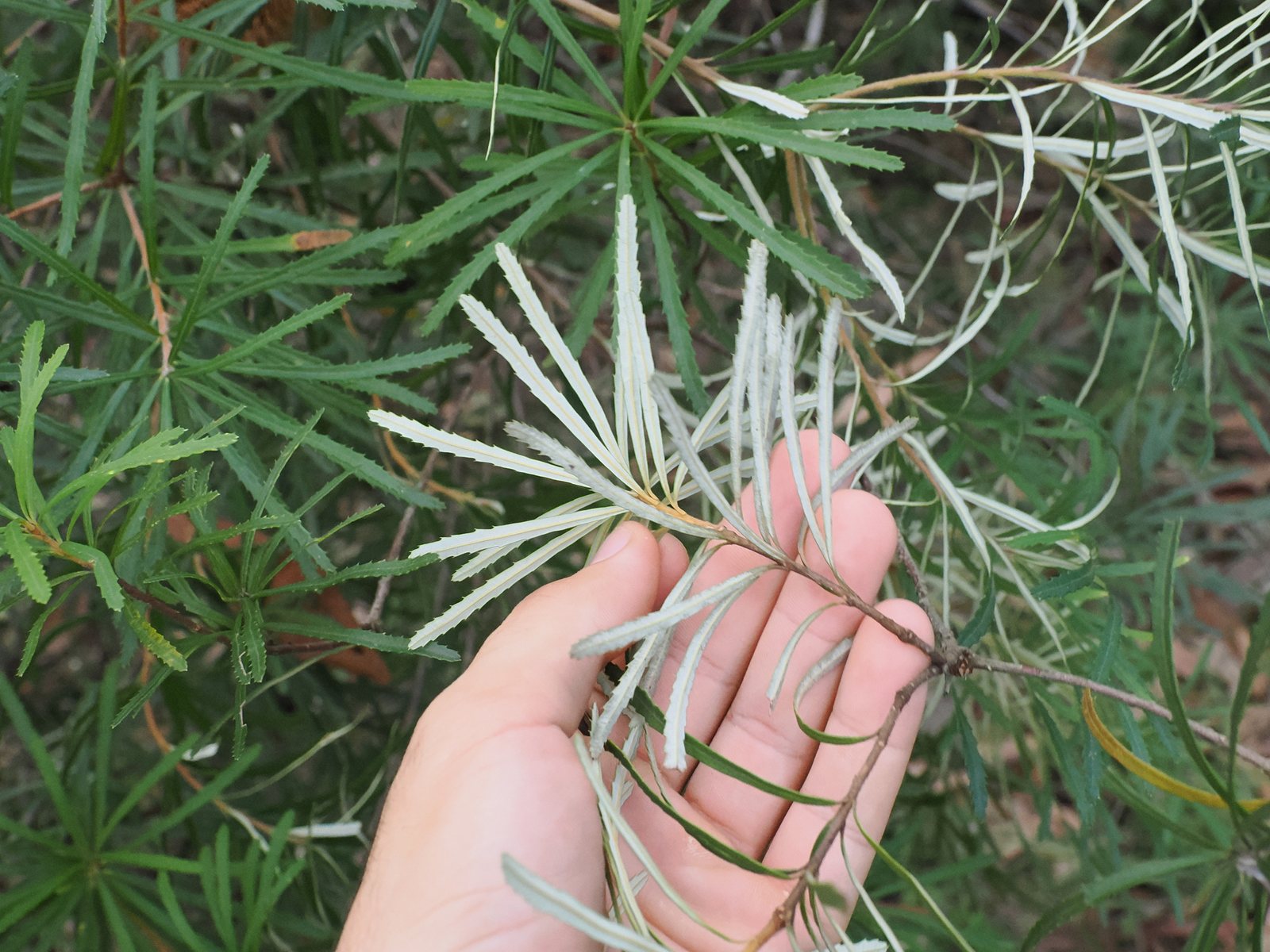
- Narrow, dark green leaves with pale undersides, rolled edges and small teeth, forming a dense evergreen mound.
- Growth
- Slow
- Care needed
- Low
The year at a glance
- Pollinators
- Drought tolerant
- Heat tolerant
- Wildlife
- Low allergen
| J | F | M | A | M | J | J | A | S | O | N | D | |
|---|---|---|---|---|---|---|---|---|---|---|---|---|
| Flowers | ||||||||||||
| Fruit | ||||||||||||
| Plant |
Northern hemisphere months. In Australia, shift them by six.
- Difficulty
- Hard
- Toughness
- Fairly tough
Will it suit your garden?
Pick your zone, country, light and whether you have pets.
Full sun is 6 or more hours of direct sun a day, part shade 3 to 6 hours, shade under 3.
How it grows
Planting day
1.5 ft (0.45 m)
full size
About 8 years to full size.
From a typical nursery size, at an average rate for this kind of plant. A rule of thumb, not a forecast.
Good to know
- Cats and dogs
- Safe
- Native to
- Australia
- Growth rate
- Slow
Care
Jobs through the year
- WaterApr–May, Sep–Oct, every 14 days
- Check established ground plants and water if dry; young plants and pots need more frequent checks.
- WaterJun–Aug, every 7 days
- Deep-water established ground plants during dry spells; never leave pots standing in water.
- FeedApr–May
- Feed sparingly only if needed, using a low-phosphorus product explicitly suitable for banksias.
- MulchMay
- Apply a light layer of coarse mulch, keeping it away from the stem.
- PruneMay
- After flowering, lightly trim leafy shoots; retain spikes if woody seed cones are wanted.
- ProtectJan–Apr, Oct–Dec
- Overwinter in bright, frost-free shelter; outdoor ground planting is unsuitable for zone 6–7 winters.
- Plant with the root ball level with the surrounding soil; choose a raised bed or container if drainage is poor.
- Water deeply during establishment, allowing the surface soil to begin drying between waterings.
- Feed sparingly, using only a low-phosphorus fertiliser labelled suitable for banksias or phosphorus-sensitive Australian natives.
- Apply a light layer of coarse mulch, keeping it clear of the stem.
- Use a free-draining, low-phosphorus potting mix in containers and keep drainage holes unobstructed.
- In cold regions, move pots into a bright, frost-free shelter for winter.
Pruning. After flowering, remove spent spikes if desired and lightly trim leafy shoots to maintain shape. Avoid hard cutting into bare old wood, and do not assume this dwarf cultivar will recover from severe pruning.
Through the year
- Spring
- Plant in frost-prone mild climates once hard frosts have passed; water new plants regularly.
- Late spring
- After flowering finishes, lightly trim uneven growth and remove spent flower spikes if wanted.
- Summer
- Check container moisture frequently and water established garden plants during prolonged drought.
- Early autumn
- Plant in mild, frost-light climates while the soil is still warm; refresh mulch without covering the stem.
- Late autumn
- Move containers under bright, frost-free cover where winter temperatures regularly fall below freezing.
- Winter
- Keep sheltered pots slightly moist rather than wet, and check outdoor plants for poor drainage after heavy rain.
In the garden
- Use at the front of an Australian-native border, where the flower spikes remain visible above the low foliage.
- Grow in a broad container on a sunny terrace, using a free-draining native-plant potting mix.
- Repeat along a sunny path with low grasses and kangaroo paws for contrasting foliage and flower shapes.
- Plant on a well-drained coastal bank or raised gravel bed for evergreen structure and cool-season flowers.
Garden styles it suits: Australian native, Coastal, Wildlife garden, Dry gravel garden, Small-space and Winter interest.
Plant it with: Kangaroo paw, Waxflower, Coastal rosemary, Dwarf lomandra, Small grass tree and Grevillea.
Wildlife: Nectar-rich flowers attract honeyeaters and other nectar-feeding birds in Australia, as well as bees and other insects. Bird visitors vary outside its native region.
Problems to watch for
- Root rot, including Phytophthora, can cause wilting and dieback in wet soil: improve drainage, avoid overwatering and remove badly affected plants.
- Phosphorus toxicity can cause yellowing, scorched leaf tips and decline: stop unsuitable fertiliser and use only products formulated for phosphorus-sensitive natives.
- Yellow leaves with green veins can indicate iron deficiency in alkaline soil: check soil pH and consider growing in a container with a suitable acidic mix.
- Frost can scorch foliage and damage young growth: shelter plants from cold winds and protect pots during freezing weather.
Safety
Not known to be toxic to people, cats, dogs or horses. It is not a food plant, and the stiff, toothed leaves may cause minor scratches.
Easily confused with
Hairpin banksia (Banksia spinulosa)
Ordinary seed-grown plants usually become much taller shrubs, although their leaves and flower spikes can look very similar. A reliable cultivar label is the best way to confirm 'Birthday Candles'.
Heath banksia (Banksia ericifolia)
Usually grows into a much larger shrub, with finer, mostly untoothed leaves and typically orange to reddish flower spikes.
The name
Banksia honours botanist Sir Joseph Banks, while spinulosa means finely spiny, referring to the small teeth on the leaves.
Propagation. Propagate from semi-ripe cuttings taken from healthy, non-flowering shoots; rooting can be slow and unreliable at home. Seed-grown plants will not reliably retain the cultivar's dwarf habit.
Checked against open data
- Accepted botanical name
- Banksia spinulosa
- Native range
- New South Wales and Queensland.
- Measured
- Average height 200 cm.
Sources: GBIF (CC BY 4.0) and Trefle (CC BY 4.0). The care and design notes are LandscapeGPT's own.
See it in your own yard.
Upload a photo of your yard and see it redesigned with plants that suit your climate, each checked against your zone.