Barbara Karst bougainvillea
Bougainvillea × buttiana 'Barbara Karst'. Family Nyctaginaceae. Climber.
Also called Bougainvillea × buttiana 'Barbara Karst', Paperflower 'Barbara Karst'.
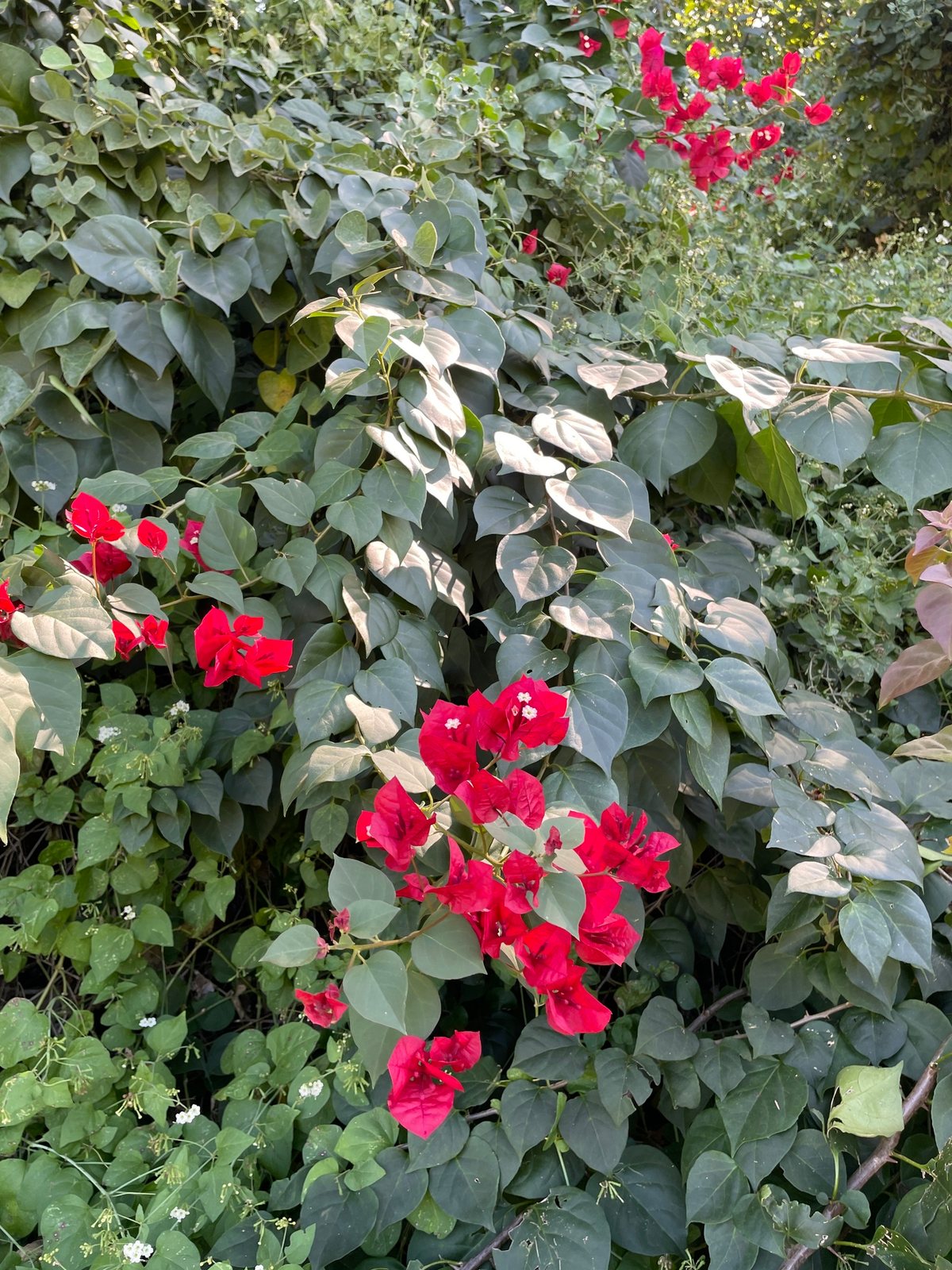
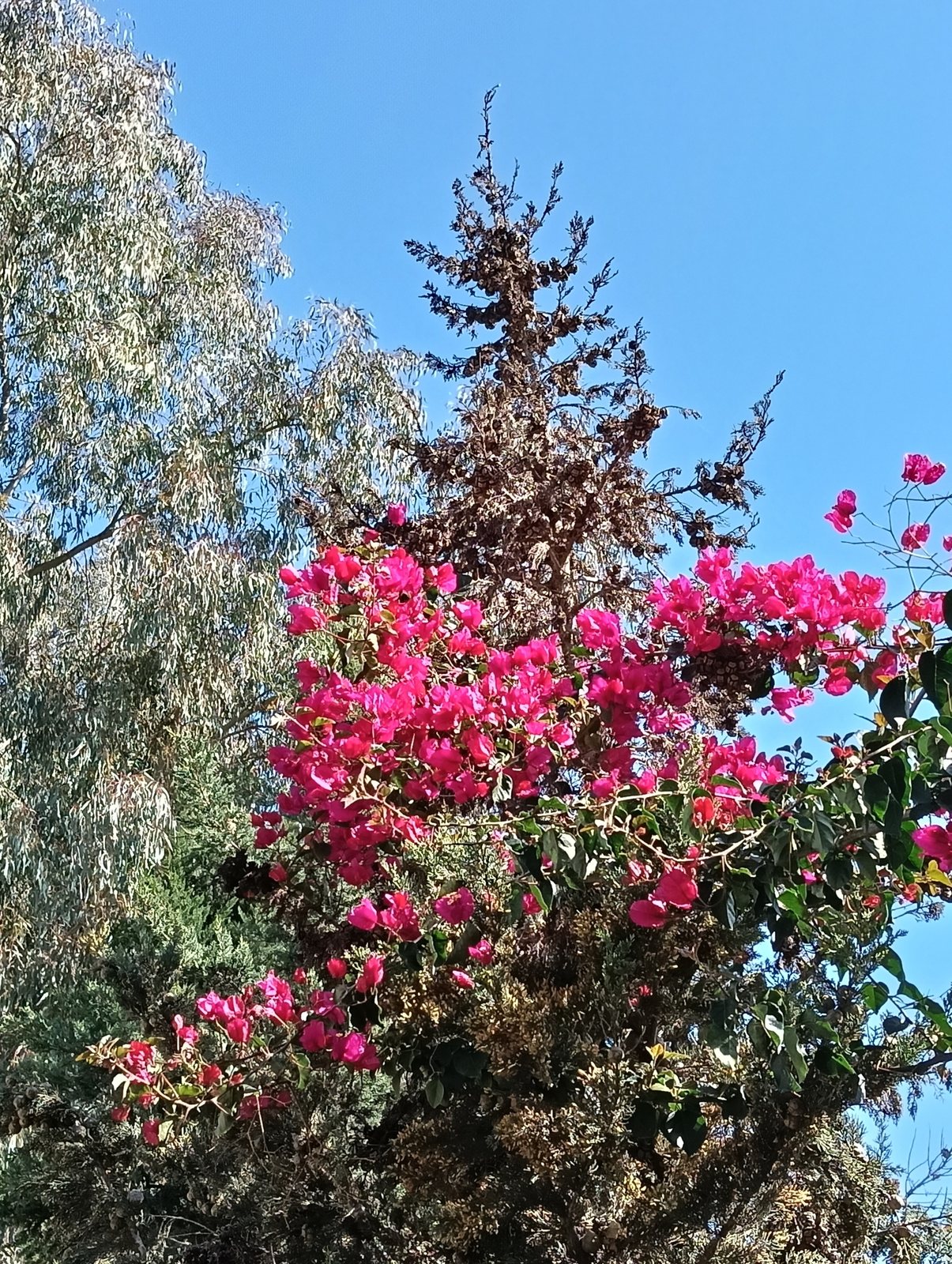
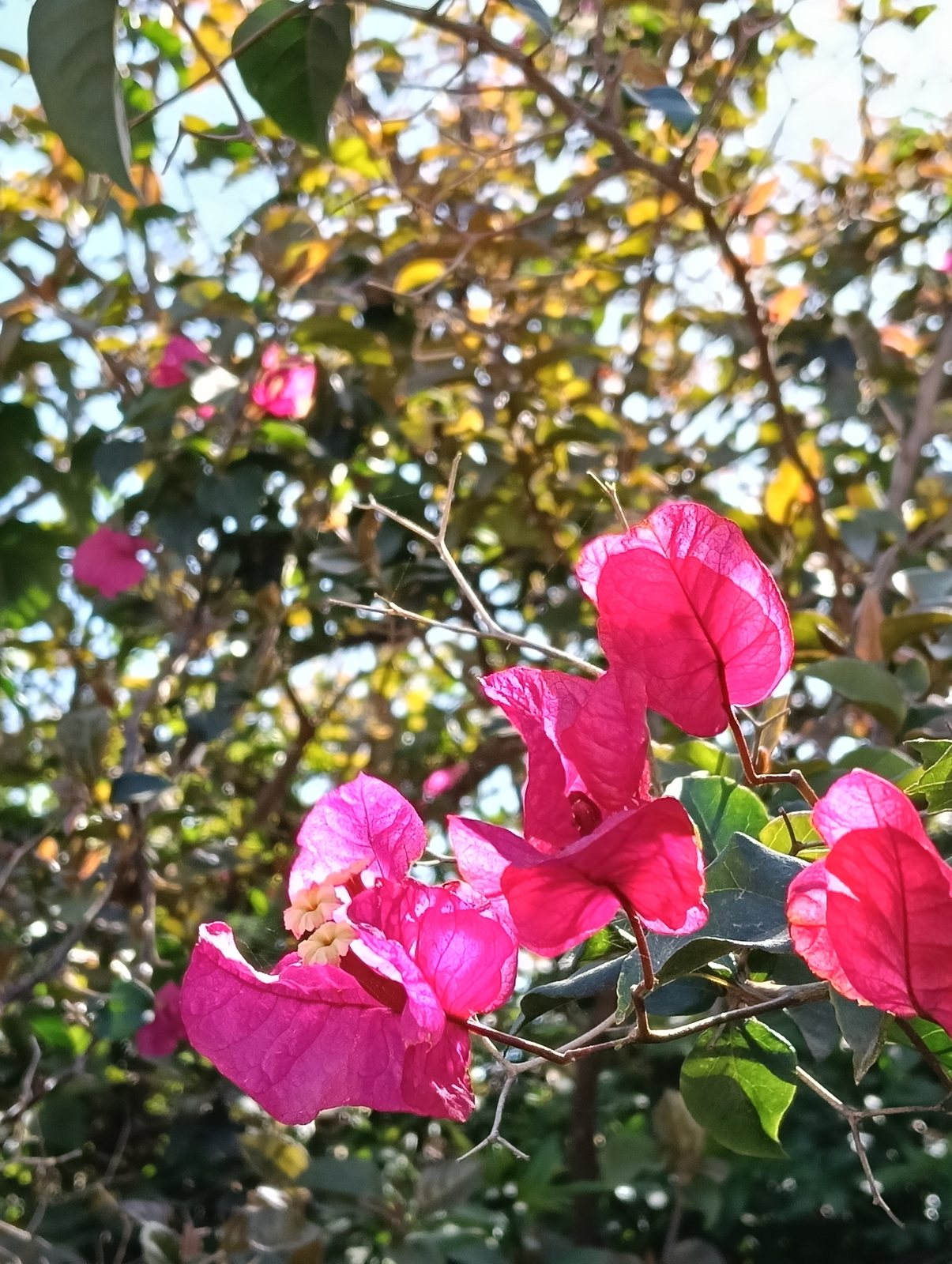
A vigorous, thorny, woody climber grown for masses of bright red to magenta-red papery bracts surrounding tiny white flowers. It covers sunny walls and pergolas in frost-free climates; in the UK, most of Canada and colder parts of the United States and Australia, grow it in a container and overwinter it under cover.
At a glance
- Sun
- Full sun; give it at least 6 hours of direct sunlight daily for good flowering.
- Water
- Water deeply, then let the soil partly dry before watering again. Established plants in the ground tolerate drought; containers need more frequent checks.
- Soil
- Well-drained sandy or loamy soil; avoid waterlogged ground. In containers, use a free-draining potting mix and a pot with drainage holes.
- Height
- 15-30 ft (4.6-9.1 m) with support in warm climates; smaller in containers
- Spread
- 10-20 ft (3-6.1 m) if left unrestrained
- Flowers
- Repeated flushes from spring through autumn, sometimes nearly year-round in frost-free climates; red to magenta-red bracts surround small white flowers.
- Foliage
- Evergreen. Green, pointed, oval leaves on long, thorny stems; foliage may fall during cold weather or drought.
- Growth
- Fast in warm weather
- Care needed
- Medium
The year at a glance
- Pollinators
- Drought tolerant
- Heat tolerant
- Low allergen
| J | F | M | A | M | J | J | A | S | O | N | D | |
|---|---|---|---|---|---|---|---|---|---|---|---|---|
| Flowers | ||||||||||||
| Plant |
Northern hemisphere months. In Australia, shift them by six.
- Difficulty
- Moderate
- Toughness
- Fairly tough
Will it suit your garden?
Pick your zone, country, light and whether you have pets.
Full sun is 6 or more hours of direct sun a day, part shade 3 to 6 hours, shade under 3.
How it grows
Planting day
2 ft (0.6 m)
After 1 year
3 ft (1.1 m)
After 2 years
5 ft (1.5 m)
After 3 years
6 ft (1.8 m)
full size
About 3 years to full size.
From a typical nursery size, at an average rate for this kind of plant. A rule of thumb, not a forecast.
Good to know
- Cats and dogs
- Mildly toxic: may upset a stomach
- Growth rate
- Fast
Care
Jobs through the year
- WaterApr–May, Sep–Oct, every 7 days
- In this climate grow in a pot; water only after partial drying, then drain thoroughly.
- WaterJun–Aug, every 3 days
- Check pots and water deeply only if partly dry; established frost-free ground plants need less.
- WaterJan–Mar, Nov–Dec, every 21 days
- Under frost-free cover, water sparingly after partial drying; never leave standing water.
- FeedMay–Aug, every 28 days
- Feed container plants lightly with flowering-plant fertilizer, following its label.
- PruneMar–Apr
- Under frost-free cover, remove dead wood and shorten wayward stems; wear thick gloves.
- PruneJun–Sep
- Lightly shorten long shoots after a flowering flush; avoid repeated hard clipping.
- ProtectSep–Oct
- Bring the pot into bright, frost-free shelter before the first frost.
- ProtectJan–Apr, Nov–Dec, every 14 days
- Keep frost-free and inspect sheltered growth for whitefly, scale and aphids.
- ProtectMay–Jun
- After frost, gradually acclimatise to outdoor sun and tie stems loosely to sturdy supports.
- Plant after frost danger has passed, keeping the root ball intact because roots resent disturbance.
- Provide a strong trellis or wires and tie stems loosely; it does not cling to walls by itself.
- Water thoroughly and allow partial drying between waterings; never leave a container standing in water.
- Feed container plants lightly during active growth with a flowering-plant fertiliser; avoid heavy nitrogen feeding.
- Move containers into a bright, frost-free place before cold weather and reduce watering while growth is slow.
- Wear thick gloves and keep thorny stems clear of paths, seating and play areas.
Pruning. In late winter or early spring, once frost risk has passed, remove dead or damaged growth and shorten wayward stems to the framework. Lightly trim long shoots after a flowering flush to encourage branching; repeated hard clipping removes flowering growth.
Through the year
- Late winter
- Check overwintered plants for pests and remove dead stems; delay outdoor pruning where frost remains possible.
- Spring
- After the last frost, plant or move containers outdoors gradually, acclimatising sheltered plants to direct sun.
- Late spring
- Tie new stems to supports and begin light feeding when growth is active.
- Summer
- Check container moisture frequently, water deeply when needed and trim lightly after flowering flushes.
- Autumn
- Stop feeding as growth slows and bring containers under cover before frost.
- Winter
- Keep sheltered plants bright and frost-free, watering sparingly without allowing the root ball to dry out completely.
In the garden
- Train over a sturdy pergola for a bright overhead canopy in a frost-free courtyard.
- Spread across wires on a sunny wall to soften masonry with long flowering flushes.
- Grow in a large container beside a sheltered terrace, allowing room to move it indoors where winters are cold.
- Combine with silver foliage and drought-tolerant planting for strong colour contrast in a Mediterranean-style garden.
Garden styles it suits: Mediterranean, Modern Mediterranean, Modern courtyard, Spanish courtyard, Mexican hacienda and Tropical.
Plant it with: Lavender, Rosemary, Society garlic, Blue chalk sticks, Agave and African lily.
Wildlife: The small flowers can attract butterflies and other nectar-feeding insects. Dense mature growth may provide shelter for small birds, but this is not a native wildlife planting in the listed countries.
Problems to watch for
- Few bracts and excessive leafy growth: increase direct sun, reduce nitrogen feeding and avoid constantly wet soil.
- Yellowing leaves, wilting and root rot in wet soil: improve drainage and let the root zone partly dry between waterings.
- Aphids, whiteflies or scale, especially under cover: inspect leaf undersides and stems, and treat with a labelled insecticidal soap or horticultural oil away from strong sun.
- Cold damage and leaf drop: protect from frost, keep container plants under cover and wait until spring growth starts before cutting back damaged wood.
Safety
Not known to be seriously poisonous to cats, dogs, horses or people. Sap from leaves and stems can irritate skin, and chewing plant material may cause mouth or stomach irritation. Sharp thorns are the main hazard and can cause puncture wounds.
Easily confused with
Lesser bougainvillea (Bougainvillea glabra)
Typical forms have purple or magenta bracts rather than the red to magenta-red display of 'Barbara Karst'. Hybrid cultivars overlap in appearance, so a reliable nursery label is more dependable than colour alone.
Mandevilla (Mandevilla spp.)
Has large trumpet-shaped flowers and twining, usually thornless stems; bougainvillea has papery coloured bracts, tiny central flowers and thorny woody stems.
The name
Bougainvillea honours Louis Antoine de Bougainville, the French navigator whose expedition brought the plant to European attention.
Propagation. Take semi-ripe stem cuttings during the warm growing season and root them in a free-draining medium with warmth and humidity. Rooting can be slow or uneven; cuttings preserve the cultivar, whereas seedlings do not.
Checked against open data
- Accepted botanical name
- Bougainvillea buttiana
Sources: GBIF (CC BY 4.0) and Trefle (CC BY 4.0). The care and design notes are LandscapeGPT's own.
See it in your own yard.
Upload a photo of your yard and see it redesigned with plants that suit your climate, each checked against your zone.