Beauty bush
Kolkwitzia amabilis. Family Caprifoliaceae. Shrub.
Also called Beautybush.
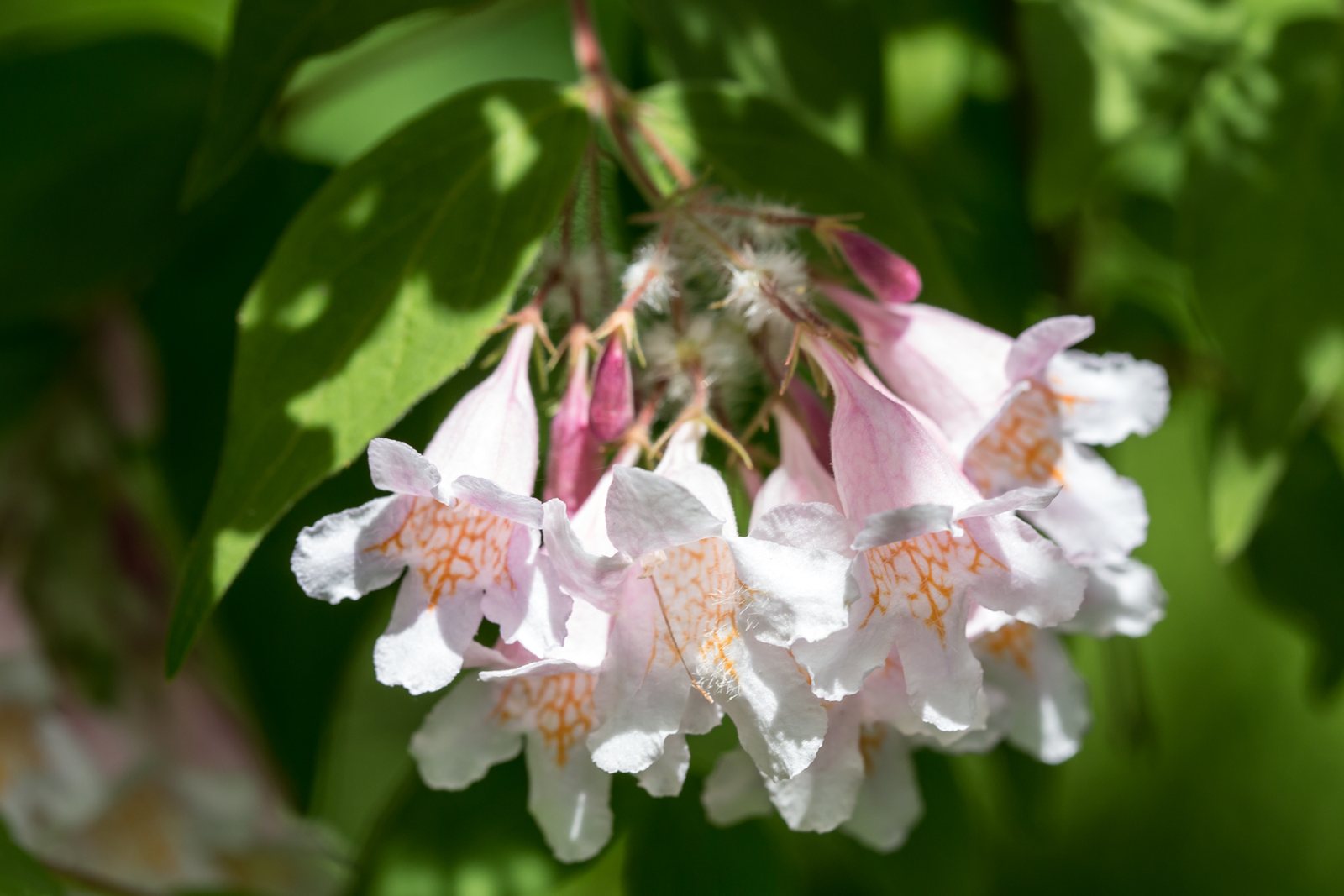
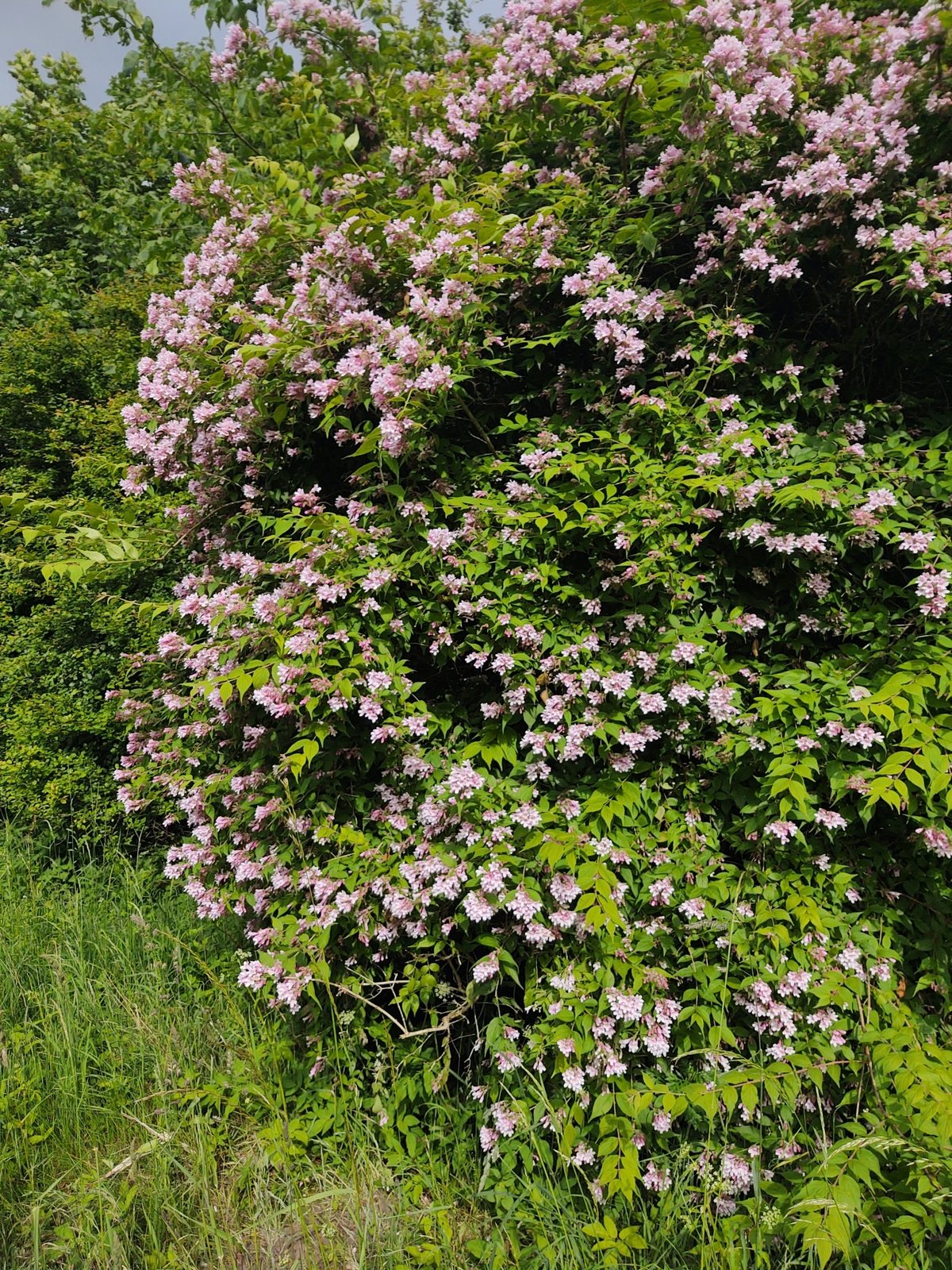
Beauty bush is a large, deciduous shrub with arching branches covered in soft pink flowers in late spring. Gardeners grow it for its generous flowering and informal shape; give it room to spread rather than trying to keep it tightly clipped.
At a glance
- Sun
- Full sun for the best flowering; tolerates partial shade.
- Water
- Water regularly while establishing. Established plants tolerate some drought but benefit from deep watering during prolonged dry spells.
- Soil
- Well-drained soil, including clay, loam or sandy soil; tolerates a broad pH range. Avoid waterlogged ground.
- Height
- 6-10 ft (1.8-3 m)
- Spread
- 6-10 ft (1.8-3 m)
- Flowers
- Late spring to early summer; masses of pale pink, bell-shaped flowers with yellow markings inside the throat.
- Foliage
- Opposite, oval green leaves with pointed tips; autumn colour is usually yellowish and variable. Older stems develop peeling bark.
- Growth
- Moderate to fast once established.
- Care needed
- Low
The year at a glance
- Pollinators
- Drought tolerant
- Cold hardy
- Wildlife
- Low allergen
| J | F | M | A | M | J | J | A | S | O | N | D | |
|---|---|---|---|---|---|---|---|---|---|---|---|---|
| Flowers | ||||||||||||
| Plant |
Northern hemisphere months. In Australia, shift them by six.
- Difficulty
- Easy
- Toughness
- Very tough
Will it suit your garden?
Pick your zone, country, light and whether you have pets.
Full sun is 6 or more hours of direct sun a day, part shade 3 to 6 hours, shade under 3.
How it grows
Planting day
1.6 ft (0.5 m)
After 1 year
3 ft (0.98 m)
After 2 years
5 ft (1.5 m)
After 3 years
6 ft (1.9 m)
After 5 years
8 ft (2.4 m)
full size
About 4 years to full size.
From a typical nursery size, at an average rate for this kind of plant. A rule of thumb, not a forecast.
Good to know
- Cats and dogs
- Safe
- Growth rate
- Fast
Care
Jobs through the year
- WaterApr–May, Sep–Oct, every 14 days
- Water established shrubs only during prolonged dry spells; young plants need more frequent watering.
- WaterJun–Aug, every 14 days
- Soak established shrubs during prolonged drought; water regularly for the first two summers.
- MulchMar–Apr
- Top-dress with compost and maintain 5–8 cm of mulch, clear of stem bases.
- PruneJun–Jul
- Immediately after flowering, remove up to one-third of the oldest stems at ground level.
- PruneSep–Oct
- Remove unwanted basal shoots without trimming healthy flowering wood.
- Water deeply during dry weather for the first two growing seasons.
- Apply a 2-3 in (5-8 cm) layer of organic mulch, keeping it clear of the stem bases.
- Top-dress with compost in spring; use fertiliser only if growth is weak, as excess nitrogen encourages leaves rather than flowers.
- Allow room for the arching branches instead of shearing the shrub into a compact shape.
- Remove unwanted basal shoots if they extend beyond the space you have allowed.
Pruning. Prune immediately after flowering, removing up to one-third of the oldest stems at ground level and shortening flowered shoots only where needed. Avoid routine winter pruning because it removes wood that would flower the following spring.
Through the year
- Early spring
- Plant when the soil is workable and not waterlogged; water thoroughly.
- Spring
- Top-dress with compost and renew mulch, keeping it away from the stems.
- Late spring to early summer
- After flowering, thin out selected old stems and remove dead or damaged growth.
- Summer
- Water young plants during dry spells and take softwood cuttings from healthy, non-flowering shoots.
- Autumn
- Plant while the soil remains warm in mild climates, and remove unwanted rooted basal shoots.
- Winter
- Check for broken branches, but leave healthy flowering wood unpruned.
In the garden
- Use as a specimen in a lawn or broad border where its arching outline can develop fully.
- Plant in a mixed shrub border with lilacs and mock oranges for a succession of spring and early-summer flowers.
- Include in a loose flowering hedge or informal boundary rather than a clipped hedge.
- Underplant with hardy geraniums and spring bulbs to cover the ground beneath its open branches.
Garden styles it suits: English country, Cottage garden, Romantic rose garden, Traditional, Low-maintenance and Pastel border.
Plant it with: Lilac, Mock orange, Hardy geranium, Catmint, Peony and Daffodil.
Wildlife: Flowers attract bees and other pollinating insects. The dense branching provides shelter for small birds.
Problems to watch for
- Few flowers: move to a sunnier position if heavily shaded, avoid high-nitrogen feeding, and prune only after flowering.
- Overcrowded, twiggy growth: remove selected old stems at ground level after flowering to encourage replacement shoots.
- Wilting or root decline in wet ground: improve drainage or replant in a better-drained position; do not keep the soil constantly saturated.
- Aphids on young shoots: tolerate small colonies or wash them off with water; avoid broad-spectrum insecticides that harm their predators.
Safety
Not known to be toxic to people, cats, dogs or horses, and no part is generally recognised as poisonous. Specific toxicity information is limited, particularly for horses; it is not an edible plant.
Easily confused with
Weigela (Weigela florida)
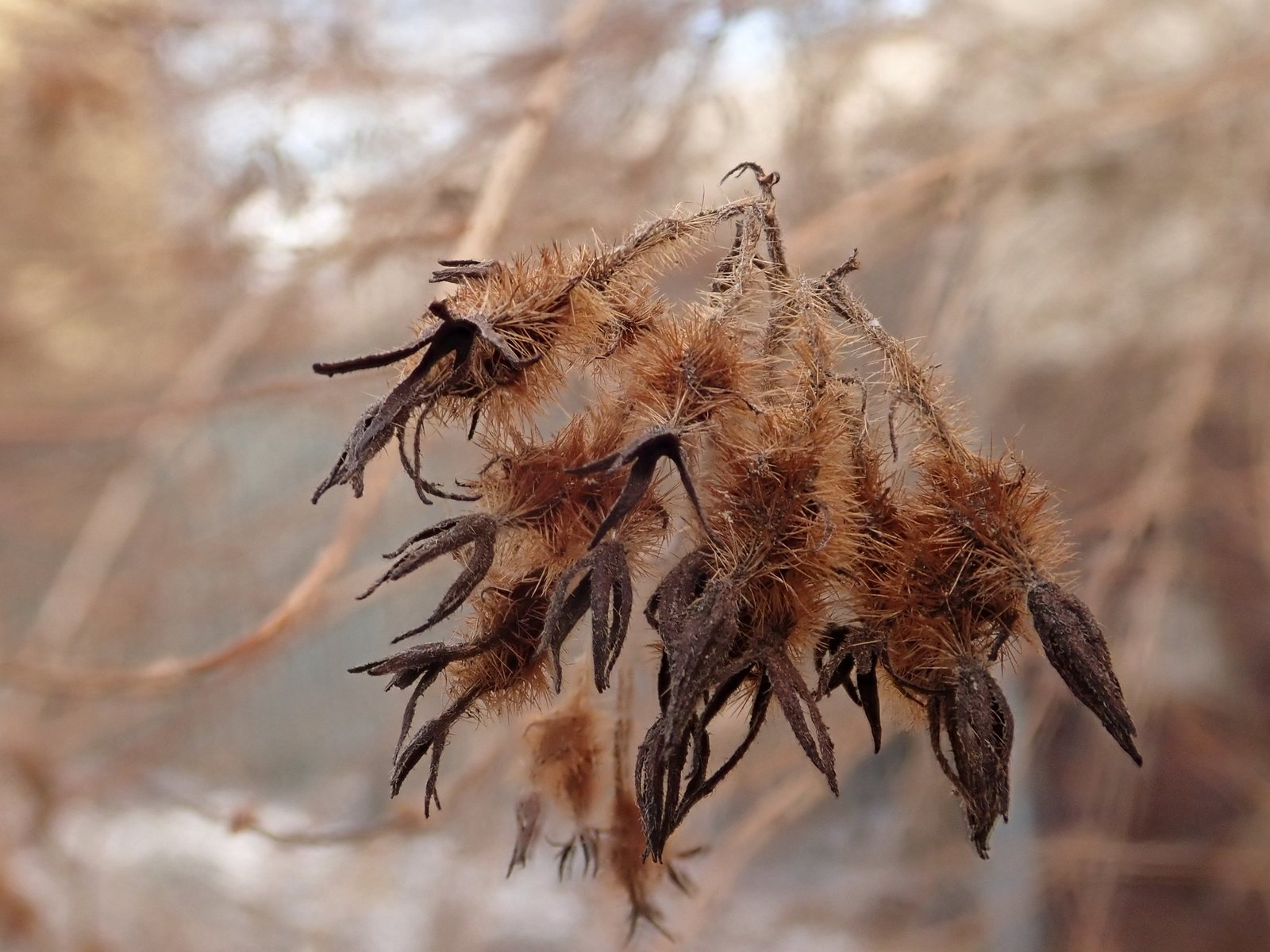
Weigela usually has longer, more tubular flowers and lacks beauty bush's distinctive bristly fruits. Beauty bush flowers are shorter bells with yellow throat markings.
Pink deutzia (Deutzia × rosea)
Deutzia has more open, star-shaped flowers with five clearly spreading petals; beauty bush has bell-shaped flowers with petals joined into a tube.
The name
Kolkwitzia honours the German botanist Richard Kolkwitz, while amabilis is Latin for lovely or lovable.
Propagation. Take softwood cuttings in early summer or semi-ripe cuttings later in summer. Low branches can also be layered, and rooted basal shoots can be separated during dormancy.
Checked against open data
- Accepted botanical name
- Kolkwitzia amabilis
- In the US and Canada
- Introduced in the lower 48 states.
- Native range
- China North-Central, China South-Central and China Southeast.
- Measured
- Average height 300 cm.
Sources: GBIF (CC BY 4.0), USDA PLANTS and Trefle (CC BY 4.0). The care and design notes are LandscapeGPT's own.
See it in your own yard.
Upload a photo of your yard and see it redesigned with plants that suit your climate, each checked against your zone.