Becky Shasta daisy
Leucanthemum × superbum 'Becky'. Family Asteraceae. Perennial.
Also called Leucanthemum × superbum 'Becky', Shasta daisy 'Becky'.
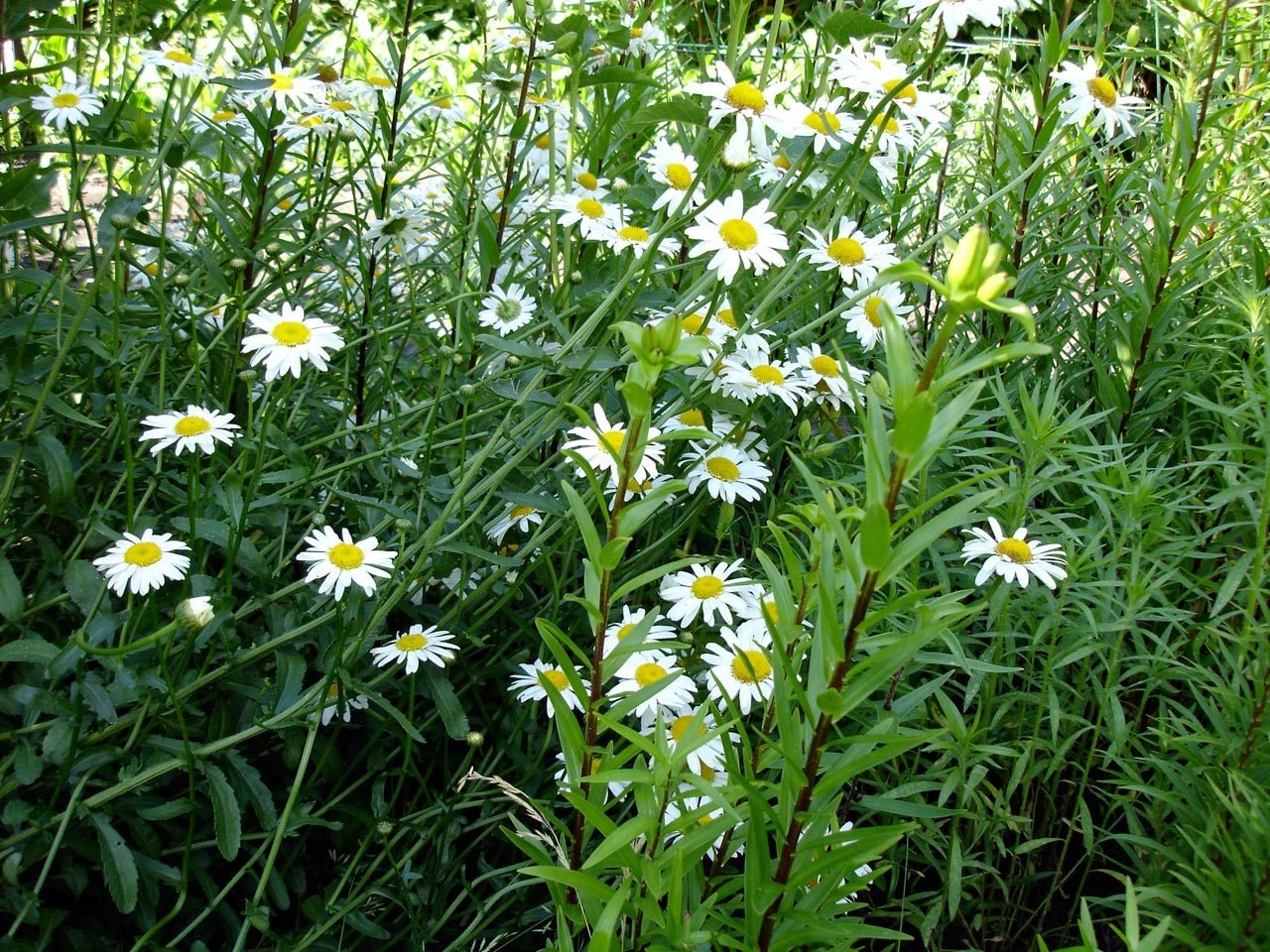
Becky Shasta daisy is a clump-forming perennial with large, white, yellow-centred flowers on tall, sturdy stems. Gardeners grow it for its long summer display in sunny borders and for cut flowers; it performs best where the soil drains freely, especially in winter.
At a glance
- Sun
- Full sun is best; light afternoon shade can help in hot climates, but too much shade produces fewer flowers and weaker stems.
- Water
- Water regularly during establishment. Once established, water deeply during prolonged dry spells; avoid keeping the crown wet.
- Soil
- Well-drained soil of average fertility, from slightly acidic to slightly alkaline. Avoid waterlogged clay and excessively rich soil.
- Height
- 3-4 ft (0.9-1.2 m)
- Spread
- 2-3 ft (0.6-0.9 m)
- Flowers
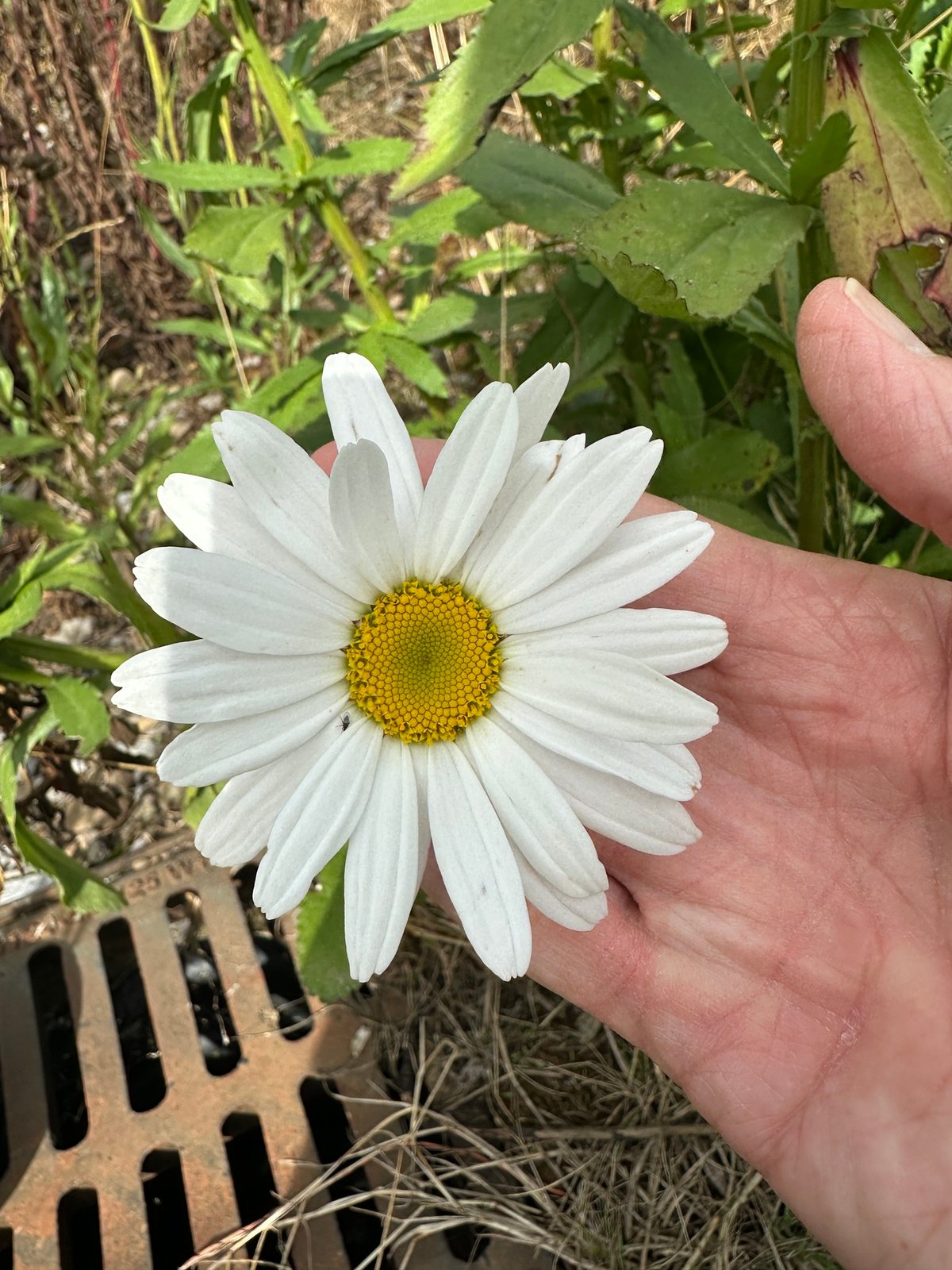
- Early to late summer, sometimes continuing into early autumn with deadheading; white petals surround yellow centres.
- Foliage
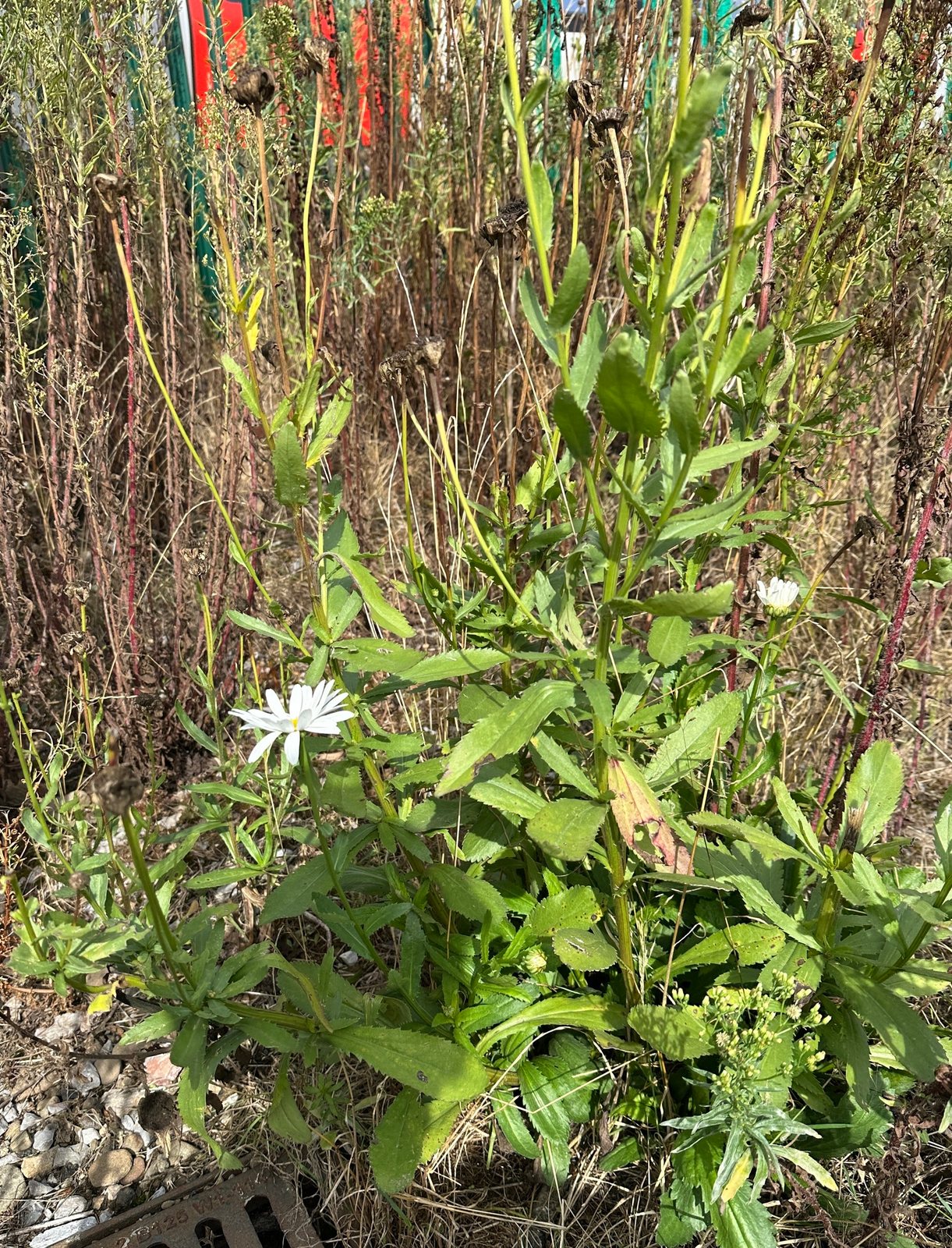
- Dark green, toothed, lance-shaped leaves form a basal clump, with smaller leaves along the flowering stems. Basal leaves may persist through mild winters.
- Growth
- Moderate to fast; forms a substantial flowering clump within two growing seasons.
- Care needed
- Medium
The year at a glance
- Pollinators
- Deer resistant
- Heat tolerant
| J | F | M | A | M | J | J | A | S | O | N | D | |
|---|---|---|---|---|---|---|---|---|---|---|---|---|
| Flowers | ||||||||||||
| Plant |
Northern hemisphere months. In Australia, shift them by six.
- Difficulty
- Moderate
- Toughness
- Fairly tough
Will it suit your garden?
Pick your zone, country, light and whether you have pets.
Full sun is 6 or more hours of direct sun a day, part shade 3 to 6 hours, shade under 3.
How it grows
Planting day
1 ft (0.3 m)
After 1 year
2 ft (0.61 m)
After 2 years
3 ft (0.93 m)
After 3 years
3 ft (1.1 m)
full size
About 2 years to full size.
From a typical nursery size, at an average rate for this kind of plant. A rule of thumb, not a forecast.
Good to know
- Cats and dogs
- Toxic
- Growth rate
- Fast
Care
Jobs through the year
- WaterApr–May, Sep–Oct, every 14 days
- Water established plants deeply only if the root zone is dry; young plants need more frequent watering.
- WaterJun–Aug, every 7 days
- During prolonged dry weather, water established plants deeply at soil level without soaking the crown.
- FeedMar–Apr
- Apply a thin compost dressing; avoid high-nitrogen fertilizer.
- MulchApr–May
- Apply a light mulch, leaving the crown uncovered.
- DivideMar–Apr
- Divide crowded clumps every two to three years, retaining vigorous outer sections.
- DeadheadJun–Sep, every 7 days
- Cut faded stems to a leafy side shoot or basal foliage.
- PruneFeb–Mar
- Cut dead stems near ground level, preserving healthy basal leaves.
- ProtectMay
- Install discreet supports before flowering if stems are exposed to wind.
- ProtectJan–Feb, Nov–Dec
- Clear wet leaves from the crown and prevent standing water.
- Water at soil level when the root zone becomes dry during establishment or extended summer drought.
- Apply a thin layer of compost in spring; avoid heavy nitrogen feeding, which encourages floppy growth.
- Mulch lightly to conserve moisture, keeping mulch clear of the crown.
- Use discreet supports before flowering if the site is windy or stems begin to lean.
- Divide congested clumps every two to three years in spring, keeping vigorous outer sections.
Pruning. Remove faded flowers by cutting each stem back to a leafy side shoot, or to the basal foliage once flowering finishes. Cut dead stems near ground level in late autumn or late winter, leaving healthy basal leaves intact.
Through the year
- Early spring
- Remove dead stems and divide crowded clumps as new growth starts.
- Spring
- Plant in a sunny, well-drained position and apply a thin layer of compost.
- Late spring
- Install supports where needed before flower stems reach full height.
- Summer
- Deadhead regularly and water deeply during prolonged dry spells.
- Early autumn
- Remove finished flower stems while retaining healthy basal foliage.
- Winter
- Keep the crown free of wet leaves and check that water is not pooling around the plant.
In the garden
- Plant in groups through the middle or back of a sunny mixed border for repeated blocks of white.
- Combine with purple salvias and catmint for contrasting flower shapes and a long summer display.
- Use beside ornamental grasses and coneflowers in informal perennial planting.
- Include in a cutting border or white garden, allowing space for its broad mature clump.
Garden styles it suits: Cottage garden, English country, Traditional, New perennial (prairie), White garden and Pollinator garden.
Plant it with: Catmint, Perennial salvia, Purple coneflower, Yarrow, Threadleaf coreopsis and Feather reed grass.
Wildlife: The open flowers provide pollen and nectar for bees, hoverflies and other visiting insects. This garden hybrid is not a native meadow plant.
Problems to watch for
- Crown and root rot: prevent winter waterlogging, keep mulch away from the crown and move plants to better-drained ground if necessary.
- Leaf spot: remove badly affected leaves, clear fallen debris and water at soil level to keep foliage dry.
- Aphids: rinse small colonies from young shoots with water and encourage natural predators.
- Flopping or declining flowering: increase sunlight, reduce fertiliser, support tall stems and divide congested clumps.
Safety
Keep leaves, stems and flowers away from cats, dogs and horses: ingestion may cause vomiting, diarrhoea or drooling. Sap can irritate human skin, particularly in people sensitive to the daisy family; it is not a food plant. Seek veterinary advice if an animal eats it.
Easily confused with
Oxeye daisy (Leucanthemum vulgare)
Usually has smaller flowers and a looser, more spreading habit than 'Becky'. It readily colonises grassland and is invasive or regulated in some regions.
Other Shasta daisies (Leucanthemum × superbum)
'Becky' has tall stems and large, single white flowers, but similar cultivars cannot always be distinguished reliably without a plant label.
Feverfew (Tanacetum parthenium)
Has clusters of much smaller white daisies and strongly aromatic, deeply lobed leaves rather than the long, toothed leaves of Shasta daisy.
The name
Leucanthemum comes from Greek words meaning 'white flower', and Shasta daisy was named for the snowy appearance associated with California's Mount Shasta.
Propagation. Divide in spring to keep plants true to 'Becky'; basal cuttings are another option. Seedlings may differ from the parent and should not be labelled 'Becky'.
Checked against open data
- Accepted botanical name
- Leucanthemum superbum
Sources: GBIF (CC BY 4.0). The care and design notes are LandscapeGPT's own.
See it in your own yard.
Upload a photo of your yard and see it redesigned with plants that suit your climate, each checked against your zone.