Bedding fuchsia
Fuchsia × hybrida. Family Onagraceae. Annual.
Also called Hybrid fuchsia, Tender fuchsia.
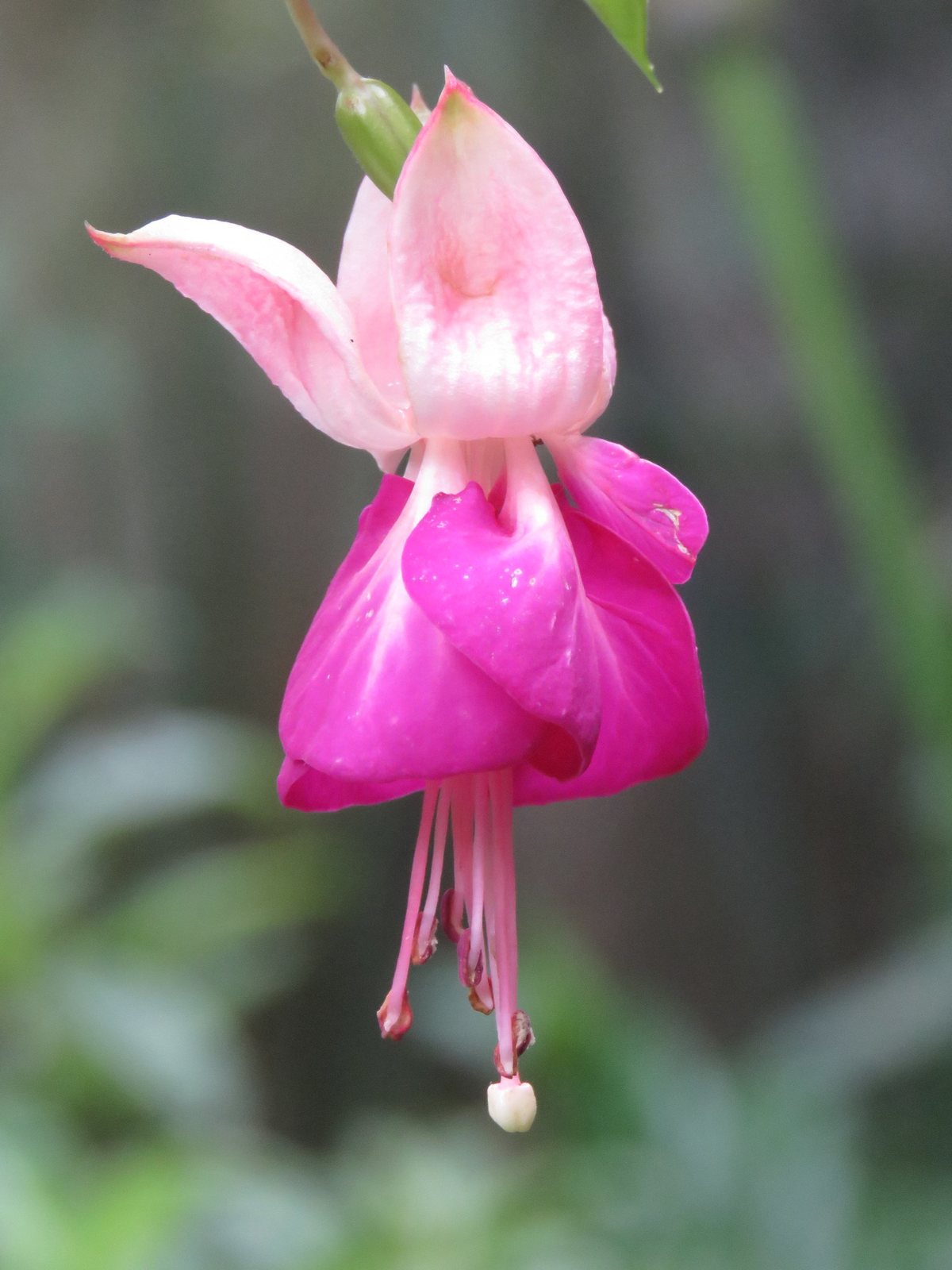
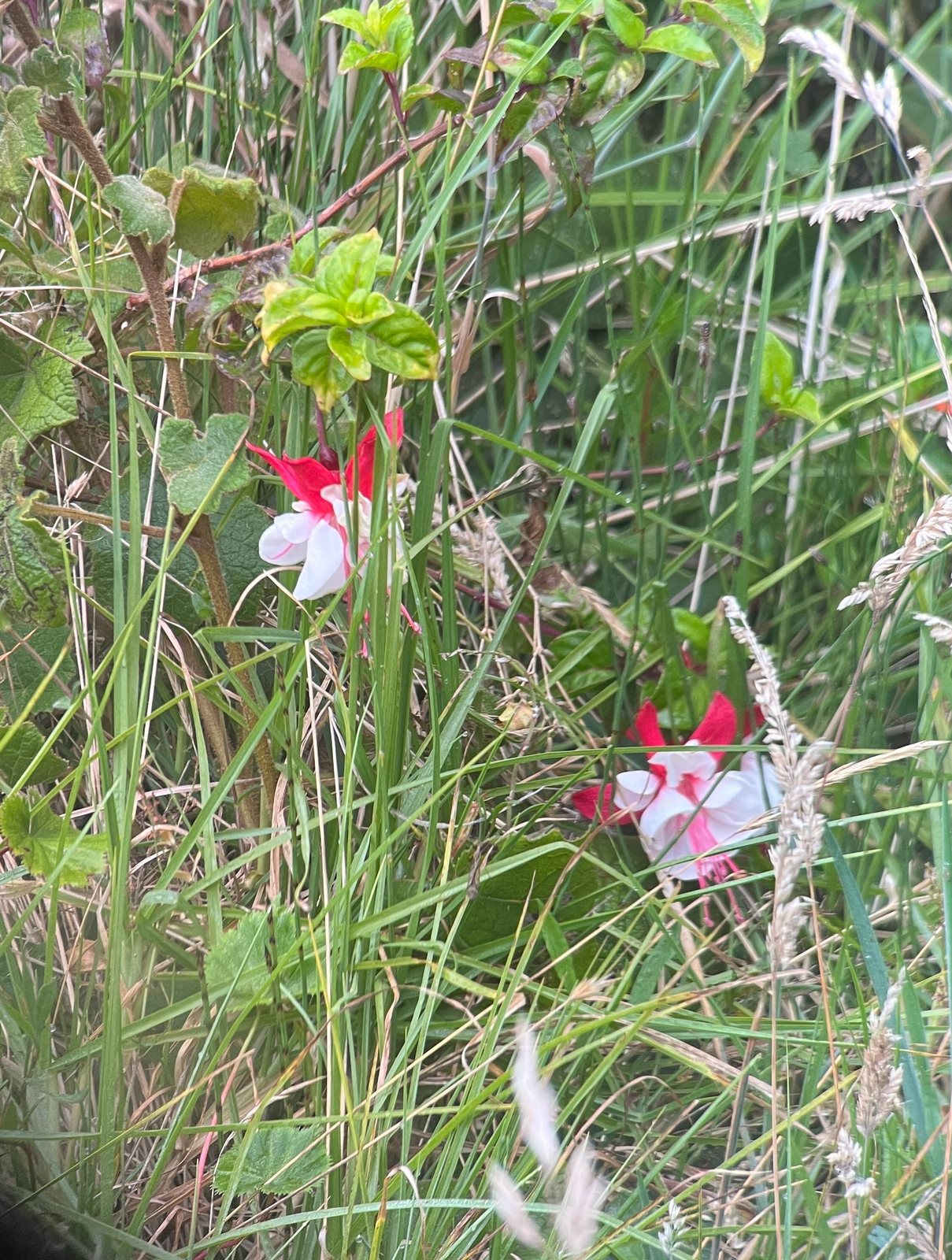
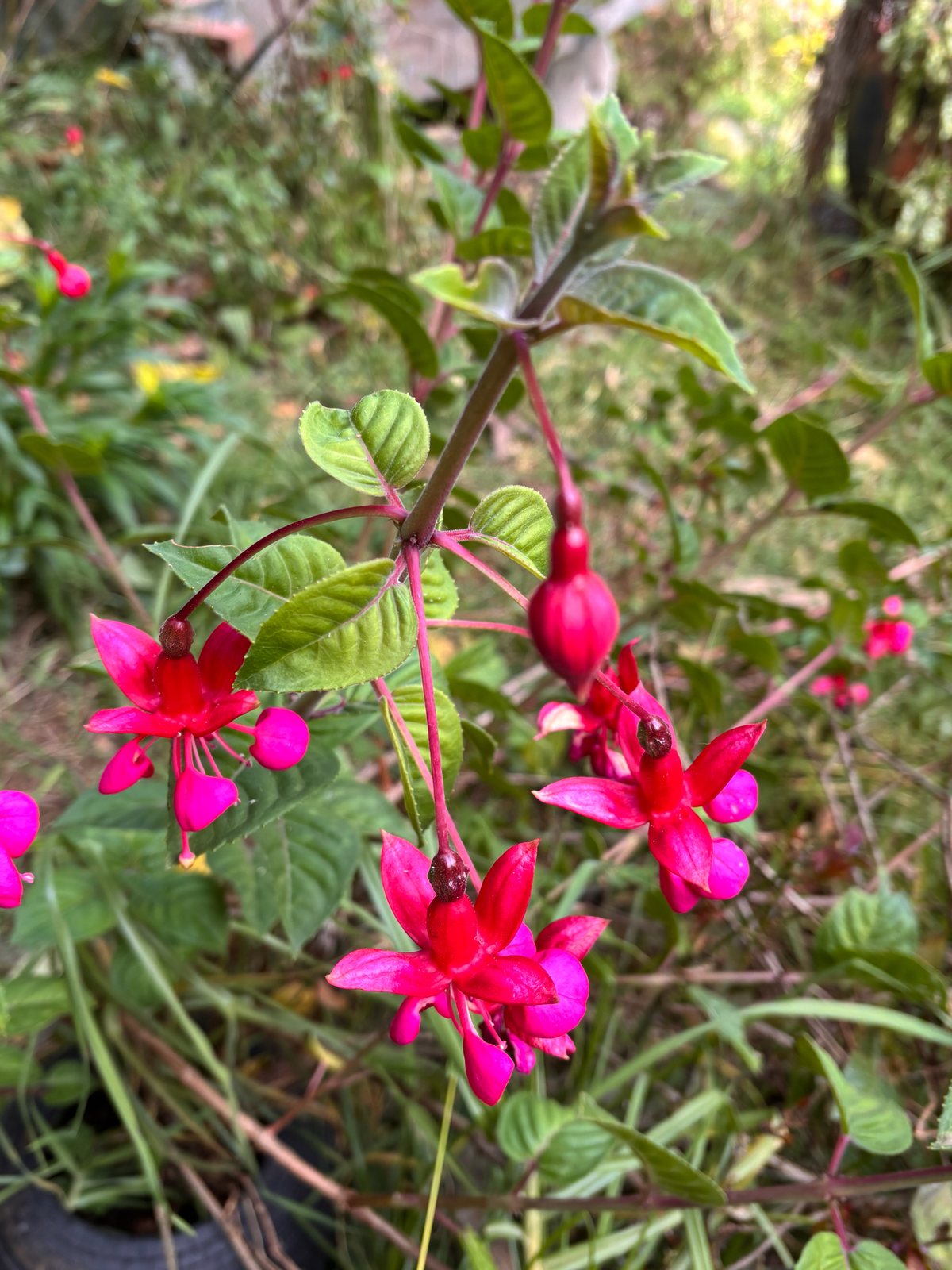
Bedding fuchsias are tender, shrubby perennials usually grown as annuals where winters freeze. Their hanging flowers, often with contrasting outer sepals and inner petals, bring colour to sheltered beds, pots and hanging baskets from late spring until autumn frost. Upright and trailing cultivars are available.
At a glance
- Sun
- Partial shade or bright, filtered light; morning sun is suitable in cool climates. Protect from hot afternoon sun and drying winds.
- Water
- Keep evenly moist but not waterlogged. Containers may need daily checking in warm weather; water when the surface begins to dry.
- Soil
- Fertile, moisture-retentive soil with good drainage; use a good-quality container potting mix in pots and baskets.
- Height
- 1-3 ft (0.3-0.9 m), depending on cultivar
- Spread
- 1-3 ft (0.3-0.9 m), depending on cultivar
- Flowers
- Late spring to autumn frost; pink, red, purple, violet or white, often bicoloured, with single or double flowers.
- Foliage
- Opposite or whorled, toothed, oval leaves, usually green; some cultivars have bronze or variegated foliage. Plants may retain leaves in frost-free conditions but often shed them during cool overwintering.
- Growth
- Fast during the growing season
- Care needed
- Medium
The year at a glance
- Pollinators
- Low allergen
| J | F | M | A | M | J | J | A | S | O | N | D | |
|---|---|---|---|---|---|---|---|---|---|---|---|---|
| Flowers | ||||||||||||
| Fruit | ||||||||||||
| Plant |
Northern hemisphere months. In Australia, shift them by six.
- Difficulty
- Moderate
- Toughness
- Needs looking after
Will it suit your garden?
Pick your zone, country, light and whether you have pets.
Full sun is 6 or more hours of direct sun a day, part shade 3 to 6 hours, shade under 3.
How it grows
Planting day
0.5 ft (0.15 m)
After 1 year
2 ft (0.6 m)
full size
Full size in one season.
From a typical nursery size, at an average rate for this kind of plant. A rule of thumb, not a forecast.
Good to know
- Cats and dogs
- Safe
- Growth rate
- Fast
Care
Jobs through the year
- WaterMay, Sep–Oct, every 7 days
- Water established plants when the surface dries; new plants and pots need more frequent checks.
- WaterJun–Aug, every 3 days
- In dry weather, keep established plants evenly moist; check containers daily.
- FeedMay–Sep, every 14 days
- Feed container plants with balanced liquid fertilizer at the label rate; feed beds only if needed.
- PruneMar–Apr
- Shorten overwintered stems and pinch young tips; stop pinching several weeks before flowering.
- DeadheadMay–Oct, every 7 days
- Remove faded flowers and developing berries to encourage more blooms.
- ProtectMay
- Harden plants off and delay planting until frost risk has passed.
- ProtectSep–Oct
- If keeping plants for next year, lift or move them into cool, frost-free shelter before frost.
- WaterJan–Mar, Nov–Dec, every 30 days
- For frost-free stored plants only, water sparingly if the root ball is becoming dry.
- Plant outside after frost risk has passed, and gradually acclimatise indoor-grown plants first.
- Water the potting mix thoroughly and let excess water drain; never leave pots standing in water.
- Feed container plants with a balanced liquid fertiliser at the label rate during active growth.
- Remove faded flowers and developing berries to keep plants tidy and encourage continued flowering.
- If keeping plants for another year, move them into a cool, frost-free place before the first frost and water sparingly over winter.
Pruning. Pinch out young shoot tips in spring to encourage branching; stop several weeks before you want flowers. In early spring, shorten overwintered stems to a healthy framework and remove dead or weak growth.
Through the year
- Early spring
- Prune overwintered plants, refresh their potting mix and increase watering as new growth appears.
- Spring
- Take softwood cuttings and pinch young plants to build a bushy shape.
- Late spring
- Harden plants off and plant outside once frost risk has passed.
- Summer
- Check container moisture frequently, feed regularly and remove faded flowers.
- Early autumn
- Take cuttings if you want small replacement plants to overwinter indoors.
- Late autumn
- Before frost, bring plants under frost-free cover or discard those being grown as annuals.
- Winter
- Keep stored plants cool and frost-free, watering just enough to prevent the root ball drying out completely.
In the garden
- Use trailing cultivars in hanging baskets where the dangling flowers can be seen from below.
- Plant upright cultivars along shaded patio edges for a long season of colour.
- Combine with begonias and impatiens in sheltered containers for contrasting flower shapes.
- Set pots against fern or hosta foliage to make the flowers stand out.
Garden styles it suits: Cottage garden, Victorian, Romantic rose garden, Modern courtyard, Small-space and Blues and silvers.
Plant it with: Begonias, Impatiens, Coleus, Hostas, Ferns and Lobelia.
Wildlife: Single-flowered cultivars offer more accessible nectar than heavily doubled forms. Flowers may attract hummingbirds where these occur, and some bees visit them.
Problems to watch for
- Whitefly and aphids: check leaf undersides and shoot tips; wash off small infestations and use insecticidal soap labelled for the pest if needed.
- Fuchsia gall mite: distorted, swollen shoot tips and flowers can indicate infestation. Remove affected growth, do not take cuttings from affected plants, and seek local advice; badly affected plants may need disposal.
- Fuchsia rust: orange pustules beneath leaves and premature leaf fall are warning signs. Remove affected leaves, clear fallen foliage and improve spacing and airflow.
- Wilting and root loss: check moisture before watering. Dry roots need a thorough soak, but saturated compost needs better drainage; heat-stressed plants may wilt even when moist and should be moved into cooler shade.
Safety
Not known to be toxic to people, cats, dogs or horses. Flowers and ripe berries are generally considered edible, though flavour varies; do not eat material treated with pesticides unsuitable for edible crops.
Easily confused with
Hardy fuchsia (Fuchsia magellanica)
Typically has slender red-and-purple single flowers and a more open, woody habit. Bedding hybrids often have larger or doubled flowers, but appearance alone does not establish winter hardiness; check the cultivar name.
Cape fuchsia (Phygelius capensis)
Has long tubular flowers held in upright, branched clusters rather than the dangling flowers with conspicuous swept-back sepals typical of bedding fuchsias.
The name
Fuchsia honours the German physician and botanist Leonhart Fuchs, while hybrida refers to the plants' hybrid ancestry.
Propagation. Take non-flowering softwood cuttings in spring or late summer and root them in a moist, free-draining propagation mix under bright, indirect light. Cuttings retain the cultivar's characteristics; seedlings may differ.
Checked against open data
- Accepted botanical name
- Fuchsia hybrida
Sources: GBIF (CC BY 4.0) and Trefle (CC BY 4.0). The care and design notes are LandscapeGPT's own.
See it in your own yard.
Upload a photo of your yard and see it redesigned with plants that suit your climate, each checked against your zone.