Belladonna lily
Amaryllis belladonna. Family Amaryllidaceae. Bulb.
Also called Naked ladies, Jersey lily, March lily.
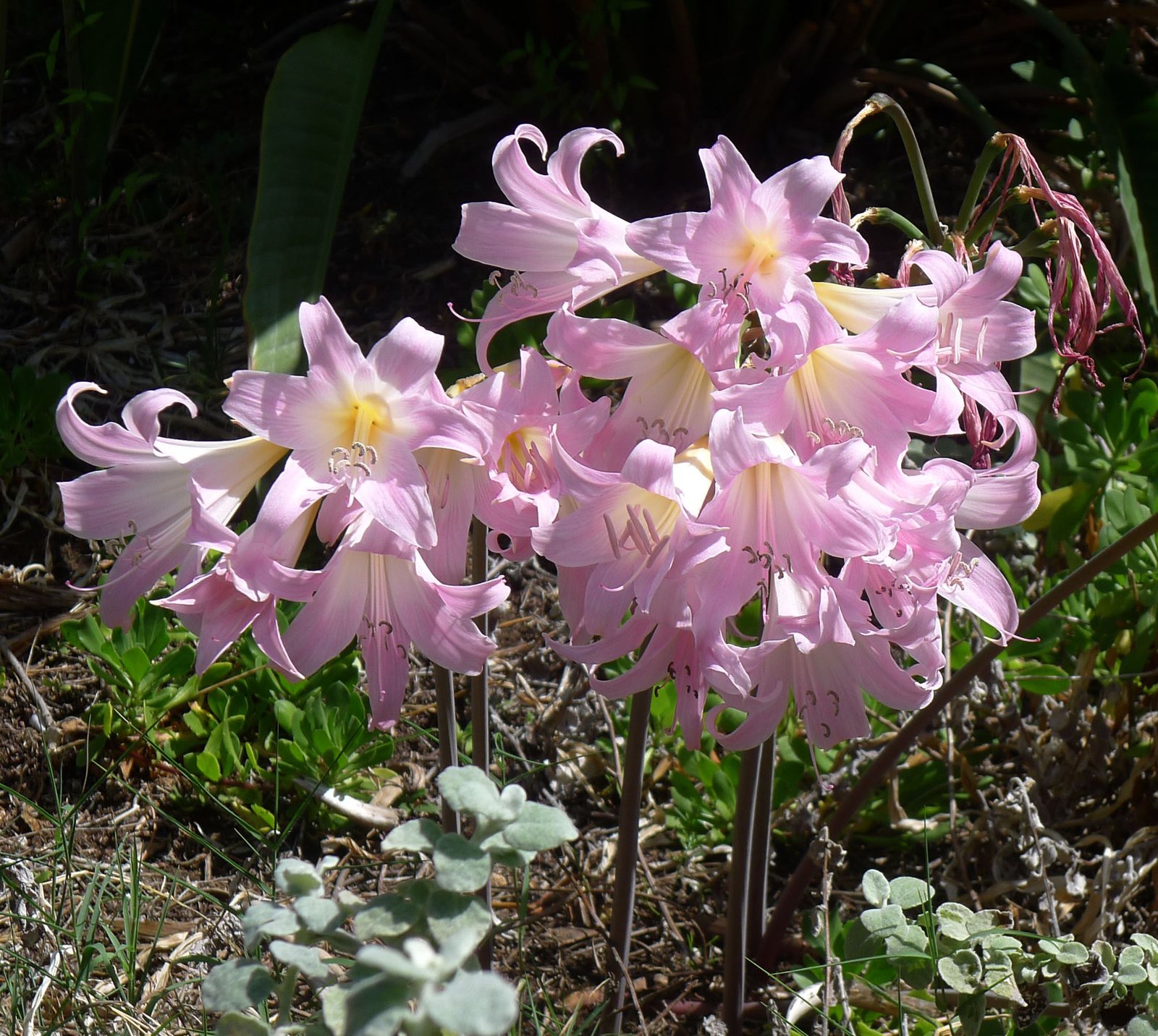
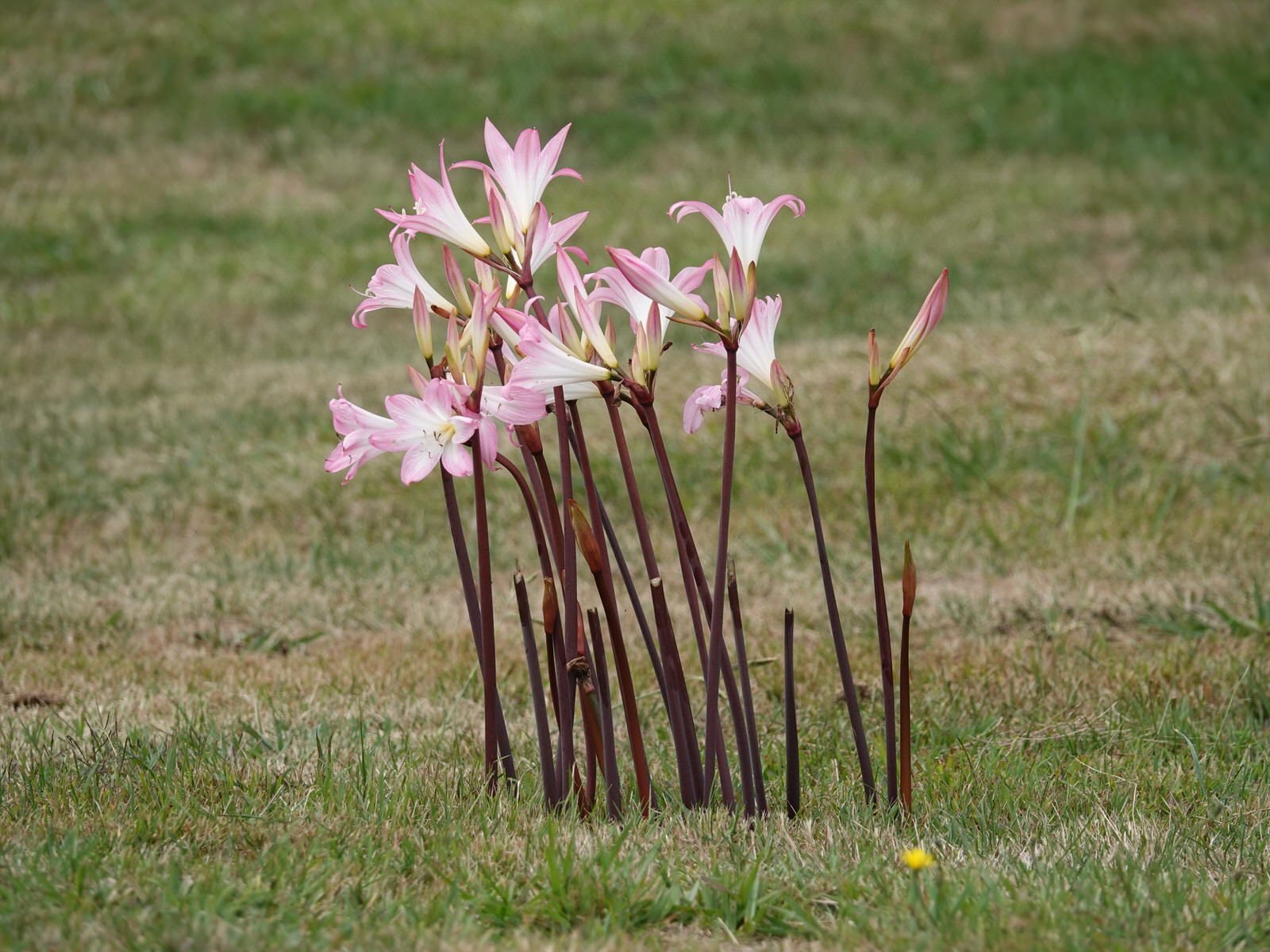
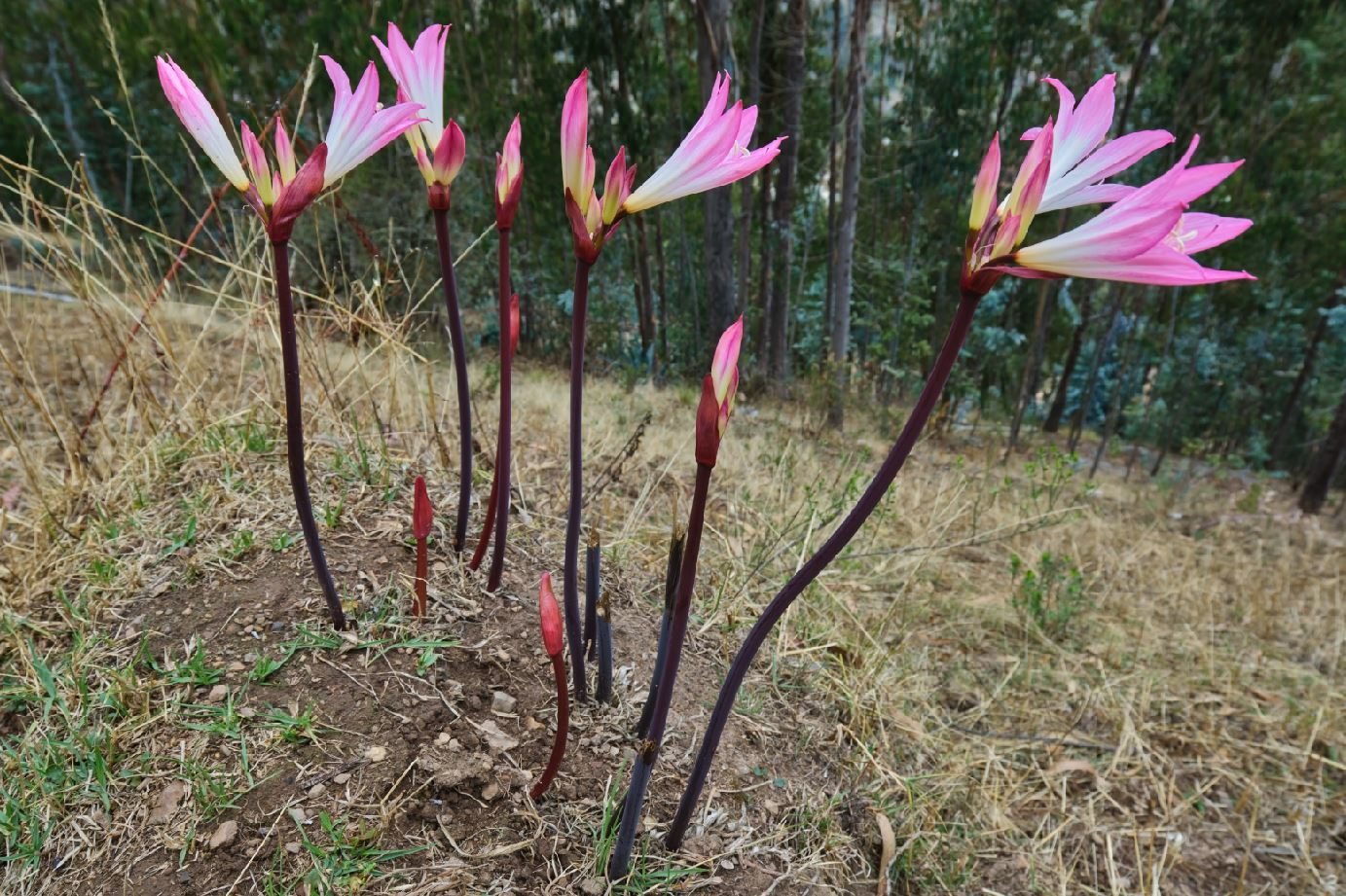
Belladonna lily is a South African bulb grown for fragrant, trumpet-shaped pink flowers on bare stems in late summer or early autumn. Its strap-shaped leaves grow through the cooler months and disappear before flowering, so leave room for a summer gap. It flowers best in a sunny, well-drained position where its bulbs can remain undisturbed.
At a glance
- Sun
- Full sun; a warm, sheltered position is especially important in cooler climates.
- Water
- Water during autumn-to-spring growth if rainfall is insufficient; keep relatively dry during summer dormancy. Avoid persistently wet soil in any season.
- Soil
- Well-drained sandy or loamy soil; tolerates a range of soil pH. Improve drainage or use a raised bed on heavy clay.
- Height
- 1.5-3 ft (0.45-0.9 m)
- Spread
- 1-2 ft (0.3-0.6 m) per established clump
- Flowers
- Late summer to early autumn; clusters of fragrant pale to deep pink trumpets, sometimes white, on leafless stems.
- Foliage
- Long, fleshy, strap-shaped green leaves emerge in autumn, persist through winter and spring, and die back for summer dormancy.
- Growth
- Slow to moderate; bulbs gradually form clumps and may take several years to flower after planting or disturbance.
- Care needed
- Low
The year at a glance
- Pollinators
- Deer resistant
- Drought tolerant
- Heat tolerant
- Low allergen
- Fragrant
| J | F | M | A | M | J | J | A | S | O | N | D | |
|---|---|---|---|---|---|---|---|---|---|---|---|---|
| Flowers | ||||||||||||
| Plant |
Northern hemisphere months. In Australia, shift them by six.
- Difficulty
- Moderate
- Toughness
- Fairly tough
Will it suit your garden?
Pick your zone, country, light and whether you have pets.
Full sun is 6 or more hours of direct sun a day, part shade 3 to 6 hours, shade under 3.
How it grows
Planting day
0.5 ft (0.15 m)
After 1 year
1.8 ft (0.55 m)
After 2 years
2.2 ft (0.68 m)
full size
About 1 years to full size.
From a typical nursery size, at an average rate for this kind of plant. A rule of thumb, not a forecast.
Good to know
- Cats and dogs
- Toxic
- Invasive in
- Australia
- Growth rate
- Slow
Care
Jobs through the year
- WaterSep–Nov, every 14 days
- Water during dry weather as leaves emerge; newly planted bulbs need closer moisture checks.
- WaterJan–Feb, Dec, every 21 days
- Water only during prolonged dry, frost-free weather while leaves are growing.
- WaterMar–May, every 14 days
- Water during extended dry spells while leaves are green; stop as foliage dies back.
- FeedSep–Oct
- On poor soil, apply a light bulb fertilizer as autumn leaves emerge.
- DeadheadSep–Oct
- Cut finished flower stems near the base unless saving seed.
- PruneJun–Jul
- Remove leaves only after they have turned completely yellow.
- DivideJul–Aug
- Divide only overcrowded dormant clumps; flowering may pause for several years.
- ProtectJan–Feb, Nov–Dec
- Use dry winter mulch in sheltered zone 7 sites; frost-free container growing is safer in zone 6.
- Plant dormant bulbs with their necks at soil level in a warm, sunny spot; avoid deep planting.
- Water during active leaf growth in dry weather, but do not routinely irrigate dormant bulbs in summer.
- Apply a light dressing of balanced bulb fertiliser as leaves begin growing if the soil is poor.
- At the colder end of its range, use a sheltered site and dry winter mulch; container growing under frost-free cover is safer in colder districts.
- Leave clumps undisturbed unless overcrowded; divide during summer dormancy and expect flowering to pause afterward.
Pruning. Cut spent flower stems near the base after flowering unless you want seed. Let leaves turn fully yellow before removing them; green leaves replenish the bulb.
Through the year
- Autumn
- As leaves emerge, resume watering if the weather is dry and apply a light feed on poor soil.
- Winter
- Keep drainage clear and protect bulbs from prolonged frost in marginal climates.
- Spring
- Leave healthy foliage intact and water during extended dry spells.
- Early summer
- Remove fully yellow leaves and reduce watering as bulbs become dormant.
- Summer
- Plant dormant bulbs or divide crowded clumps only if necessary; avoid damaging fleshy roots.
- Late summer to early autumn
- Enjoy the bare-stemmed flowers, then remove faded stems unless saving seed.
In the garden
- Plant in repeated groups along a sunny border for a late-season display above lower plants.
- Use beside a south-facing wall in the Northern Hemisphere, or a north-facing wall in Australia, to provide warmth and shelter.
- Combine with low, drought-tolerant plants that soften the bare ground during summer dormancy without shading the bulbs.
- Grow in a large, freely draining container where winter protection is needed.
Garden styles it suits: Mediterranean, Dry gravel garden, Cottage garden, Coastal, Romantic rose garden and Sensory garden.
Plant it with: Lavender, Rosemary, Santolina, Rockrose, Creeping thyme and Stonecrop.
Wildlife: Flowers can attract bees and other nectar-feeding insects. It is not a native habitat plant outside its southern African range.
Problems to watch for
- Bulb rot in wet ground: improve drainage, reduce summer irrigation and discard soft or rotting bulbs.
- Failure to flower after planting or division: allow several growing seasons to settle, provide full sun and avoid further disturbance.
- Poor flowering in shaded or cool sites: move dormant bulbs to a warmer, sunnier position and avoid cutting green leaves.
- Slugs and snails damaging leaves: inspect during damp weather, remove pests and use wildlife-conscious controls where needed.
Safety
Toxic to people, cats, dogs and horses if eaten. All parts contain toxic alkaloids, with the bulbs particularly hazardous; ingestion can cause drooling, vomiting, abdominal pain and diarrhoea, while larger amounts may cause weakness, tremors or more serious poisoning. Keep bulbs away from children and animals, and seek medical or veterinary advice after ingestion.
Where it spreads. Can escape gardens and form persistent clumps; it is treated as an environmental weed in parts of Western Australia and Victoria. Avoid planting near bushland in affected districts and dispose of unwanted bulbs securely.
Easily confused with
Florist's amaryllis (Hippeastrum spp.)
Usually sold for indoor winter flowering, with larger flowers in a wider range of colours and a hollow flower stalk; belladonna lily has a solid stalk and normally flowers outdoors in late summer.
Resurrection lily (Lycoris squamigera)
Also produces pink flowers on bare late-summer stems, but its leaves emerge in spring rather than autumn and its flowers often have lilac-blue shading at the tips.
Crinum lily (Crinum spp.)
Usually has a much larger bulb, broader leaves and foliage present at flowering; many have longer, narrower flower segments.
The name
The species name belladonna means 'beautiful lady' in Italian, while 'naked ladies' refers to the flowers appearing on stems without leaves.
Propagation. Separate offsets during summer dormancy, retaining roots where possible, and replant promptly. Sow fresh seed when ripe; seedlings usually take several years to reach flowering size.
Checked against open data
- Accepted botanical name
- Amaryllis belladonna
- In the US and Canada
- Introduced in the lower 48 states.
- Native range
- Cape Provinces.
Sources: GBIF (CC BY 4.0), USDA PLANTS and Trefle (CC BY 4.0). The care and design notes are LandscapeGPT's own.
See it in your own yard.
Upload a photo of your yard and see it redesigned with plants that suit your climate, each checked against your zone.