Black and Blue salvia
Salvia guaranitica 'Black and Blue'. Family Lamiaceae. Perennial.
Also called Black and Blue anise-scented sage, Black and Blue hummingbird sage.
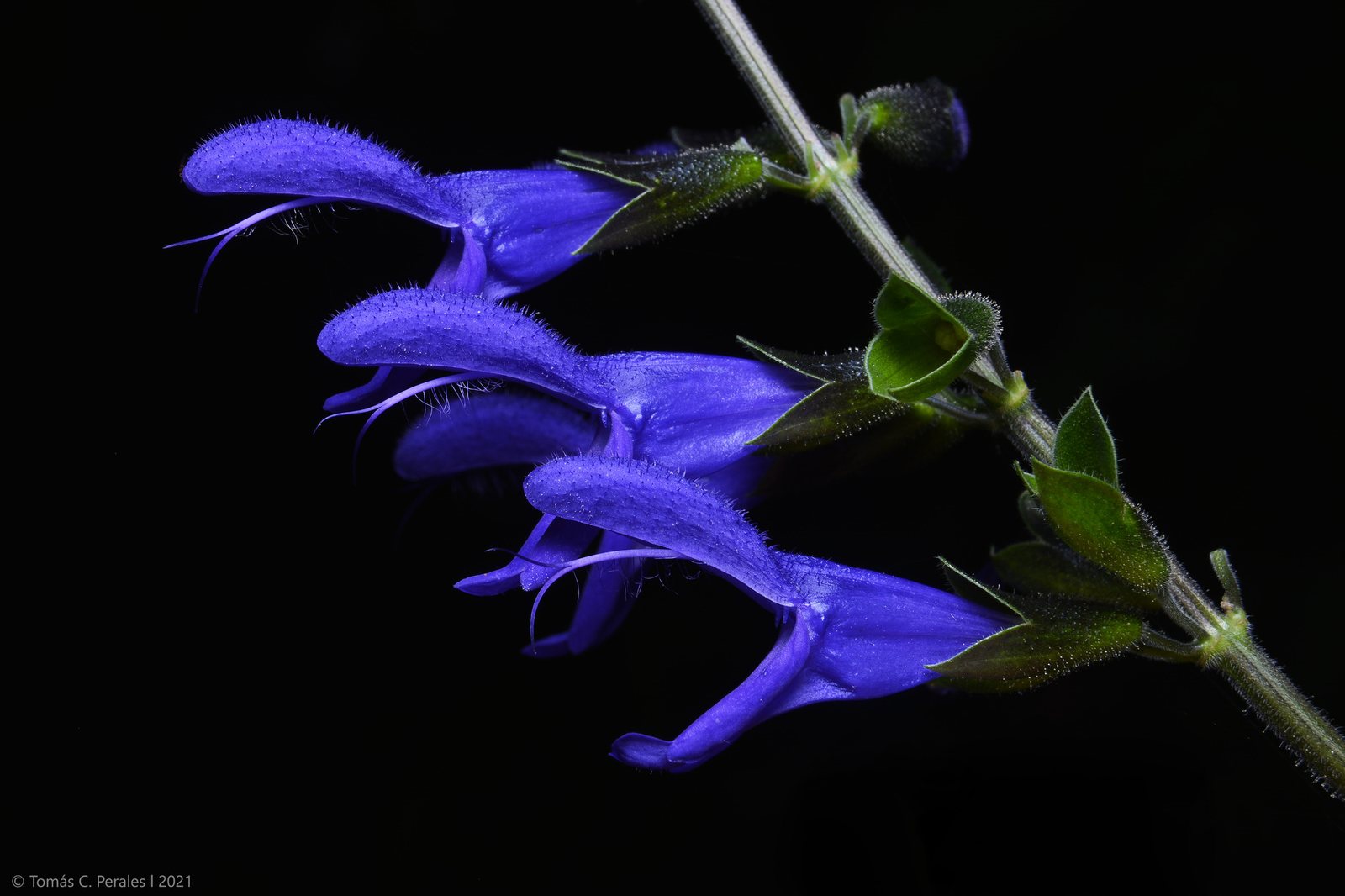
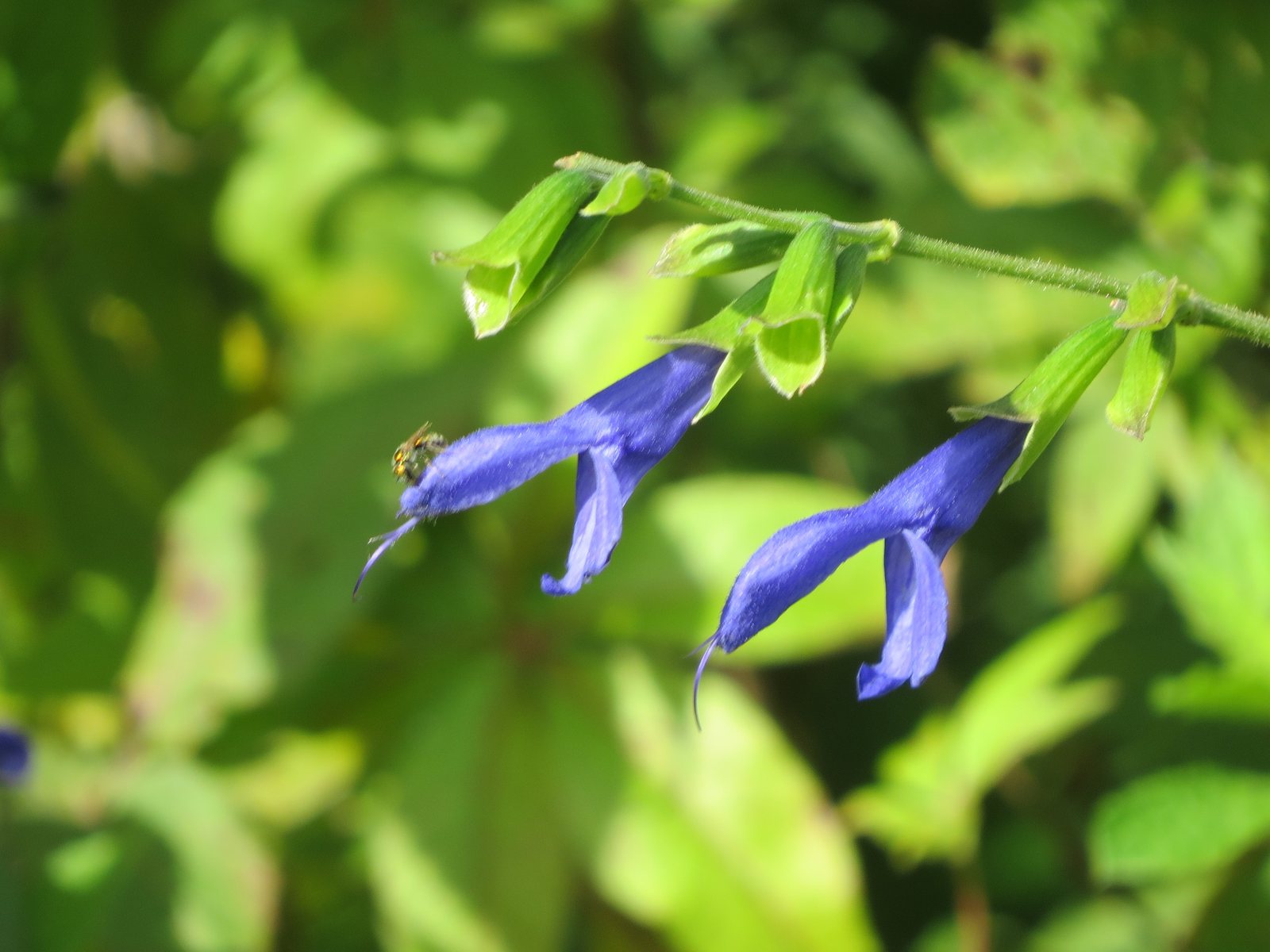
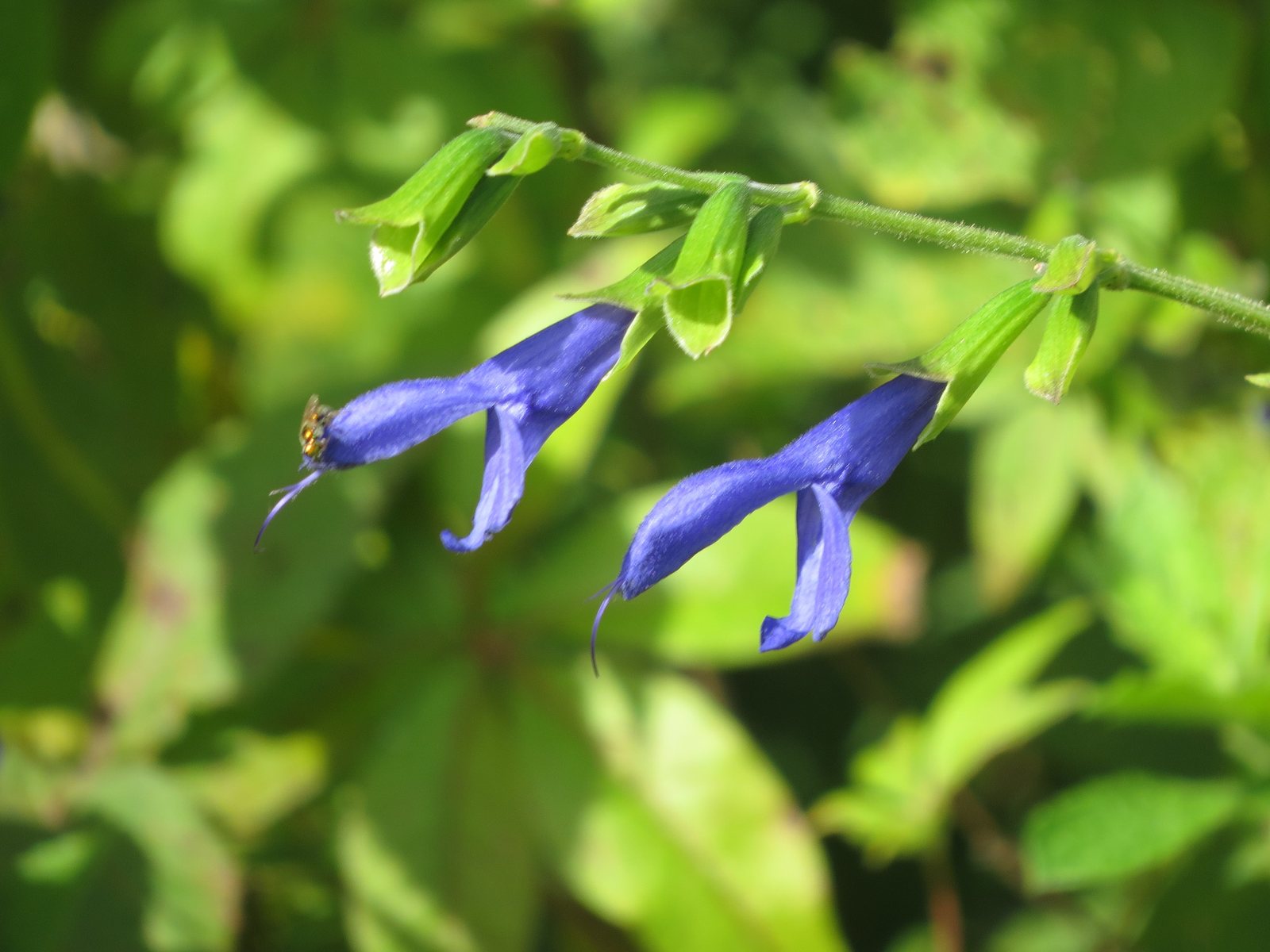
Black and Blue salvia is a tall, frost-tender perennial grown for cobalt-blue flowers emerging from nearly black calyces and stems. It flowers for months and attracts hummingbirds where they occur, as well as bees. In colder climates, it is grown as an annual or overwintered under cover.
At a glance
- Sun
- Full sun to light partial shade; flowering is best with at least six hours of direct sun.
- Water
- Water regularly during establishment, then when the upper soil begins to dry. Established plants tolerate brief dry spells but flower better with consistent moisture.
- Soil
- Fertile, moisture-retentive but well-drained soil; avoid ground that stays wet in winter.
- Height
- 3-5 ft (0.9-1.5 m)
- Spread
- 2-3 ft (0.6-0.9 m), widening over time through underground stems
- Flowers
- Early summer to the first frost; cobalt-blue tubular flowers held in nearly black calyces.
- Foliage
- Opposite, pointed, green leaves with toothed edges and a faint anise-like scent when crushed.
- Growth
- Fast
- Care needed
- Medium
The year at a glance
- Pollinators
- Deer resistant
- Heat tolerant
- Low allergen
| J | F | M | A | M | J | J | A | S | O | N | D | |
|---|---|---|---|---|---|---|---|---|---|---|---|---|
| Flowers | ||||||||||||
| Plant |
Northern hemisphere months. In Australia, shift them by six.
- Difficulty
- Moderate
- Toughness
- Fairly tough
Will it suit your garden?
Pick your zone, country, light and whether you have pets.
Full sun is 6 or more hours of direct sun a day, part shade 3 to 6 hours, shade under 3.
How it grows
Planting day
1 ft (0.3 m)
After 1 year
2.5 ft (0.76 m)
After 2 years
4 ft (1.2 m)
full size
About 2 years to full size.
From a typical nursery size, at an average rate for this kind of plant. A rule of thumb, not a forecast.
Good to know
- Cats and dogs
- Safe
- In the garden
- Spreads vigorously: plan to contain it.
- Growth rate
- Fast
Care
Jobs through the year
- WaterMay, Sep–Oct, every 14 days
- Water established plants in the ground deeply if the upper soil dries; young plants need more frequent watering.
- WaterJun–Aug, every 7 days
- Water established plants deeply when the upper soil dries; skip after soaking rain.
- WaterJan–Apr, Nov–Dec, every 21 days
- Check sheltered overwintering plants and water sparingly without letting the root ball dry completely.
- FeedApr–May
- Apply a little compost as growth starts or at planting; avoid heavy nitrogen feeding.
- PruneApr–May
- Cut overwintered dead stems back to just above fresh basal growth.
- PruneMay–Jun
- Pinch young shoots, remove unwanted spreading shoots and add supports in exposed sites.
- DeadheadJun–Oct, every 14 days
- Remove faded flower spikes back to a leafy shoot.
- DivideApr–May
- Divide established overwintered clumps as growth starts if crowded or spreading too far.
- ProtectAug–Sep
- Root non-flowering cuttings as insurance against winter loss.
- ProtectOct–Nov
- Before frost, move lifted plants or rooted cuttings into cool, bright, frost-free shelter; mulch alone is unreliable in zone 6–7.
- Plant after frost danger has passed, allowing room for the clump to widen.
- Water deeply during dry spells, especially in containers; do not leave pots standing in water.
- Apply compost in spring; avoid heavy nitrogen feeding, which encourages leafy, floppy growth.
- Mulch the root area before winter in borderline-hardy locations, keeping the crown free of soggy material.
- Use discreet supports in exposed positions before the stems become tall.
- Remove unwanted shoots at the edge of established clumps to limit spreading.
Pruning. Pinch young shoots in late spring for bushier growth, and remove spent flower spikes during summer. Leave old stems standing over winter where plants are hardy, then cut them back to just above new basal growth in spring.
Through the year
- Early spring
- Check overwintered crowns for new growth and cut away last year's dead stems once severe frost has passed.
- Spring
- Divide established clumps as growth starts, and work a little compost into the surrounding soil.
- Late spring
- Plant out after the last frost; pinch young shoots and install supports where needed.
- Summer
- Water during dry spells and remove faded flower spikes to keep the display tidy.
- Late summer
- Take non-flowering shoot cuttings as insurance against winter losses.
- Autumn
- Before frost, move container plants under cover in cold climates; mulch outdoor clumps where winters are mild enough for survival.
- Winter
- Keep protected plants cool, bright and frost-free, watering sparingly without letting the root ball dry out completely.
In the garden
- Place in the middle or back of a sunny mixed border, where the blue flowers rise above lower perennials.
- Combine with orange dahlias or yellow rudbeckias for a strong warm-and-cool colour contrast.
- Grow in a large container near a terrace, with smaller plants hiding the lower stems.
- Repeat through a pollinator border with ornamental grasses for late-season flowers and movement.
Garden styles it suits: Cottage garden, English country, Pollinator garden, Blues and silvers, Tropical and Modern courtyard.
Plant it with: Dahlias, Black-eyed Susans, Purple coneflowers, Verbena, Switchgrass and Cosmos.
Wildlife: The tubular flowers attract hummingbirds in the Americas and are visited by bees, including some that reach nectar through holes near the flower base. It is not a native plant in the United States, the United Kingdom, Canada or Australia.
Problems to watch for
- Winter crown or root rot: improve drainage and avoid wet winter soil; overwinter a spare plant under cover in colder regions.
- Slugs and snails eating emerging shoots: inspect young growth and use barriers, hand-picking or labelled iron-phosphate bait.
- Whiteflies or spider mites on plants kept under cover: inspect leaf undersides, improve growing conditions and use a labelled insecticidal soap if needed.
- Tall stems flopping: provide more sun, reduce nitrogen feeding, pinch young shoots and add discreet supports.
Safety
Not known to be toxic to people, cats, dogs or horses; no poisonous part is established. Species-specific safety information is limited, particularly for horses, and this ornamental salvia should not be treated as a culinary sage.
Easily confused with
Anise-scented sage (Salvia guaranitica)
Typical plants have blue flowers but usually greener calyces; 'Black and Blue' is selected for its conspicuously dark calyces and upper stems.
Amistad salvia (Salvia 'Amistad')
It also has dark calyces and tall flowering stems, but its flowers are rich violet-purple rather than cobalt blue.
The name
Salvia comes from the Latin salvere, meaning to be well, guaranitica refers to the Guaraní people of South America, and 'Black and Blue' describes the dark calyces and blue flowers.
Propagation. Take softwood or semi-ripe cuttings from non-flowering shoots during the growing season, or divide established clumps in spring. These methods preserve the cultivar; seedlings may differ from the parent.
Checked against open data
- Accepted botanical name
- Salvia guaranitica
- Native range
- Argentina Northeast, Argentina Northwest, Brazil South, Brazil West-Central, Paraguay and Uruguay.
Sources: GBIF (CC BY 4.0) and Trefle (CC BY 4.0). The care and design notes are LandscapeGPT's own.
See it in your own yard.
Upload a photo of your yard and see it redesigned with plants that suit your climate, each checked against your zone.