Black cohosh
Actaea racemosa. Family Ranunculaceae. Perennial.
Also called Black bugbane, Black snakeroot, Fairy candles, Cimicifuga racemosa.
Black cohosh is a tall, clump-forming woodland perennial native to eastern North America, grown for its divided leaves and slender, creamy-white flower spikes. It brings height to shaded borders but needs moisture-retentive soil and shelter from hot afternoon sun; it performs poorly in hot, dry gardens.
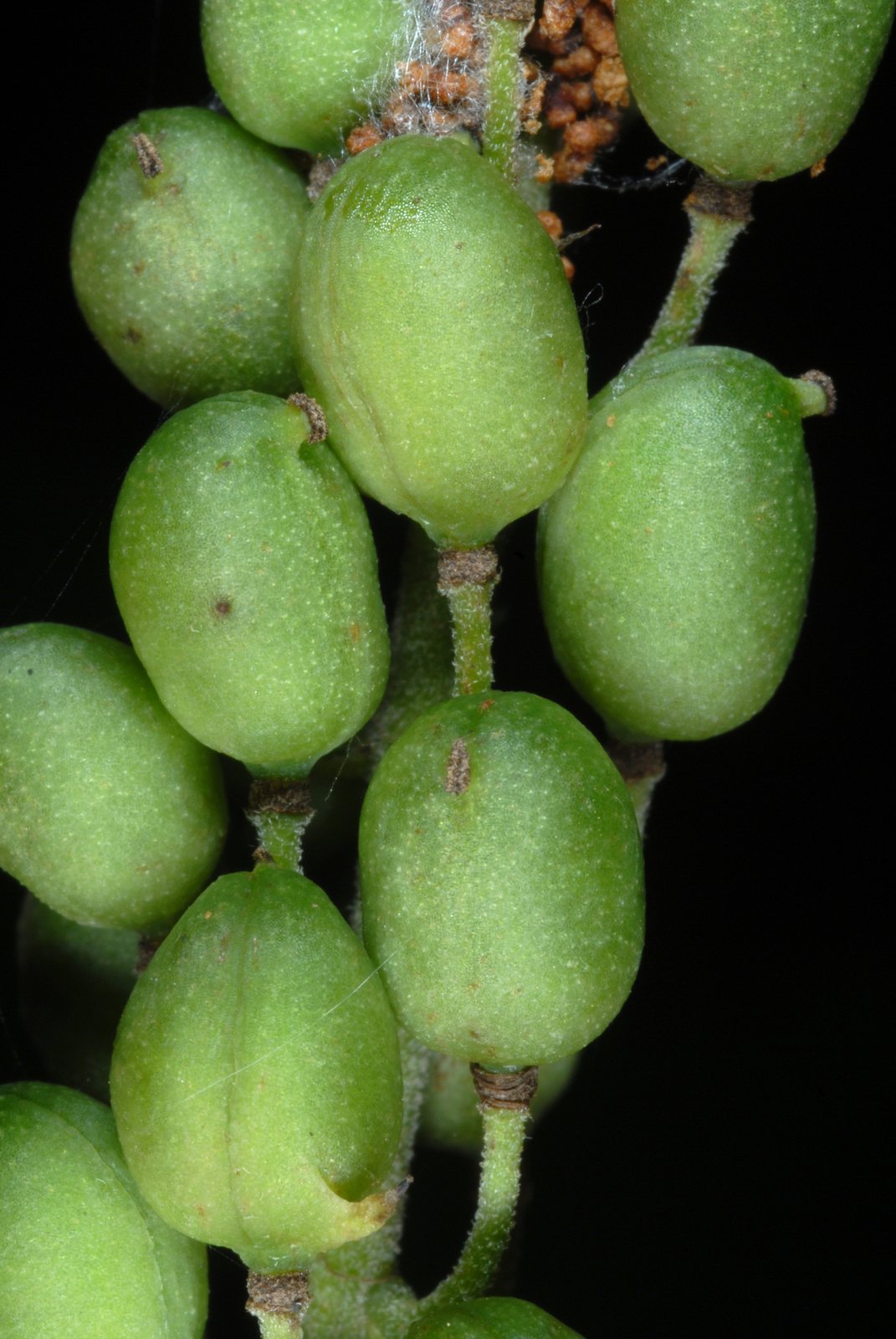
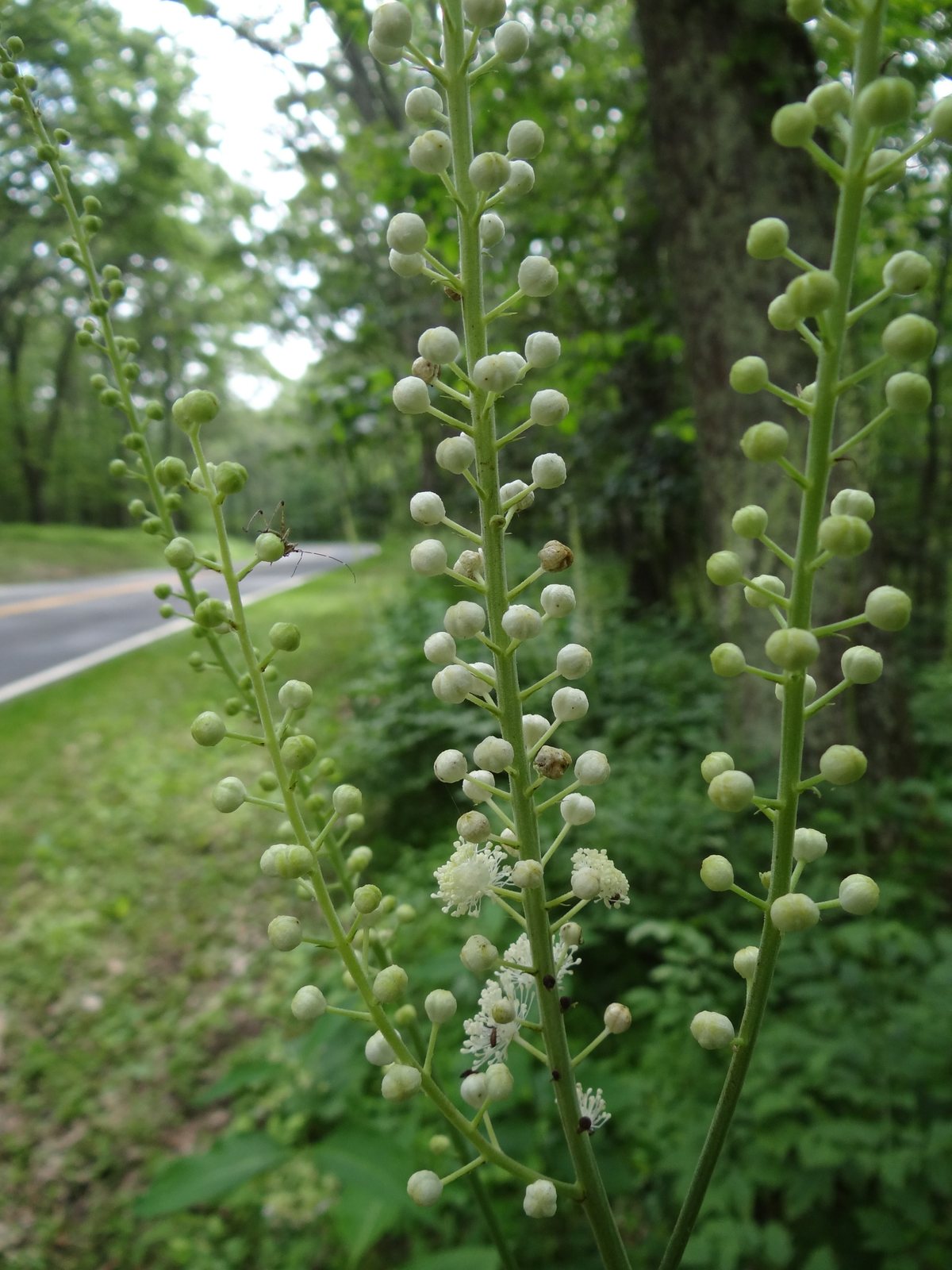
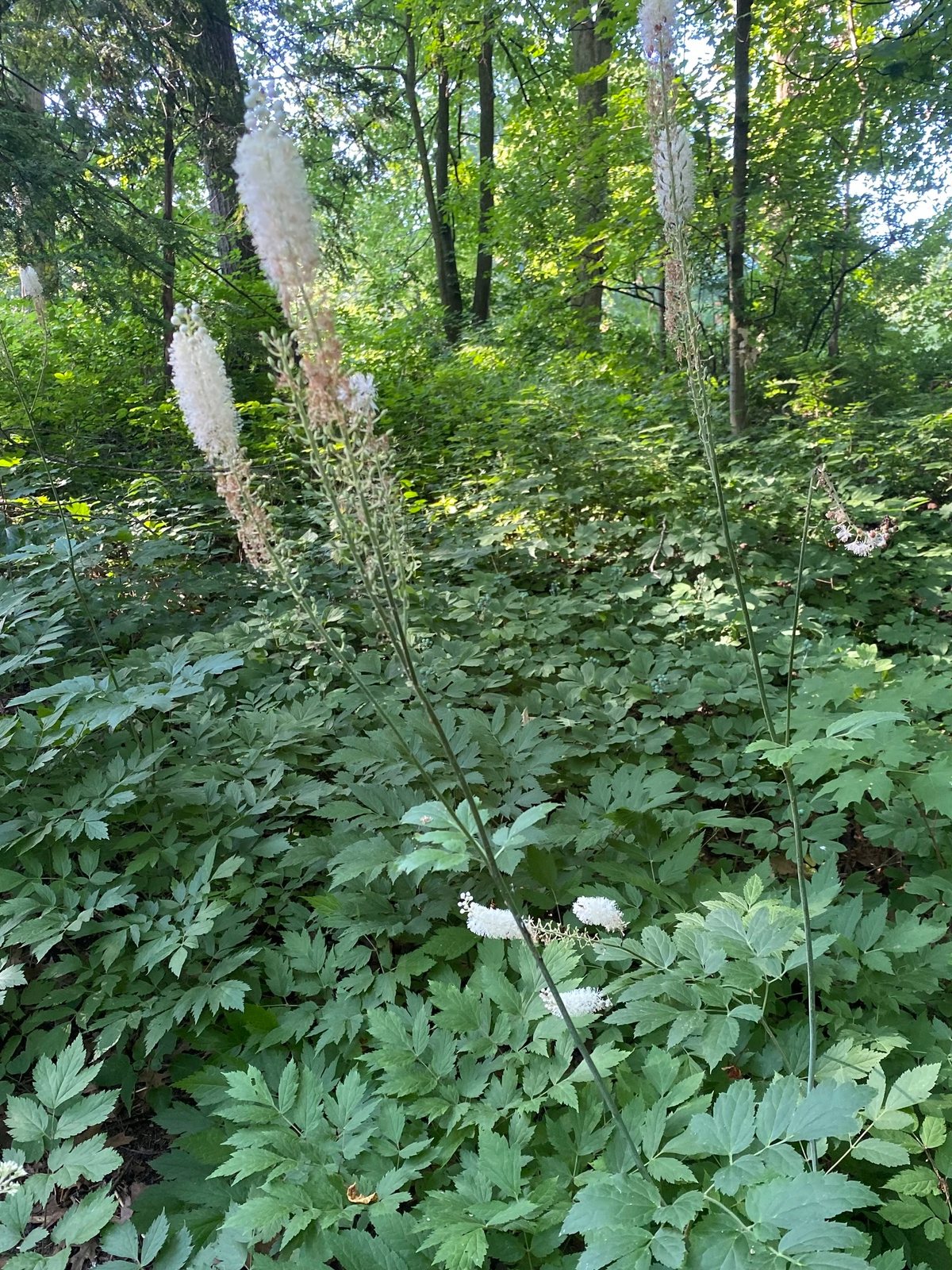
At a glance
- Sun
- Partial shade or dappled shade; tolerates more sun in cool climates if the soil stays moist.
- Water
- Keep evenly moist, especially during establishment and summer heat; avoid both prolonged drought and waterlogged soil.
- Soil
- Humus-rich, moisture-retentive but well-drained soil; tolerates mildly acidic to mildly alkaline conditions.
- Height
- 4-7 ft (1.2-2.1 m), including flower stems
- Spread
- 2-4 ft (0.6-1.2 m)
- Flowers
- Early to midsummer, sometimes continuing into late summer; tall, narrow spikes of creamy-white flowers.
- Foliage
- Large, deeply divided green leaves form a bushy basal clump; foliage dies back in winter.
- Growth
- Slow to moderate; allow several years for a substantial clump.
- Care needed
- Medium
The year at a glance
- Pollinators
- Deer resistant
- Cold hardy
- Wildlife
- Low allergen
| J | F | M | A | M | J | J | A | S | O | N | D | |
|---|---|---|---|---|---|---|---|---|---|---|---|---|
| Flowers | ||||||||||||
| Fruit | ||||||||||||
| Plant |
Northern hemisphere months. In Australia, shift them by six.
- Difficulty
- Moderate
- Toughness
- Fairly tough
Will it suit your garden?
Pick your zone, country, light and whether you have pets.
Full sun is 6 or more hours of direct sun a day, part shade 3 to 6 hours, shade under 3.
How it grows
Planting day
1 ft (0.3 m)
After 1 year
2.1 ft (0.65 m)
After 2 years
3 ft (0.99 m)
After 3 years
4 ft (1.3 m)
After 5 years
5 ft (1.7 m)
full size
About 4 years to full size.
From a typical nursery size, at an average rate for this kind of plant. A rule of thumb, not a forecast.
Good to know
- Cats and dogs
- Toxic
- Native to
- the US and Canada
- Growth rate
- Slow
Care
Jobs through the year
- WaterApr–May, Sep–Oct, every 7 days
- Water established clumps deeply if rain is insufficient; keep young plants consistently moist.
- WaterJun–Aug, every 4 days
- Water when needed to keep established roots evenly moist, never waterlogged; young plants need closer checks.
- MulchMar–Apr
- Top-dress with compost or leaf mould and renew loose mulch, keeping emerging shoots clear.
- ProtectApr–May
- Protect emerging shoots from slugs and install discreet stem supports in windy sites.
- PruneFeb
- Cut remaining dead stems and foliage to ground level before new shoots emerge.
- Water deeply during dry spells so the root zone does not dry out.
- Apply leaf mould or well-rotted compost in spring, keeping it clear of emerging shoots.
- Use a loose organic mulch to conserve moisture and keep roots cool.
- Stake flower stems early if the site is windy or the stems lean toward the light.
- Leave established clumps undisturbed unless division is needed; recovery can be slow.
Pruning. Cut dead stems and foliage to ground level in late autumn or late winter, before new shoots emerge. Leave seedheads standing through winter if you like their structure.
Through the year
- Spring
- Plant in a sheltered, partly shaded position and water thoroughly.
- Spring
- Top-dress established clumps with compost or leaf mould and renew the mulch.
- Late spring
- Install discreet supports where tall flowering stems may need help.
- Summer
- Water during dry spells and check for leaf scorch.
- Autumn
- Collect ripe seed for prompt sowing, or leave seedheads for winter structure.
- Late winter
- Remove remaining dead stems before new growth starts.
In the garden
- Place at the back of a shaded border, where the flower spikes rise above lower foliage.
- Plant in loose groups beneath high-canopied deciduous trees, away from the driest root competition.
- Combine with ferns and hostas for contrasting leaf shapes in a woodland garden.
- Use the pale flower spikes against a dark hedge or shaded background to make them easier to see.
Garden styles it suits: Woodland, English country, Cottage garden, Wildlife garden, White garden and New perennial (prairie).
Plant it with: Hostas, Astilbes, Japanese painted ferns, Solomon's seal, Foamflowers and Siberian bugloss.
Wildlife: Flowers provide pollen for visiting insects, including bees and flies. In parts of its native North American range, the foliage supports larvae of the Appalachian azure butterfly.
Problems to watch for
- Brown leaf edges or early dieback in dry weather: water deeply, mulch and provide protection from afternoon sun.
- Crown or root rot in waterlogged soil: improve drainage or move the plant; do not keep the crown buried under wet mulch.
- Slugs and snails damaging emerging shoots: check young growth and use barriers, hand-picking or locally approved controls.
- Flopping stems in exposed sites: add discreet supports and choose a more sheltered position for future plantings.
Safety
Not edible: roots, rhizomes and above-ground parts can be harmful if swallowed. In people, ingestion may cause nausea, vomiting and other illness; larger amounts may be serious. Keep it away from children and prevent cats, dogs and horses from eating it; species-specific veterinary toxicity information is limited. Do not use garden-grown plants for self-medication.
Easily confused with
Autumn bugbane (Actaea simplex)
Usually flowers in late summer or autumn rather than early to midsummer. Many commonly sold cultivars have dark purple foliage; black cohosh normally has green leaves.
Red baneberry (Actaea rubra)
A shorter woodland plant with compact flower clusters followed by conspicuous red, occasionally white, berries; black cohosh has much taller, slender flower spikes and dry seed follicles.
Goat's beard (Aruncus dioicus)
Produces broad, airy, branching cream plumes rather than the narrow, wand-like flower spikes of black cohosh.
The name
The species name racemosa refers to the racemes, or elongated clusters, in which the flowers are borne.
Propagation. Divide large clumps carefully in early spring, retaining several buds and a good portion of roots on each division. Fresh seed can be sown outdoors when ripe, but germination is slow and irregular and may require successive warm and cold periods; seedlings take several years to flower.
Checked against open data
- Accepted botanical name
- Actaea racemosa
- In the US and Canada
- Native in Canada and the lower 48 states.
- Native range
- Alabama, Arkansas, Connecticut, Delaware, District of Columbia, Georgia, Illinois, Indiana, Kentucky, Maryland, Masachusettes and Missouri.
Sources: GBIF (CC BY 4.0), USDA PLANTS and Trefle (CC BY 4.0). The care and design notes are LandscapeGPT's own.
See it in your own yard.
Upload a photo of your yard and see it redesigned with plants that suit your climate, each checked against your zone.