Black Knight butterfly bush
Buddleja davidii 'Black Knight'. Family Scrophulariaceae. Shrub.
Also called Buddleja davidii 'Black Knight', Buddleia 'Black Knight', Black Knight summer lilac.
A fast-growing, arching shrub with fragrant spikes of very dark purple flowers, grown for its long summer display and nectar for butterflies. It needs sun and good drainage, and can die back to the ground in cold winters. This fertile cultivar can spread by seed, so check local invasive-plant rules before planting.
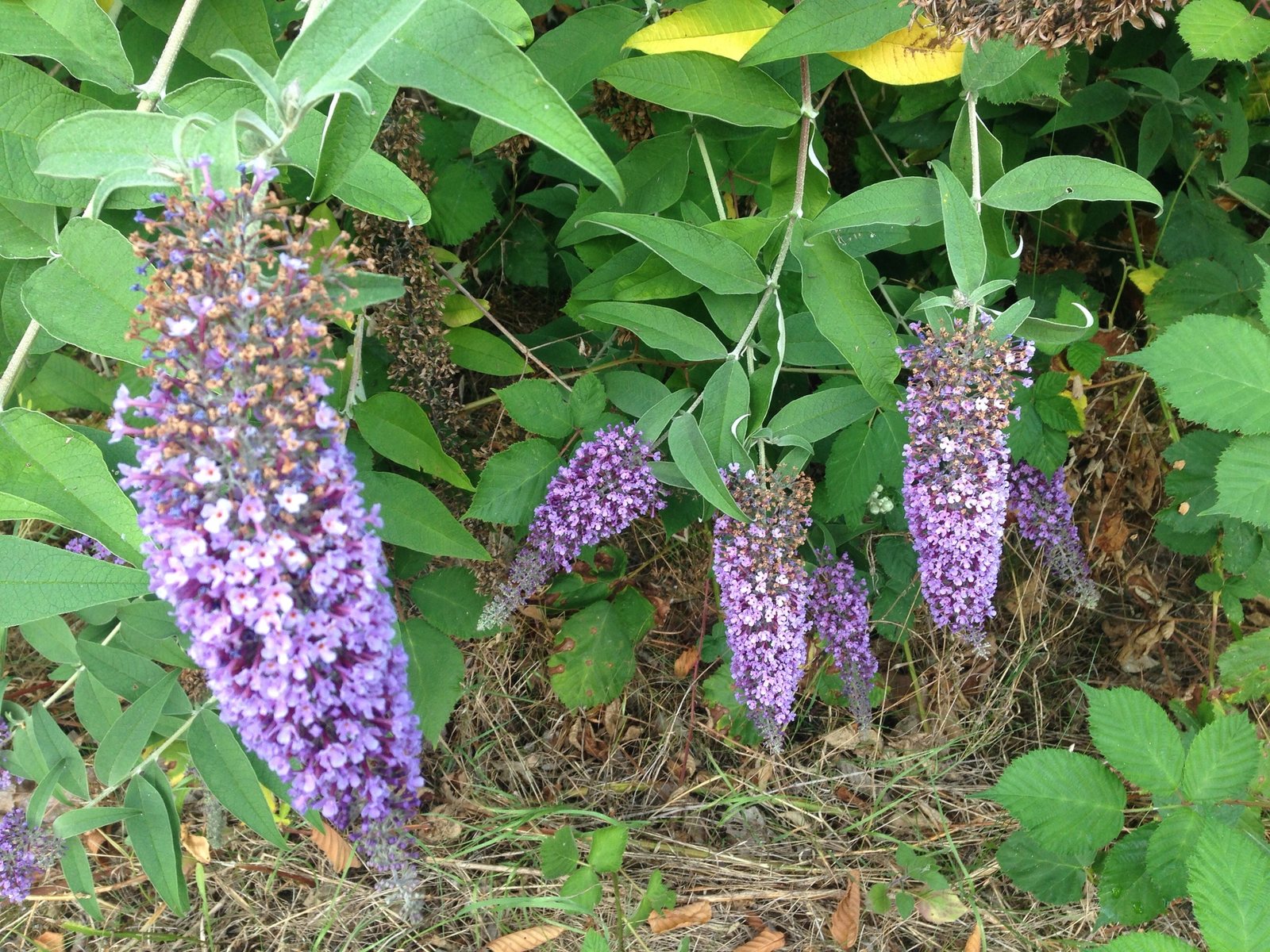
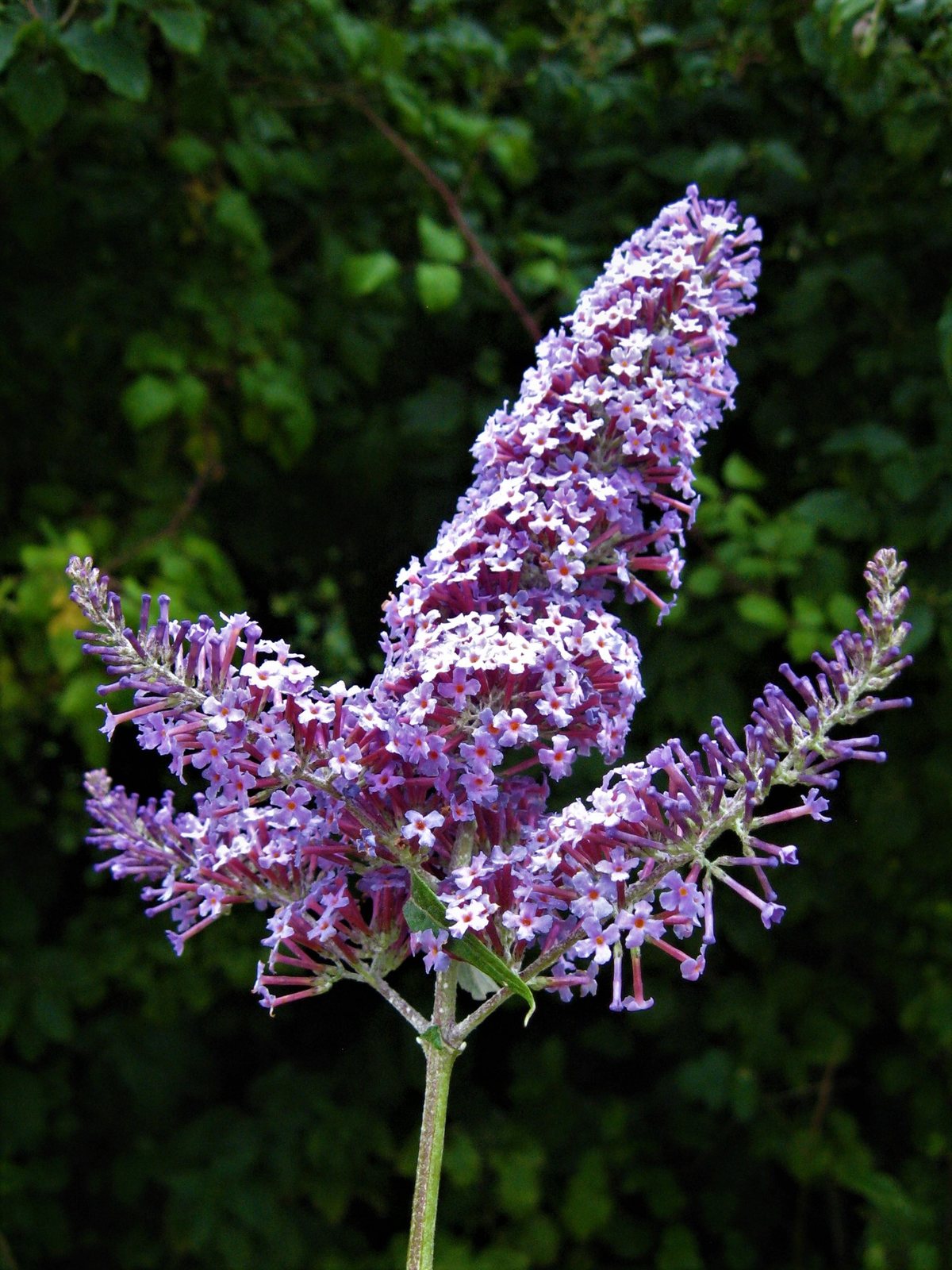
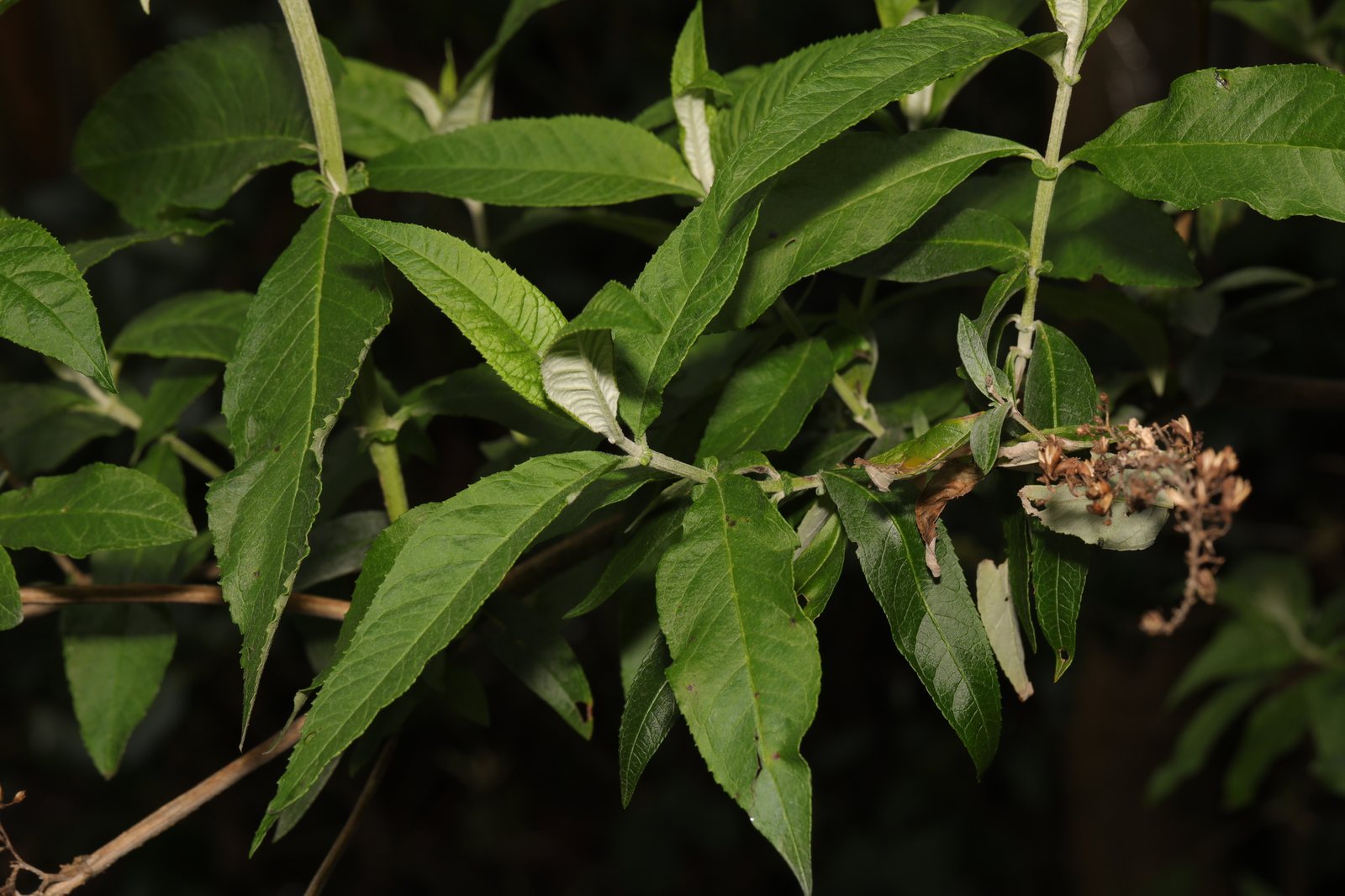
At a glance
- Sun
- Full sun; aim for at least six hours of direct sunlight daily.
- Water
- Water regularly during the first growing season. Once established, water deeply during prolonged dry spells; avoid persistently wet soil.
- Soil
- Well-drained soil, from sandy to loamy or improved clay; tolerates a broad pH range. Winter drainage is especially important.
- Height
- 6-10 ft (1.8-3 m)
- Spread
- 4-8 ft (1.2-2.4 m)
- Flowers
- Summer into autumn; long, tapering spikes of deep violet-purple flowers with small orange eyes.
- Foliage
- Opposite, narrow, pointed grey-green leaves with pale, softly hairy undersides; usually deciduous, sometimes partly retained in mild winters.
- Growth
- Fast; often makes several feet of new growth in a season.
- Care needed
- Medium
The year at a glance
- Pollinators
- Deer resistant
- Drought tolerant
- Heat tolerant
- Low allergen
- Fragrant
| J | F | M | A | M | J | J | A | S | O | N | D | |
|---|---|---|---|---|---|---|---|---|---|---|---|---|
| Flowers | ||||||||||||
| Fruit | ||||||||||||
| Plant |
Northern hemisphere months. In Australia, shift them by six.
- Difficulty
- Easy
- Toughness
- Very tough
Will it suit your garden?
Pick your zone, country, light and whether you have pets.
Full sun is 6 or more hours of direct sun a day, part shade 3 to 6 hours, shade under 3.
How it grows
Planting day
1.6 ft (0.5 m)
After 1 year
4 ft (1.1 m)
After 2 years
5 ft (1.7 m)
After 3 years
7 ft (2.3 m)
After 5 years
8 ft (2.4 m)
full size
About 3 years to full size.
From a typical nursery size, at an average rate for this kind of plant. A rule of thumb, not a forecast.
Good to know
- Cats and dogs
- Safe
- Invasive in
- the US, Canada, the UK and Australia
- In the garden
- Spreads vigorously: plan to contain it.
- Growth rate
- Fast
Care
Jobs through the year
- WaterApr–May, Sep–Oct, every 21 days
- Water established ground shrubs only during prolonged dry spells; water young plants more frequently.
- WaterJun–Aug, every 14 days
- During prolonged drought, soak established ground shrubs deeply; skip watering when soil is already moist.
- FeedMar–Apr
- Apply a thin layer of compost; avoid rich or high-nitrogen feeding.
- PruneMar–Apr
- After severe frosts, cut to healthy buds on a 30–60 cm framework and remove dead wood.
- MulchApr, Nov
- Mulch the root zone for moisture retention and winter protection without burying the woody crown.
- DeadheadJul–Oct, every 7 days
- Remove fading spikes before seed matures to prolong flowering and reduce unwanted seedlings.
- Water deeply through the first growing season, allowing the soil surface to dry between waterings.
- Plant where water drains freely; avoid hollows that stay wet through winter.
- Apply a thin layer of compost in spring; rich feeding usually produces excessive leafy growth.
- Mulch the root area, keeping mulch clear of the woody crown.
- Remove faded flower spikes before seeds mature, and pull out seedlings promptly.
Pruning. In early to mid-spring, after the worst frosts, cut the previous year's growth back to a low framework about 1-2 ft (0.3-0.6 m) high, cutting just above healthy buds. Remove dead stems once new growth shows which wood has survived; avoid hard autumn pruning in cold climates.
Through the year
- Early spring
- Check for emerging buds and prune once the worst frosts have passed.
- Spring
- Plant in a sunny, well-drained position; water in thoroughly and mulch.
- Late spring
- Remove dead wood that has failed to sprout and check nearby ground for seedlings.
- Summer
- Water young plants during dry weather and remove fading flower spikes.
- Late summer
- Take semi-ripe cuttings if you want plants identical to the parent.
- Autumn
- Remove remaining seedheads before they shed seed; leave major pruning until spring.
In the garden
- Place toward the back of a sunny mixed border, allowing room for its arching branches.
- Pair with silver foliage and pale flowers to make the dark purple flower spikes stand out.
- Use as a summer-flowering focal shrub in a gravel garden with good drainage.
- Where it is not invasive, include in a nectar border alongside plants that feed butterfly caterpillars.
Garden styles it suits: Cottage garden, English country, Pollinator garden, Sensory garden, Dry gravel garden and Blues and silvers.
Plant it with: Lavender, Catmint, Russian sage, Yarrow, Purple coneflower and Lamb's ears.
Wildlife: Flowers supply nectar for many adult butterflies, bees and other insects. It is not a significant caterpillar food plant for most native butterflies, so include locally appropriate larval host plants as well.
Problems to watch for
- Winter dieback: exposed stems may die in cold weather; wait for spring growth, then remove dead wood. Protect the root area with mulch without burying the crown.
- Root rot in wet soil: improve drainage or move the plant to a raised position; do not keep watering saturated ground.
- Spider mites in hot, dry weather: look for stippled leaves and fine webbing; rinse leaf undersides and avoid broad-spectrum insecticides.
- Unwanted seedlings: remove flower spikes before seed ripens and pull seedlings while small; deadheading reduces spread but does not make the plant sterile.
Safety
Not known to be toxic to cats, dogs, horses or people; no part is recognized as a significant poisoning hazard. It is an ornamental, not a food plant, and eating plant material may still cause stomach upset.
Where it spreads. Buddleja davidii spreads aggressively on disturbed ground, riverbanks and railway land in the Pacific Northwest and parts of the eastern United States, southwestern British Columbia, the United Kingdom, and parts of southeastern Australia, including Victoria and Tasmania. It is subject to restrictions in Oregon and Washington. 'Black Knight' produces viable seed and is not a sterile alternative;
Easily confused with
Alternate-leaved butterfly bush (Buddleja alternifolia)
Has alternate rather than opposite leaves and small lilac flower clusters along arching, previous-year stems in late spring or early summer.
Orange ball tree (Buddleja globosa)
Produces round orange flower heads rather than tapering purple spikes, usually in late spring or early summer.
The name
Buddleja honours the English botanist Adam Buddle, davidii honours the naturalist Armand David, and 'Black Knight' refers to the cultivar's unusually dark flowers.
Propagation. Take softwood cuttings in late spring or semi-ripe cuttings in summer, rooting them in a free-draining medium under humid conditions. Seedlings do not reliably retain the cultivar's dark flowers, so use cuttings to reproduce 'Black Knight'; do not propagate where local restrictions prohibit it.
Checked against open data
- Accepted botanical name
- Buddleja davidii
- In the US and Canada
- Introduced in Canada, Hawaii, the lower 48 states and Puerto Rico.
- Native range
- China North-Central, China South-Central, China Southeast and Tibet.
- Measured
- Soil pH 7 to 7.5. Average height 300 cm.
Sources: GBIF (CC BY 4.0), USDA PLANTS and Trefle (CC BY 4.0). The care and design notes are LandscapeGPT's own.
See it in your own yard.
Upload a photo of your yard and see it redesigned with plants that suit your climate, each checked against your zone.