Black Lace elderberry
Sambucus nigra 'Black Lace'. Family Viburnaceae. Shrub.
Also called Black Lace elder, Sambucus nigra 'Eva', Sambucus nigra BLACK LACE.
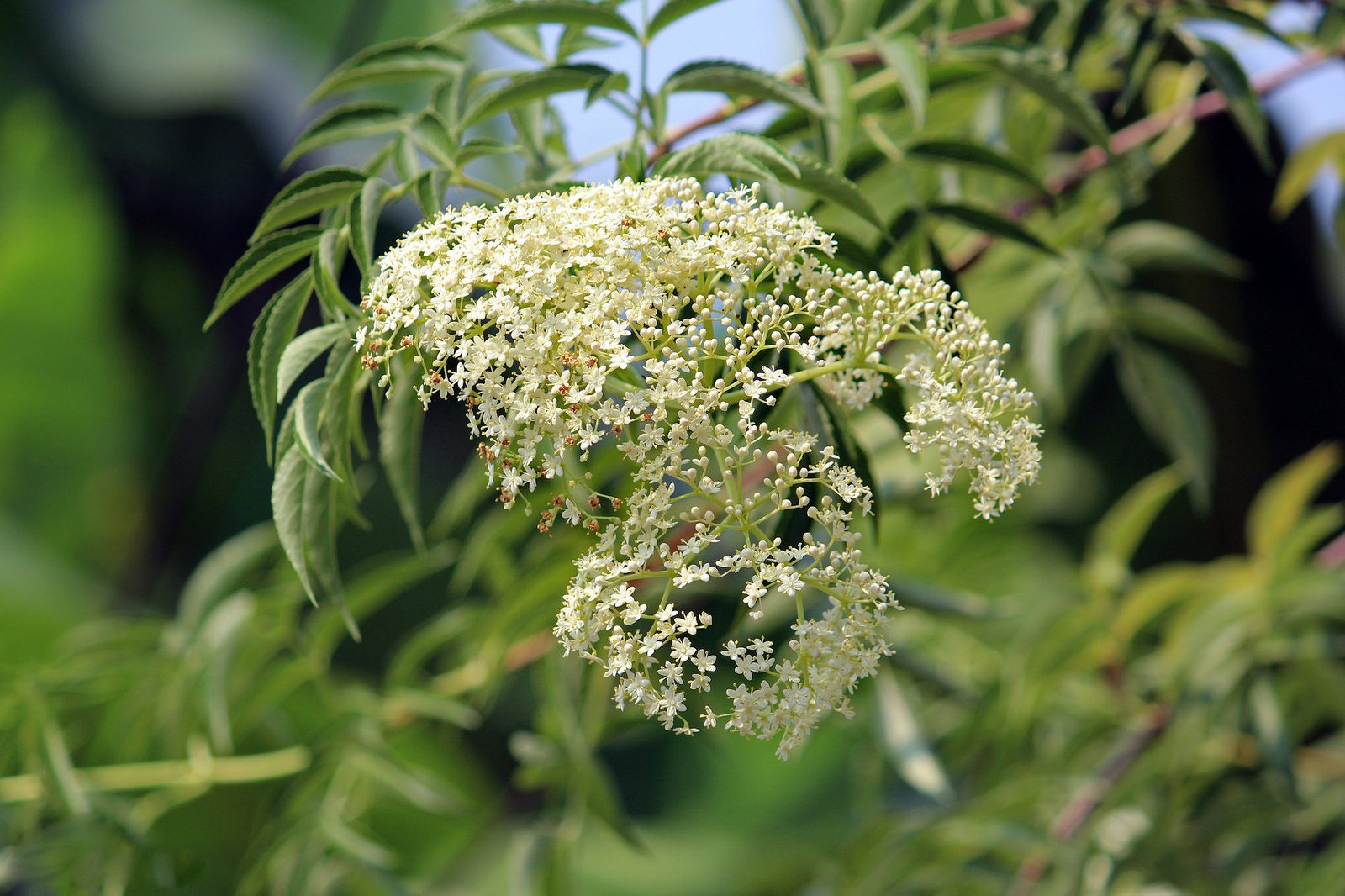
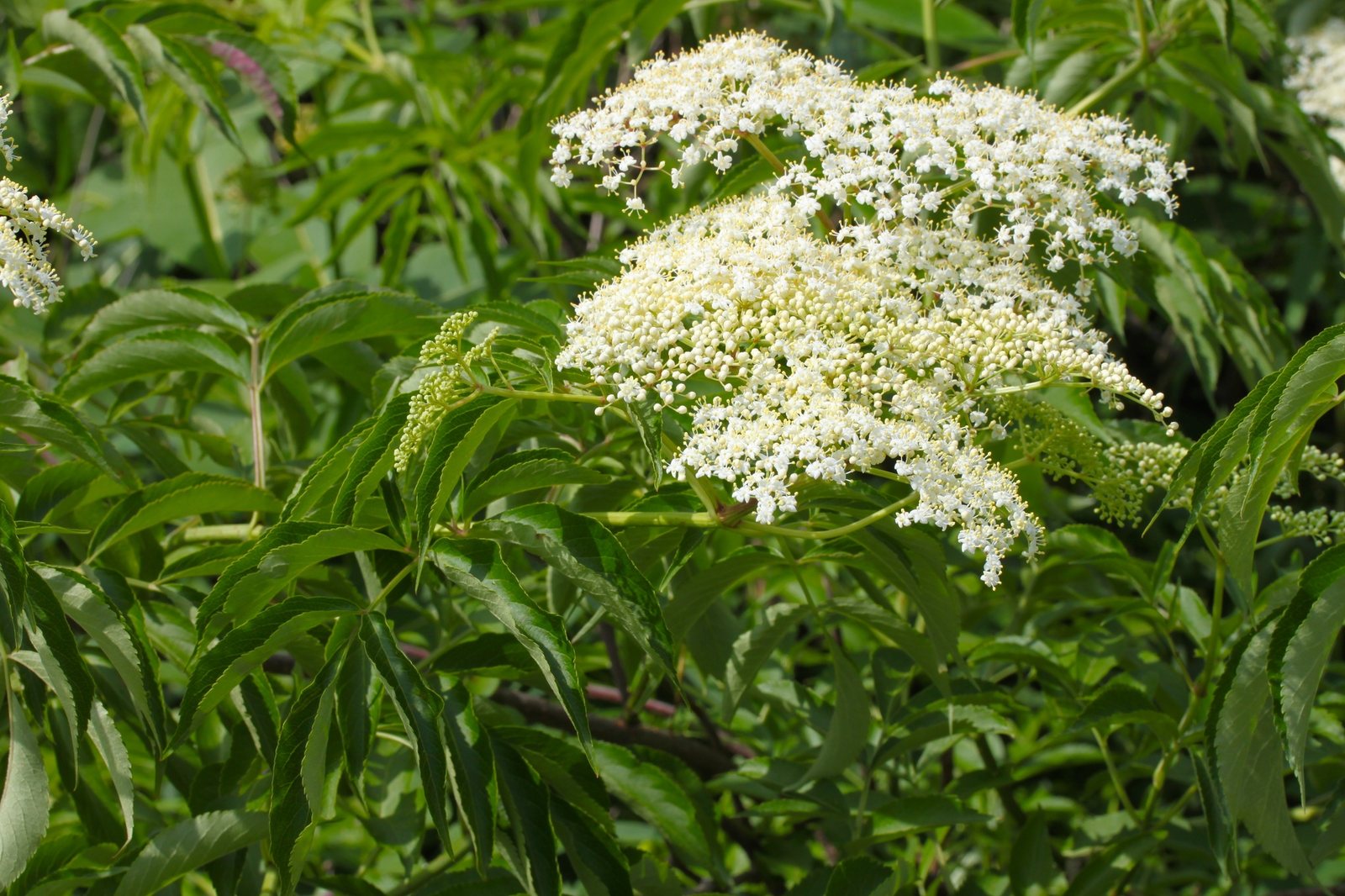
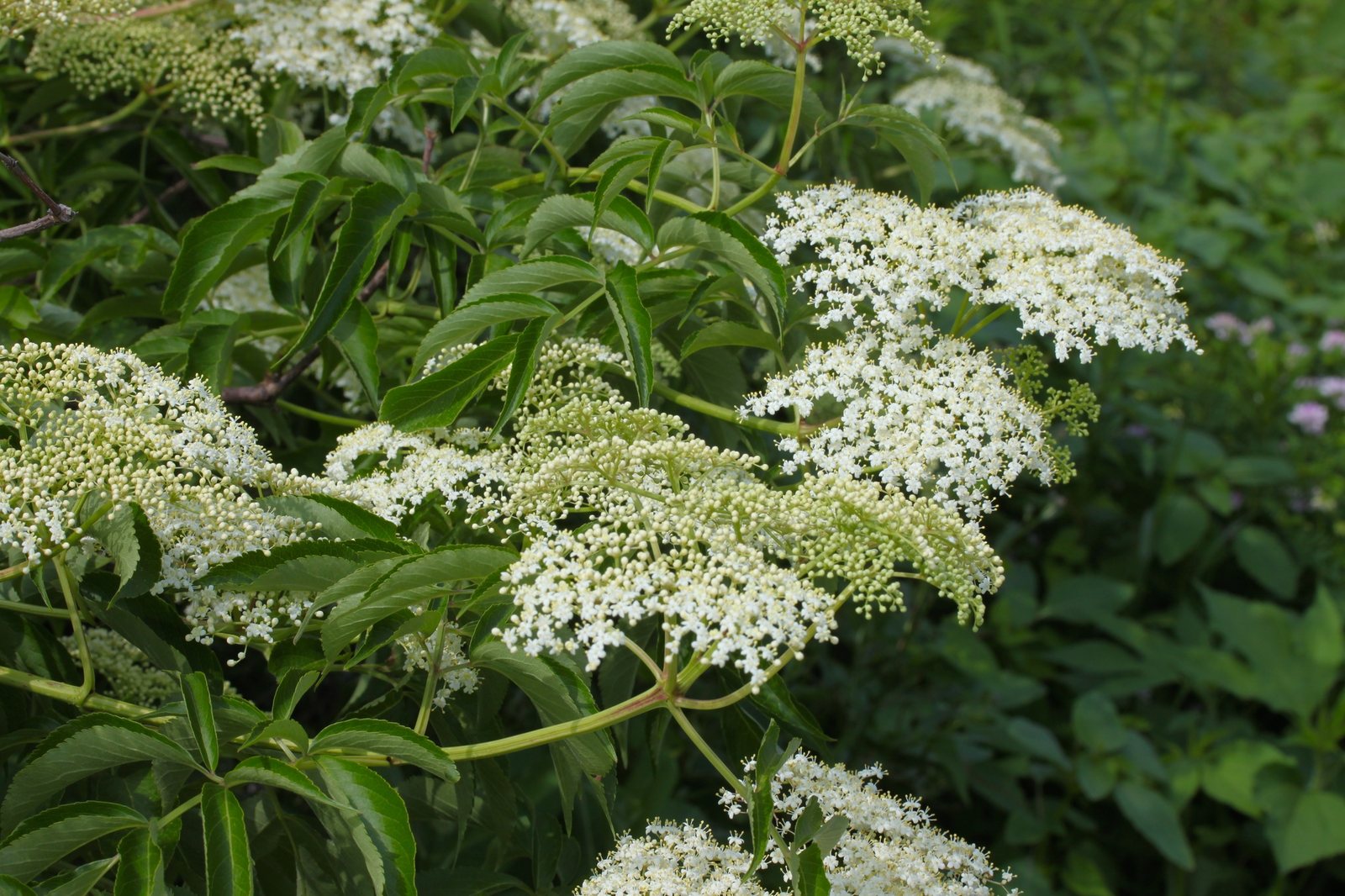
A deciduous elder grown for its finely divided, nearly black leaves and broad clusters of pale pink flowers. It makes a bold background shrub or informal screen, but needs room and regular pruning if you want to keep it compact. Black Lace is the selling name for the cultivar 'Eva'.
At a glance
- Sun
- Full sun to partial shade; foliage develops its darkest colour in sun. Afternoon shade helps in hot climates.
- Water
- Moderate to high; keep the root zone evenly moist, especially during establishment and hot weather.
- Soil
- Moist, fertile, well-drained soil; tolerates clay and a broad pH range, but performs poorly in prolonged drought.
- Height
- 6-10 ft (1.8-3 m)
- Spread
- 6-8 ft (1.8-2.4 m)
- Flowers
- Late spring to early summer; flat clusters of pale pink, lightly scented flowers.
- Foliage
- Deep purple-black, finely cut compound leaves; deciduous. Leaves can become greener in shade.
- Growth
- Fast
- Care needed
- Medium
The year at a glance
- Pollinators
- Wildlife
- Low allergen
- Fragrant
| J | F | M | A | M | J | J | A | S | O | N | D | |
|---|---|---|---|---|---|---|---|---|---|---|---|---|
| Flowers | ||||||||||||
| Fruit | ||||||||||||
| Plant |
Northern hemisphere months. In Australia, shift them by six.
- Difficulty
- Easy
- Toughness
- Fairly tough
Will it suit your garden?
Pick your zone, country, light and whether you have pets.
Full sun is 6 or more hours of direct sun a day, part shade 3 to 6 hours, shade under 3.
How it grows
Planting day
1.6 ft (0.5 m)
After 1 year
4 ft (1.1 m)
After 2 years
5 ft (1.7 m)
After 3 years
7 ft (2.3 m)
After 5 years
8 ft (2.4 m)
full size
About 3 years to full size.
From a typical nursery size, at an average rate for this kind of plant. A rule of thumb, not a forecast.
Good to know
- Cats and dogs
- Toxic
- Native to
- the US, Canada and the UK
- Invasive in
- Australia
- Growth rate
- Fast
Care
Jobs through the year
- WaterApr–May, Sep–Oct, every 14 days
- Water established shrubs deeply during dry spells; water more often for the first two growing seasons.
- WaterJun–Aug, every 7 days
- Water deeply if rainfall is insufficient, keeping roots evenly moist.
- MulchMar–Apr
- Apply 5–8 cm of compost or organic mulch, keeping it clear of stems.
- PruneFeb–Mar
- Remove dead wood and up to one-third of the oldest stems; hard pruning sacrifices flowers and berries.
- PruneMay–Oct
- Remove green reversions and unwanted suckers at their point of origin.
- Water deeply during dry spells, particularly for the first two growing seasons.
- Apply a 2-3 in (5-8 cm) layer of organic mulch in spring, keeping it clear of the stems.
- Top-dress with compost in spring; use a balanced fertiliser only if growth is weak.
- Remove unwanted suckers at their point of origin.
- For more reliable fruiting, grow another compatible Sambucus nigra cultivar nearby that flowers at the same time.
Pruning. In late winter or early spring, remove dead wood and cut up to one-third of the oldest stems to ground level. For a smaller foliage shrub, cut all stems back to 1-2 ft (0.3-0.6 m), accepting fewer flowers and berries that season.
Through the year
- Late winter
- Prune before growth begins, choosing either selective thinning or a hard cutback for foliage.
- Spring
- Plant while conditions are cool, water thoroughly and mulch the root zone.
- Late spring
- Check soft shoots for aphids and rub off small colonies or wash them away with water.
- Summer
- Water during dry weather and remove any plain green shoots at their base.
- Late summer to autumn
- Leave berries for birds, or harvest fully ripe clusters for careful preparation and cooking.
- Autumn
- Remove unwanted seedlings and suckers before they become established.
In the garden
- Place at the back of a mixed border, where dark foliage provides contrast for pale flowers.
- Use as an informal screen with other moisture-loving shrubs, allowing room for its broad habit.
- Pair with chartreuse foliage or white-flowered perennials for strong colour contrast.
- Grow as a regularly cut-back foliage feature where a Japanese-maple-like leaf texture is wanted in a sunnier position.
Garden styles it suits: Modern, Cottage garden, Woodland, Wildlife garden, Native hedgerow and English country.
Plant it with: Japanese forest grass, Hosta, Astilbe, Oakleaf hydrangea, Hardy geranium and Lady's mantle.
Wildlife: Flowers provide pollen for visiting insects, and ripe berries feed birds. Dense branching offers shelter. Birds can carry the seeds into nearby gardens and natural areas.
Problems to watch for
- Aphids cluster on tender shoots: wash them off with water and avoid excessive nitrogen feeding.
- Powdery mildew can coat leaves in dry, crowded conditions: improve airflow and water the soil rather than the foliage.
- Leaf scorch and early leaf drop occur in heat or drought: water deeply, mulch and provide afternoon shade in hot regions.
- Plain green shoots can outgrow the dark foliage: remove them completely where they arise.
Safety
Potentially toxic to people, cats, dogs and horses. Leaves, stems, bark, roots and unripe berries contain cyanogenic compounds; substantial ingestion can cause serious poisoning. Raw ripe berries may also cause nausea, vomiting or diarrhoea. For human food, use only correctly identified, fully ripe fruit, remove stalks and cook thoroughly; do not let pets or horses browse the plant.
Where it spreads. European elder is an environmental weed in parts of southeastern Australia, including Victoria and Tasmania. Birds spread its seed, so check local guidance before planting near bushland; the dark-leaved cultivar should not be assumed sterile.
Easily confused with
Black Beauty elder (Sambucus nigra 'Gerda')
Also has dark foliage and pink flowers, but its leaflets are broad rather than deeply cut and lace-like.
Cut-leaved elder (Sambucus nigra 'Laciniata')
Has similarly dissected leaves, but they are green and the flowers are creamy white.
Laceleaf Japanese maple (Acer palmatum Dissectum Group)
Each maple leaf is a single, palmately lobed blade; elder leaves consist of separate leaflets arranged along a central stalk.
The name
The species name nigra means black, referring to the ripe berries, while Black Lace describes this cultivar's dark, finely divided foliage.
Propagation. Take softwood cuttings in late spring or early summer, or hardwood cuttings during dormancy. Seedlings do not reliably retain the finely cut, dark foliage. Check local plant breeders' rights or patent restrictions before propagating.
Checked against open data
- Accepted botanical name
- Sambucus nigra
- In the US and Canada
- Native in Canada, the lower 48 states and Puerto Rico. Introduced in Canada, Hawaii, the lower 48 states, Pacific Basin and US Virgin Islands.
- Native range
- Albania, Austria, Azores, Baltic States, Belarus, Belgium, Bulgaria, Central European Rus, Corse, Czechoslovakia, Denmark and East European Russia.
- Measured
- Soil pH 7 to 7.5. Average height 450 cm.
Sources: GBIF (CC BY 4.0), USDA PLANTS and Trefle (CC BY 4.0). The care and design notes are LandscapeGPT's own.
See it in your own yard.
Upload a photo of your yard and see it redesigned with plants that suit your climate, each checked against your zone.