Black mulberry
Morus nigra. Family Moraceae. Tree.
Also called Common mulberry.
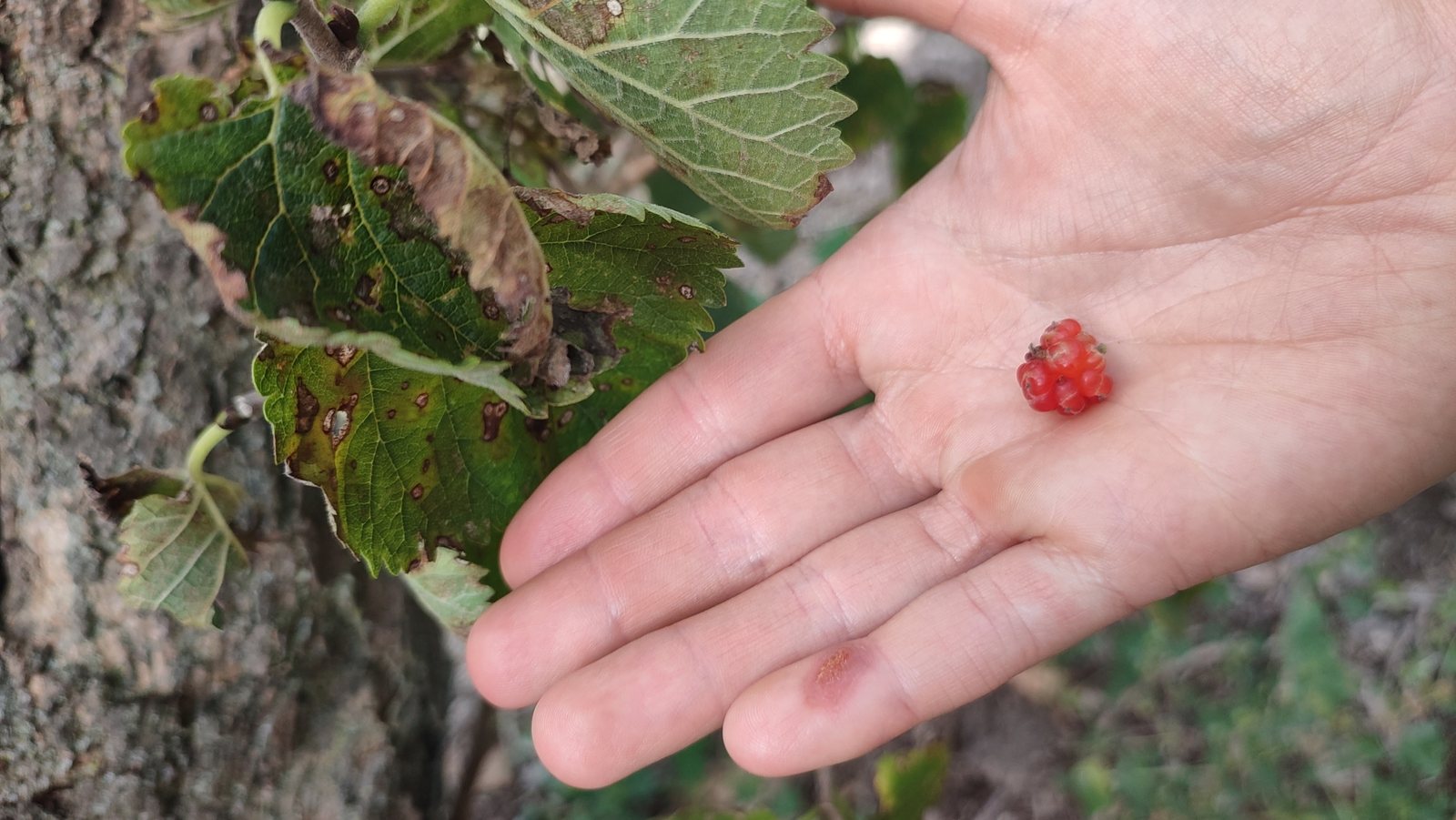
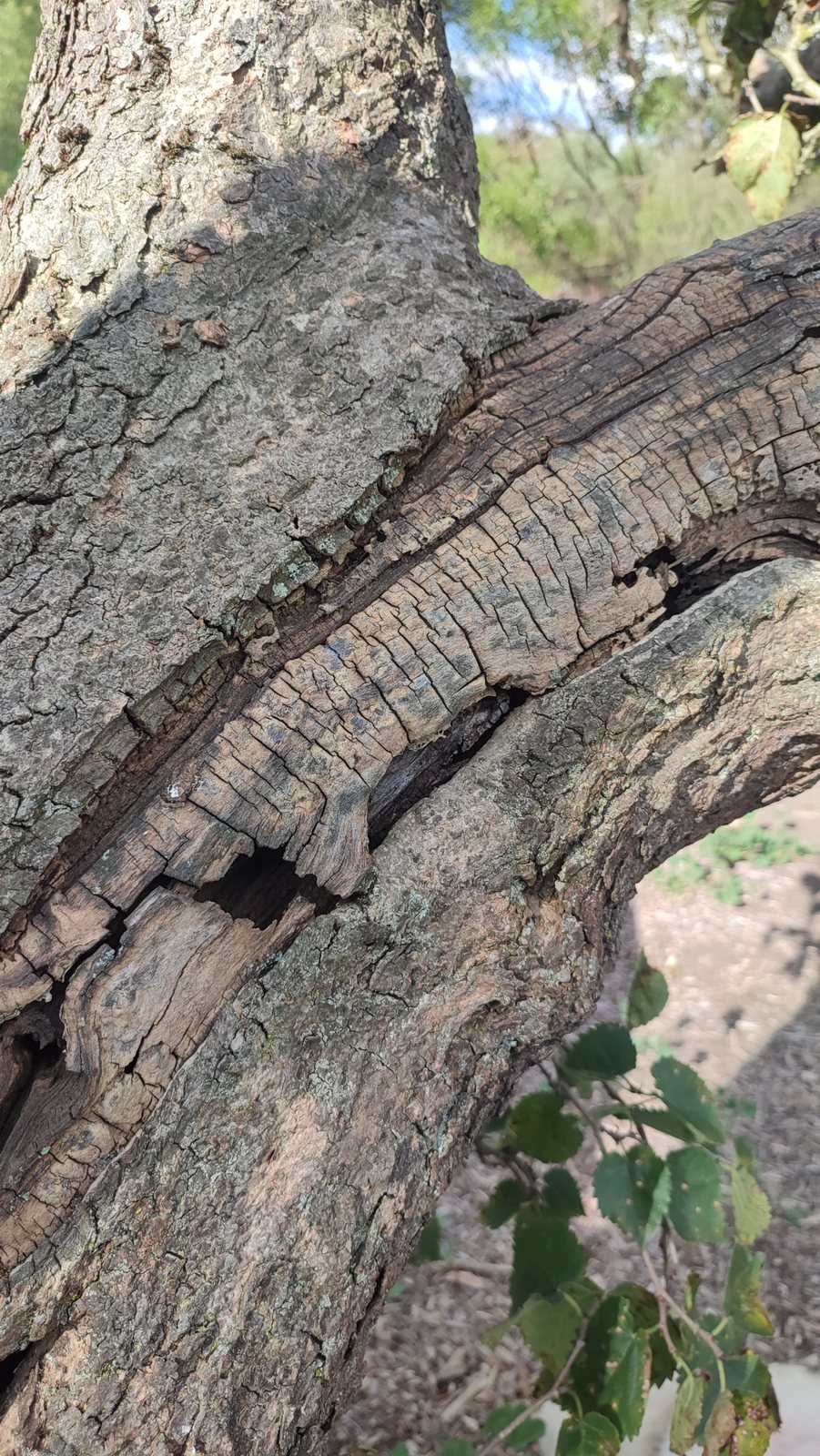
Black mulberry (Morus nigra) is a slow-growing deciduous fruit tree with a broad crown that becomes gnarled and spreading with age. Gardeners grow it for its sweet, sharp, dark-purple fruit and its character as a specimen tree; allow plenty of room and keep it away from paving because fallen fruit stains.
At a glance
- Sun
- Full sun in a sheltered position; warm summers improve fruit ripening.
- Water
- Water regularly while establishing. Established trees tolerate some drought, but prolonged dryness can reduce fruit size and cause fruit drop.
- Soil
- Deep, fertile, well-drained soil that retains some moisture; tolerates clay if it does not remain waterlogged, and grows in slightly acid to alkaline conditions.
- Height
- 20-30 ft (6-9 m)
- Spread
- 25-35 ft (7.5-10.5 m)
- Flowers
- Small, inconspicuous greenish flowers in late spring.
- Foliage
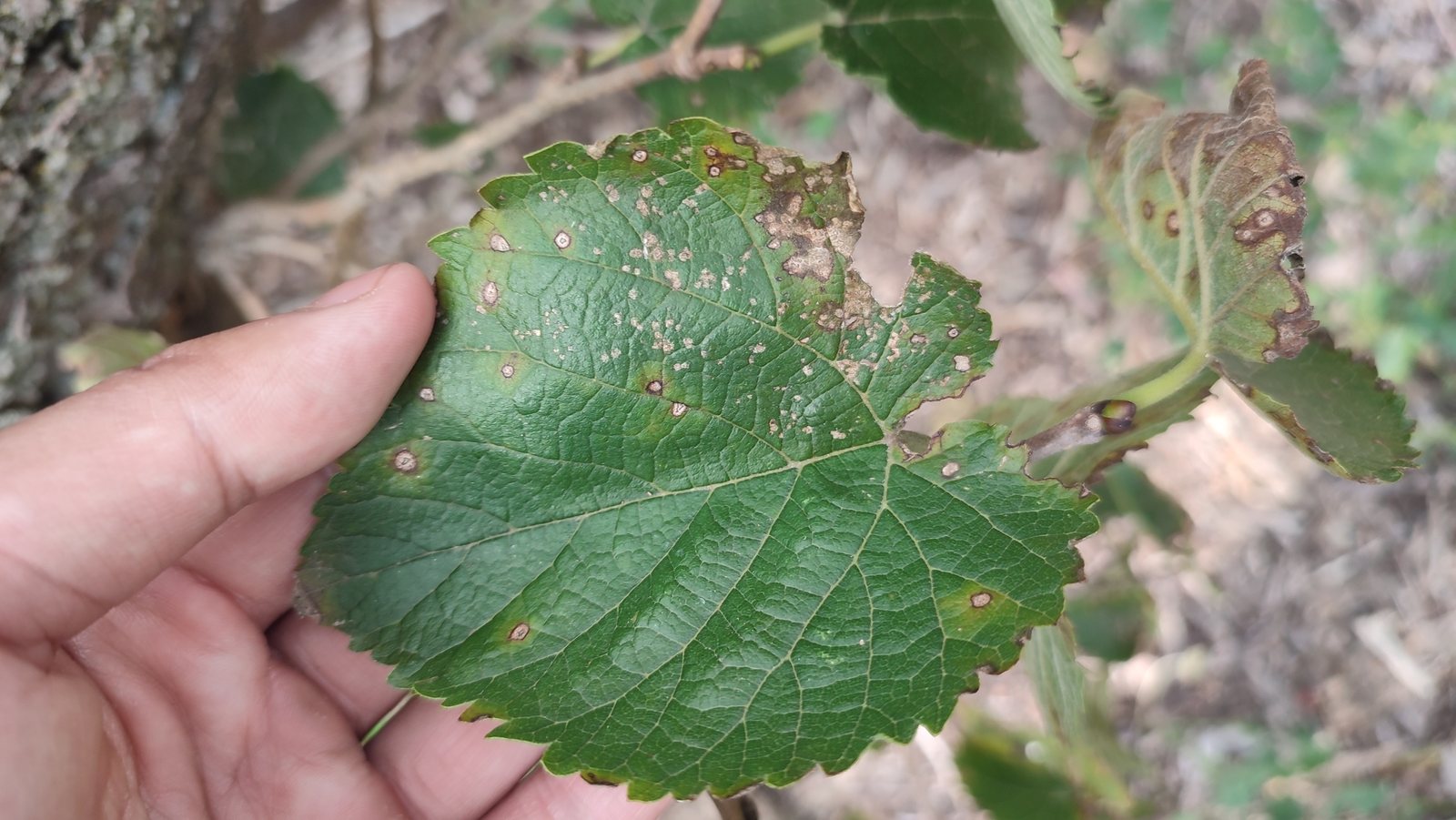
- Broad, heart-shaped, toothed green leaves with a distinctly rough upper surface; leaves turn yellow in autumn.
- Growth
- Slow
- Care needed
- Medium
The year at a glance
- Drought tolerant
- Heat tolerant
- Wildlife
- Edible
| J | F | M | A | M | J | J | A | S | O | N | D | |
|---|---|---|---|---|---|---|---|---|---|---|---|---|
| Flowers | ||||||||||||
| Fruit | ||||||||||||
| Plant |
Northern hemisphere months. In Australia, shift them by six.
- Difficulty
- Moderate
- Toughness
- Very tough
Will it suit your garden?
Pick your zone, country, light and whether you have pets.
Full sun is 6 or more hours of direct sun a day, part shade 3 to 6 hours, shade under 3.
How it grows
Planting day
7 ft (2 m)
After 1 year
7 ft (2.2 m)
After 2 years
8 ft (2.3 m)
After 3 years
8 ft (2.5 m)
After 5 years
9 ft (2.9 m)
About 32 years to full size.
From a typical nursery size, at an average rate for this kind of plant. A rule of thumb, not a forecast.
Good to know
- Cats and dogs
- Mildly toxic: may upset a stomach
- Invasive in
- Australia
- Growth rate
- Slow
Care
Jobs through the year
- WaterApr–May, Sep, every 14 days
- Water established trees deeply only in dry spells; water more often for the first three growing seasons.
- WaterJun–Aug, every 7 days
- Water established trees deeply during prolonged dryness, especially while fruit swells; skip if soil remains moist.
- MulchMar–Apr
- Apply 5–8 cm of compost or well-rotted organic matter, keeping it clear of the trunk.
- PruneJan, Dec
- While fully dormant, remove only dead, damaged or crossing branches with small cuts; avoid spring pruning.
- ProtectJul–Sep
- If needed, cover a manageable tree with tightly secured wildlife-safe netting before fruit ripens.
- HarvestJul–Sep
- Pick soft purple-black fruit that releases easily; use promptly and clear fallen fruit.
- Water deeply during dry spells for the first two or three growing seasons.
- Apply a 2-3 in (5-8 cm) mulch of compost or well-rotted organic matter in spring, keeping it clear of the trunk.
- Avoid heavy nitrogen feeding, which encourages leafy growth at the expense of fruit.
- Stake a newly planted tree only if needed for stability, and remove the support once the roots hold it securely.
- Keep heavy loads and climbing children off old, spreading branches, which can be brittle.
Pruning. Prune sparingly in early to midwinter while fully dormant, removing dead, damaged or crossing branches and making small cuts where possible. Avoid spring pruning because cuts can bleed heavily, and avoid major reshaping of mature trees.
Harvest
Pick fruit in summer to early autumn when it is purple-black, soft and releases with a gentle touch; it ripens over several weeks. Harvest by hand or gently shake ripe fruit onto a clean sheet, then eat or process it promptly because it bruises and spoils quickly. A young nursery tree may take roughly 5-10 years from planting to give a substantial crop, although older planting stock can bear sooner.
Through the year
- Autumn
- Plant while the soil is workable, choosing a sunny site away from paving, cars and outdoor seating.
- Early winter
- Inspect the branch structure and carry out only necessary pruning while the tree is fully dormant.
- Early spring
- Renew mulch and remove grass or weeds from around the trunk.
- Late spring
- Check soil moisture and water young trees deeply during dry weather.
- Summer
- Pick ripe fruit frequently and collect fallen fruit before it attracts wasps or stains nearby surfaces.
- Late summer
- Remove dead twigs and spoiled fruit from the ground, and check spreading branches for cracks.
In the garden
- Use as a long-lived specimen in a generous lawn, allowing room for its spreading crown.
- Plant in a traditional orchard or edible garden where falling fruit can be collected easily.
- Place in a sheltered, sunny garden with spring bulbs beneath the outer canopy for interest before the leaves emerge.
- Use its low, irregular branching as a focal point in a country garden, away from busy paths.
Garden styles it suits: English country, Traditional, Backyard orchard, Edible landscape, Homestead and Grand estate.
Plant it with: Daffodils, Crocuses, Chives and Nasturtiums.
Wildlife: Ripe fruit feeds birds and small mammals, while the canopy offers shelter and nesting sites. Flowers are mainly wind-pollinated; fallen fruit also attracts insects, including wasps.
Problems to watch for
- Birds take ripe fruit: harvest frequently or protect a manageable tree with tightly secured, wildlife-safe netting; never leave loose netting around branches.
- Leaf spot or powdery mildew: collect fallen leaves, avoid wetting foliage unnecessarily and maintain airflow without heavy pruning.
- Root decline in waterlogged soil: improve drainage before planting and avoid sites that remain saturated.
- Poor cropping: allow time for a young tree to mature, provide full sun and avoid excessive nitrogen feeding; cool summers can limit ripening.
Safety
Ripe fruit is edible for people and is not known to be toxic to cats, dogs or horses, though large amounts may cause digestive upset. Unripe fruit and milky sap can cause stomach upset, and sap may irritate skin; avoid eating unripe fruit or allowing pets to chew stems.
Where it spreads. Naturalised in parts of eastern Australia and regarded as an environmental weed in parts of Queensland and New South Wales, where birds can disperse its seed. Check local guidance before planting; mulberry species are sometimes misidentified.
Easily confused with
White mulberry (Morus alba)
Leaves are generally smoother and often shinier above, with more variable lobing. Its ripe fruit may be white, pink, red or black, so fruit colour alone is not a reliable distinction.
Red mulberry (Morus rubra)
Also has rough upper leaf surfaces, but leaves are often larger, with long pointed tips and a softly hairy underside. It is native to eastern North America;
The name
Morus is the Latin name for mulberry, and nigra means black, referring to the ripe fruit.
Propagation. Usually propagated by hardwood cuttings in dormancy or by grafting onto mulberry rootstock; cuttings can be slow and unreliable to root. Seedlings vary and take longer to fruit, so buy a correctly identified, vegetatively propagated tree for predictable crops.
Checked against open data
- Accepted botanical name
- Morus nigra
- In the US and Canada
- Introduced in the lower 48 states and Puerto Rico.
- Native range
- Iran.
- Measured
- Soil pH 5.5 to 6.5. Average height 1000 cm.
Sources: GBIF (CC BY 4.0), USDA PLANTS and Trefle (CC BY 4.0). The care and design notes are LandscapeGPT's own.
See it in your own yard.
Upload a photo of your yard and see it redesigned with plants that suit your climate, each checked against your zone.