Black rose aeonium
Aeonium arboreum 'Zwartkop'. Family Crassulaceae. Succulent.
Also called Black tree aeonium, Aeonium 'Schwarzkopf'.
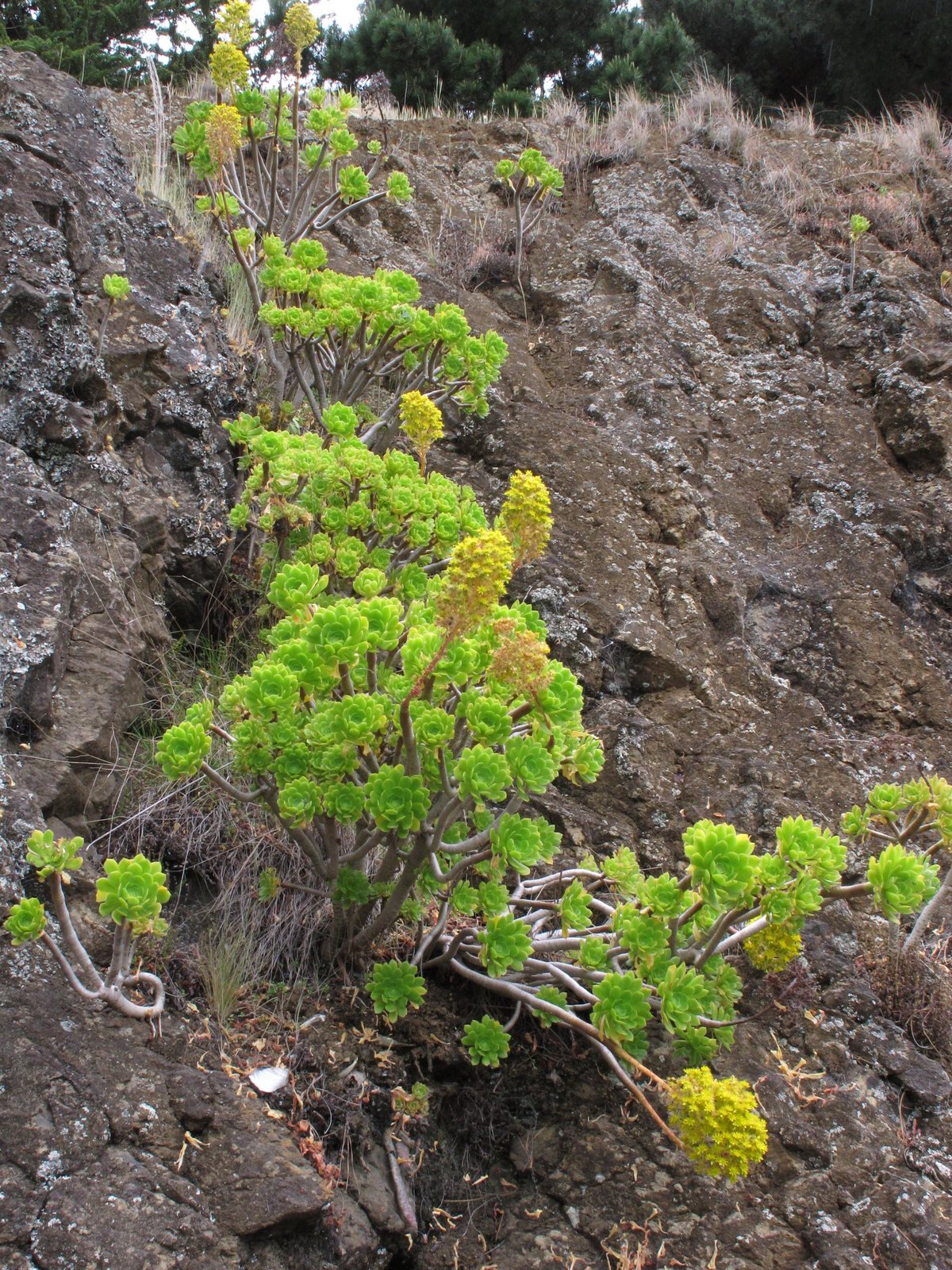
Black rose aeonium is a branching succulent with woody stems topped by rosettes of glossy, almost black leaves. Gardeners grow it for its sculptural shape and dark foliage in containers and frost-free borders; in colder climates, bring it indoors for winter.
At a glance
- Sun
- Full sun to light shade. Strong light gives the darkest leaves; provide afternoon shade in very hot inland climates and introduce indoor-grown plants to direct sun gradually.
- Water
- Water thoroughly, then let the soil dry substantially before watering again. Water more regularly during cool-weather growth and sparingly during summer dormancy; never leave the roots standing in water.
- Soil
- Very free-draining, sandy or gritty soil. In pots, use a cactus mix with added pumice, perlite or coarse grit, and a container with drainage holes.
- Height
- 3-5 ft (0.9-1.5 m)
- Spread
- 2-3 ft (0.6-0.9 m)
- Flowers
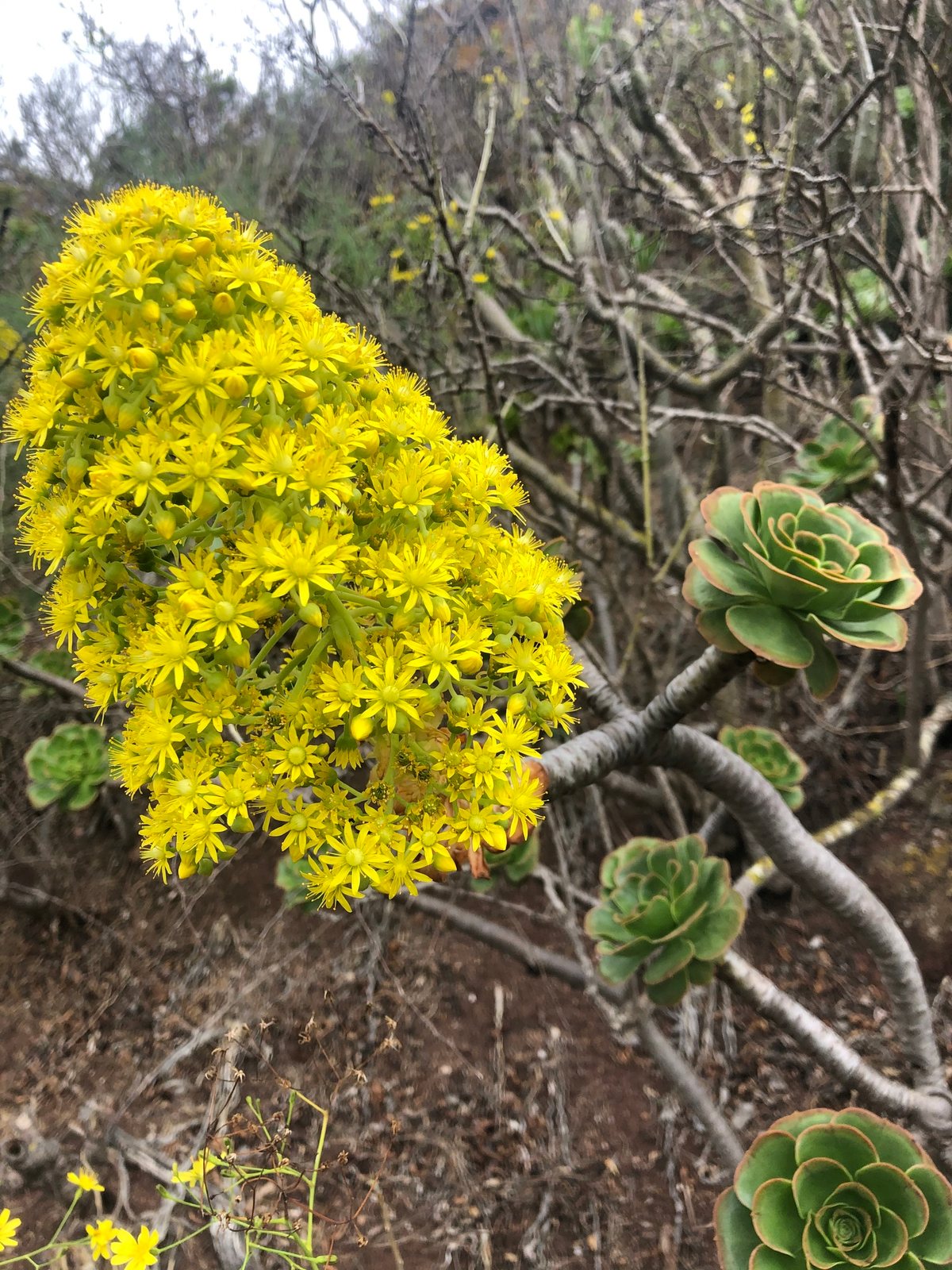
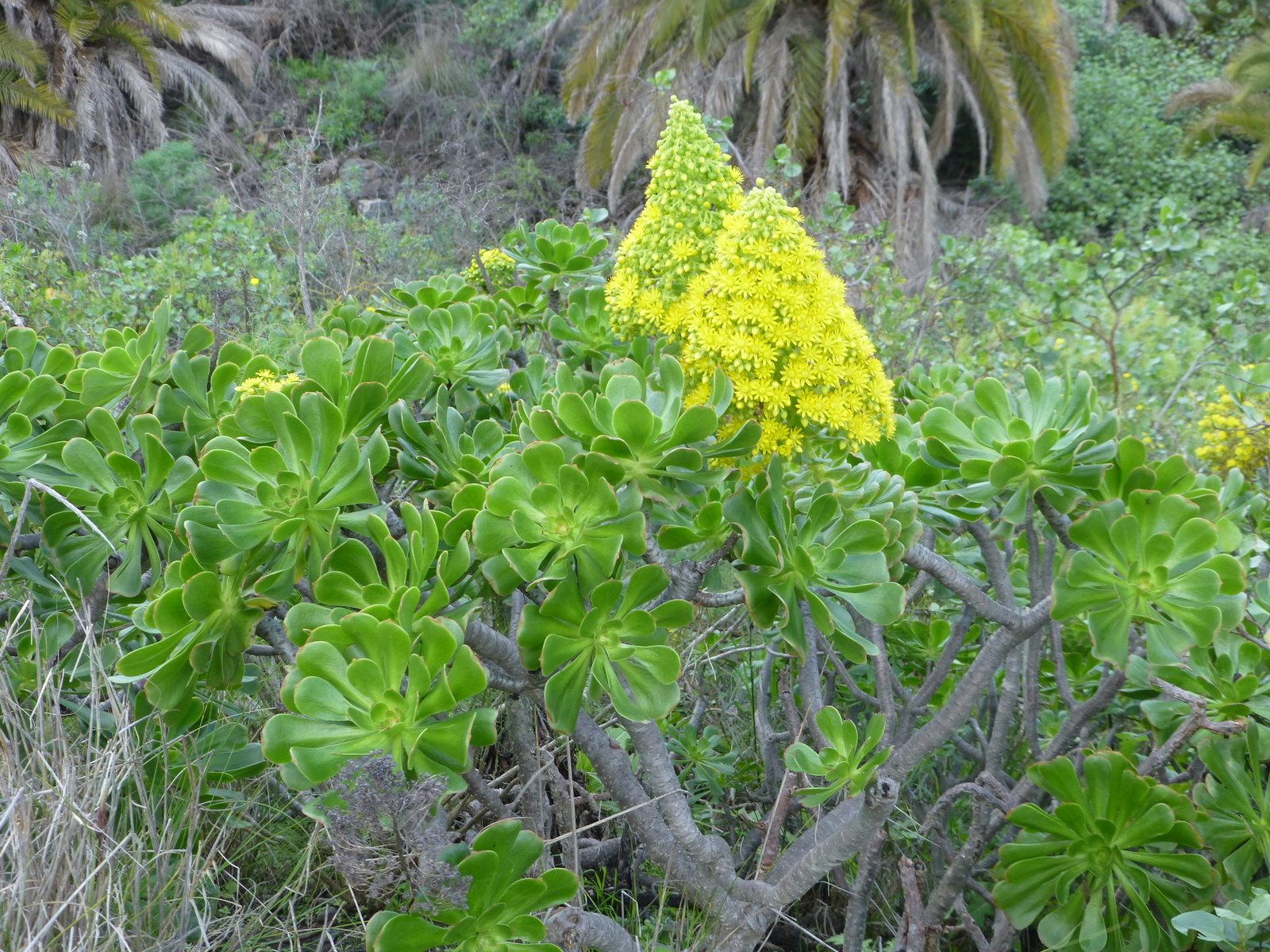
- Mature rosettes may produce large clusters of small yellow flowers in late winter or spring. The flowering rosette and its stem die afterward, but other branches usually survive.
- Foliage
- Evergreen. Spoon-shaped, glossy burgundy-black leaves form rosettes at the ends of bare, branching stems. Rosette centres may remain green, especially in shade; leaves often close inward and some lower leaves drop during summer dormancy.
- Growth
- Moderate during cool, mild weather; little growth during hot summer dormancy.
- Care needed
- Low
The year at a glance
- Drought tolerant
- Low allergen
| J | F | M | A | M | J | J | A | S | O | N | D | |
|---|---|---|---|---|---|---|---|---|---|---|---|---|
| Plant |
Northern hemisphere months. In Australia, shift them by six.
- Difficulty
- Easy
- Toughness
- Fairly tough
Will it suit your garden?
Pick your zone, country, light and whether you have pets.
Full sun is 6 or more hours of direct sun a day, part shade 3 to 6 hours, shade under 3.
How it grows
Planting day
0.8 ft (0.25 m)
After 1 year
1.3 ft (0.41 m)
After 2 years
1.9 ft (0.57 m)
After 3 years
2.4 ft (0.73 m)
After 5 years
3 ft (1 m)
About 6 years to full size.
From a typical nursery size, at an average rate for this kind of plant. A rule of thumb, not a forecast.
Good to know
- Cats and dogs
- Safe
- Growth rate
- Moderate
Care
Jobs through the year
- WaterMar–May, Sep–Oct, every 14 days
- During active growth, water only after soil dries substantially; ground culture requires a frost-free climate.
- WaterJun–Aug, every 28 days
- Check soil and rosettes; water sparingly during heat-induced dormancy, more normally if cool weather keeps growth active.
- WaterJan–Feb, Nov–Dec, every 21 days
- In bright frost-free shelter, water only after substantial drying; reduce further in cool, dull conditions.
- FeedApr, Sep
- Feed lightly with diluted balanced fertiliser only if actively growing.
- PruneApr–May, Sep
- During active growth, shorten leggy stems above a leaf scar and remove dead flowering stems.
- ProtectJan–Apr, Oct–Dec
- Overwinter movable pots in bright, ventilated, frost-free shelter, protected from prolonged cold rain.
- Use a pot with drainage holes and empty any saucer after watering.
- Adjust watering to growth rather than the calendar: water during cool-weather growth and reduce sharply when rosettes close in summer.
- Feed lightly with a diluted balanced fertiliser once or twice during active growth; do not feed dormant plants.
- Move containers under cover before frost, giving them the brightest practical position and good ventilation.
- Keep damp organic mulch away from the stems; a thin gravel surface dressing is suitable.
Pruning. During active growth, shorten leggy stems just above a leaf scar to encourage branching, retaining some leafy growth on the plant. Remove dead flowering stems and dry leaves, and allow any cuttings to callus before potting.
Through the year
- Late winter
- In frost-free conditions, check for fresh growth and resume more regular watering as needed.
- Spring
- Repot crowded plants into a slightly larger container with fresh, gritty compost; feed lightly once growth is underway.
- Late spring
- Move overwintered plants outdoors after frost risk has passed, gradually increasing sun exposure.
- Summer
- Reduce watering if growth stops and rosettes tighten; protect from fierce afternoon sun during heatwaves.
- Early autumn
- As cooler weather restarts growth, increase watering cautiously and take stem cuttings if wanted.
- Late autumn
- Bring pots into bright, frost-free shelter before freezing weather and protect outdoor plants from prolonged cold rain.
In the garden
- Use a single specimen in a simple container beside a sunny doorway, where its branching silhouette can be seen.
- Contrast its dark rosettes with silver foliage, pale gravel and blue-grey succulents in a frost-free dry garden.
- Place it among lower-growing echeverias and stonecrops to add height without dense shade.
- Repeat matching pots along a sheltered terrace for a strong, architectural rhythm.
Garden styles it suits: Architectural minimal, Contemporary minimal, Modern Mediterranean, Dry gravel garden, Modern courtyard and Small-space.
Plant it with: Echeverias, Blue chalk sticks, Aloes, Agaves and Stonecrops.
Wildlife: Yellow flowers can attract bees and other visiting insects when produced. Plants grown mainly for foliage or kept indoors provide little wildlife value.
Problems to watch for
- Root or stem rot: prevent with fast drainage and restrained watering, especially during dormancy; salvage healthy stem tips if the base becomes soft.
- Mealybugs: inspect rosette centres and leaf joints, isolate affected pots and treat with a product labelled for mealybugs on succulents.
- Sun scorch: pale or brown patches can follow sudden exposure to strong sun; acclimatise plants gradually and provide afternoon shade in extreme heat.
- Frost damage: blackened, collapsing leaves and stems indicate cold injury; move under cover and remove damaged tissue once the extent of injury is clear.
Safety
Not known to be toxic to cats, dogs, horses or people. No poisonous part is established, although animal-specific information is limited; it is not an edible plant, and eating it may cause stomach upset.
Easily confused with
Purple tree aeonium (Aeonium arboreum 'Atropurpureum')
Has the same branching habit, but the leaves are usually reddish-purple rather than nearly black, often with more conspicuous green colouring.
Velour aeonium (Aeonium 'Velour')
Usually has broader, softer-looking burgundy leaves and a more conspicuous green centre; 'Zwartkop' has narrower, glossier leaves.
Black Prince echeveria (Echeveria 'Black Prince')
Forms low rosettes of thick, pointed triangular leaves rather than spoon-shaped leaves on tall, branching woody stems.
The name
The species name arboreum means tree-like, referring to its woody branching habit, and the Dutch cultivar name 'Zwartkop' means black head, describing the dark rosettes.
Propagation. Take healthy stem cuttings during active growth in spring or autumn. Let the cut ends dry and callus for several days, then insert into a gritty potting mix and water sparingly until rooted. Seed does not reliably preserve this cultivar's dark foliage.
Checked against open data
- Accepted botanical name
- Aeonium arboreum
- In the US and Canada
- Introduced in the lower 48 states.
- Native range
- Canary Is. and Morocco.
- Measured
- Average height 48 cm.
Sources: GBIF (CC BY 4.0), USDA PLANTS and Trefle (CC BY 4.0). The care and design notes are LandscapeGPT's own.
See it in your own yard.
Upload a photo of your yard and see it redesigned with plants that suit your climate, each checked against your zone.