Blue chalksticks
Curio talinoides. Family Asteraceae. Succulent.
Also called Narrow-leaved chalksticks, Senecio talinoides.
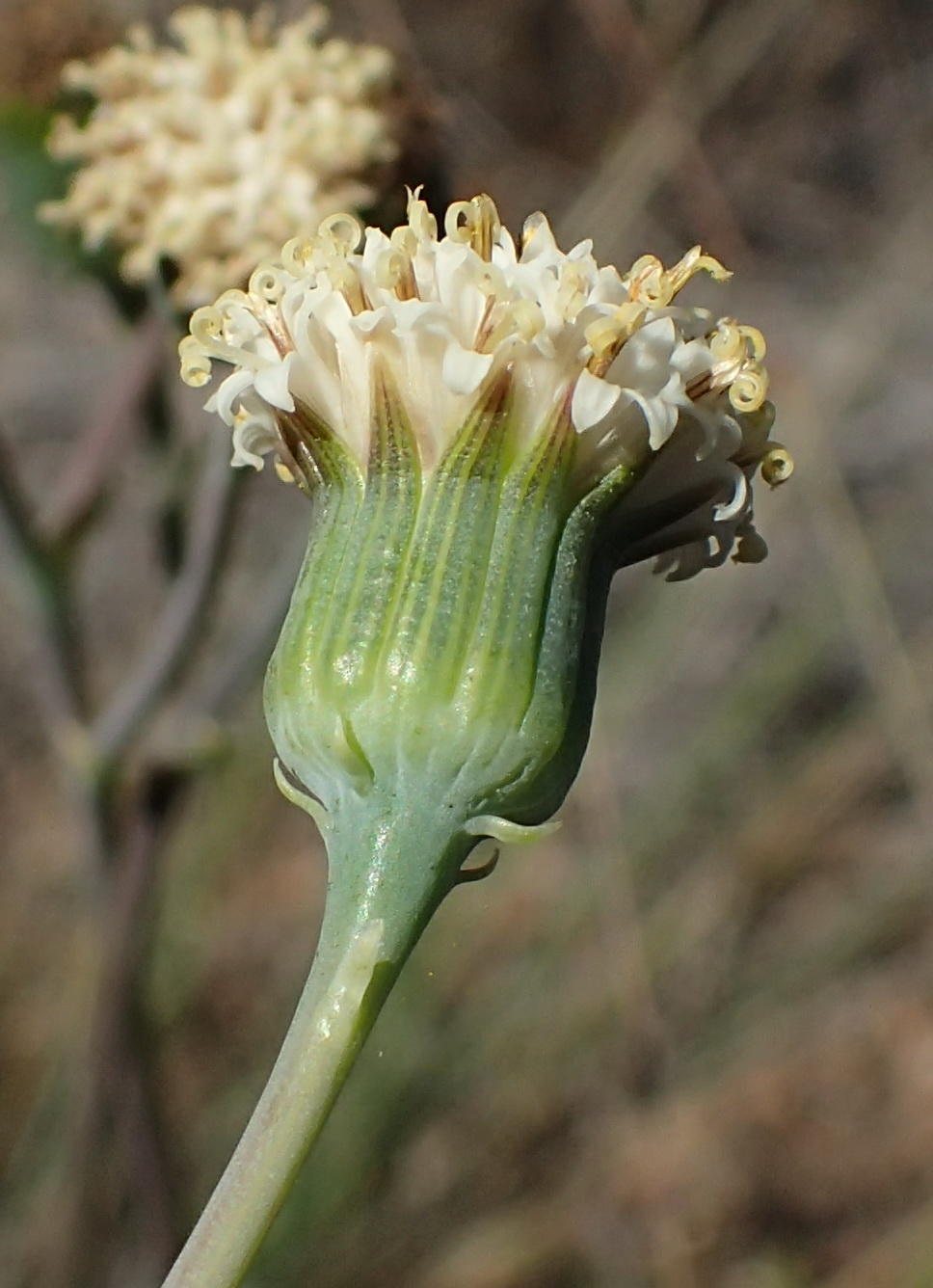
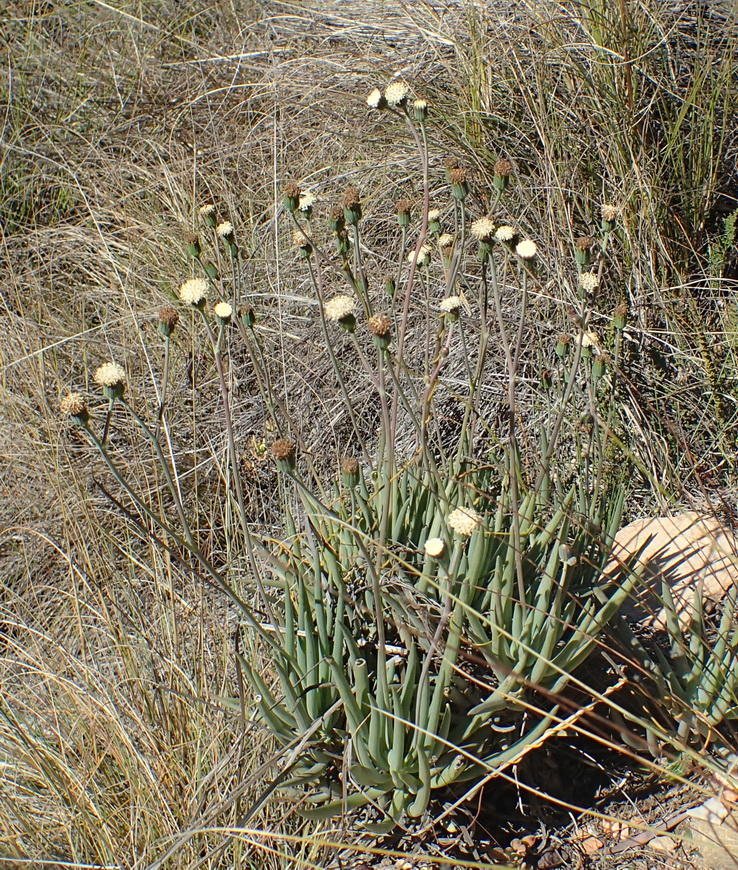
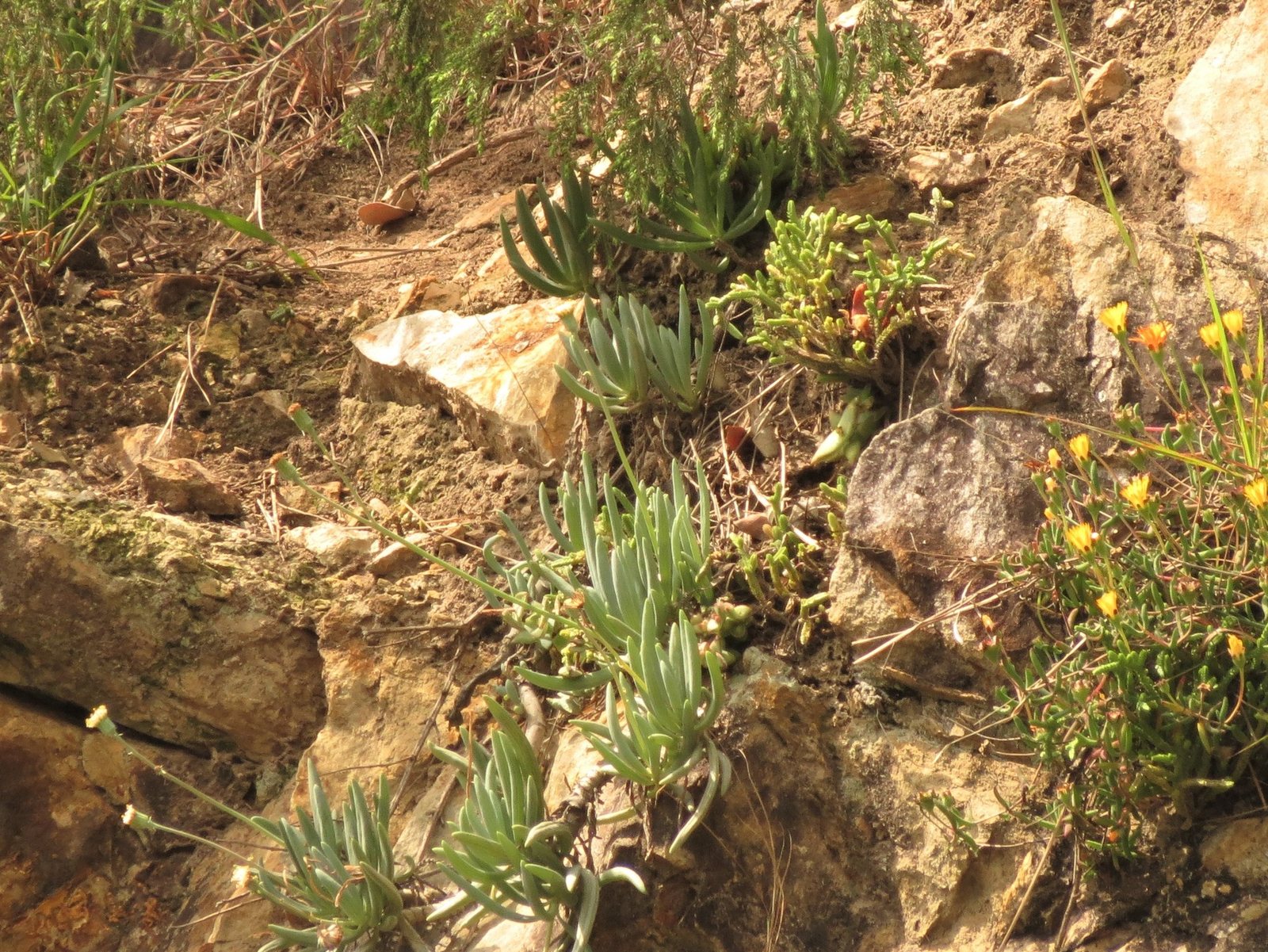
Blue chalksticks is an evergreen South African succulent with branching stems and narrow, powdery blue-grey leaves. Gardeners grow it for foliage contrast in dry borders, gravel gardens and containers. The common name covers several similar plants, so check the botanical name when buying.
At a glance
- Sun
- Full sun to light shade; provide afternoon shade in very hot inland gardens.
- Water
- Low once established. Water thoroughly, then let the soil dry; keep considerably drier during cool, dull weather.
- Soil
- Very freely draining sandy or gravelly soil. In containers, use cactus compost amended with pumice, grit or perlite.
- Height
- 1-3 ft (0.3-0.9 m)
- Spread
- 2-3 ft (0.6-0.9 m), sometimes wider where stems root
- Flowers
- Small cream to pale yellow flower heads, usually in summer; flowering time varies with climate.
- Foliage
- Evergreen. Slender, fleshy, cylindrical to slightly flattened leaves with a powdery blue-grey coating, carried on branching stems.
- Growth
- Moderate in suitable warmth and light; slower during extreme heat or cold.
- Care needed
- Low
The year at a glance
- Drought tolerant
- Heat tolerant
- Low allergen
| J | F | M | A | M | J | J | A | S | O | N | D | |
|---|---|---|---|---|---|---|---|---|---|---|---|---|
| Plant |
Northern hemisphere months. In Australia, shift them by six.
- Difficulty
- Easy
- Toughness
- Fairly tough
Will it suit your garden?
Pick your zone, country, light and whether you have pets.
Full sun is 6 or more hours of direct sun a day, part shade 3 to 6 hours, shade under 3.
How it grows
Planting day
0.8 ft (0.25 m)
After 1 year
1 ft (0.29 m)
After 2 years
1.1 ft (0.34 m)
After 3 years
1.3 ft (0.38 m)
After 5 years
1.6 ft (0.47 m)
About 8 years to full size.
From a typical nursery size, at an average rate for this kind of plant. A rule of thumb, not a forecast.
Good to know
- Cats and dogs
- Toxic
- In the garden
- Spreads vigorously: plan to contain it.
- Growth rate
- Slow
Care
Jobs through the year
- WaterApr–May, Sep, every 21 days
- For established ground plants in frost-free climates, water only after soil dries; check pots more often.
- WaterJun–Aug, every 14 days
- Water only when soil is dry; do not increase watering if extreme heat stops growth.
- WaterJan–Mar, Oct–Dec, every 30 days
- Check frost-free overwintering pots and water sparingly only if the mix has dried.
- FeedApr
- Feed container plants once with half-strength cactus fertiliser; omit for established border plants.
- PruneApr–May
- Shorten leggy stems above leafy side shoots and remove dead or rotting growth.
- MulchMay
- Use a thin gravel dressing rather than moisture-retaining organic mulch.
- ProtectJan–Apr, Oct–Dec
- Grow in movable pots in this climate and overwinter in bright, frost-free shelter.
- Plant above surrounding soil level where drainage is uncertain; avoid sites that stay wet after rain.
- Water the root zone only after the soil has dried, and empty container saucers.
- Feed container plants once in spring with a half-strength cactus fertiliser; established border plants rarely need feeding.
- Use a thin gravel mulch around the stems rather than moisture-retaining organic mulch.
- In frost-prone climates, grow in a pot and overwinter in a bright, frost-free place.
- Avoid rubbing the leaves, which removes their powdery coating.
Pruning. In spring, shorten leggy stems just above a leafy side shoot to encourage branching. Remove dead or rotting stems promptly, cutting back to firm, healthy tissue.
Through the year
- Spring
- Trim leggy growth and repot only if roots have filled the container.
- Late spring
- Move overwintered pots outdoors after frost risk has passed, introducing direct sun gradually.
- Summer
- Check soil before watering; do not assume a plant resting in extreme heat needs more water.
- Early autumn
- Take healthy stem cuttings as replacements for ageing or frost-vulnerable plants.
- Autumn
- Move pots under bright, frost-free cover before cold nights arrive.
- Winter
- Give sheltered plants maximum light and water sparingly, without leaving roots wet.
In the garden
- Plant in drifts through gravel beds to contrast with dark stones and green succulents.
- Use in broad, shallow containers with drainage holes for a restrained blue-grey planting.
- Place at the front of frost-free dry borders beside upright aloes or agaves.
- Allow stems to soften the edge of a sunny raised bed or low retaining wall.
Garden styles it suits: Modern Mediterranean, Desert modern, Architectural minimal, Dry gravel garden, Desert / xeriscape and Coastal.
Plant it with: Aloe, Agave, Echeveria, Rock rose, Lavender and Red yucca.
Wildlife: The small flowers may attract bees and other insects, but this is primarily a foliage plant rather than a major wildlife resource.
Problems to watch for
- Root and stem rot: improve drainage, reduce watering and remove affected tissue; salvage sound stem tips if the base has rotted.
- Mealybugs: inspect leaf bases and stem joints, isolate affected pots and treat with a product labelled for mealybugs on succulents.
- Frost damage: move containers under cover before freezing weather; wait until spring to assess and remove damaged growth.
- Long, weak green growth: increase light gradually and avoid excessive fertiliser.
Safety
Treat all parts as toxic if eaten by people, cats, dogs or horses. Curio and related senecio plants can contain pyrrolizidine alkaloids; ingestion may cause digestive illness and potentially serious liver damage, especially with repeated exposure. Keep trimmings away from pets and livestock, and seek medical or veterinary advice after ingestion.
Easily confused with
Dwarf blue chalksticks (Curio repens)
Often sold under its older name, Senecio serpens; it forms a lower, tighter carpet with shorter, stouter blue leaves.
Narrow-leaf chalksticks (Curio ficoides)
Usually develops a taller, more upright woody framework, with longer leaves that are more noticeably flattened and often curve upward.
The name
The common name refers to the slender, blue-grey leaves and their powdery, chalk-like surface.
Propagation. Take stem cuttings during active growth. Let the cut ends dry and seal for several days, then insert into a gritty propagation mix; water lightly until roots establish. Stems touching the ground may also root naturally.
Checked against open data
- Accepted botanical name
- Curio talinoides
- Native range
- Cape Provinces.
Sources: GBIF (CC BY 4.0) and Trefle (CC BY 4.0). The care and design notes are LandscapeGPT's own.
See it in your own yard.
Upload a photo of your yard and see it redesigned with plants that suit your climate, each checked against your zone.