Blue Hill salvia
Salvia × sylvestris 'Blauhügel'. Family Lamiaceae. Perennial.
Also called Salvia × sylvestris 'Blauhügel', Blue Hill woodland sage, Blauhügel salvia.
Blue Hill salvia is a compact, clump-forming perennial grown for its upright spikes of violet-blue flowers in early summer. It attracts bees and fits well at the front of sunny borders, often flowering again after a trim.
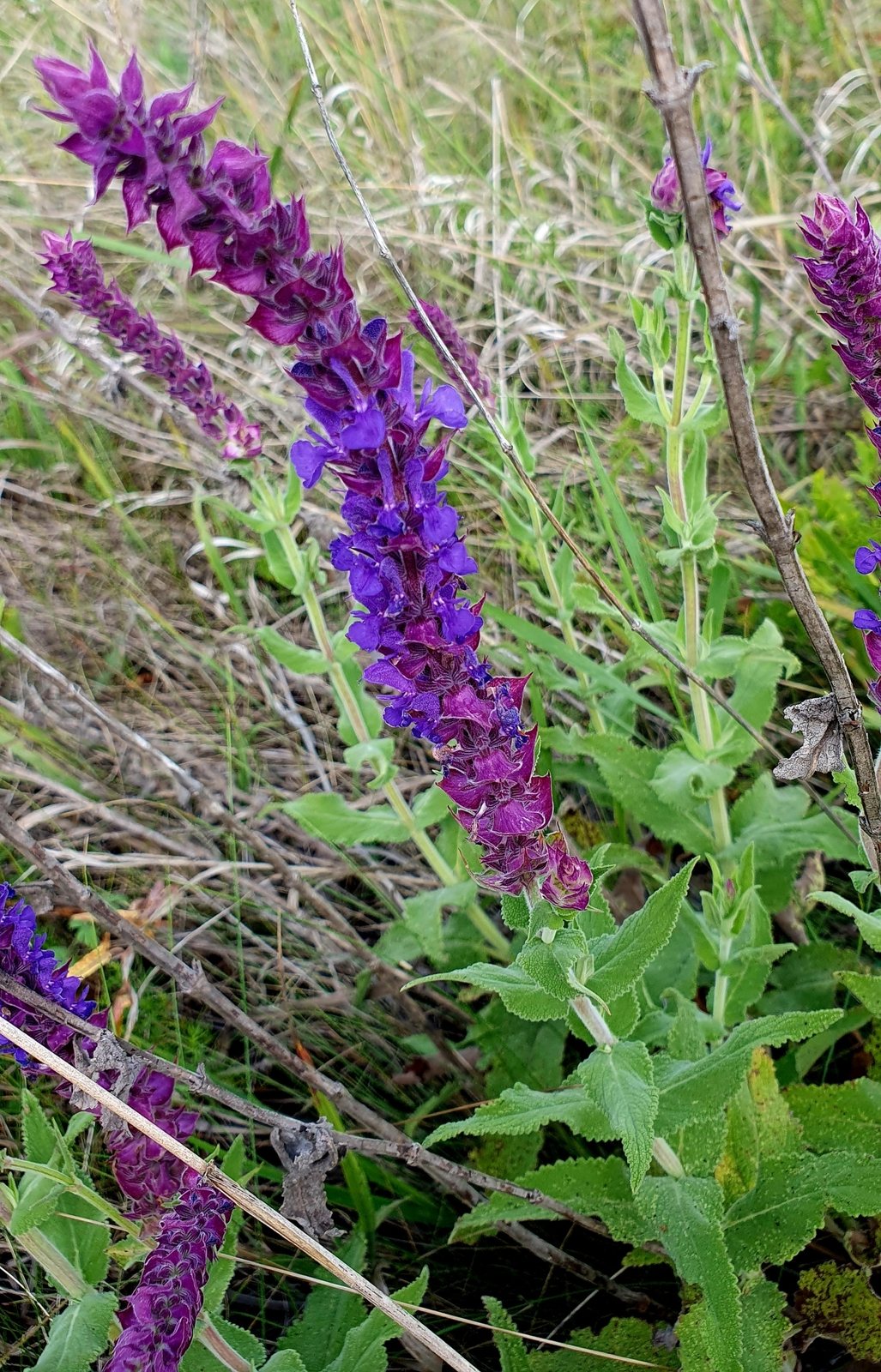
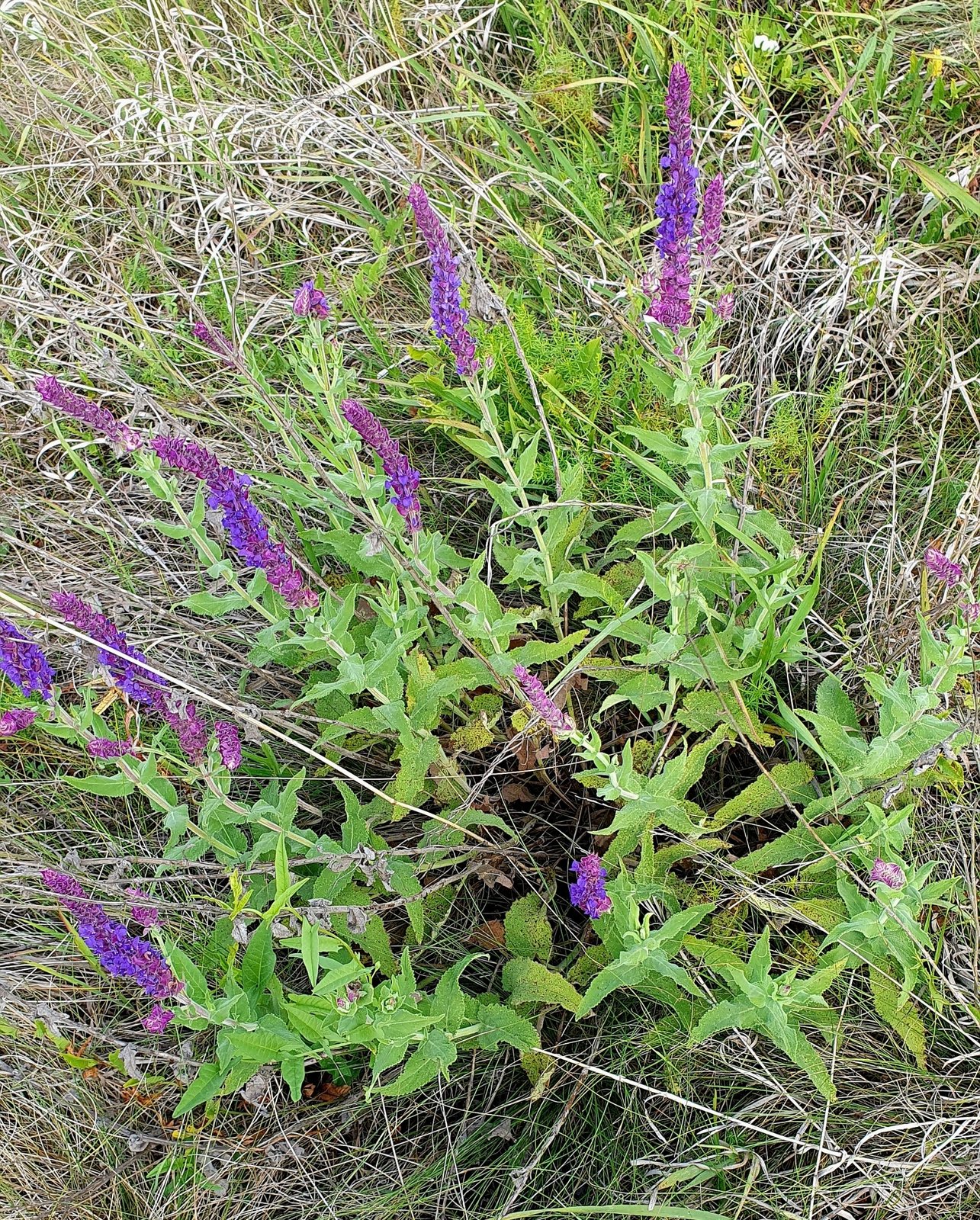
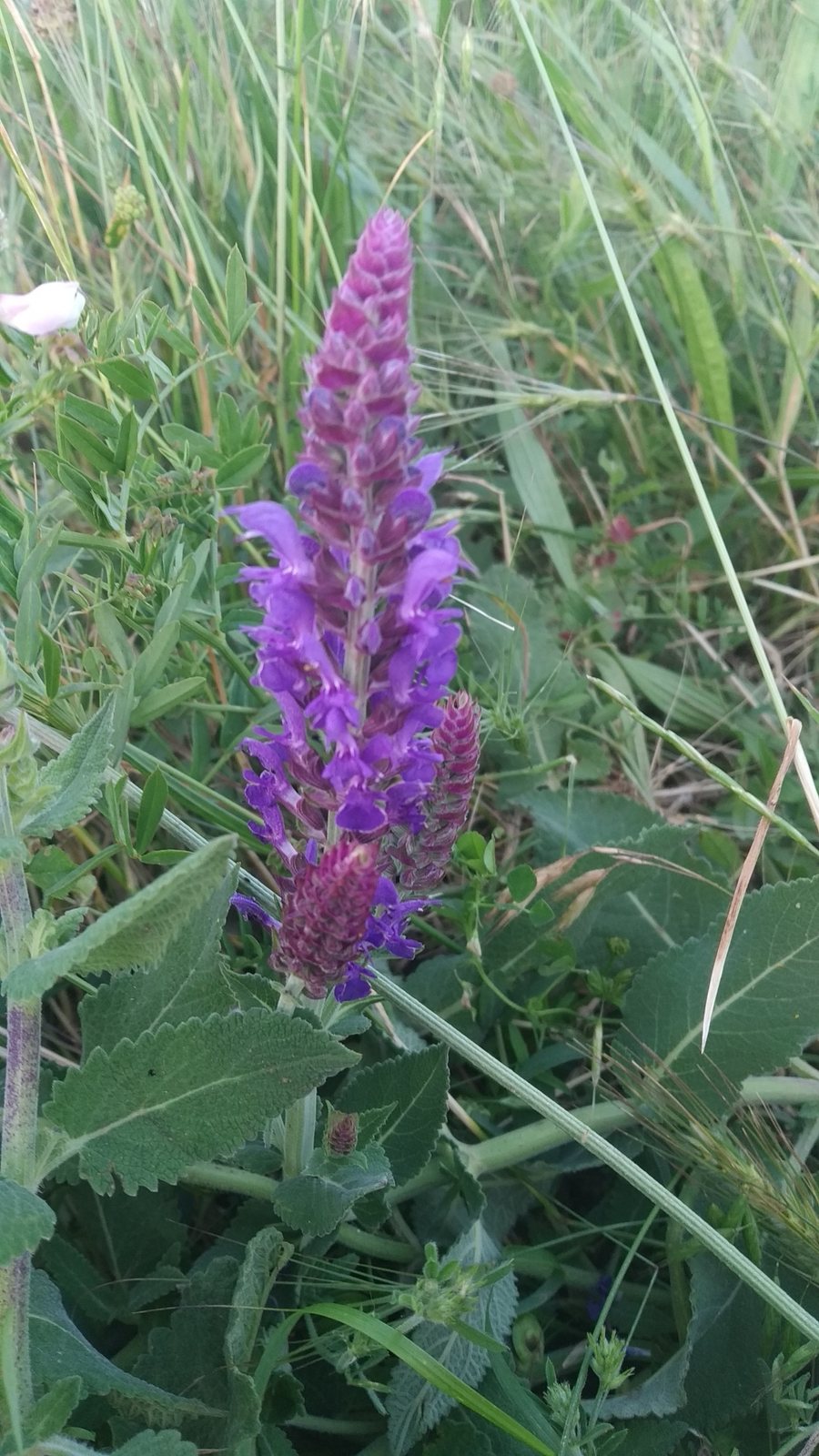
At a glance
- Sun
- Full sun; tolerates light shade, but flowers less freely and may lean.
- Water
- Water regularly during establishment. Once rooted, water during prolonged dry spells; avoid persistently wet soil, especially in winter.
- Soil
- Well-drained soil, from sandy to loamy or gritty clay, with modest fertility. Tolerates a range of soil pH.
- Height
- 1.5-2 ft (0.45-0.6 m)
- Spread
- 1-1.5 ft (0.3-0.45 m)
- Flowers
- Violet-blue flower spikes in late spring and early summer, with a smaller repeat flush later in summer if cut back.
- Foliage
- Aromatic, mid-green leaves with a wrinkled surface and toothed edges, forming a low basal clump beneath the flower stems.
- Growth
- Moderate; usually forms a substantial flowering clump within two growing seasons.
- Care needed
- Low
The year at a glance
- Pollinators
- Deer resistant
- Drought tolerant
- Cold hardy
- Low allergen
| J | F | M | A | M | J | J | A | S | O | N | D | |
|---|---|---|---|---|---|---|---|---|---|---|---|---|
| Flowers | ||||||||||||
| Plant |
Northern hemisphere months. In Australia, shift them by six.
- Difficulty
- Easy
- Toughness
- Very tough
Will it suit your garden?
Pick your zone, country, light and whether you have pets.
Full sun is 6 or more hours of direct sun a day, part shade 3 to 6 hours, shade under 3.
How it grows
Planting day
1 ft (0.3 m)
After 1 year
1.2 ft (0.37 m)
After 2 years
1.5 ft (0.45 m)
After 3 years
1.7 ft (0.53 m)
full size
About 3 years to full size.
From a typical nursery size, at an average rate for this kind of plant. A rule of thumb, not a forecast.
Good to know
- Cats and dogs
- Safe
- Growth rate
- Moderate
Care
Jobs through the year
- WaterApr–May, Sep, every 21 days
- Water established clumps only during prolonged dry spells; water new plants more regularly.
- WaterJun–Aug, every 14 days
- Water established clumps deeply if soil is dry, allowing the surface to dry between waterings.
- PruneFeb–Mar
- Remove dead stems before new growth develops, avoiding emerging basal shoots.
- DeadheadJun–Sep, every 14 days
- Cut faded flower spikes back to healthy basal foliage to encourage repeat flowering.
- DivideMar–Apr
- Divide crowded or thinning clumps every 3–4 years and replant in well-drained soil.
- ProtectOct–Nov
- Clear debris from the crown and ensure winter rain drains away freely.
- Water deeply when newly planted, letting the soil surface dry between waterings.
- Avoid heavy feeding; rich soil encourages soft stems that can flop.
- Keep mulch clear of the crown, particularly where winters are wet.
- Divide crowded or thinning clumps in spring, usually every three to four years.
- Staking is rarely needed in full sun and lean soil.
Pruning. After the main flower spikes fade, cut the flowering stems back to healthy basal foliage to encourage another flush. Remove dead stems in late winter or early spring before new growth develops.
Through the year
- Late winter
- Remove last year's dead stems if they were left standing, avoiding new basal shoots.
- Spring
- Plant or divide clumps in well-drained soil and water thoroughly.
- Late spring
- Check young growth for slugs and snails, especially during damp weather.
- Early summer
- Enjoy the main flowering period; water newly planted clumps during dry spells.
- Midsummer
- Cut spent flower stems back to the basal leaves and water if the soil is dry.
- Autumn
- Clear fallen debris from the crown and check that water drains away freely.
In the garden
- Repeat small groups along the front of a sunny border for a rhythm of blue flower spikes.
- Plant beside roses to contrast upright blue flowers with rounded rose blooms.
- Combine with yarrow and ornamental grasses in a free-draining perennial planting.
- Edge a gravel path, where its compact foliage keeps the planting low and its flowers attract bees.
Garden styles it suits: Cottage garden, English country, New perennial (prairie), Pollinator garden, Dry gravel garden and Low-maintenance.
Plant it with: Roses, Yarrow, Catmint, Lady's mantle, Hardy geraniums and Feather reed grass.
Wildlife: Flowers provide nectar and pollen for bees and attract butterflies. Deer and rabbits often leave the aromatic foliage alone, though browsing is still possible.
Problems to watch for
- Crown or root rot in wet soil: improve drainage, keep mulch away from the crown and avoid waterlogged planting sites.
- Flopping stems in shade or rich soil: move to full sun, stop high-nitrogen feeding and cut back after flowering.
- Slugs and snails eating spring shoots: inspect during damp evenings, remove pests and use wildlife-conscious controls if needed.
- Powdery mildew during dry, crowded conditions: improve airflow, water the soil rather than the leaves and remove badly affected foliage.
Safety
Not known to be toxic to people, cats, dogs or horses. No particular part is recognized as poisonous, but this ornamental salvia is not a culinary sage and should not be used as a food plant.
Easily confused with
May Night salvia (Salvia × sylvestris 'Mainacht')
Has much deeper violet-purple flowers; Blue Hill has a lighter, bluer appearance.
East Friesland salvia (Salvia nemorosa 'Ostfriesland')
Usually has darker purple flowers and more conspicuous dark flower bracts than Blue Hill.
Catmint (Nepeta × faassenii)
Has greyer foliage, looser flower clusters and a spreading, billowy habit rather than Blue Hill's distinct upright spikes.
The name
Salvia comes from the Latin salvere, meaning to be well, sylvestris means of woods, and the German cultivar name Blauhügel means blue hill.
Propagation. Divide established clumps in spring or take basal cuttings from fresh spring shoots. Seedlings may differ from the parent; division and cuttings preserve the named cultivar.
Checked against open data
- Accepted botanical name
- Salvia sylvestris
Sources: GBIF (CC BY 4.0). The care and design notes are LandscapeGPT's own.
See it in your own yard.
Upload a photo of your yard and see it redesigned with plants that suit your climate, each checked against your zone.