Blue holly
Ilex × meserveae. Family Aquifoliaceae. Shrub.
Also called Meserve holly.
Blue holly is a dense evergreen shrub grown for its glossy, blue-green leaves and red berries that often last into winter. Most cultivars are either male or female: females need a nearby male holly flowering at the same time to produce berries. Mature size and cold tolerance vary by cultivar.
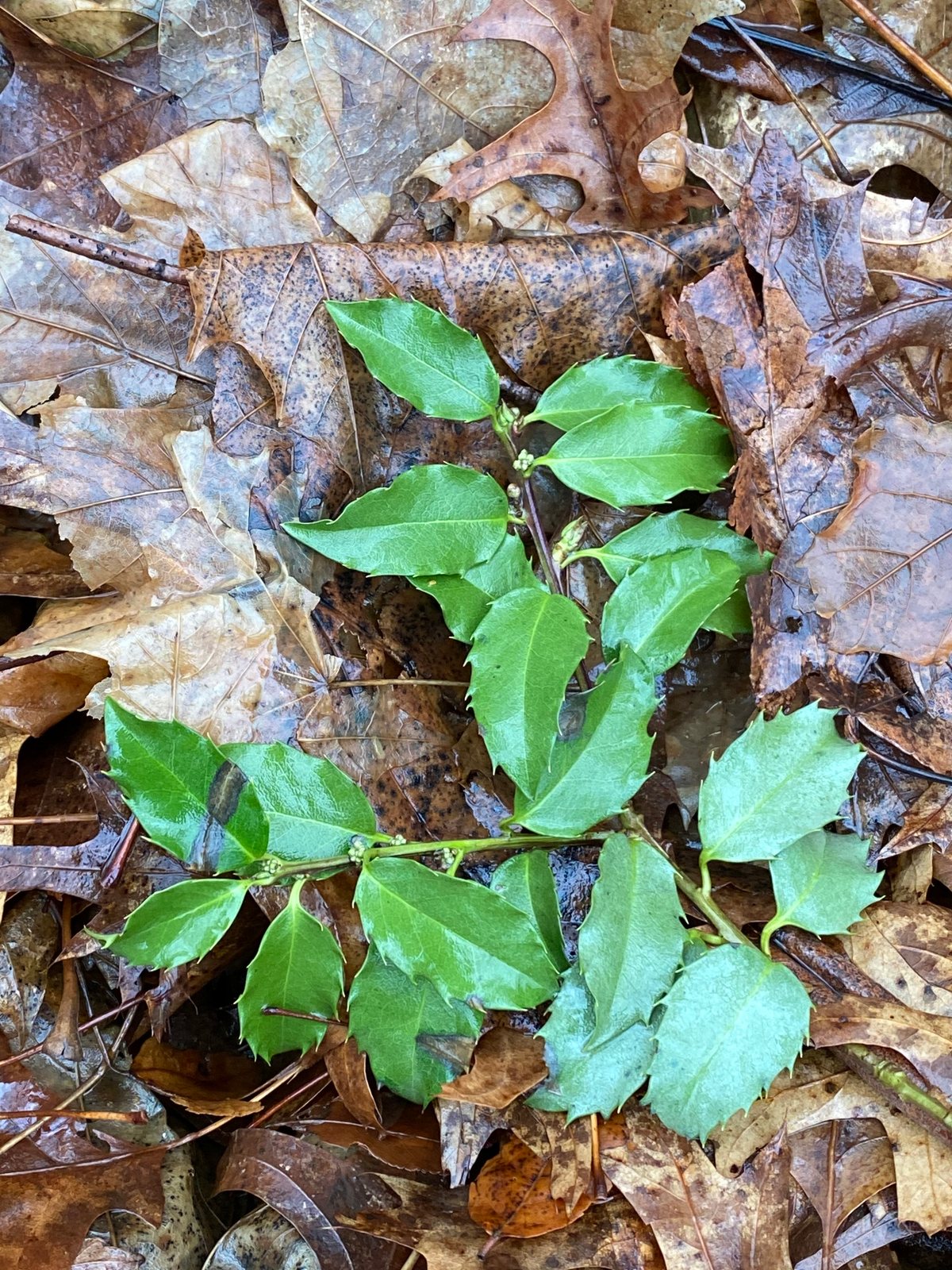
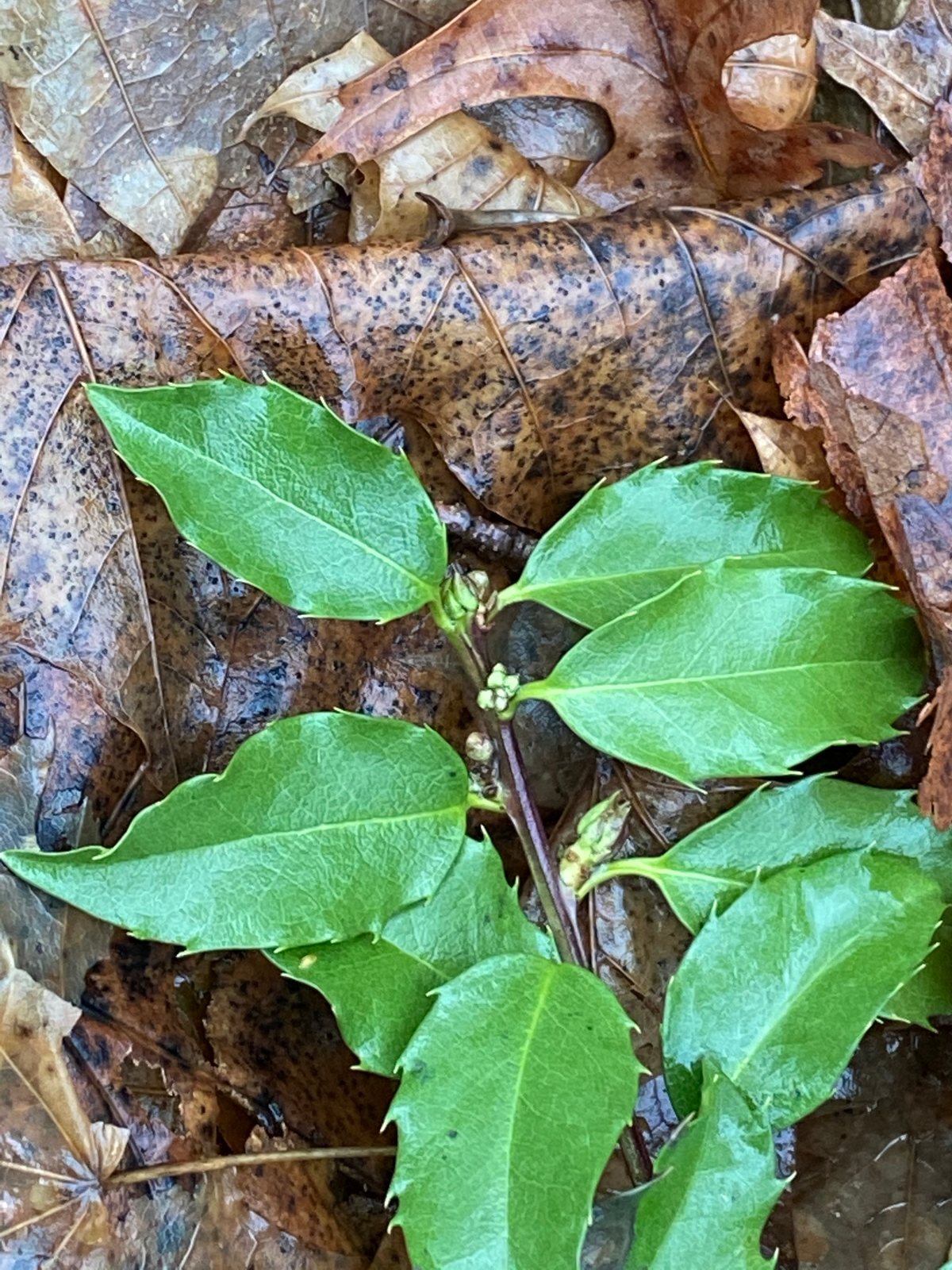
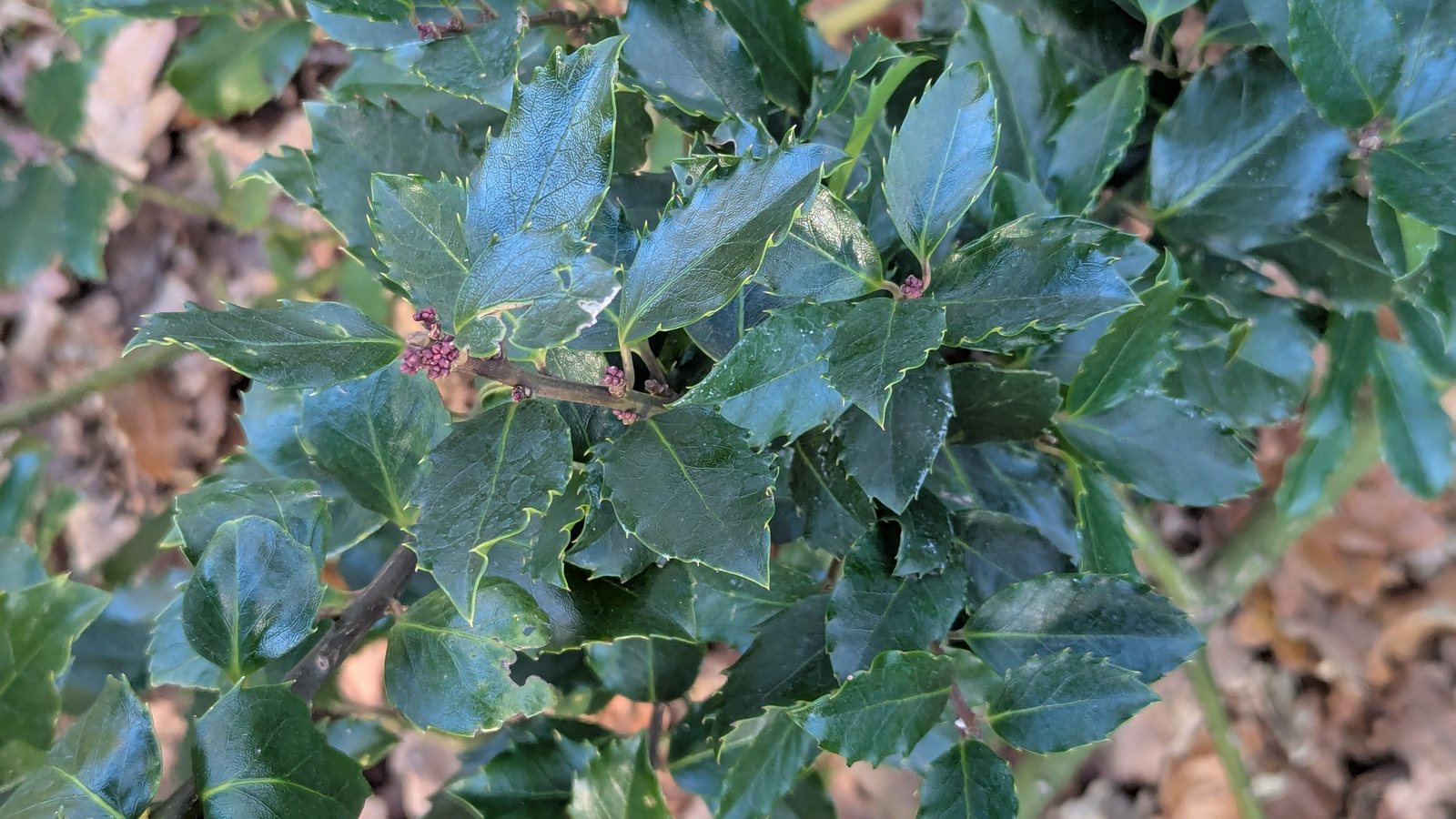
At a glance
- Sun
- Full sun to partial shade; afternoon shade is useful in hot climates. Dense shade reduces growth and berry production.
- Water
- Moderate; keep the root zone evenly moist while establishing. Established plants tolerate brief dry spells but need deep watering during prolonged drought.
- Soil
- Moist, well-drained, acidic soil enriched with organic matter. Alkaline soil can cause yellow leaves; avoid waterlogged sites.
- Height
- 6-15 ft (1.8-4.6 m), depending on cultivar
- Spread
- 5-10 ft (1.5-3 m), depending on cultivar
- Flowers
- Small, creamy-white flowers in spring; male and female flowers usually occur on separate plants.
- Foliage
- Evergreen. Glossy, leathery, dark blue-green leaves with sharp marginal spines; young stems are often purple.
- Growth
- Slow to moderate
- Care needed
- Medium
The year at a glance
- Pollinators
- Wildlife
- Low allergen
| J | F | M | A | M | J | J | A | S | O | N | D | |
|---|---|---|---|---|---|---|---|---|---|---|---|---|
| Flowers | ||||||||||||
| Fruit | ||||||||||||
| Plant |
Northern hemisphere months. In Australia, shift them by six.
- Difficulty
- Moderate
- Toughness
- Fairly tough
Will it suit your garden?
Pick your zone, country, light and whether you have pets.
Full sun is 6 or more hours of direct sun a day, part shade 3 to 6 hours, shade under 3.
How it grows
Planting day
1.6 ft (0.5 m)
After 1 year
3 ft (0.92 m)
After 2 years
4 ft (1.3 m)
After 3 years
6 ft (1.7 m)
After 5 years
8 ft (2.6 m)
About 7 years to full size.
From a typical nursery size, at an average rate for this kind of plant. A rule of thumb, not a forecast.
Good to know
- Cats and dogs
- Toxic
- Growth rate
- Slow
Care
Jobs through the year
- WaterMar–May, Sep–Nov, every 14 days
- Water established shrubs if upper soil is drying; young plants need more frequent watering.
- WaterJun–Aug, every 7 days
- During dry spells, soak established root zones deeply without waterlogging.
- WaterJan–Feb, Dec, every 28 days
- Water established shrubs only during prolonged dry, frost-free weather.
- MulchMar–Apr
- Maintain 5–8 cm of organic mulch, keeping it clear of stem bases.
- FeedMar–Apr
- Feed lightly only if growth is weak or a soil test indicates a need.
- PruneFeb–Mar
- Remove damaged or crossing branches and shorten stray shoots lightly to preserve flowering wood.
- ProtectJan–Feb, Nov–Dec
- Shelter exposed shrubs from drying winds and gently remove loose heavy snow.
- Water deeply during the first two growing seasons whenever the upper soil begins to dry.
- Apply 2-3 in (5-8 cm) of organic mulch over the root zone, keeping it clear of the stems.
- Plant a compatible male within about 50 ft (15 m) of female plants if you want berries; check flowering compatibility when buying.
- Feed lightly in spring only if growth is weak or a soil test indicates a need.
- Shelter plants from drying winter winds, especially in exposed sites and colder parts of their range.
- In hot regions, choose a site with afternoon shade and reliable moisture; prolonged heat can limit performance.
Pruning. Prune in late winter or early spring to remove dead, damaged or crossing branches and shorten stray shoots. Keep pruning light if berries matter, since trimming flowering or fruiting wood reduces the display.
Through the year
- Late winter
- Remove dead or damaged wood and lightly shape established plants before new growth starts.
- Spring
- Plant new shrubs, water thoroughly and renew mulch without covering the stem bases.
- Late spring
- Check that male and female plants flower together if berry production has been poor.
- Summer
- Water deeply during dry spells and inspect leaves for scale insects or yellowing.
- Autumn
- Check berry development and water during dry weather before the soil freezes in cold climates.
- Winter
- Check exposed plants for wind scorch and gently remove heavy snow before branches bend or split.
In the garden
- Use as an evergreen hedge or screen, allowing enough width for its natural growth.
- Plant female shrubs with a compatible male in mixed borders for winter berries against dark foliage.
- Use a suitably sized cultivar beside an entrance or building, set back from paths because the leaves are spiny.
- Combine with rhododendrons, ferns and other acid-soil plants along a lightly shaded woodland edge.
Garden styles it suits: Formal, Traditional, Woodland, Winter interest, English country and Green on green.
Plant it with: Rhododendrons, Azaleas, Japanese pieris, Camellias, Hellebores and Christmas fern.
Wildlife: Flowers provide nectar and pollen for insects. Birds eat the berries, often later in winter, and dense branches provide shelter and nesting cover.
Problems to watch for
- Yellow leaves with green veins often indicate alkaline soil. Test the soil, correct the growing conditions where practical, and use a suitable chelated iron treatment for temporary relief.
- Scale insects cause bumps on stems or leaves and sometimes sticky honeydew. Prune heavily infested shoots and use horticultural oil at the label-recommended stage.
- Root rot can develop in waterlogged soil. Improve drainage, avoid frequent shallow watering and replace severely affected plants in a better-drained position.
- Brown leaf edges or winter scorch follow drying winds, frozen soil or drought. Water before freezing weather, mulch the roots and provide shelter from exposed winds.
Safety
Toxic to people, cats, dogs and horses if eaten. Berries and leaves contain compounds that can cause vomiting, diarrhoea and abdominal discomfort; the berries are especially tempting to children. Small accidental ingestions usually cause gastrointestinal illness rather than severe poisoning, but seek medical or veterinary advice after ingestion. Spiny leaves can also cause physical injury.
Easily confused with
English holly (Ilex aquifolium)
Usually has greener, often more strongly waved leaves and can become a much larger tree. Blue holly typically has a bluish cast to its foliage and purple young stems, though cultivars overlap.
American holly (Ilex opaca)
Usually has duller, less glossy green leaves and develops into a substantial tree rather than a compact, rounded shrub.
Japanese holly (Ilex crenata)
Has much smaller, spineless leaves with fine rounded teeth and black rather than red fruit.
The name
The hybrid name honours breeder Kathleen Meserve, while 'blue holly' refers to the bluish cast of its dark green foliage.
Propagation. Take semi-ripe cuttings in late summer and root them in a moist, free-draining medium under cover; rooting can be slow. Cuttings preserve the cultivar and its sex. Seed is slow to germinate and does not reliably reproduce the parent cultivar.
Checked against open data
- Accepted botanical name
- Ilex meserveae
Sources: GBIF (CC BY 4.0). The care and design notes are LandscapeGPT's own.
See it in your own yard.
Upload a photo of your yard and see it redesigned with plants that suit your climate, each checked against your zone.