Blue moor grass
Sesleria caerulea. Family Poaceae. Ornamental grass.
Also called Blue moor-grass.
Blue moor grass is a small, clump-forming perennial grass grown for its neat tufts of blue-green leaves and short, dark spring flower heads. It provides low edging and year-round texture in cooler climates, especially in gardens with chalky or limestone soils.
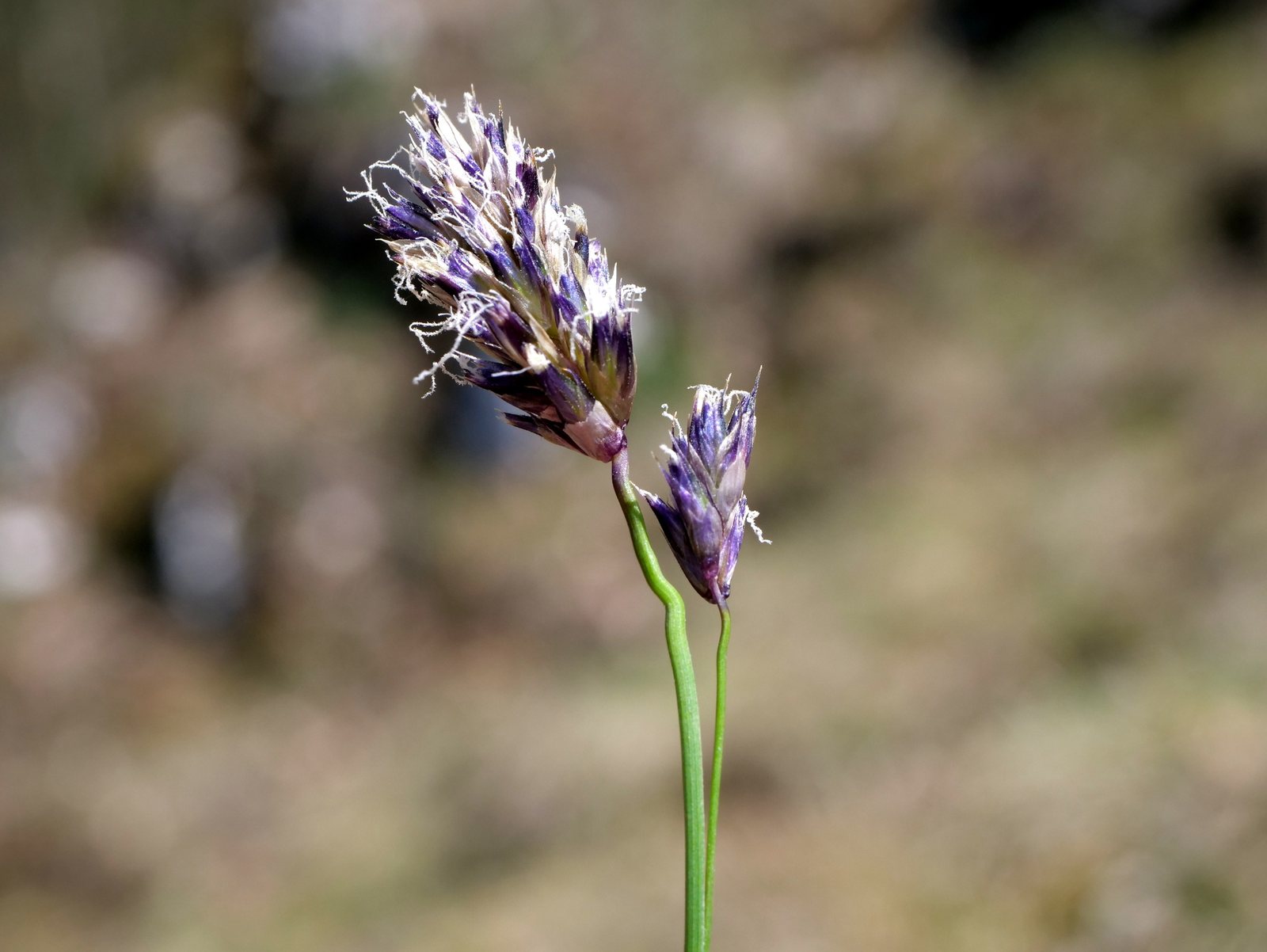
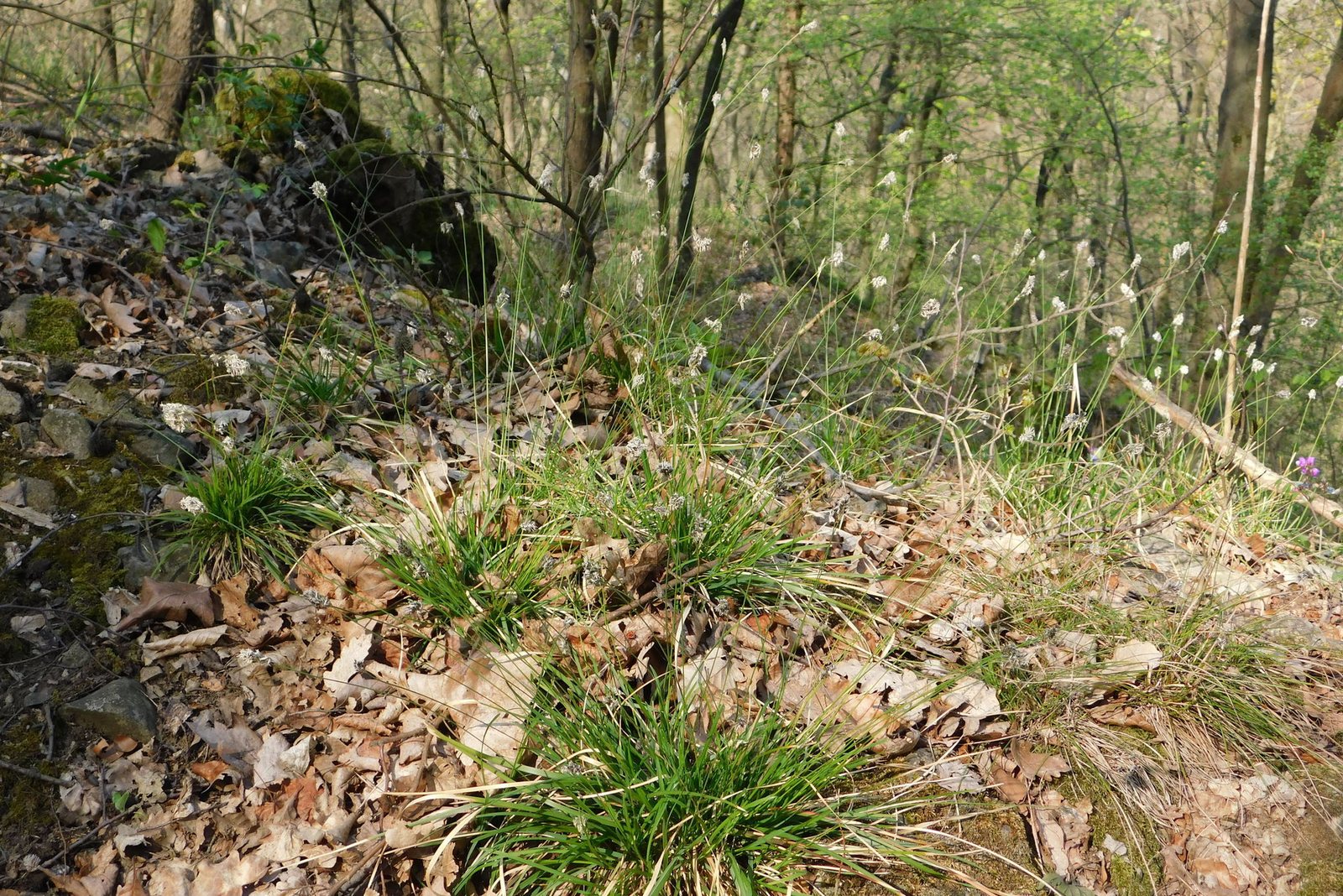
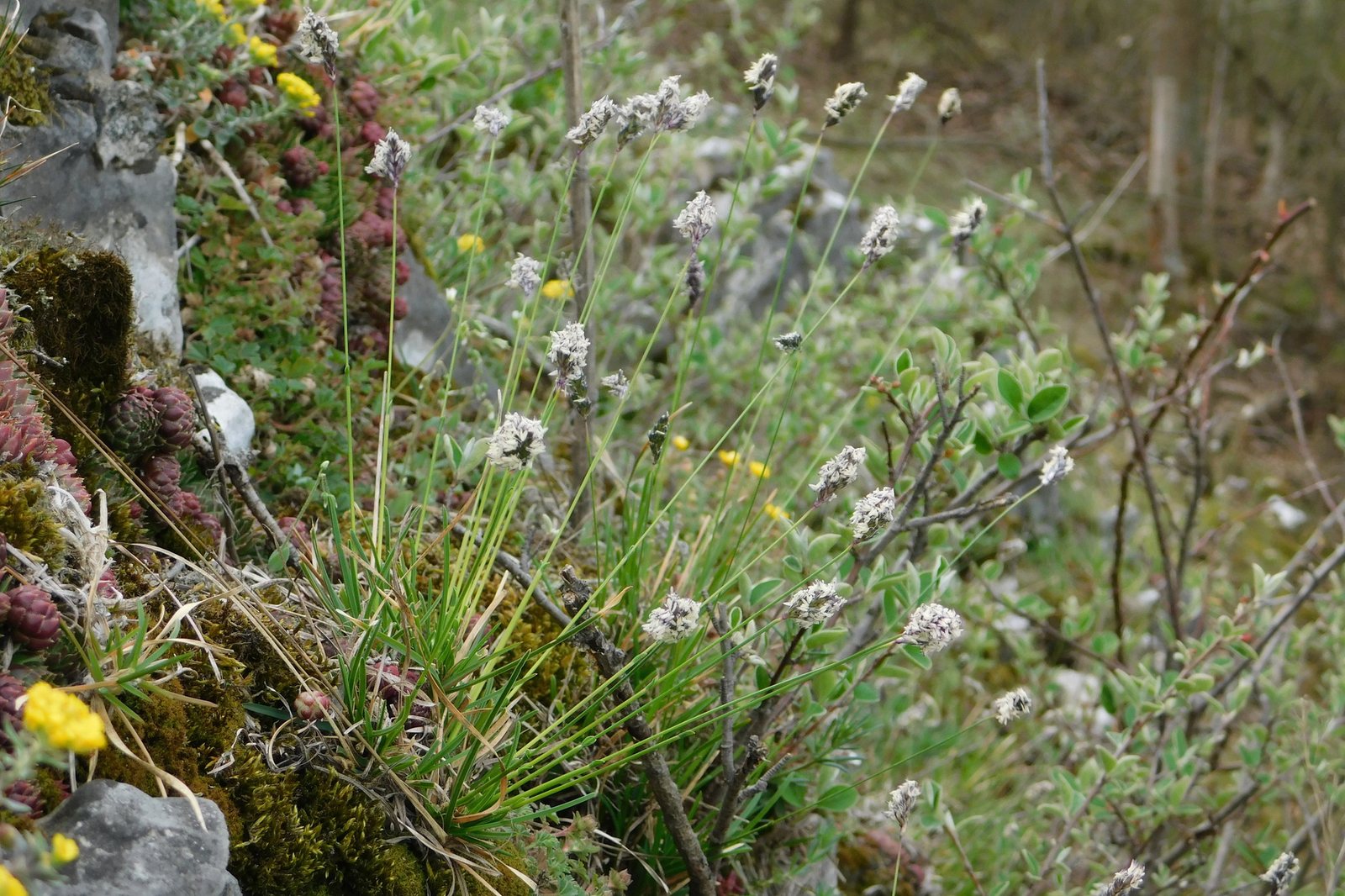
At a glance
- Sun
- Full sun to partial shade; light afternoon shade helps in warmer areas.
- Water
- Moderate; keep newly planted clumps watered, then water established plants during prolonged dry spells. Some drought tolerance once rooted.
- Soil
- Well-drained soil that retains some moisture; particularly suited to neutral or alkaline soils, including chalk and limestone. Avoid waterlogged ground.
- Height
- 0.5-1 ft (0.15-0.3 m), including flower stems
- Spread
- 1-1.5 ft (0.3-0.45 m)
- Flowers
- Early to mid-spring; short, dense purple-black flower heads mature to silvery tan.
- Foliage
- Narrow, flat leaves with contrasting blue-grey and green surfaces, forming compact, slightly arching tufts. Usually evergreen, but foliage may deteriorate in severe winters.
- Growth
- Slow to moderate
- Care needed
- Low
The year at a glance
- Deer resistant
- Drought tolerant
- Cold hardy
- Wildlife
| J | F | M | A | M | J | J | A | S | O | N | D | |
|---|---|---|---|---|---|---|---|---|---|---|---|---|
| Flowers | ||||||||||||
| Fruit | ||||||||||||
| Plant |
Northern hemisphere months. In Australia, shift them by six.
- Difficulty
- Easy
- Toughness
- Very tough
Will it suit your garden?
Pick your zone, country, light and whether you have pets.
Full sun is 6 or more hours of direct sun a day, part shade 3 to 6 hours, shade under 3.
How it grows
Planting day
0.7 ft (0.22 m)
full size
About 3 years to full size.
From a typical nursery size, at an average rate for this kind of plant. A rule of thumb, not a forecast.
Good to know
- Cats and dogs
- Safe
- Growth rate
- Slow
Care
Jobs through the year
- WaterApr–May, Sep–Oct, every 14 days
- Water established clumps only during extended dry spells; keep first-year plants more consistently watered.
- WaterJun–Aug, every 10 days
- Water deeply during prolonged drought, especially in shallow or sandy soil.
- PruneFeb–Mar
- Comb out dead leaves and old stems without damaging emerging flowers; trim damaged foliage only lightly.
- MulchMar–Apr
- On poor soil, add a light compost dressing while leaving the crown clear.
- DivideMar–Apr
- Divide crowded clumps or those with dead centres, replanting healthy outer sections.
- ProtectJan–Feb, Nov–Dec
- Keep crowns free of pooled water and wet debris.
- Water regularly through the first growing season, allowing the surface soil to dry slightly between waterings.
- Water established clumps during extended drought, particularly in shallow or sandy soil.
- Avoid rich feeding; a light spring dressing of compost is enough on poor soil.
- Keep mulch away from the crown and improve drainage before planting in heavy ground.
- Divide in spring if clumps develop dead centres or become crowded.
Pruning. In late winter or very early spring, comb out dead leaves and remove old flower stems without cutting into new growth. If foliage is badly winter-damaged, trim it back lightly before fresh growth begins rather than routinely shearing the whole clump to ground level.
Through the year
- Late winter
- Remove dead foliage and old stems, taking care not to damage emerging flower shoots.
- Spring
- Plant or divide clumps while conditions are cool and the soil is workable.
- Late spring
- Leave fading flower heads for texture, or snip them off for a tidier appearance.
- Summer
- Water young plants and established clumps during prolonged dry weather.
- Early autumn
- Plant in mild climates, allowing time for roots to establish before winter.
- Winter
- Check that water is not pooling around crowns, especially in heavy soil.
In the garden
- Repeat small clumps along paths for a soft, low edge that does not hide neighbouring plants.
- Plant in drifts beneath spring bulbs, where the foliage gives continuity after the bulbs fade.
- Combine with low perennials in gravel gardens on moisture-retentive, well-drained soil.
- Use at the front of perennial borders to contrast fine grassy leaves with broad or rounded foliage.
- Plant between widely spaced shrubs in light shade for a restrained, textured ground layer.
Garden styles it suits: New perennial (prairie), Dry gravel garden, Low-maintenance, Modern, Cottage garden and Blues and silvers.
Plant it with: Snowdrops, Species crocuses, Hardy geraniums, Lady's mantle, Hellebores and Autumn moor grass.
Wildlife: Dense clumps provide shelter for small invertebrates. The wind-pollinated flowers are not a significant nectar source for bees or butterflies.
Problems to watch for
- Crown rot in waterlogged soil: improve drainage or move the plant to a raised position; discard rotten crowns.
- Brown, ragged foliage after winter: comb out dead leaves before spring growth rather than removing healthy foliage.
- Scorched or dormant-looking foliage in hot, dry summers: provide afternoon shade and water deeply during prolonged drought.
- Dead centres in older clumps: lift and divide in spring, retaining healthy outer sections.
Safety
Not known to be toxic to people, cats, dogs or horses; no poisonous parts are recognised. It is an ornamental grass, not a food plant.
Easily confused with
Autumn moor grass (Sesleria autumnalis)
Usually taller, with yellow-green rather than blue-grey foliage and pale flower spikes in late summer or autumn instead of spring.
Blue fescue (Festuca glauca)
Has much finer, bristle-like blue leaves and open, branched flower heads rather than the short, dense heads of blue moor grass.
Nest moor grass (Sesleria nitida)
Forms larger, more upright clumps of longer, strongly blue-grey leaves, with flower stems held noticeably higher above the foliage.
The name
The species name caerulea means blue, referring to the bluish foliage.
Propagation. Divide established clumps in spring, keeping roots and several healthy shoots on each section. It can also be raised from seed, though seedlings take longer to form useful garden clumps.
Checked against open data
- Accepted botanical name
- Sesleria caerulea
- Native range
- Austria, Baltic States, Bulgaria, Czechoslovakia, Finland, Germany, Hungary, Northwest European R, Poland, Romania, Sweden and Switzerland.
- Measured
- Soil pH 8 to 9. Average height 9 cm.
Sources: GBIF (CC BY 4.0) and Trefle (CC BY 4.0). The care and design notes are LandscapeGPT's own.
See it in your own yard.
Upload a photo of your yard and see it redesigned with plants that suit your climate, each checked against your zone.