Blue porterweed
Stachytarpheta jamaicensis. Family Verbenaceae. Perennial.
Also called Jamaican porterweed, Blue snakeweed.
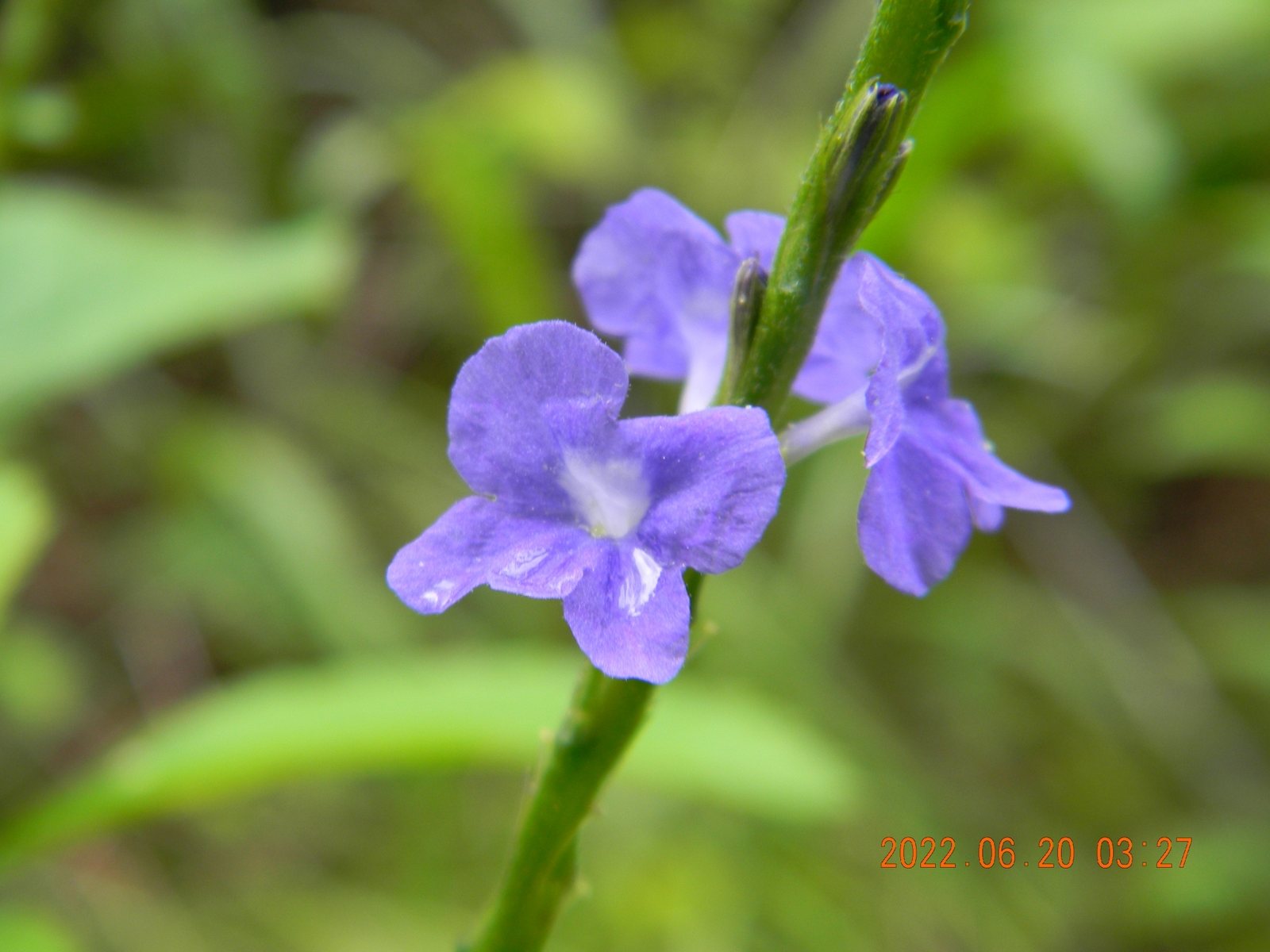
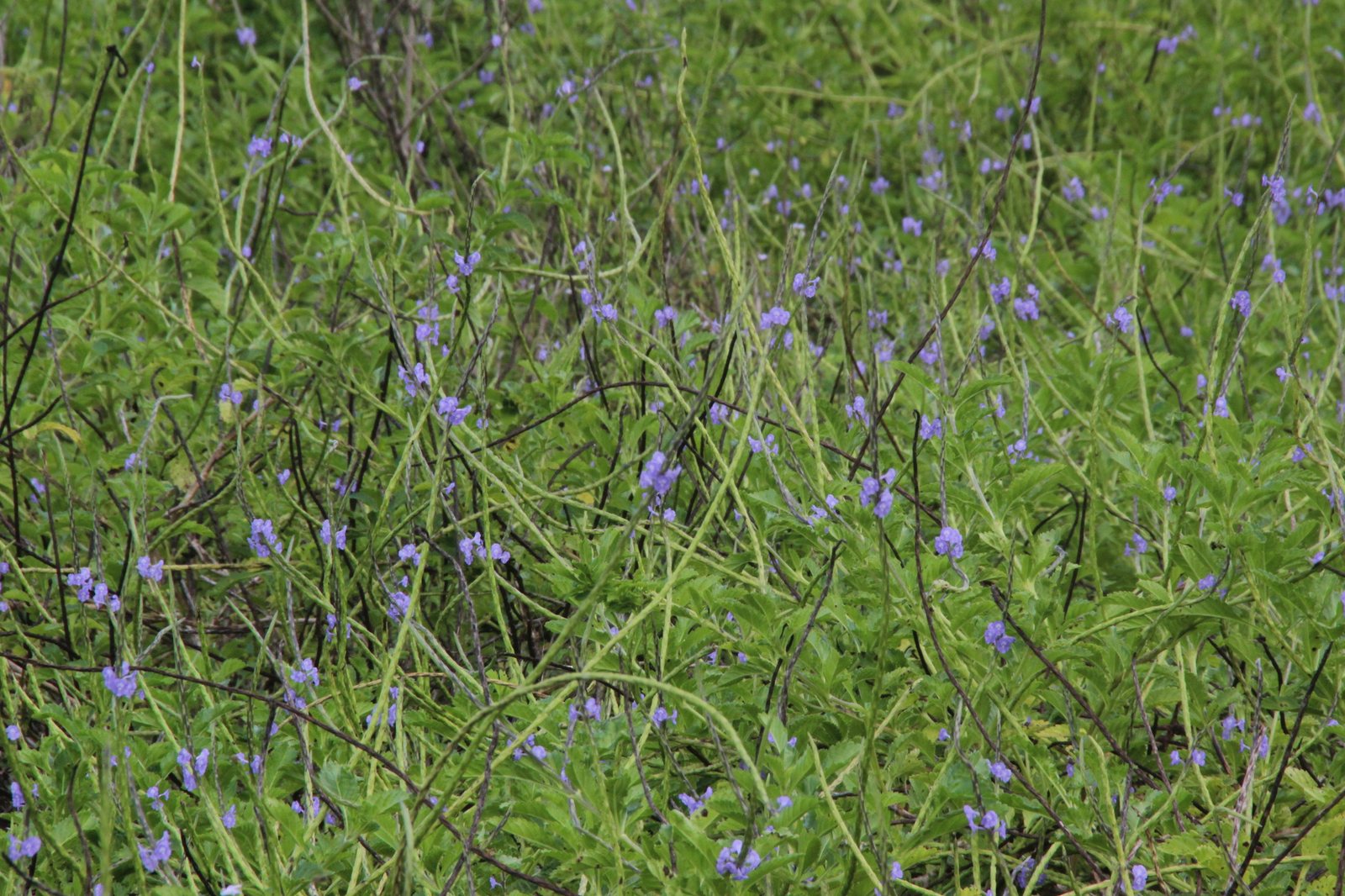
Blue porterweed is a low, spreading tropical perennial with small blue flowers opening a few at a time along slender, upright spikes. Gardeners grow it for butterflies and informal groundcover; outside frost-mild climates, it is grown as an annual or overwintered under cover. Check the botanical name when buying, because taller porterweed species are often sold under the same common name.
At a glance
- Sun
- Full sun to light partial shade; flowering is best in full sun.
- Water
- Water regularly while establishing, then during prolonged dry spells. Established plants tolerate some drought but flower better with occasional deep watering.
- Soil
- Well-drained sandy or loamy soil; tolerates poor soil and some coastal salt exposure, but not persistent waterlogging.
- Height
- 1-3 ft (0.3-0.9 m)
- Spread
- 2-3 ft (0.6-0.9 m)
- Flowers
- Small blue to violet-blue flowers from late spring until frost; potentially year-round in frost-free climates.
- Foliage
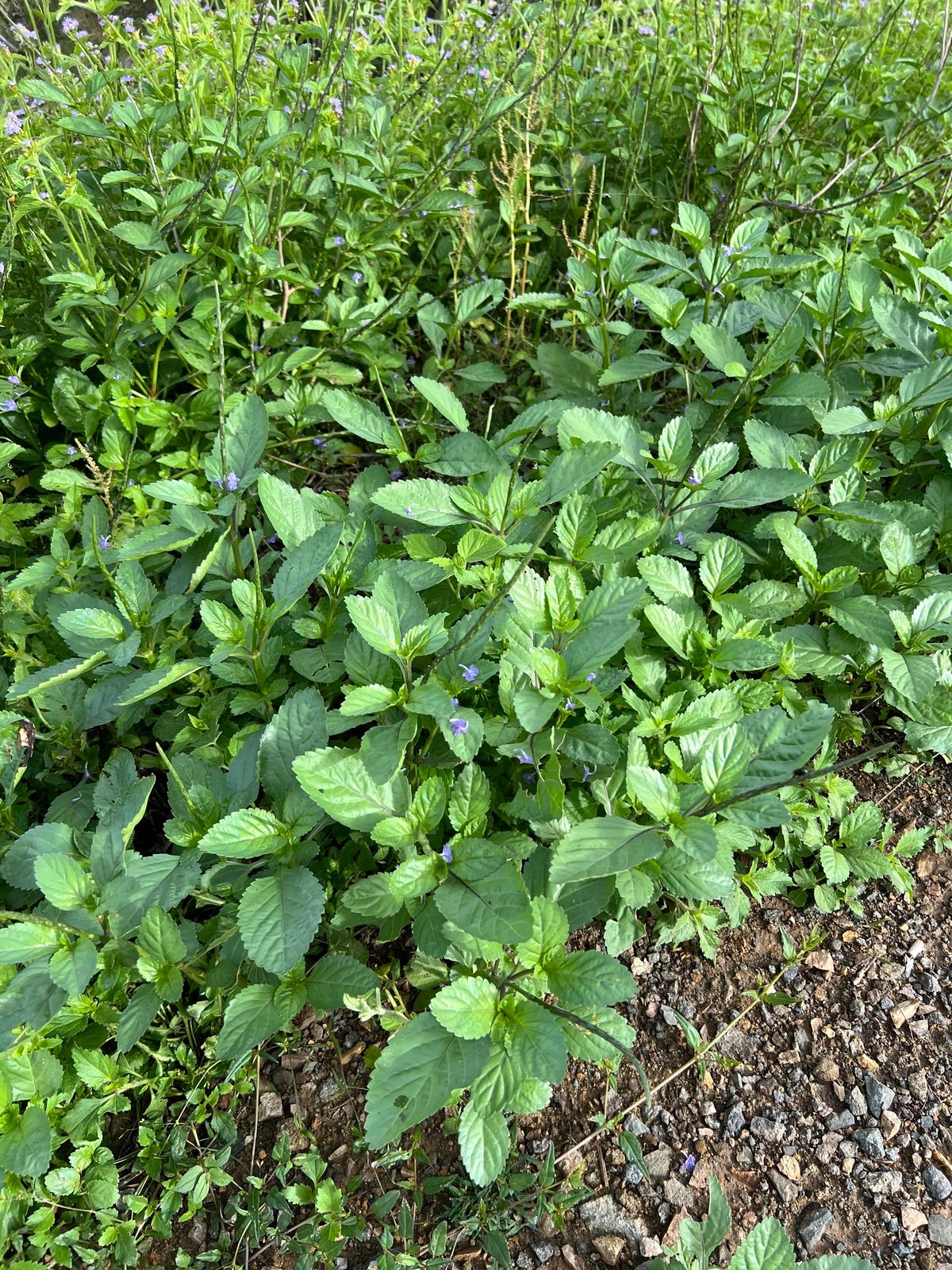
- Evergreen. Opposite, oval green leaves with toothed edges; generally smoother and less puckered than those of tall blue porterweed.
- Growth
- Fast in warm weather.
- Care needed
- Low
The year at a glance
- Pollinators
- Drought tolerant
- Heat tolerant
- Wildlife
- Low allergen
| J | F | M | A | M | J | J | A | S | O | N | D | |
|---|---|---|---|---|---|---|---|---|---|---|---|---|
| Flowers | ||||||||||||
| Plant |
Northern hemisphere months. In Australia, shift them by six.
- Difficulty
- Moderate
- Toughness
- Fairly tough
Will it suit your garden?
Pick your zone, country, light and whether you have pets.
Full sun is 6 or more hours of direct sun a day, part shade 3 to 6 hours, shade under 3.
How it grows
Planting day
1 ft (0.3 m)
After 1 year
1.5 ft (0.45 m)
After 2 years
2 ft (0.6 m)
full size
About 2 years to full size.
From a typical nursery size, at an average rate for this kind of plant. A rule of thumb, not a forecast.
Good to know
- Cats and dogs
- Safe
- Native to
- the US
- Invasive in
- Australia
- In the garden
- Spreads vigorously: plan to contain it.
- Growth rate
- Fast
Care
Jobs through the year
- WaterMay, Sep–Oct, every 14 days
- Water established ground plants during dry spells; young plants and pots need more frequent checks.
- WaterJun–Aug, every 10 days
- Water established ground plants deeply during extended dry weather, allowing surface soil to dry.
- MulchMay–Jun
- Apply a thin mulch without covering stem bases.
- PruneMay–Jun
- Pinch young shoot tips to encourage branching.
- PruneJul–Aug
- Lightly shorten sprawling stems only where needed.
- ProtectSep–Oct
- Usually grown as an annual here; to retain it, pot up before frost and move to bright, frost-free shelter.
- WaterJan–Apr, Nov–Dec, every 14 days
- Only for retained sheltered plants: check soil and water sparingly before the root ball dries completely.
- Plant after frost danger has passed, allowing room for the spreading stems.
- Water deeply during establishment, then let the soil surface dry between waterings.
- Use little fertilizer; feed container plants lightly during active growth.
- Apply a thin mulch, keeping it away from the base of the stems.
- In cold climates, take cuttings before autumn chills or move a potted plant into bright, frost-free shelter.
Pruning. Pinch young shoots to encourage branching, and lightly trim sprawling stems during warm weather. In spring, remove frost-damaged growth once new shoots show which stems are alive.
Through the year
- Spring
- Remove dead or frost-damaged stems after growth resumes.
- Late spring
- Plant outdoors once frost danger has passed and the soil has warmed.
- Summer
- Water during extended dry weather and lightly trim stems that spread onto paths.
- Late summer
- Take stem cuttings if you want plants to keep through winter.
- Autumn
- Move container plants under cover before frost, or remove plants being grown as annuals.
- Winter
- Keep sheltered plants in bright light and water sparingly without allowing the root ball to dry completely.
In the garden
- Use as a loose, flowering groundcover at the front of sunny tropical borders.
- Combine with salvias and milkweeds in butterfly gardens for a long season of nectar.
- Plant beside coastal paths where its spreading habit has room without obstructing access.
- Grow in a broad container near seating so the small flowers and visiting butterflies are easy to see.
Garden styles it suits: Pollinator garden, Wildlife garden, Coastal, Tropical, Florida subtropical and Caribbean.
Plant it with: Scarlet sage, Blanket flower, Coreopsis, Butterfly weed and Muhly grass.
Wildlife: Flowers provide nectar for butterflies and other pollinating insects. In Florida and parts of its native range, the foliage also feeds tropical buckeye caterpillars.
Problems to watch for
- Root rot in wet soil: improve drainage, reduce watering and avoid sites that remain saturated.
- Sparse flowering and floppy growth in shade: move to a sunnier position and avoid heavy nitrogen feeding.
- Frost damage: protect container plants before frost and wait until spring growth resumes before removing damaged stems.
- Whiteflies or spider mites, especially under cover: inspect leaf undersides, rinse off pests and use insecticidal soap if needed, avoiding open flowers and visiting insects.
Safety
Not known to be toxic to cats, dogs, horses or people, but reliable species-specific safety information is limited. No particular poisonous part is established; do not treat the leaves or flowers as food or allow pets to graze on it.
Where it spreads. Introduced and weedy in Hawaii and parts of tropical Australia, including Queensland and the Northern Territory, where it can spread into disturbed ground and pasture. Porterweed species are frequently confused, so check local identification and weed guidance before planting. It is native in southern Florida and the tropical Americas.
Easily confused with
Tall blue porterweed (Stachytarpheta cayennensis)
Usually taller and more upright, with distinctly puckered, prominently veined leaves. True blue porterweed is lower and more spreading, with comparatively smooth leaves; hybrids can blur these differences.
Pink porterweed (Stachytarpheta mutabilis)
Develops into a much taller, upright shrub with larger, often hairy leaves and pink to salmon flowers rather than the small blue flowers of blue porterweed.
The name
Stachytarpheta refers to the spike-like flower clusters, jamaicensis means 'of Jamaica', and porterweed recalls the plant's historical use in making a porter-like drink.
Propagation. Take softwood or semi-ripe stem cuttings during warm weather and root them in a moist, free-draining medium. It can also be raised from seed in warmth and may self-seed where winters are mild.
Checked against open data
- Accepted botanical name
- Stachytarpheta jamaicensis
- In the US and Canada
- Native in the lower 48 states, Puerto Rico and US Virgin Islands. Introduced in Hawaii and Pacific Basin.
- Native range
- Bahamas, Belize, Bermuda, Brazil North, Colombia, Costa Rica, Cuba, Dominican Republic, Ecuador, El Salvador, Florida and French Guiana.
- Measured
- Average height 61 cm.
Sources: GBIF (CC BY 4.0), USDA PLANTS and Trefle (CC BY 4.0). The care and design notes are LandscapeGPT's own.
See it in your own yard.
Upload a photo of your yard and see it redesigned with plants that suit your climate, each checked against your zone.