Blue Rug juniper
Juniperus horizontalis 'Wiltonii'. Family Cupressaceae. Groundcover.
Also called Wilton juniper, Creeping juniper 'Wiltonii'.
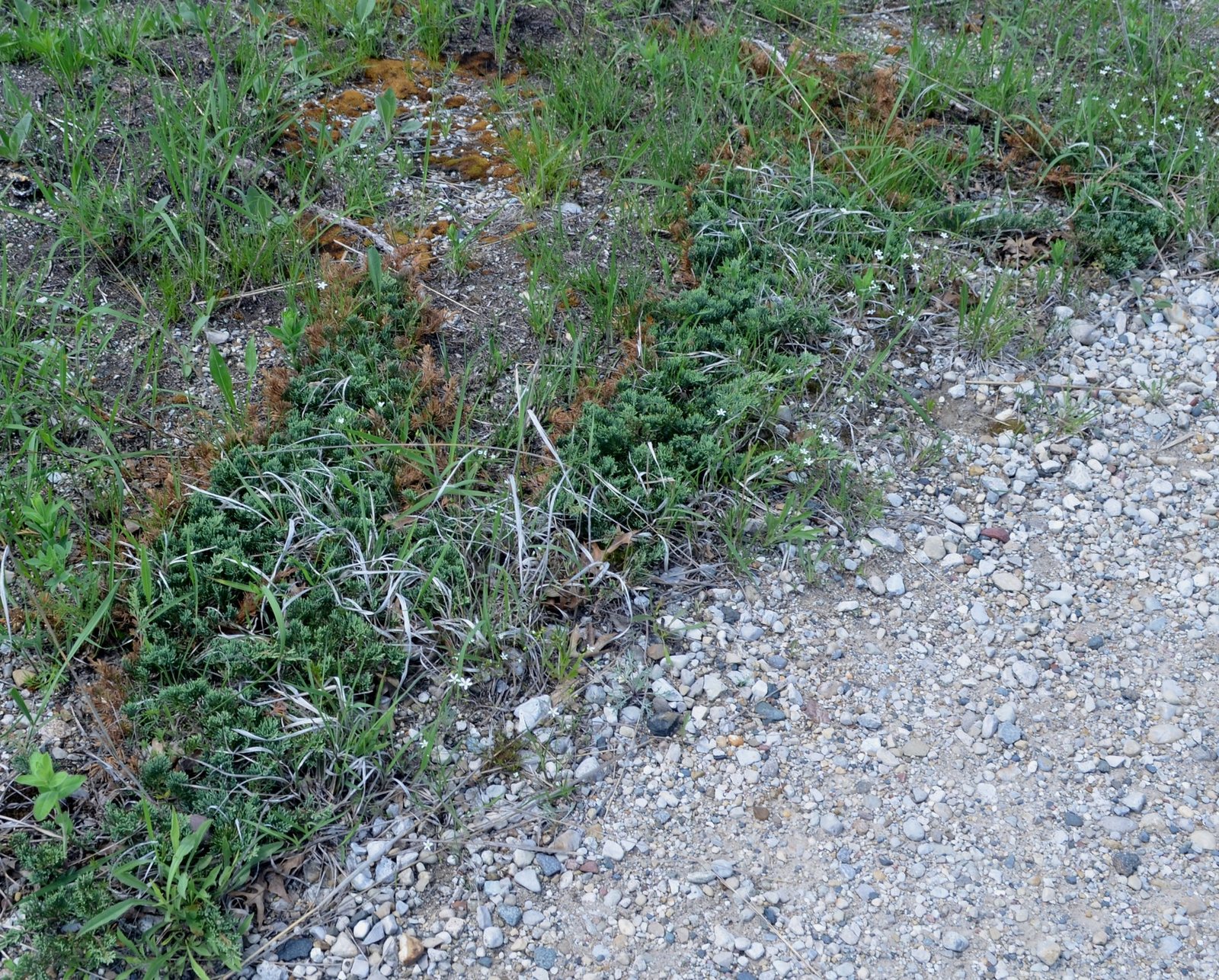
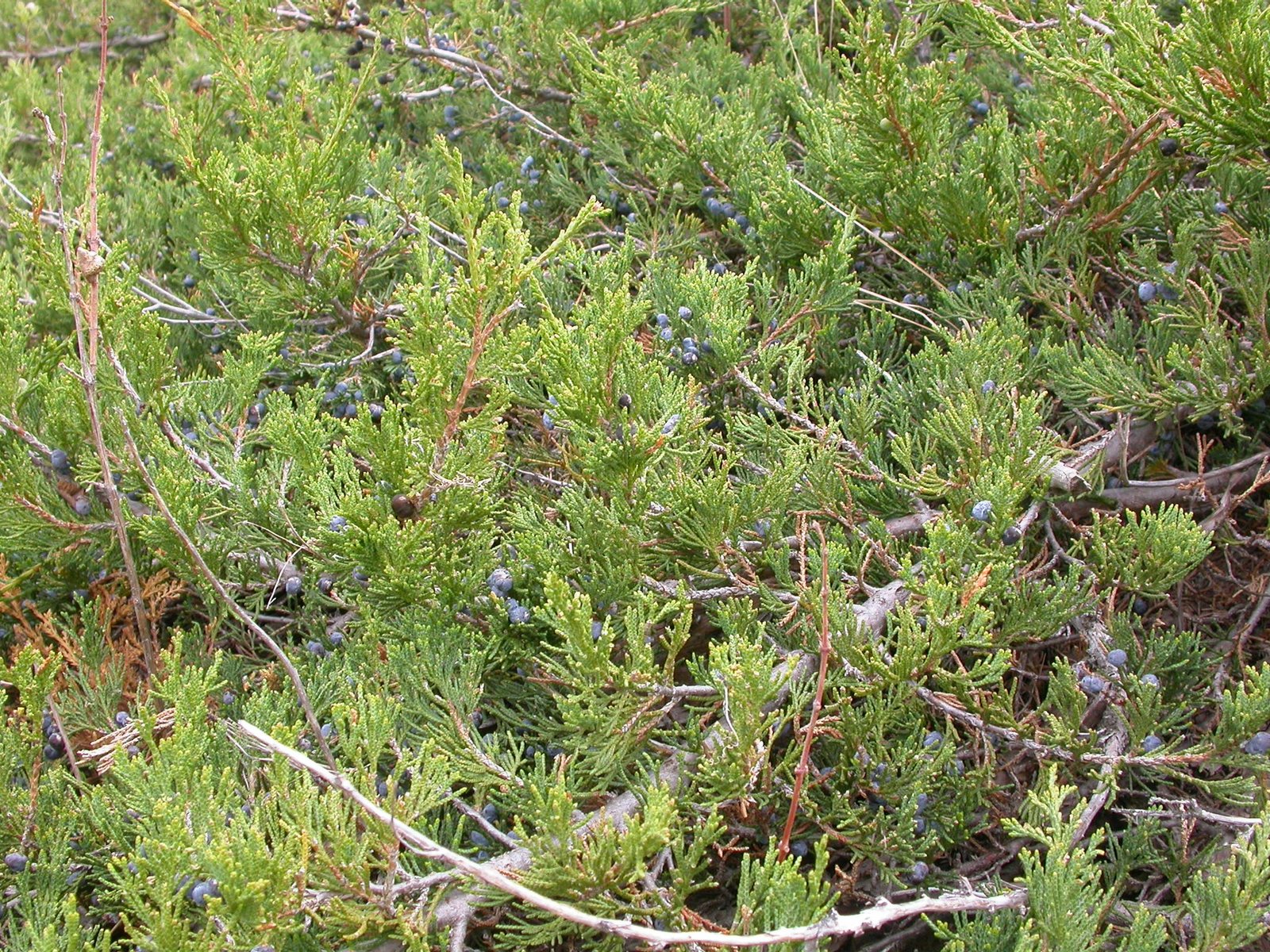
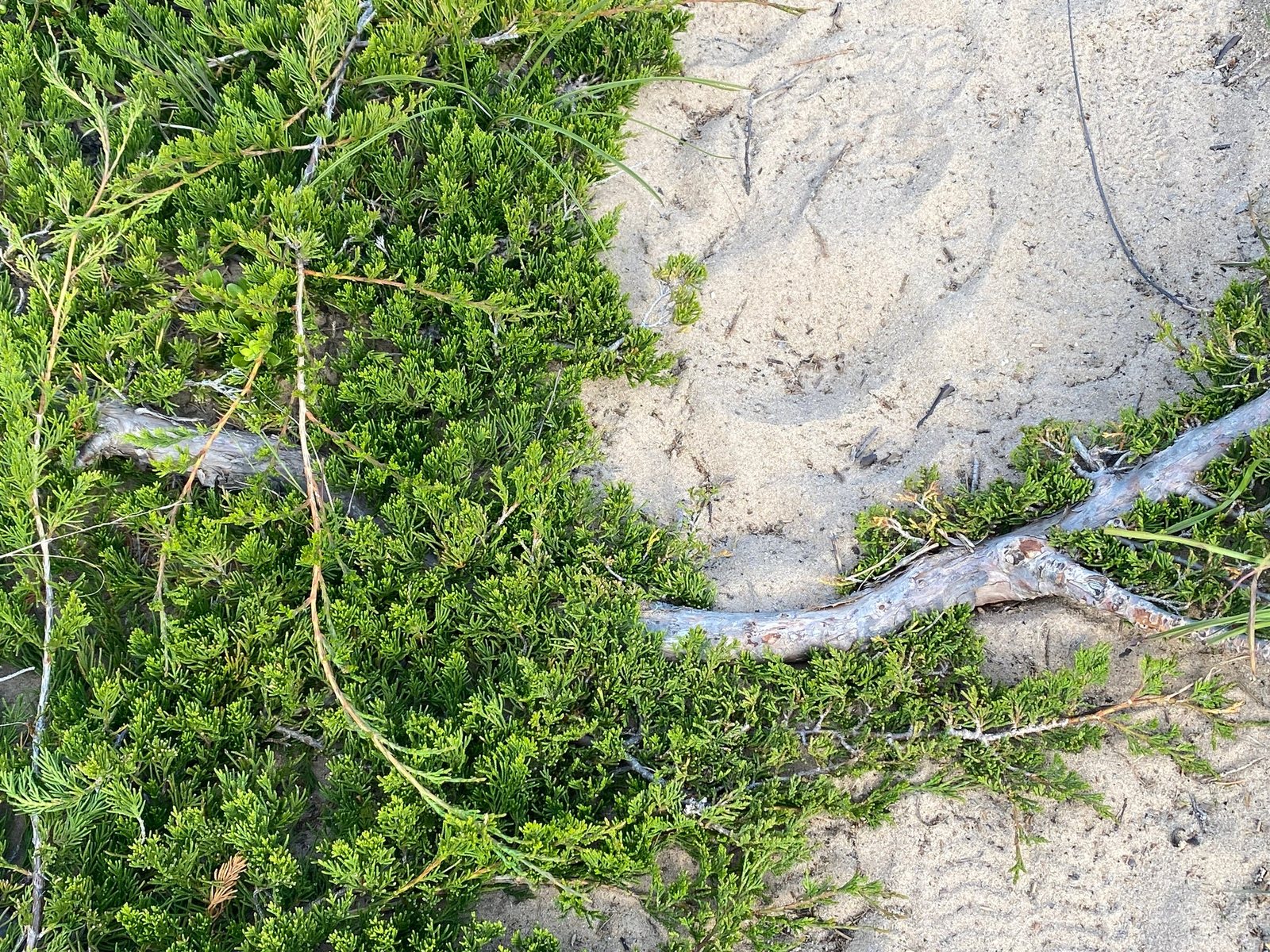
Blue Rug juniper is a very low, spreading evergreen conifer with trailing branches and silver-blue foliage. Grow it to cover sunny banks, soften retaining walls or form a broad carpet among rocks; it tolerates drought once established but dislikes wet soil and foot traffic.
At a glance
- Sun
- Full sun; shade produces thinner growth and poorer foliage colour.
- Water
- Water regularly while establishing; drought-tolerant once rooted. Let the soil dry between waterings rather than keeping it constantly damp.
- Soil
- Well-drained sandy, gravelly or loamy soil, from acidic to alkaline. Avoid waterlogged ground and heavy clay unless drainage is improved.
- Height
- 0.3-0.5 ft (0.1-0.15 m)
- Spread
- 6-8 ft (1.8-2.4 m)
- Foliage
- Fine-textured, silver-blue to blue-green evergreen foliage on ground-hugging stems; often develops purple or bronze tones in cold weather.
- Growth
- Moderate; takes several years to form a broad carpet.
- Care needed
- Low
The year at a glance
- Deer resistant
- Drought tolerant
- Cold hardy
- Heat tolerant
- Wildlife
| J | F | M | A | M | J | J | A | S | O | N | D | |
|---|---|---|---|---|---|---|---|---|---|---|---|---|
| Plant |
Northern hemisphere months. In Australia, shift them by six.
- Difficulty
- Easy
- Toughness
- Very tough
Will it suit your garden?
Pick your zone, country, light and whether you have pets.
Full sun is 6 or more hours of direct sun a day, part shade 3 to 6 hours, shade under 3.
How it grows
Planting day
0.1 ft (0.03 m)
After 1 year
0.2 ft (0.07 m)
After 2 years
0.3 ft (0.11 m)
After 3 years
0.4 ft (0.13 m)
full size
About 3 years to full size.
From a typical nursery size, at an average rate for this kind of plant. A rule of thumb, not a forecast.
Good to know
- Cats and dogs
- Mildly toxic: may upset a stomach
- Native to
- the US and Canada
- Growth rate
- Moderate
Care
Jobs through the year
- WaterApr–May, Sep–Oct, every 28 days
- Water established plants only during prolonged drought; water new plants regularly through their first season.
- WaterJun–Aug, every 21 days
- Deep-water established plants only in prolonged dry weather, allowing soil to dry between soakings.
- PruneMar–Apr
- Remove dead shoots in dry weather and shorten strays to leafy side shoots; never shear into bare wood.
- MulchApr
- Use a light gravel mulch in gaps, keeping the central crown uncovered.
- FeedApr
- Feed lightly only if growth is weak and soil is poor; avoid heavy nitrogen.
- ProtectOct–Nov
- Clear fallen leaves from the mat and keep winter drainage unobstructed.
- Water deeply during dry spells through the first growing season, allowing the surface soil to dry between waterings.
- Leave enough space for its mature spread rather than relying on repeated trimming.
- Remove weeds before planting and hand-weed gaps until the branches cover the ground.
- Use a light gravel mulch on suitable sites; keep mulch away from the central crown.
- Feed only if growth is weak and soil is poor; avoid heavy nitrogen applications.
- Keep sprinklers off the foliage where possible, especially in humid weather.
Pruning. In spring, remove dead or damaged shoots and shorten stray branches back to a leafy side shoot. Do not cut into bare old wood, which usually will not regrow, and avoid shearing the whole plant.
Through the year
- Early spring
- Check for winter damage and remove dead branches in dry weather.
- Spring
- Plant into well-drained soil, water thoroughly and keep surrounding weeds down.
- Late spring
- Inspect new shoot tips for browning; remove affected growth and check drainage.
- Summer
- Water young plants during dry spells; check stressed foliage for spider mites.
- Late summer
- Take semi-ripe cuttings if you want more plants of the same cultivar.
- Autumn
- Remove fallen leaves caught in the mat and check that winter rain can drain freely.
In the garden
- Cover sunny slopes with a low evergreen carpet, allowing room for the stems to spread.
- Trail it over retaining walls to soften hard edges without obscuring the whole structure.
- Plant among boulders and gravel with dwarf conifers for contrasting shapes and textures.
- Use beneath upright ornamental grasses or beside sedums for a cool blue foreground.
Garden styles it suits: Low-maintenance, Dry gravel garden, Desert / xeriscape, Coastal, Winter interest and Alpine rock garden.
Plant it with: Dwarf mugo pine, Blue fescue, Russian sage, Catmint, Upright sedum and Creeping phlox.
Wildlife: The dense mat provides shelter for small animals and invertebrates. It offers little nectar or pollen value to pollinating insects.
Problems to watch for
- Root rot in wet soil: improve drainage or move the plant to a raised, freely draining site; replace plants with extensively rotted roots.
- Juniper tip blight: prune brown shoot tips back to healthy growth in dry weather, clean tools between cuts and avoid overhead watering.
- Spider mites in hot, dry conditions: look for fine stippling and webbing, rinse foliage thoroughly and use a labelled insecticidal soap if necessary.
- Bare patches from shade, trampling or severe cutting: remove the cause; old bare branches rarely fill out again, so badly damaged plants may need replacing.
Safety
Not known to be seriously toxic to people, cats, dogs or horses, although safety information specific to this cultivar is limited. Eating foliage or berry-like cones may cause stomach upset, and contact with the foliage or sap can irritate sensitive skin. Do not treat it as an edible juniper.
Easily confused with
Blue Chip juniper (Juniperus horizontalis 'Blue Chip')
Also blue and spreading, but generally forms a taller, more uneven mound with more noticeably raised branch tips.
Japanese garden juniper (Juniperus procumbens 'Nana')
Forms a thicker, taller mound with conspicuously prickly, needle-like foliage rather than Blue Rug's flatter, finer-textured carpet.
Blue Pacific shore juniper (Juniperus conferta 'Blue Pacific')
Has longer, sharply pointed needles in groups of three and a looser, coarser appearance.
The name
The species name horizontalis refers to its horizontal growth, while Blue Rug describes its low carpet of blue-toned foliage.
Propagation. Root semi-ripe cuttings in late summer in a freely draining medium. Low branches may also root where they touch the soil and can be separated once well rooted; seed will not reproduce the cultivar reliably.
Checked against open data
- Accepted botanical name
- Juniperus horizontalis
- In the US and Canada
- Native in Alaska, Canada, the lower 48 states and St. Pierre and Miquelon.
- Native range
- Alaska, Alberta, British Columbia, Colorado, Illinois, Iowa, Labrador, Manitoba, Masachusettes, Michigan, Minnesota and Montana.
- Measured
- Soil pH 5.5 to 7.8. Average height 76 cm.
Sources: GBIF (CC BY 4.0), USDA PLANTS and Trefle (CC BY 4.0). The care and design notes are LandscapeGPT's own.
See it in your own yard.
Upload a photo of your yard and see it redesigned with plants that suit your climate, each checked against your zone.