Blue sedge
Carex flacca. Family Cyperaceae. Ornamental grass.
Also called Glaucous sedge, Carnation grass, Carex glauca.
Blue sedge is a low, spreading perennial sedge grown for its narrow, arching, blue-grey leaves. It makes a useful groundcover in sun or partial shade and tolerates a wide range of soils, but its creeping rhizomes can carry it well beyond its planting space.
At a glance
- Sun
- Full sun to partial shade; give afternoon shade in hot, dry climates.
- Water
- Moderate; prefers reasonably consistent moisture but tolerates some drought once established.
- Soil
- Adaptable to clay, loam, sandy and chalky soils, including alkaline ground. Prefers moisture-retentive soil without prolonged stagnant water.
- Height
- 0.5-1.5 ft (0.15-0.45 m), including flower stems
- Spread
- 1-2 ft (0.3-0.6 m) initially; spreads farther by creeping rhizomes
- Flowers
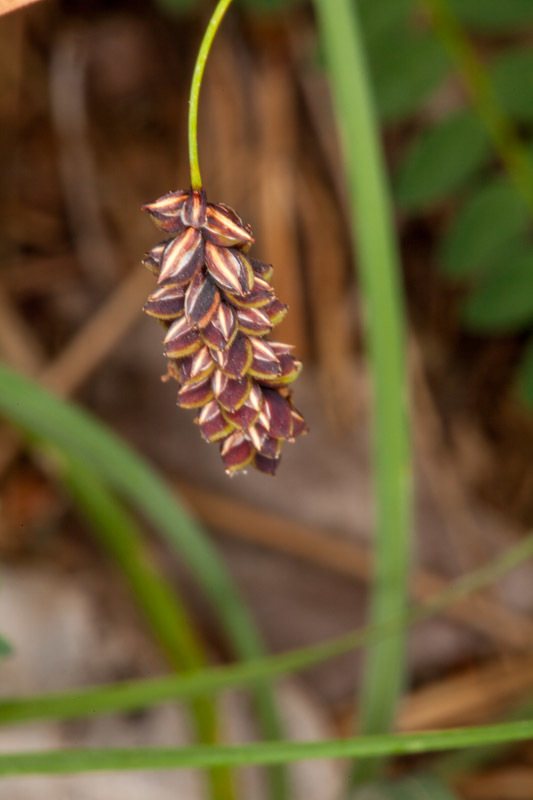
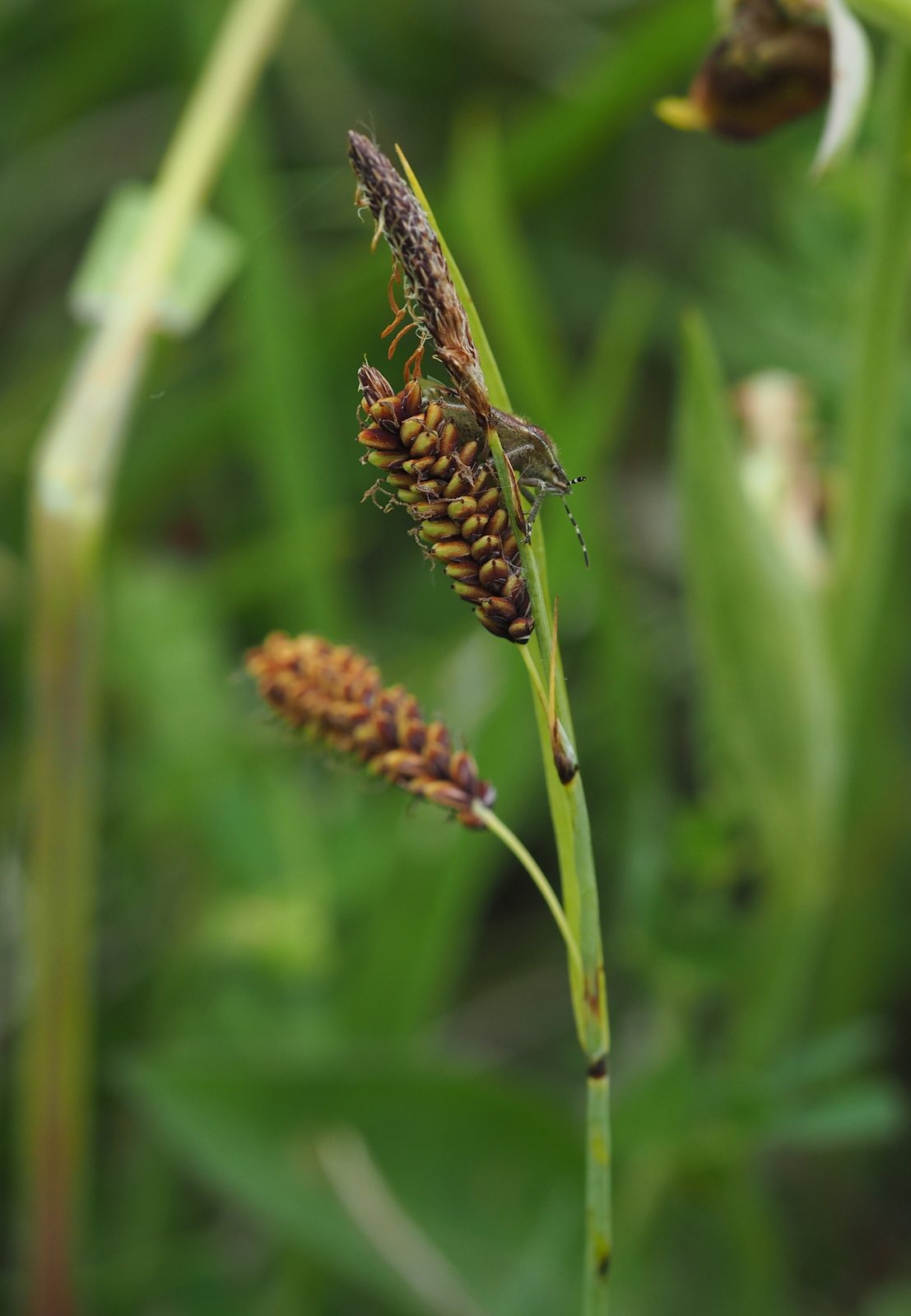
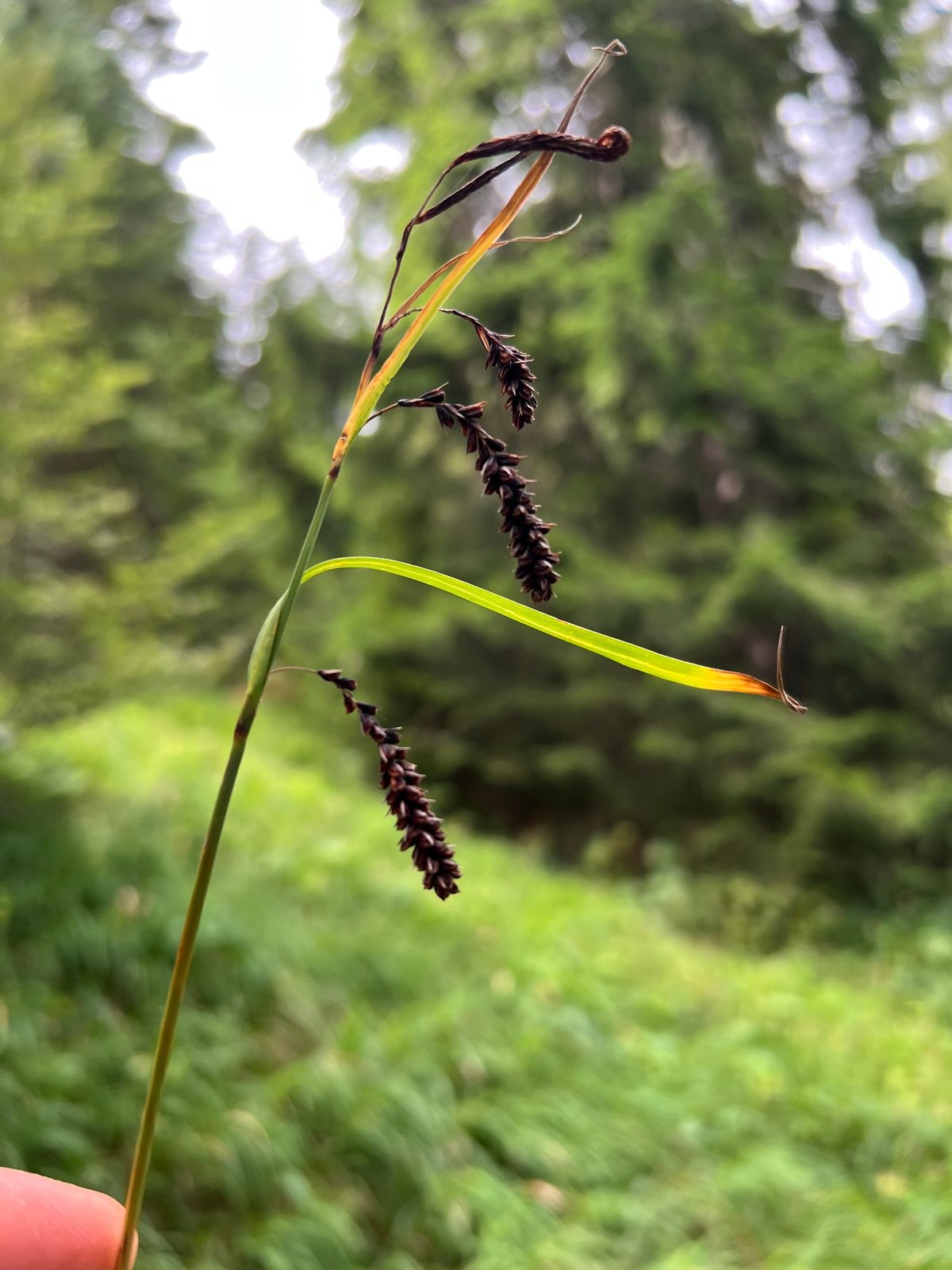
- Small, inconspicuous brown to purplish-brown flower spikes in late spring and early summer.
- Foliage
- Narrow, arching leaves, usually blue-grey above and paler beneath; colour varies between plants. Evergreen in mild climates, but often partly or fully dormant in cold winters.
- Growth
- Moderate to fast once established, especially in moist soil.
- Care needed
- Medium
The year at a glance
- Deer resistant
- Drought tolerant
- Cold hardy
- Heat tolerant
- Wildlife
| J | F | M | A | M | J | J | A | S | O | N | D | |
|---|---|---|---|---|---|---|---|---|---|---|---|---|
| Flowers | ||||||||||||
| Fruit | ||||||||||||
| Plant |
Northern hemisphere months. In Australia, shift them by six.
- Difficulty
- Moderate
- Toughness
- Very tough
Will it suit your garden?
Pick your zone, country, light and whether you have pets.
Full sun is 6 or more hours of direct sun a day, part shade 3 to 6 hours, shade under 3.
How it grows
Planting day
1 ft (0.3 m)
full size
About 2 years to full size.
From a typical nursery size, at an average rate for this kind of plant. A rule of thumb, not a forecast.
Good to know
- Cats and dogs
- Safe
- Native to
- the UK
- Invasive in
- the US
- In the garden
- Spreads vigorously: plan to contain it.
- Growth rate
- Fast
Care
Jobs through the year
- WaterApr–May, Sep–Oct, every 14 days
- Water established patches only if soil is dry; water new plants more often.
- WaterJun–Aug, every 14 days
- Deep-water established patches during prolonged drought, especially if leaves curl or brown.
- PruneFeb–Mar
- Remove dead leaves; shear badly damaged patches to 5–8 cm before new shoots lengthen.
- PruneMay–Sep, every 30 days
- Lift spreading shoots with their attached rhizomes to contain the patch.
- DivideMar–Apr
- Divide crowded or tired patches, replanting healthy outer sections.
- MulchMar–Apr
- On poor soil, add a thin compost dressing without burying the foliage.
- ProtectOct–Nov
- Clear thick accumulations of fallen leaves from the evergreen foliage.
- Water during dry spells in the first growing season so the roots establish well.
- Once established, water during prolonged drought if the foliage begins to brown or curl.
- Apply a thin layer of compost in spring on poor soil; routine fertiliser is usually unnecessary.
- Lift unwanted shoots with their connecting rhizomes before they spread into neighbouring plants.
- Divide crowded or tired patches in spring, replanting healthy outer sections.
Pruning. In late winter or early spring, remove dead leaves by hand or with scissors before new growth starts. If a patch is badly winter-damaged, shear it to about 2-3 in (5-8 cm), taking care not to cut emerging shoots.
Through the year
- Late winter
- Remove dead or winter-damaged foliage before fresh shoots lengthen.
- Spring
- Plant or divide patches, water thoroughly and add a thin compost dressing if needed.
- Late spring
- Check the edges of each patch and dig out rhizomes spreading into other plants.
- Summer
- Water new plantings during dry weather; give established patches water during prolonged drought.
- Autumn
- Remove fallen leaves that form a thick, wet layer over the foliage.
In the garden
- Plant in broad drifts beneath deciduous shrubs for a low, blue-grey ground layer.
- Use beside broad-leaved perennials such as bergenias and hostas to contrast leaf shape and texture.
- Repeat along informal path edges, allowing room for the foliage to arch without obstructing the route.
- Grow in a container for foliage contrast where spreading rhizomes would be troublesome in open ground.
Garden styles it suits: Modern, Woodland, Dry gravel garden, Coastal, Blues and silvers and New perennial (prairie).
Plant it with: Bergenia, Hardy geranium, Hellebore, Epimedium and Hosta.
Wildlife: Dense patches provide shelter for small invertebrates. The flowers are wind-pollinated and offer little nectar value to bees.
Problems to watch for
- Unwanted spread: dig out advancing rhizomes regularly, or grow it in a container; shallow edging may not contain it.
- Brown leaf tips in hot, dry weather: water deeply during prolonged drought and provide afternoon shade in hot climates.
- Winter-scorched foliage: leave it until late winter, then remove damaged leaves before new growth develops.
- Rust spots on leaves: remove badly affected foliage, improve air circulation and avoid repeatedly wetting the leaves when watering.
Safety
Not known to be toxic to cats, dogs, horses or people; no part is recognised as poisonous. It is not a food plant, and the leaf edges can cause minor cuts when handled.
Where it spreads. Can spread aggressively by underground rhizomes in gardens. It has escaped cultivation and is locally invasive in parts of northeastern North America, including New England; avoid planting it beside natural habitats there and check local invasive-plant guidance.
Easily confused with
Blue fescue (Festuca glauca)
Forms compact tussocks of very fine, almost needle-like leaves rather than spreading patches of flatter leaves; its flowers form branched grass panicles.
Blue moor grass (Sesleria caerulea)
Forms discrete clumps rather than long-running colonies and produces short, dense, dark flower heads in spring.
Blue wood sedge (Carex flaccosperma)
Usually has broader blue-green leaves and a clumping habit rather than the extensively creeping rhizomes of blue sedge.
The name
The species name flacca means limp or drooping, referring to the leaves, while blue sedge describes their blue-grey colour.
Propagation. Divide in spring, taking rooted sections with several shoots and watering them until established. Seed is possible, but seedlings vary in foliage colour; divide named selections to keep their characteristics.
Checked against open data
- Accepted botanical name
- Carex flacca
- In the US and Canada
- Introduced in Canada and the lower 48 states.
- Native range
- Albania, Algeria, Austria, Baleares, Baltic States, Belarus, Belgium, Bulgaria, Central European Rus, Corse, Cyprus and Czechoslovakia.
- Measured
- Average height 25 cm.
Sources: GBIF (CC BY 4.0), USDA PLANTS and Trefle (CC BY 4.0). The care and design notes are LandscapeGPT's own.
See it in your own yard.
Upload a photo of your yard and see it redesigned with plants that suit your climate, each checked against your zone.