Bluebeard
Caryopteris × clandonensis. Family Lamiaceae. Shrub.
Also called Blue mist shrub, Blue spirea.
Bluebeard is a small, deciduous shrub grown for its blue flowers in late summer and autumn, when many other shrubs have finished flowering. Its aromatic foliage and compact shape suit sunny borders and gravel gardens, and its flowers attract bees. In colder gardens, the stems may die back over winter while the roots survive.
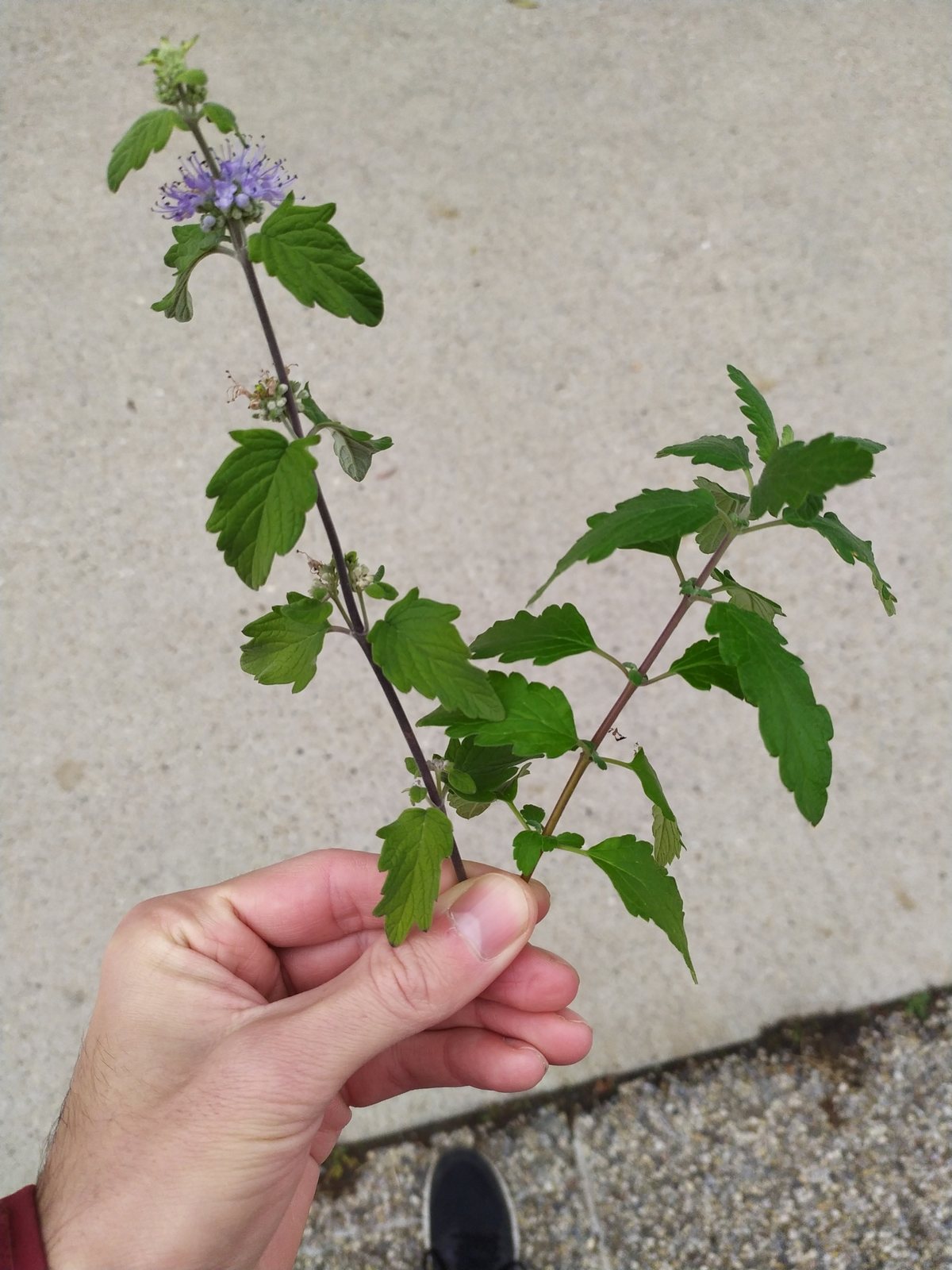
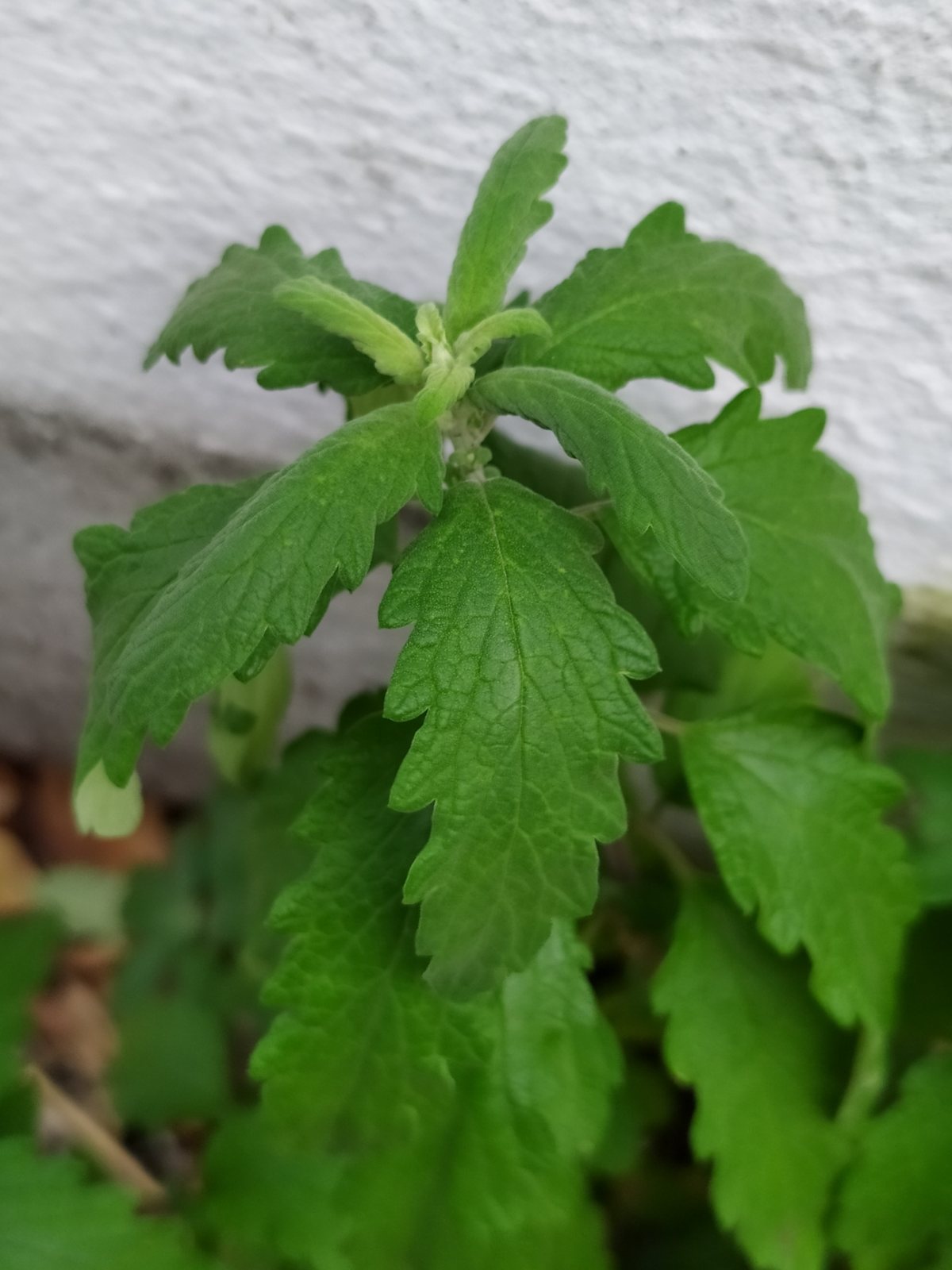
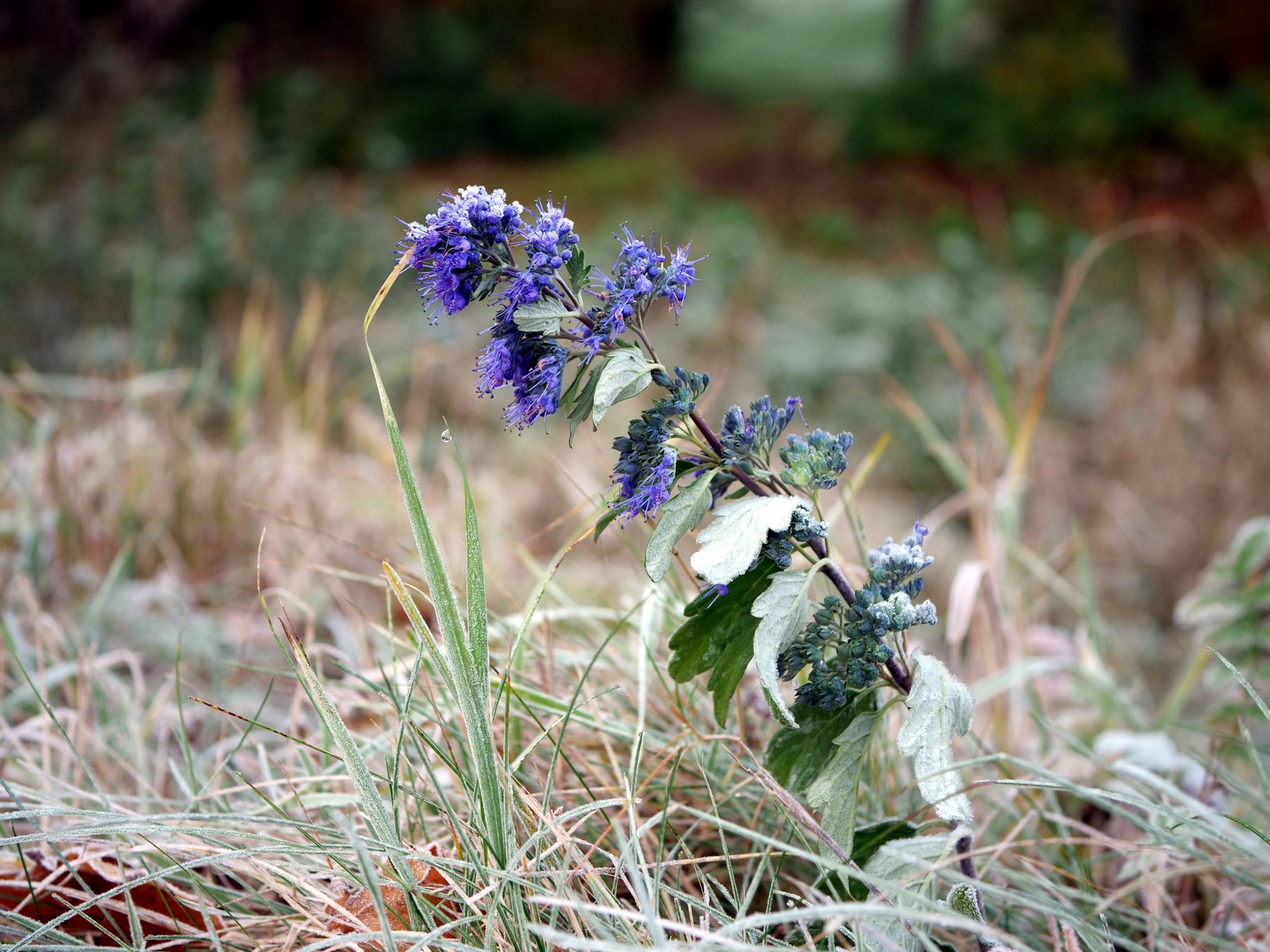
At a glance
- Sun
- Full sun; shade reduces flowering and encourages loose, floppy growth.
- Water
- Water regularly during establishment, allowing the soil surface to dry between waterings. Established plants tolerate dry spells but may need deep watering during prolonged drought.
- Soil
- Well-drained soil, including sandy, chalky or stony ground. Tolerates moderately fertile loam but struggles in heavy soil that stays wet, especially in winter.
- Height
- 2-4 ft (0.6-1.2 m)
- Spread
- 2-4 ft (0.6-1.2 m)
- Flowers
- Clusters of blue to violet-blue flowers from late summer into early autumn; timing and shade vary by cultivar and climate.
- Foliage
- Opposite, narrow, toothed leaves, usually grey-green and aromatic when rubbed; some cultivars have yellow or variegated foliage.
- Growth
- Moderate to fast; makes substantial new growth each spring.
- Care needed
- Low
The year at a glance
- Pollinators
- Deer resistant
- Drought tolerant
- Heat tolerant
- Low allergen
- Fragrant
| J | F | M | A | M | J | J | A | S | O | N | D | |
|---|---|---|---|---|---|---|---|---|---|---|---|---|
| Flowers | ||||||||||||
| Plant |
Northern hemisphere months. In Australia, shift them by six.
- Difficulty
- Easy
- Toughness
- Very tough
Will it suit your garden?
Pick your zone, country, light and whether you have pets.
Full sun is 6 or more hours of direct sun a day, part shade 3 to 6 hours, shade under 3.
How it grows
Planting day
1.6 ft (0.5 m)
After 1 year
2 ft (0.6 m)
After 2 years
2.3 ft (0.7 m)
After 3 years
2.6 ft (0.8 m)
After 5 years
3 ft (0.9 m)
full size
About 4 years to full size.
From a typical nursery size, at an average rate for this kind of plant. A rule of thumb, not a forecast.
Good to know
- Cats and dogs
- Safe
- Growth rate
- Fast
Care
Jobs through the year
- WaterApr–May, Sep, every 21 days
- Water established ground plants only if soil is dry; water new plants more often.
- WaterJun–Aug, every 14 days
- Water established ground plants deeply during prolonged drought; allow surface soil to dry.
- PruneMar–Apr
- As buds swell after severe frost, cut stems to strong buds 15–30 cm above ground.
- MulchApr
- Apply a light mulch if needed, keeping the crown and woody stem bases clear.
- Plant in full sun with good drainage; use a raised bed if your soil stays wet.
- Water deeply during the first growing season, then mainly during prolonged dry spells.
- Avoid rich manure and heavy feeding, which encourage soft growth at the expense of flowers.
- Keep mulch clear of the crown and woody stem bases.
- In cold areas, choose a sheltered spot and avoid autumn pruning.
Pruning. In early to mid-spring, once buds begin to swell and severe frost is unlikely, cut the previous year's stems back to strong low buds, usually 6-12 in (15-30 cm) above ground. Remove dead stems; flowers develop on the new season's growth.
Through the year
- Spring
- Plant once the ground is workable and no longer waterlogged; water thoroughly.
- Early to mid-spring
- Prune to strong low buds as growth starts, removing any winter-killed wood.
- Late spring
- Check new plants for dry soil and water deeply as needed.
- Early summer
- Take softwood cuttings from healthy, non-flowering shoots.
- Late summer
- Water during prolonged drought to support flowering, particularly in containers.
- Autumn
- Leave stems standing rather than cutting back; clear wet debris away from the crown.
In the garden
- Plant in small groups near the front or middle of a sunny border for late-season blue flowers.
- Combine with ornamental grasses and stonecrop for contrasting textures and autumn interest.
- Use alongside lavender and catmint in a well-drained gravel garden to extend the flowering season.
- Pair with yellow-flowered perennials for a clear blue-and-yellow contrast.
Garden styles it suits: Cottage garden, New perennial (prairie), Pollinator garden, Dry gravel garden, Low-maintenance and Mediterranean.
Plant it with: Lavender, Catmint, Stonecrop, Coneflower, Black-eyed Susan and Feather reed grass.
Wildlife: The flowers provide late-season nectar and pollen for bees and attract butterflies and other flower-visiting insects.
Problems to watch for
- Root or crown rot in wet soil: improve drainage or move to a raised position; replace plants with extensively rotted roots.
- Winter stem dieback: wait for spring growth, then cut back to living buds; in zone 5, the whole top may die back.
- Sparse flowers and floppy stems: provide more sun, stop heavy feeding and prune in spring.
- Capsid bug damage to young leaves, especially in the UK: inspect distorted shoots; light damage usually needs no treatment.
Safety
Not known to be toxic to people, cats, dogs or horses. No poisonous plant part is established, but specific animal-toxicity information is limited; it is not an edible plant.
Easily confused with
Russian sage (Salvia yangii)
Usually taller and airier, with more deeply cut, silvery leaves and long, open sprays of small flowers rather than compact clusters around the upper stems.
Chaste tree (Vitex agnus-castus)
Has palmately compound leaves with several leaflets and long terminal flower spikes; it usually becomes a much larger shrub or small tree.
The name
Caryopteris comes from Greek words meaning nut and wing, referring to the winged fruit, while bluebeard describes the blue flowers with their projecting stamens.
Propagation. Take softwood cuttings in late spring or early summer, or semi-ripe cuttings later in summer. Seedlings, if produced, may not match the parent; use cuttings to preserve a cultivar.
Checked against open data
- Accepted botanical name
- Caryopteris clandonensis
Sources: GBIF (CC BY 4.0) and Trefle (CC BY 4.0). The care and design notes are LandscapeGPT's own.
See it in your own yard.
Upload a photo of your yard and see it redesigned with plants that suit your climate, each checked against your zone.