Bobo hydrangea
Hydrangea paniculata 'Bobo'. Family Hydrangeaceae. Shrub.
Also called Bobo panicle hydrangea, Hydrangea paniculata 'Ilvobo'.
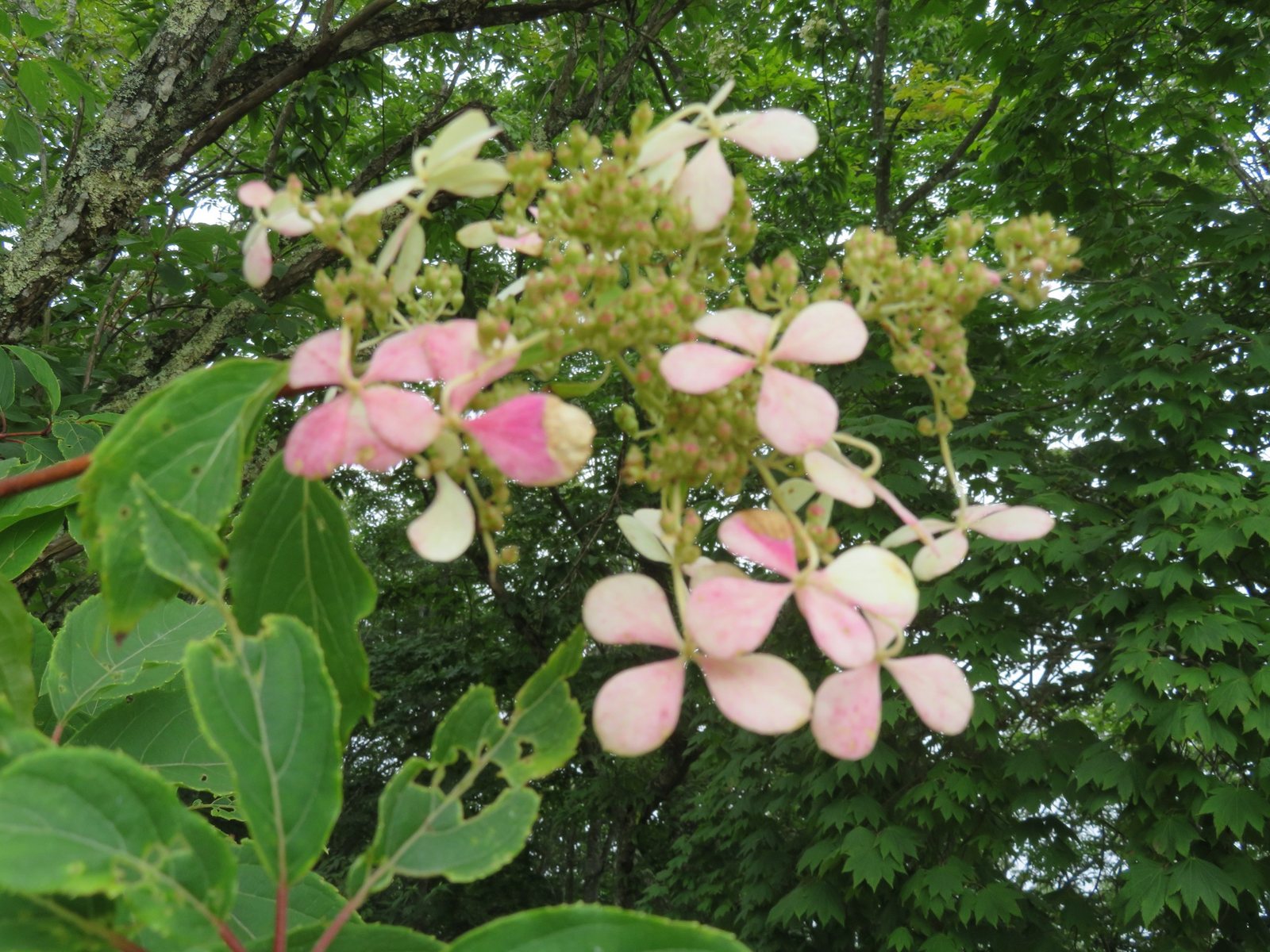
Bobo is a compact, deciduous panicle hydrangea grown for its dense covering of upright, cone-shaped flowers. The blooms open white and develop pink tones as they age, providing summer and autumn colour on a shrub suited to small gardens and large containers. Bobo is the selling name for the cultivar 'Ilvobo'.
At a glance
- Sun
- Full sun to partial shade; give afternoon shade in hot climates. Too much shade reduces flowering.
- Water
- Keep the root zone evenly moist but not waterlogged. Water deeply during dry spells, especially in the first two growing seasons; containers need more frequent checks.
- Soil
- Moist, well-drained soil enriched with organic matter. Tolerates a range of soil pH; changing soil acidity will not turn the flowers blue.
- Height
- 2.5-3 ft (0.75-0.9 m)
- Spread
- 3-4 ft (0.9-1.2 m)
- Flowers
- Midsummer to early autumn; dense white flower panicles gradually develop pink tones, then dry to tan. Pink colouring varies with weather.
- Foliage
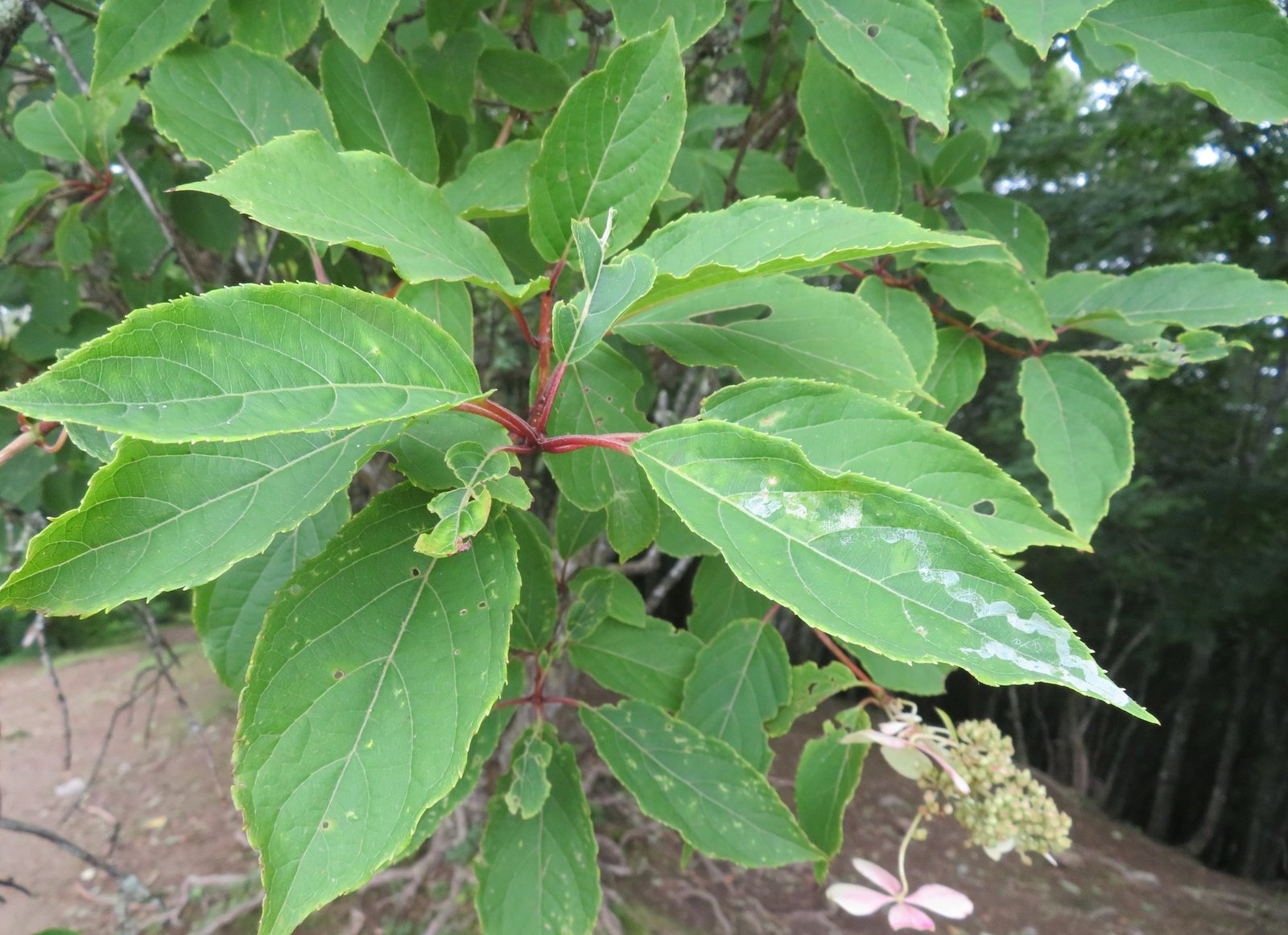
- Green, oval leaves with toothed edges; autumn colour is usually modest.
- Growth
- Moderate
- Care needed
- Low
The year at a glance
- Cold hardy
- Low allergen
| J | F | M | A | M | J | J | A | S | O | N | D | |
|---|---|---|---|---|---|---|---|---|---|---|---|---|
| Flowers | ||||||||||||
| Fruit | ||||||||||||
| Plant |
Northern hemisphere months. In Australia, shift them by six.
- Difficulty
- Easy
- Toughness
- Fairly tough
Will it suit your garden?
Pick your zone, country, light and whether you have pets.
Full sun is 6 or more hours of direct sun a day, part shade 3 to 6 hours, shade under 3.
How it grows
Planting day
1.6 ft (0.5 m)
After 1 year
1.9 ft (0.56 m)
After 2 years
2.1 ft (0.63 m)
After 3 years
2.3 ft (0.7 m)
After 5 years
2.7 ft (0.83 m)
full size
About 5 years to full size.
From a typical nursery size, at an average rate for this kind of plant. A rule of thumb, not a forecast.
Good to know
- Cats and dogs
- Toxic
- Growth rate
- Moderate
Care
Jobs through the year
- WaterApr–May, Sep–Oct, every 7 days
- Water established shrubs if the upper soil is drying; young plants need more frequent checks.
- WaterJun–Aug, every 7 days
- Water deeply to maintain even moisture; water sooner in heat or drought.
- FeedApr
- Apply a light balanced shrub feed only if growth is weak or the soil is poor.
- MulchApr
- Spread 5–8 cm of organic mulch over moist soil, keeping stems clear.
- PruneFeb–Mar
- Remove damaged or crossing stems and shorten last year's growth by up to one-third if needed.
- Water at soil level when the upper soil begins to dry; do not let newly planted shrubs dry out.
- Apply a 2-3 in (5-8 cm) layer of organic mulch, keeping it clear of the stems.
- Feed lightly in spring with a balanced shrub fertiliser if growth is weak; avoid heavy nitrogen feeding.
- Use a large container with drainage holes and check moisture frequently during warm weather.
- Leave room for its mature width rather than repeatedly trimming it to fit.
Pruning. In late winter or early spring, remove dead, damaged and crossing stems, then shorten the previous year's growth by up to one-third if needed. It flowers on new growth; avoid cutting the whole shrub hard to the ground each year, which can encourage weak stems.
Through the year
- Late winter
- Prune before strong new growth starts; retain a sturdy framework of stems.
- Spring
- Plant when the soil is workable, water thoroughly and mulch the root zone.
- Mid-spring
- Apply a light feed if needed and check that mulch is not touching the stems.
- Summer
- Water deeply during dry weather and check containers frequently.
- Autumn
- Plant in mild regions while the soil is still warm; leave sound flower heads for winter texture if desired.
- Winter
- In very cold regions, shelter containers and insulate the pot to protect roots from repeated freezing.
In the garden
- Plant a short, informal flowering hedge along a path, allowing enough setback for its mature spread.
- Repeat through a mixed border with catmint and ornamental grasses for a low, rounded rhythm.
- Use in a large patio container where its white flowers brighten the seating area.
- Place in front of taller shrubs to create a flowering middle layer without blocking windows.
Garden styles it suits: Cottage garden, Traditional, Small-space, White garden, Low-maintenance and English country.
Plant it with: Catmint, Hardy geranium, Japanese forest grass, Coral bells, Hosta and Switchgrass.
Wildlife: The flower heads are dominated by showy sterile florets, so they offer less food for pollinators than more open-flowered hydrangeas. Deer may browse the leaves and shoots.
Problems to watch for
- Wilting or scorched leaf edges: check soil moisture, water deeply and provide afternoon shade where summers are hot.
- Yellow leaves and root decline in wet soil: improve drainage and reduce watering; do not leave containers standing in water.
- Leaf spots or powdery mildew: improve airflow, water at soil level and remove fallen affected leaves.
- Flower-laden stems flopping after rain: avoid excessive feeding and severe annual pruning; support individual stems discreetly if necessary.
Safety
Toxic if eaten by cats, dogs, horses or people. All parts contain cyanogenic glycosides, with leaves and flower buds a particular concern. Ingestion usually causes digestive upset; serious poisoning is uncommon but possible, especially after a large amount. Contact a veterinarian or poison service if ingestion occurs.
Easily confused with
Little Lime hydrangea (Hydrangea paniculata 'Jane')
Usually grows taller and wider, with flowers that open lime green rather than Bobo's predominantly white display.
Little Quick Fire hydrangea (Hydrangea paniculata 'SMHPLQF')
Typically flowers earlier, has more open flower heads and grows taller than Bobo.
Annabelle hydrangea (Hydrangea arborescens 'Annabelle')
Has rounded, ball-shaped flower heads rather than upright cones, along with broader leaves and generally larger growth.
The name
Hydrangea comes from Greek words meaning water vessel, referring to the seed capsules, while paniculata describes the branched flower clusters.
Propagation. Softwood cuttings taken in late spring or early summer can root under humid conditions. Seed will not reproduce this cultivar reliably; check local plant breeders' rights or patent restrictions before propagating it.
Checked against open data
- Accepted botanical name
- Hydrangea paniculata
- In the US and Canada
- Introduced in Canada and the lower 48 states.
- Native range
- China North-Central, China South-Central, China Southeast, Japan, Kuril Is., Sakhalin and Taiwan.
- Measured
- Average height 580 cm.
Sources: GBIF (CC BY 4.0), USDA PLANTS and Trefle (CC BY 4.0). The care and design notes are LandscapeGPT's own.
See it in your own yard.
Upload a photo of your yard and see it redesigned with plants that suit your climate, each checked against your zone.