Boscobel rose
Rosa 'Auscousin'. Family Rosaceae. Shrub.
Also called Rosa 'Auscousin', Boscobel English shrub rose.
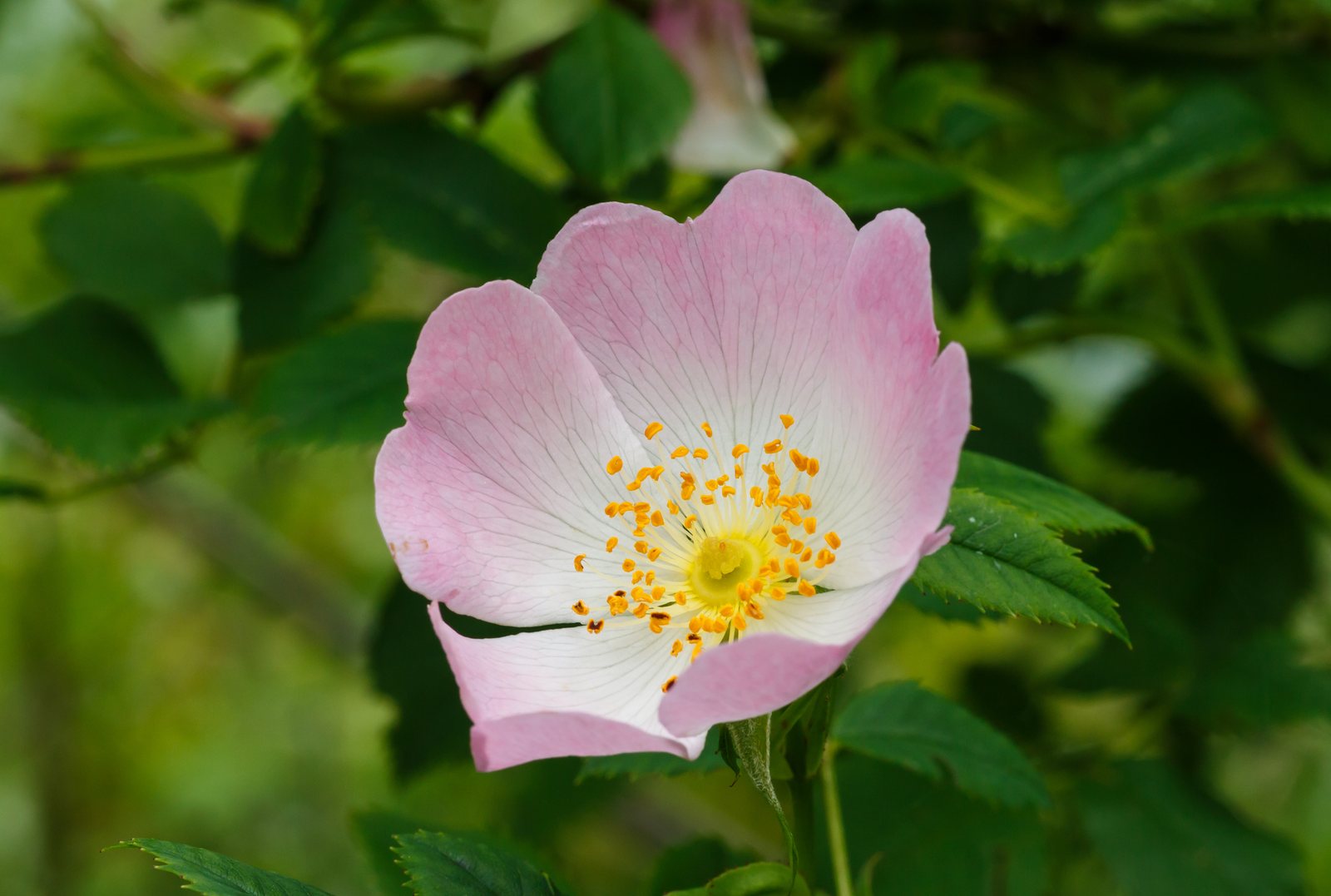
Boscobel is a repeat-flowering English shrub rose with tightly packed, cupped rosettes that open salmon pink and soften as they age. Gardeners grow it for its strong, myrrh-rich fragrance, rounded habit and flowers suitable for cutting.

At a glance
- Sun
- Full sun, ideally at least 6 hours daily; light afternoon shade helps protect flowers in hot climates.
- Water
- Keep the root zone evenly moist but not waterlogged. Water deeply during dry spells, especially in the first growing season and when grown in a container.
- Soil
- Fertile, moisture-retentive, well-drained soil; slightly acidic to neutral is ideal. Improve sandy or heavy soil with well-rotted organic matter.
- Height
- 3-4 ft (0.9-1.2 m)
- Spread
- 3-4 ft (0.9-1.2 m)
- Flowers
- Repeat flushes from late spring or early summer into autumn; coral to salmon-pink, densely double flowers that become softer pink with age.
- Foliage
- Green, pinnate leaves with toothed leaflets; normally deciduous, though some leaves may persist through mild winters.
- Growth
- Moderate; usually forms a substantial shrub within 2-3 growing seasons.
- Care needed
- Medium
The year at a glance
- Low allergen
- Fragrant
| J | F | M | A | M | J | J | A | S | O | N | D | |
|---|---|---|---|---|---|---|---|---|---|---|---|---|
| Flowers | ||||||||||||
| Plant |
Northern hemisphere months. In Australia, shift them by six.
- Difficulty
- Moderate
- Toughness
- Fairly tough
Will it suit your garden?
Pick your zone, country, light and whether you have pets.
Full sun is 6 or more hours of direct sun a day, part shade 3 to 6 hours, shade under 3.
How it grows
Planting day
1.6 ft (0.5 m)
After 1 year
2 ft (0.61 m)
After 2 years
2.4 ft (0.72 m)
After 3 years
2.7 ft (0.83 m)
After 5 years
3 ft (1.1 m)
full size
About 5 years to full size.
From a typical nursery size, at an average rate for this kind of plant. A rule of thumb, not a forecast.
Good to know
- Cats and dogs
- Safe
- Growth rate
- Moderate
Care
Jobs through the year
- WaterApr–May, Sep–Oct, every 14 days
- Deep-water established shrubs if soil is drying; water new plants more frequently.
- WaterJun–Aug, every 7 days
- Water deeply at soil level during dry weather; avoid wetting foliage.
- FeedMar, Jun
- Apply rose fertilizer as growth starts and after the first flush, following the label.
- MulchMar
- Apply 5–8 cm of compost or well-rotted manure, clear of stems.
- PruneFeb–Mar
- As buds swell and severe frost eases, remove weak wood and shorten healthy stems by one-third to one-half.
- DeadheadJun–Oct, every 7 days
- Cut spent flower clusters back to a strong leaf to encourage repeat bloom.
- ProtectNov–Dec
- Remove diseased leaves and mound soil over the dormant crown or graft in cold, exposed gardens.
- Water at soil level when the root zone begins to dry; avoid frequent light sprinkling.
- Apply a rose fertiliser as spring growth starts and again after the first main flush, following the label.
- Mulch annually with 2-3 in (5-8 cm) of compost or well-rotted manure, keeping it clear of the stems.
- Remove spent flower clusters back to a strong leaf to encourage repeat flowering.
- Allow room for air circulation and collect diseased fallen leaves.
- In cold parts of its range, protect the crown or graft union with a mound of soil or compost after the plant becomes dormant.
Pruning. In late winter or early spring, as buds begin to swell and severe frosts ease, remove dead, damaged and crossing stems, then shorten remaining growth by roughly one-third to one-half. In mild climates, do this during the coolest dormant period; remove any rootstock suckers at their point of origin.
Through the year
- Late autumn
- Plant bare-root roses where the ground is workable and winters are mild; collect fallen diseased leaves.
- Winter
- Check drainage and cold protection; avoid pruning during severe freezing weather.
- Early spring
- Prune as buds swell, plant bare-root roses in cold regions, then feed and mulch.
- Late spring
- Check young shoots for aphids and begin deep watering if rainfall is insufficient.
- Summer
- Deadhead regularly, water during dry spells and feed after the first main flush.
- Early autumn
- Stop nitrogen-rich feeding in cold climates so new growth can mature before winter.
In the garden
- Plant near a path or seating area where the fragrance can be enjoyed without thorny stems obstructing access.
- Repeat through a mixed border with catmint, hardy geraniums and salvias for a long flowering season.
- Group several plants into a low, informal flowering hedge.
- Use in a large, well-drained container as a fragrant feature on a sunny terrace.
Garden styles it suits: English country, Cottage garden, Romantic rose garden, Traditional, Sensory garden and Pastel border.
Plant it with: Catmint, Hardy geranium, Salvia, Lady's mantle, Allium and Lavender.
Wildlife: The dense double flowers offer less accessible pollen than open, single roses. Foliage and stems support insects, including aphids that provide food for predatory insects and birds.
Problems to watch for
- Black spot: remove affected fallen leaves, water at soil level and keep the shrub open to airflow; use a locally approved rose fungicide if repeated infection causes serious leaf loss.
- Powdery mildew: prevent drought stress and overcrowding; remove badly affected shoot tips and avoid excessive nitrogen feeding.
- Aphids: rub off small colonies or wash them away with water; leave ladybirds and other predators undisturbed.
- Poor flowering or weak growth: check for insufficient sun, dry roots or competition from nearby plants; improve watering and feeding without leaving the soil waterlogged.
Safety
Not known to be toxic to cats, dogs, horses or people. Thorns can puncture skin, mouths and paws; swallowing plant material may cause mild stomach upset, and garden sprays may leave harmful residues.
Easily confused with
Lady of Shalott rose (Rosa 'Ausnyson')
Its flowers are more orange-apricot, with golden-yellow petal reverses and a looser cup; Boscobel has more tightly packed salmon-pink rosettes.
Jubilee Celebration rose (Rosa 'Aushunter')
Its large salmon-pink flowers have conspicuous golden tones on the petal undersides and often nod more strongly; Boscobel generally carries more compact, cupped rosettes.
The name
Boscobel is named after Boscobel House in Shropshire, England, associated with Charles II's refuge after the Battle of Worcester in 1651.
Propagation. Usually sold as a budded or grafted plant; stem cuttings can produce own-root plants, but seedlings will not reliably match the cultivar. Check local plant breeders' rights or patent restrictions before propagating.
Checked against open data
- Accepted botanical name
- Rosa
Sources: GBIF (CC BY 4.0). The care and design notes are LandscapeGPT's own.
See it in your own yard.
Upload a photo of your yard and see it redesigned with plants that suit your climate, each checked against your zone.