Bottlebrush buckeye
Aesculus parviflora. Family Sapindaceae. Shrub.
Also called Dwarf horse chestnut.
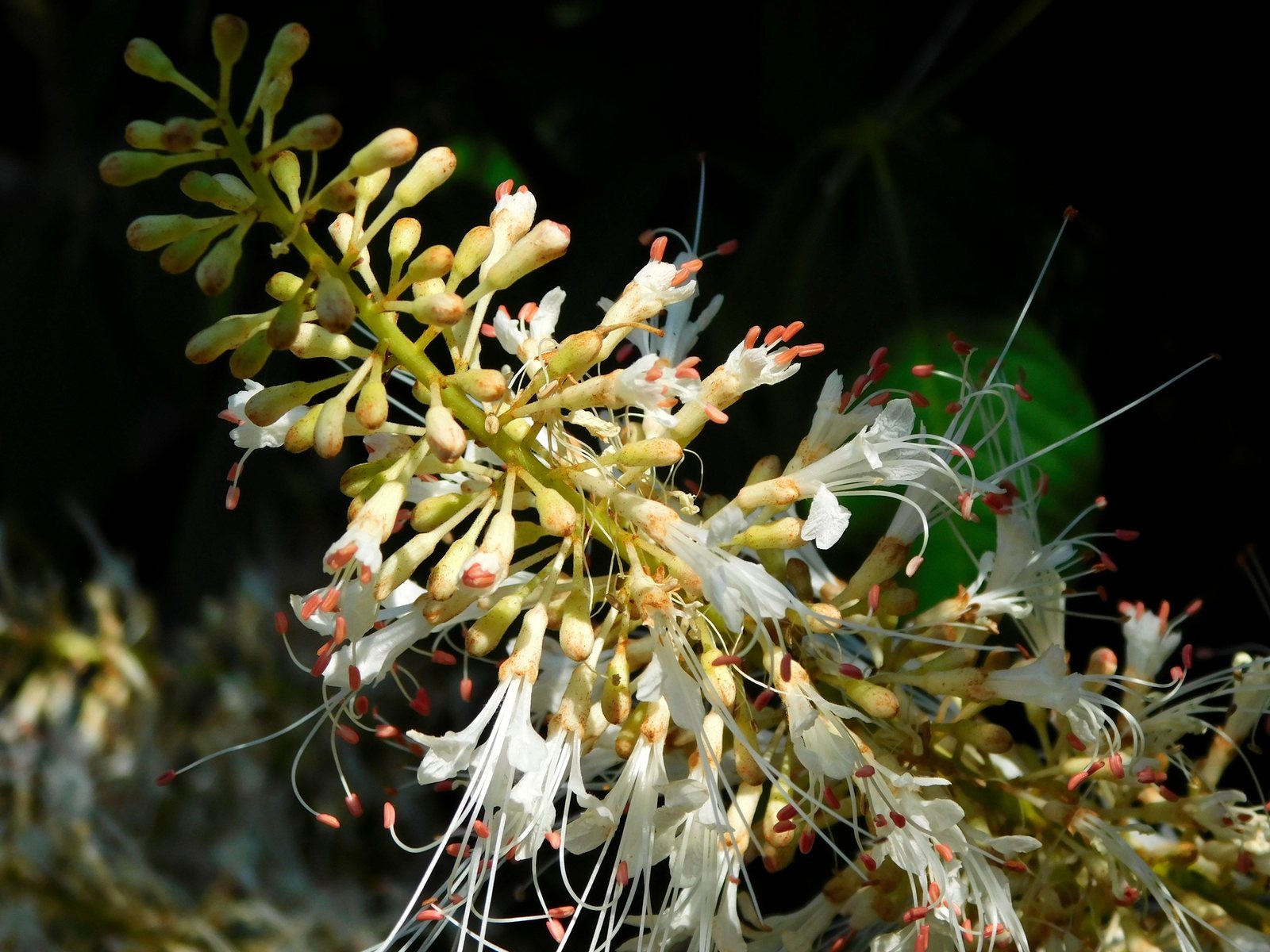
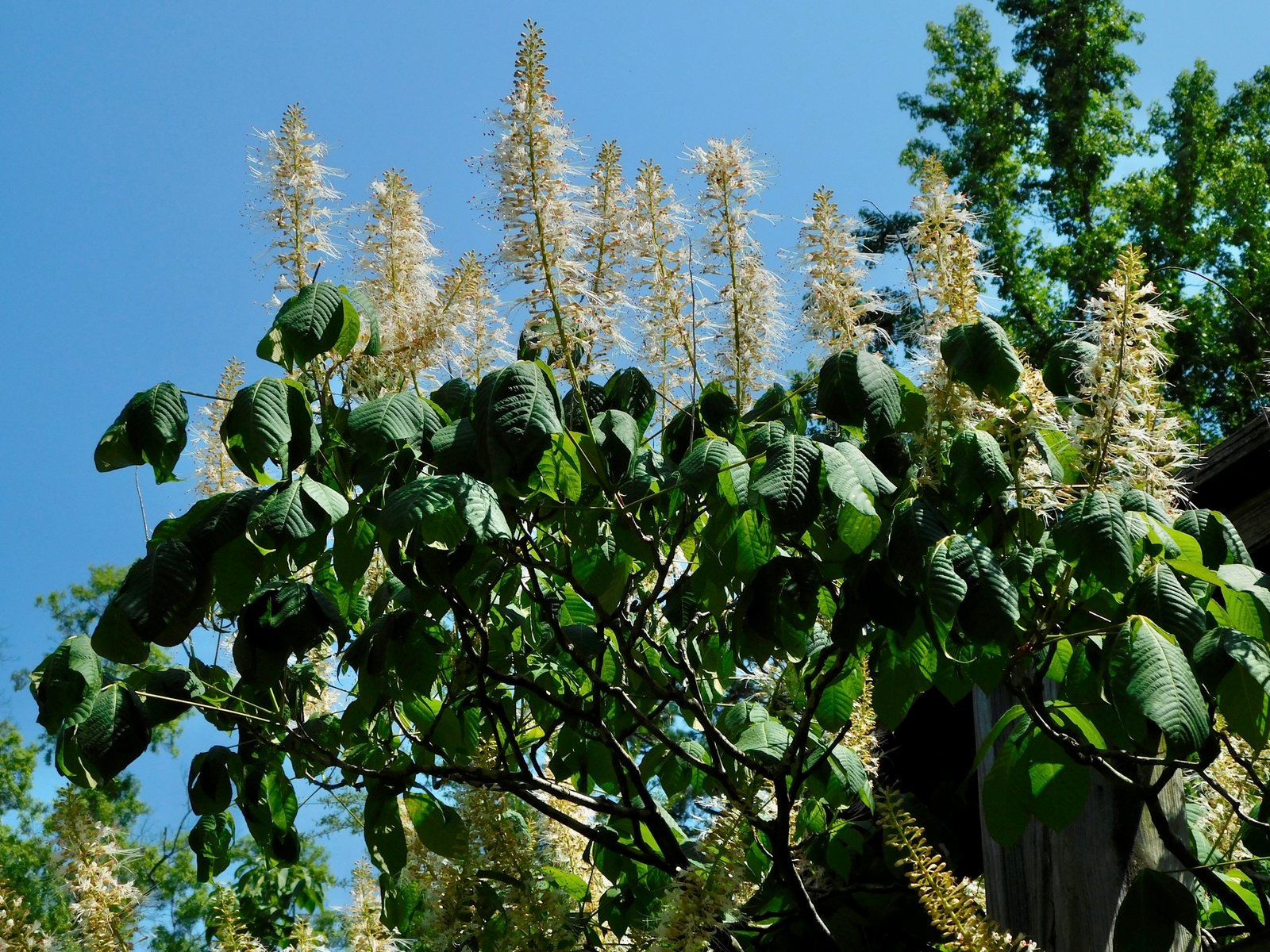
Bottlebrush buckeye is a large, suckering deciduous shrub native to the southeastern United States. Gardeners grow it for its upright white summer flowers, bold leaves and clear yellow autumn colour, especially in spacious, partly shaded gardens.
At a glance
- Sun
- Partial shade is ideal; tolerates full sun where the soil stays moist, and deeper shade with reduced flowering.
- Water
- Keep the root zone evenly moist, especially while establishing and during prolonged dry weather.
- Soil
- Humus-rich, moist but well-drained soil; prefers acidic to neutral conditions but tolerates mildly alkaline soil.
- Height
- 8-12 ft (2.4-3.7 m)
- Spread
- 8-15 ft (2.4-4.6 m), eventually wider through suckering
- Flowers
- Early to midsummer, sometimes extending into late summer in cooler climates; upright spikes of white flowers with long projecting stamens.
- Foliage
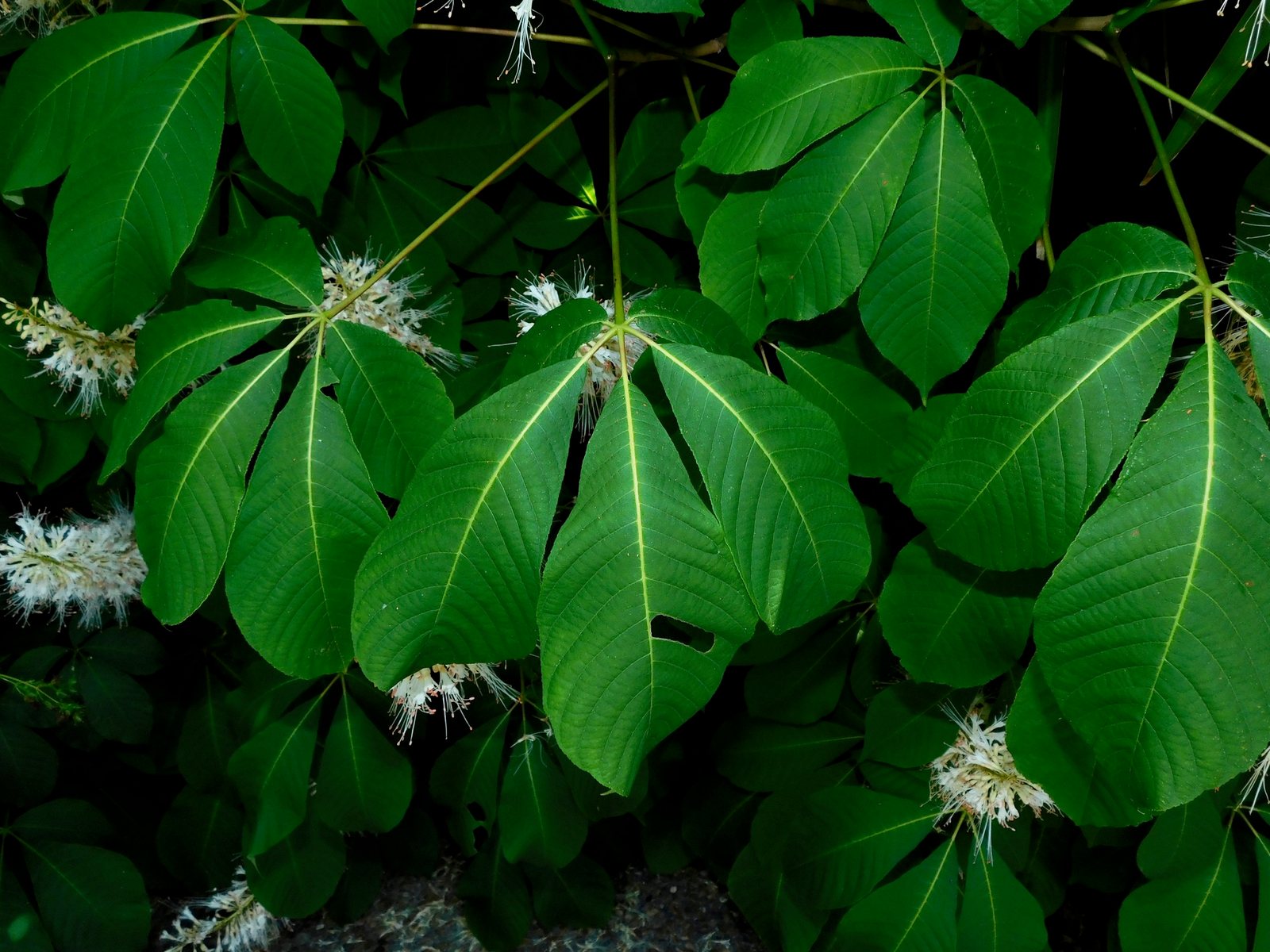
- Large, dark green leaves divided into five to seven leaflets, turning yellow in autumn.
- Growth
- Slow to moderate initially; established plants gradually form broad colonies.
- Care needed
- Low
The year at a glance
- Pollinators
- Deer resistant
- Cold hardy
- Wildlife
- Low allergen
| J | F | M | A | M | J | J | A | S | O | N | D | |
|---|---|---|---|---|---|---|---|---|---|---|---|---|
| Flowers | ||||||||||||
| Fruit | ||||||||||||
| Plant |
Northern hemisphere months. In Australia, shift them by six.
- Difficulty
- Easy
- Toughness
- Fairly tough
Will it suit your garden?
Pick your zone, country, light and whether you have pets.
Full sun is 6 or more hours of direct sun a day, part shade 3 to 6 hours, shade under 3.
How it grows
Planting day
1.6 ft (0.5 m)
After 1 year
2.9 ft (0.89 m)
After 2 years
4 ft (1.3 m)
After 3 years
6 ft (1.7 m)
After 5 years
8 ft (2.5 m)
About 7 years to full size.
From a typical nursery size, at an average rate for this kind of plant. A rule of thumb, not a forecast.
Good to know
- Cats and dogs
- Toxic
- Native to
- the US
- Growth rate
- Slow
Care
Jobs through the year
- WaterApr–May, Sep–Oct, every 10 days
- Water established shrubs if soil begins drying; keep young shrubs moist for their first two seasons.
- WaterJun–Aug, every 7 days
- Soak established roots during dry spells to maintain even moisture; skip when rain is sufficient.
- MulchMar–Apr
- Apply 5–8 cm of leaf mould or compost, keeping stems clear.
- PruneFeb–Mar
- Remove dead or damaged stems and unwanted suckers; otherwise leave the shrub unpruned.
- PruneAug
- Only if crowded, thin selected old stems at ground level immediately after flowering.
- Water deeply during dry spells for the first two growing seasons and whenever established plants show drought stress.
- Apply 2-3 in (5-8 cm) of leaf mould or organic mulch, keeping it clear of the stems.
- Top-dress with compost in spring; routine fertiliser is usually unnecessary.
- Allow room for a spreading colony, or remove unwanted rooted suckers while they are small.
- Avoid cultivating deeply beneath the shrub, where roots and developing suckers can be damaged.
Pruning. Little pruning is needed. Remove dead or damaged stems in late winter; if thinning is necessary, cut selected older stems to ground level immediately after flowering.
Through the year
- Late winter
- Remove dead or damaged stems and check whether spreading suckers need controlling.
- Spring
- Plant while conditions are cool and moist; water thoroughly and mulch the root zone.
- Late spring
- Check soil moisture as the large leaves expand, particularly beneath nearby trees.
- Summer
- Water during dry spells; thin selected old stems after flowering only if needed.
- Autumn
- Collect ripe seeds for immediate sowing, keeping them away from children and animals.
- Late autumn
- Plant or move rooted suckers after leaf fall, and renew mulch where it has thinned.
In the garden
- Plant along a woodland edge, where its white flower spikes brighten partial shade.
- Use as a broad specimen in a large lawn or garden, allowing space for its mature colony.
- Combine with ferns, hostas and sedges for contrasting leaf shapes beneath an open tree canopy.
- Mass along a spacious boundary to create an informal summer screen and a band of yellow autumn foliage.
Garden styles it suits: Woodland, Wildlife garden, Traditional, Grand estate, White garden and Autumn colour.
Plant it with: Christmas fern, Hosta, Oakleaf hydrangea, Virginia sweetspire, Foamflower and Pennsylvania sedge.
Wildlife: Flowers attract bees and butterflies, and hummingbirds visit them in North America. Dense colonies provide shelter for birds and other small wildlife.
Problems to watch for
- Brown leaf edges or early leaf drop during drought: water deeply and mulch; provide afternoon shade in hot sites.
- Sparse flowering in deep shade: increase available light where practical, or accept fewer flowers in exchange for shade-tolerant foliage.
- Occasional leaf blotch or powdery mildew: improve airflow without heavily opening the shrub, avoid wetting foliage unnecessarily, and clear badly affected fallen leaves.
Safety
Toxic to people, cats, dogs and horses if eaten. Seeds, leaves, bark and other parts contain toxic compounds; the large seeds are a particular ingestion risk. Poisoning can cause vomiting, weakness and neurological signs and may be serious. Do not treat the seeds as edible chestnuts; seek medical or veterinary advice promptly after ingestion.
Easily confused with
Red buckeye (Aesculus pavia)
Usually has red tubular flowers in spring rather than slender white bottlebrush spikes in summer; it is generally less broadly suckering.
Horse chestnut (Aesculus hippocastanum)
Develops into a large tree and flowers in spring, with broad, pyramidal flower clusters and prickly seed husks rather than a low, spreading shrub with slender summer flower spikes.
The name
The common name describes the brush-like flower spikes, while the species name parviflora means 'small-flowered', referring to the individual flowers.
Propagation. Separate rooted suckers during dormancy. Alternatively, sow fresh ripe seed promptly in deep pots protected from rodents; do not let the seed dry out, and allow it to experience natural winter cold. Seed-grown plants take several years to flower.
Checked against open data
- Accepted botanical name
- Aesculus parviflora
- In the US and Canada
- Native in the lower 48 states.
- Native range
- Alabama, Georgia and South Carolina.
Sources: GBIF (CC BY 4.0), USDA PLANTS and Trefle (CC BY 4.0). The care and design notes are LandscapeGPT's own.
See it in your own yard.
Upload a photo of your yard and see it redesigned with plants that suit your climate, each checked against your zone.