Bottlebrush Hannah Ray
Callistemon viminalis 'Hannah Ray'. Family Myrtaceae. Tree.
Also called Weeping bottlebrush 'Hannah Ray', Melaleuca viminalis 'Hannah Ray'.
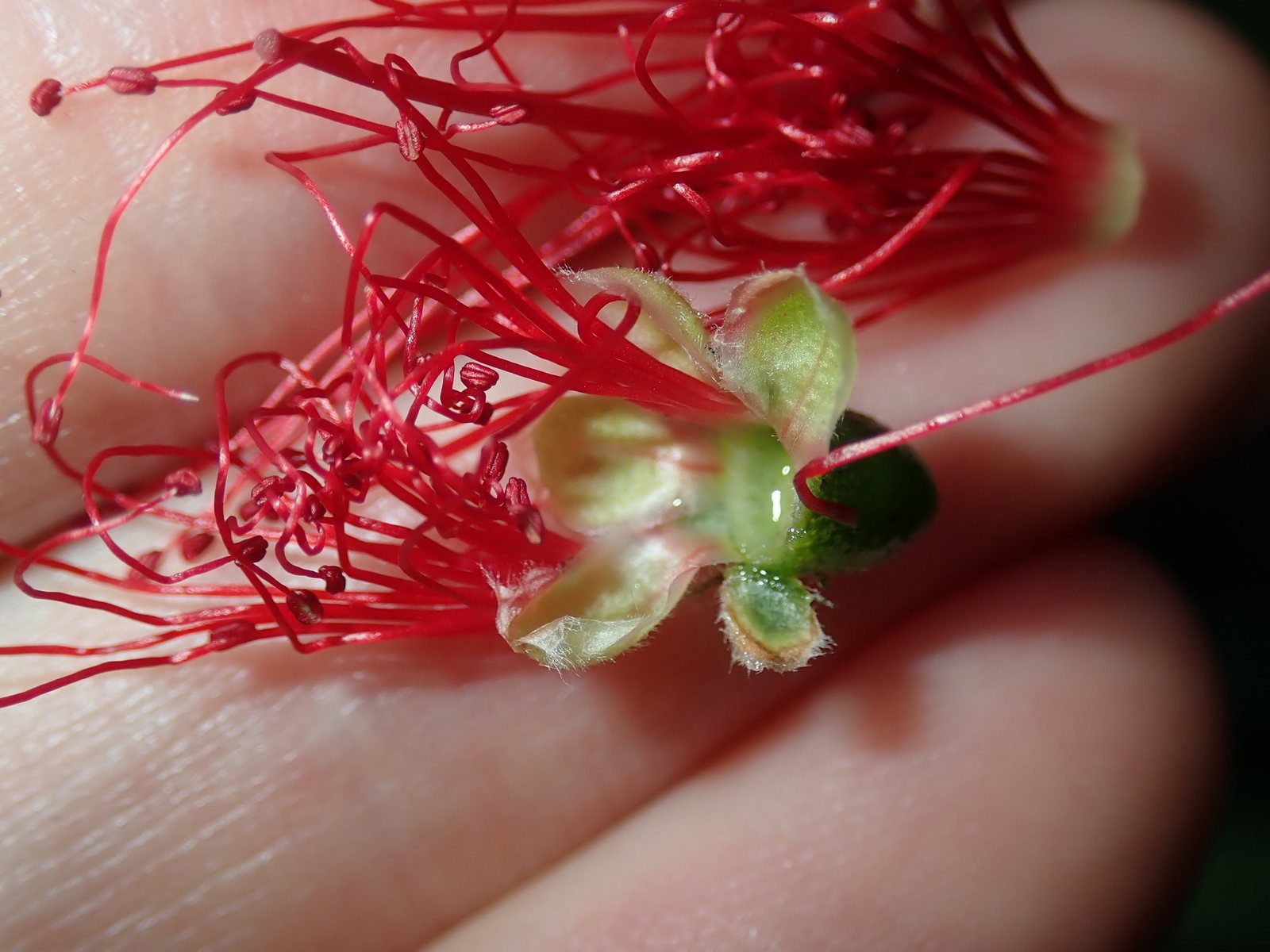
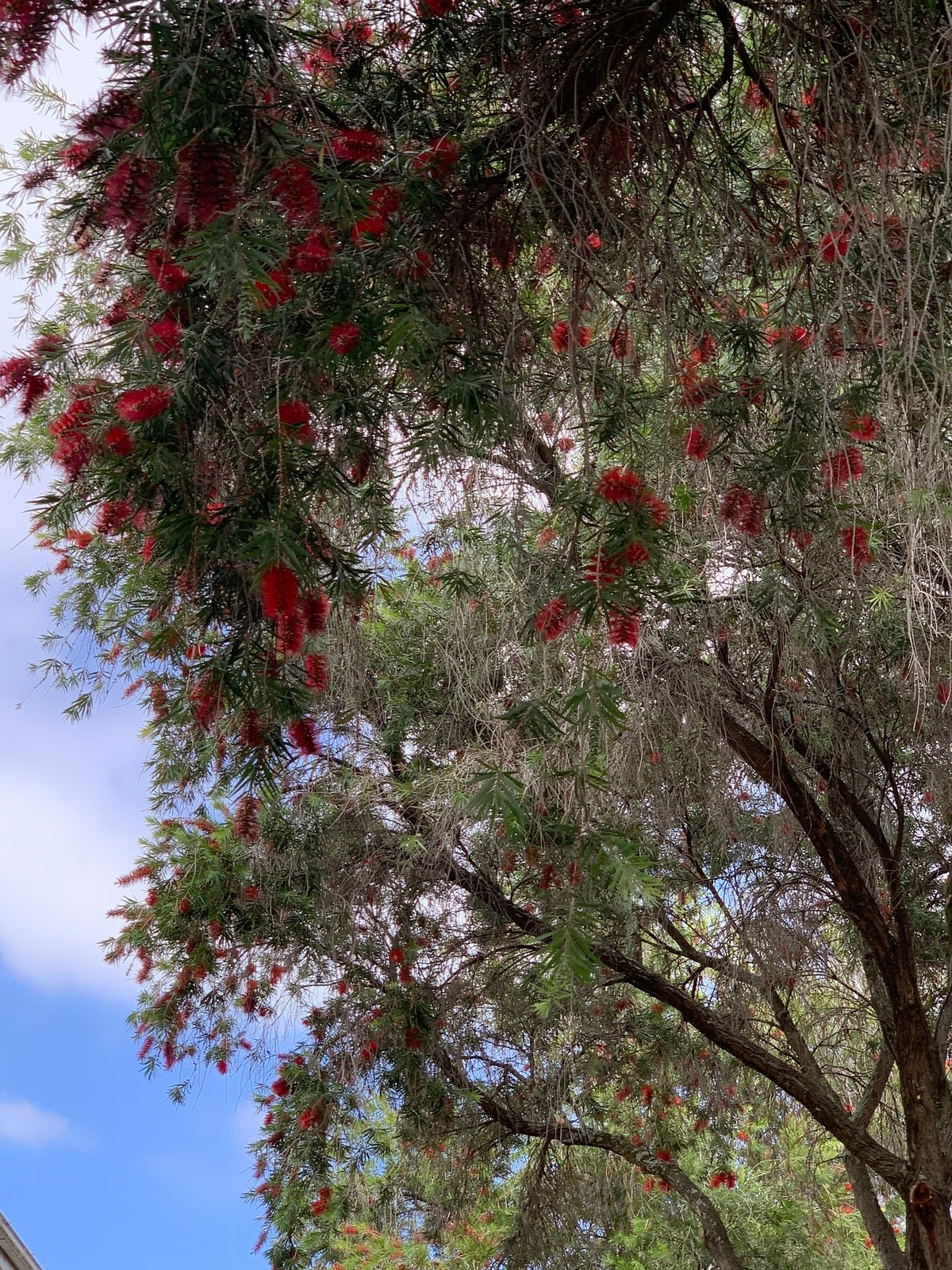
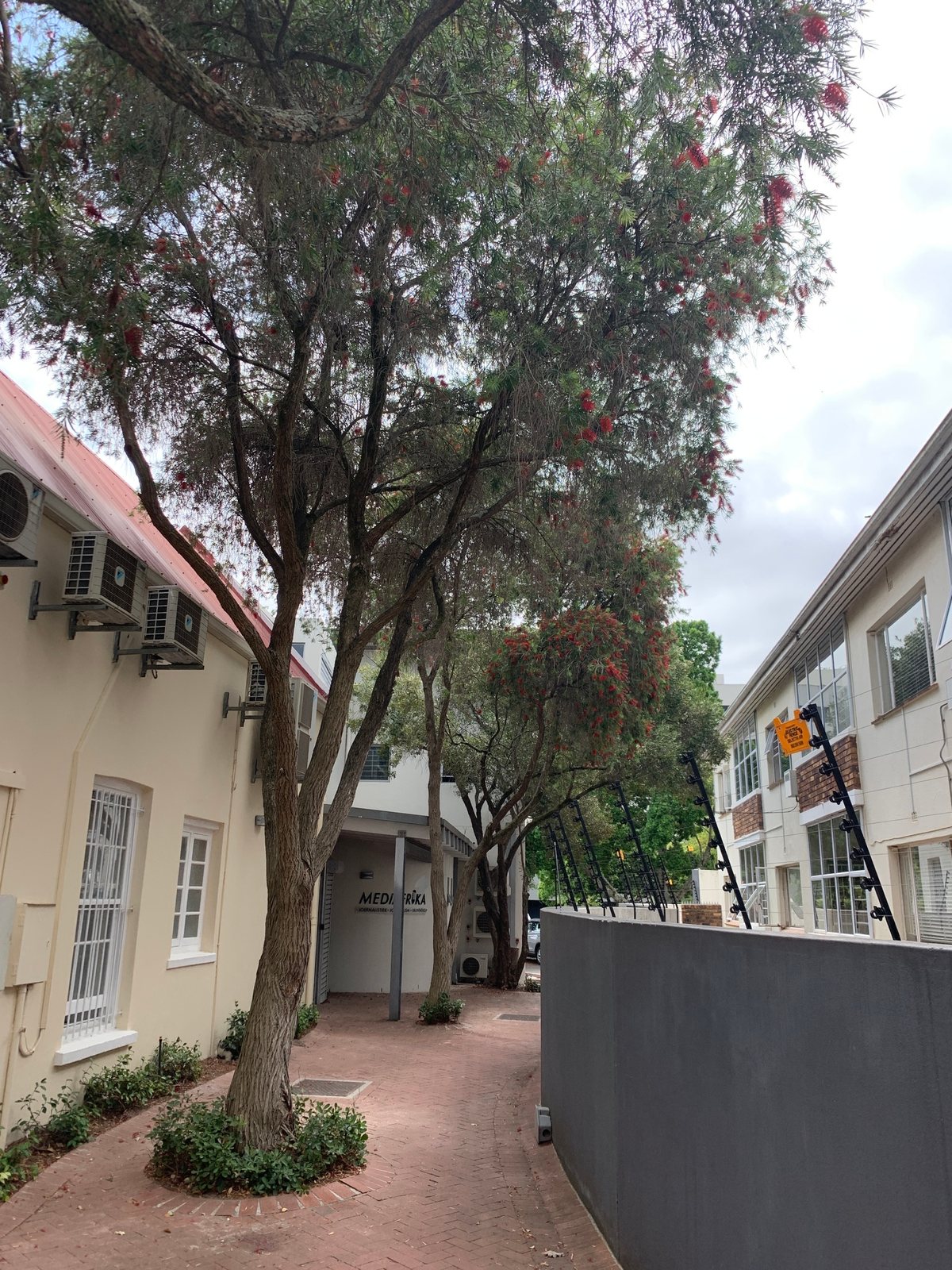
'Hannah Ray' is an evergreen small tree with strongly weeping branches, coppery-pink new growth and red bottlebrush flowers. Gardeners grow it for its cascading shape and nectar-rich blooms. It needs a warm, sheltered site; in most of the UK and Canada, grow it in a container and overwinter it under cover.
At a glance
- Sun
- Full sun for the best flowering; tolerates light partial shade.
- Water
- Water regularly while establishing. Once established, it tolerates short dry spells but flowers and grows better with occasional deep watering during prolonged drought.
- Soil
- Well-drained soil, preferably slightly acidic to neutral. Avoid persistently waterlogged ground and strongly alkaline soil.
- Height
- 13-20 ft (4-6 m)
- Spread
- 10-13 ft (3-4 m)
- Flowers
- Bright red bottlebrush flowers, mainly in spring and early summer, with occasional repeat flowering in warm weather.
- Foliage
- Narrow, evergreen green leaves on pendulous branches; young growth is coppery pink.
- Growth
- Moderate to fast in warm conditions with adequate moisture.
- Care needed
- Medium
The year at a glance
- Pollinators
- Drought tolerant
- Heat tolerant
- Wildlife
- Low allergen
| J | F | M | A | M | J | J | A | S | O | N | D | |
|---|---|---|---|---|---|---|---|---|---|---|---|---|
| Flowers | ||||||||||||
| Plant |
Northern hemisphere months. In Australia, shift them by six.
- Difficulty
- Hard
- Toughness
- Needs looking after
Will it suit your garden?
Pick your zone, country, light and whether you have pets.
Full sun is 6 or more hours of direct sun a day, part shade 3 to 6 hours, shade under 3.
How it grows
Planting day
7 ft (2 m)
After 1 year
7 ft (2.2 m)
After 2 years
8 ft (2.4 m)
After 3 years
8 ft (2.6 m)
After 5 years
10 ft (2.9 m)
About 16 years to full size.
From a typical nursery size, at an average rate for this kind of plant. A rule of thumb, not a forecast.
Good to know
- Cats and dogs
- Safe
- Growth rate
- Fast
Care
Jobs through the year
- WaterApr–May, Sep–Oct, every 14 days
- For established ground plants in suitable climates, water deeply if dry; young plants and pots need more.
- WaterJun–Aug, every 7 days
- Deep-water established ground plants during extended dry spells; check containers much more often.
- WaterJan–Mar, Nov–Dec, every 21 days
- Check sheltered containers and water sparingly before the root ball dries completely.
- FeedApr–May
- Apply a light low-phosphorus feed only if soil is poor or growth is weak.
- MulchApr–May
- Refresh 5–8 cm of organic mulch, keeping the trunk clear.
- PruneJun–Jul
- After the main flowering flush, lightly shorten flowered shoots while preserving the weeping outline.
- ProtectJan–Apr, Oct–Dec
- Not winter-hardy in zones 6–7 or most UK gardens; keep container plants bright and frost-free.
- ProtectMay
- Acclimatise overwintered plants gradually outdoors once frost danger has passed.
- Water deeply during the first two growing seasons, allowing the surface soil to dry slightly between waterings.
- Apply a low-phosphorus fertiliser suitable for Australian native plants in spring if growth is weak or the soil is poor.
- Spread 2-3 in (5-8 cm) of mulch over the root area, keeping it clear of the trunk.
- Use a container with drainage holes and a free-draining potting mix where winter protection is needed.
- Move container-grown plants into a bright, frost-free space before freezing weather; water sparingly through winter.
Pruning. Lightly shorten flowered shoots after the main flowering flush to encourage branching, while preserving the weeping outline. Remove dead or damaged wood and gradually raise the canopy if needed for access; avoid routine hard clipping.
Through the year
- Spring
- Plant after frost danger has passed, or repot container-grown plants if their roots are crowded.
- Spring
- Refresh mulch and apply a light feed with low-phosphorus fertiliser if needed.
- Late spring
- After the main flowering flush, lightly trim spent shoots and remove damaged branches.
- Summer
- Water deeply during extended dry spells; check containers frequently because they dry faster than garden soil.
- Late summer
- Take semi-ripe cuttings from healthy, non-flowering shoots.
- Autumn
- Move pots under bright, frost-free cover before freezing weather arrives.
- Winter
- Keep protected plants on the dry side without letting the rootball dry out completely.
In the garden
- Use as a lawn specimen where the cascading branches have room to develop without frequent trimming.
- Place near a patio or seating area to frame views with weeping foliage and red flowers.
- Combine with grevilleas, lomandras and kangaroo paws in a sunny Australian native planting.
- Grow in a large movable container for a sheltered courtyard in cooler climates.
Garden styles it suits: Australian native, Coastal, Mediterranean, Wildlife garden, Pollinator garden and Modern courtyard.
Plant it with: Lomandra, Kangaroo paw, Westringia, Grevillea and Flax lily.
Wildlife: Flowers provide nectar for bees and nectar-feeding birds, including honeyeaters in Australia and hummingbirds where grown in North America. The dense canopy can provide shelter for small birds.
Problems to watch for
- Root rot in waterlogged soil: improve drainage before planting and avoid frequent watering of already wet ground.
- Yellow leaves on alkaline soil: check soil pH and treat confirmed iron deficiency with an appropriate chelated iron product.
- Scale insects and associated sooty mould: inspect stems and leaf undersides, control ants, and treat scale with horticultural oil according to the label.
- Frost damage to shoots: protect young plants and containers, then wait until spring growth begins before cutting back dead wood.
Safety
Not known to be toxic to people, cats, dogs or horses. No part is recognised as a significant poisoning hazard, although it is an ornamental plant rather than a food plant.
Where it spreads. The species Callistemon viminalis is listed as invasive in South Africa. This is a species-level concern; cultivar-specific evidence for 'Hannah Ray' is limited.
Easily confused with
Crimson bottlebrush (Callistemon citrinus)
Usually has a more upright, less cascading habit; its crushed leaves commonly have a distinct lemon scent.
Stiff bottlebrush (Callistemon rigidus)
Has stiff, upright branches and rigid, narrow leaves rather than the strongly pendulous growth of 'Hannah Ray'.
Little John bottlebrush (Callistemon 'Little John')
Forms a compact dwarf shrub with blue-green foliage, rather than a small tree with long, weeping branches.
The name
Callistemon comes from Greek words meaning beautiful stamens, referring to the conspicuous flower filaments, while viminalis means suitable for wickerwork and refers to the flexible shoots.
Propagation. Take semi-ripe cuttings in late summer and root them in a free-draining medium with gentle warmth. Seed-grown plants will not reliably retain the characteristics of 'Hannah Ray'.
Checked against open data
- Accepted botanical name
- Callistemon viminalis
Sources: GBIF (CC BY 4.0). The care and design notes are LandscapeGPT's own.
See it in your own yard.
Upload a photo of your yard and see it redesigned with plants that suit your climate, each checked against your zone.