Bowman's root
Gillenia trifoliata. Family Rosaceae. Perennial.
Also called Indian physic, American ipecac, Porteranthus trifoliatus.
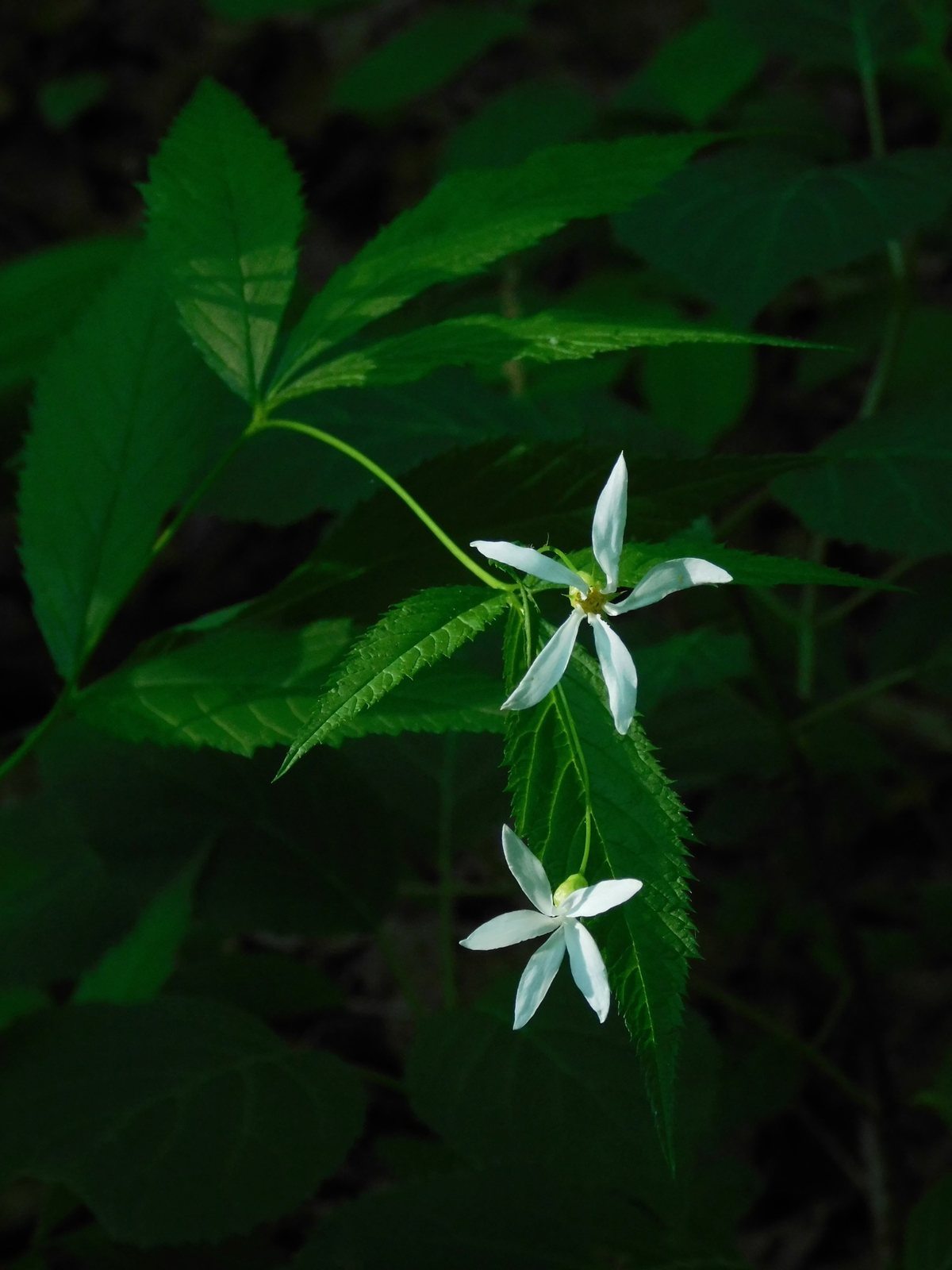
Bowman's root is a clump-forming perennial native to eastern North America, grown for its loose sprays of starry white flowers on slender, reddish stems. Its airy growth fits woodland edges and mixed borders, and its leaves often turn orange or red in autumn.
At a glance
- Sun
- Partial shade or sun; give afternoon shade in hot climates.
- Water
- Moderate; keep evenly moist while establishing, then water during prolonged dry spells.
- Soil
- Humus-rich, well-drained soil, preferably acidic to neutral; tolerates some clay if drainage is good.
- Height
- 2-3 ft (0.6-0.9 m)
- Spread
- 1.5-3 ft (0.45-0.9 m)
- Flowers
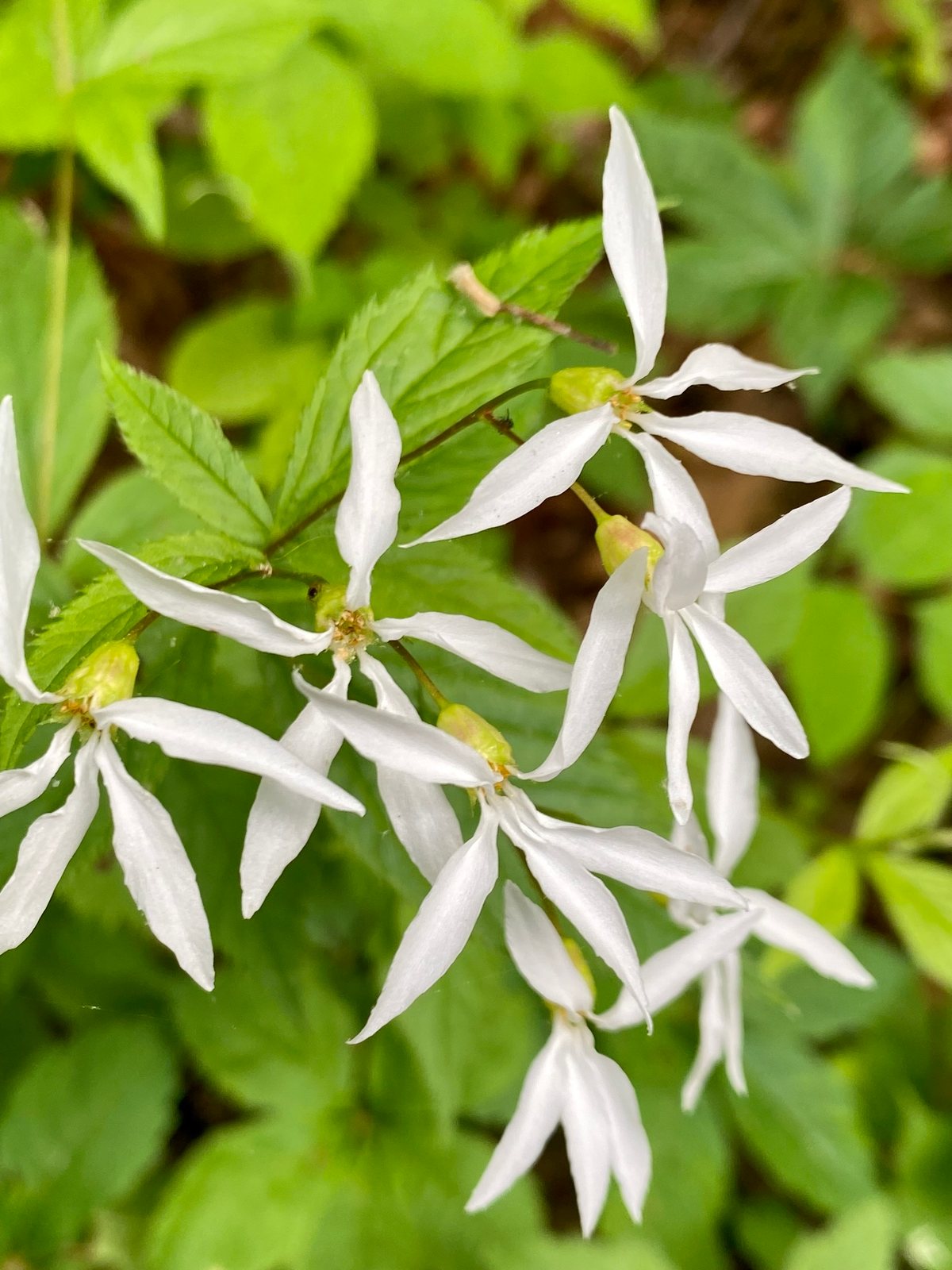
- Late spring to early summer; white flowers with narrow, uneven petals and reddish calyces.
- Foliage
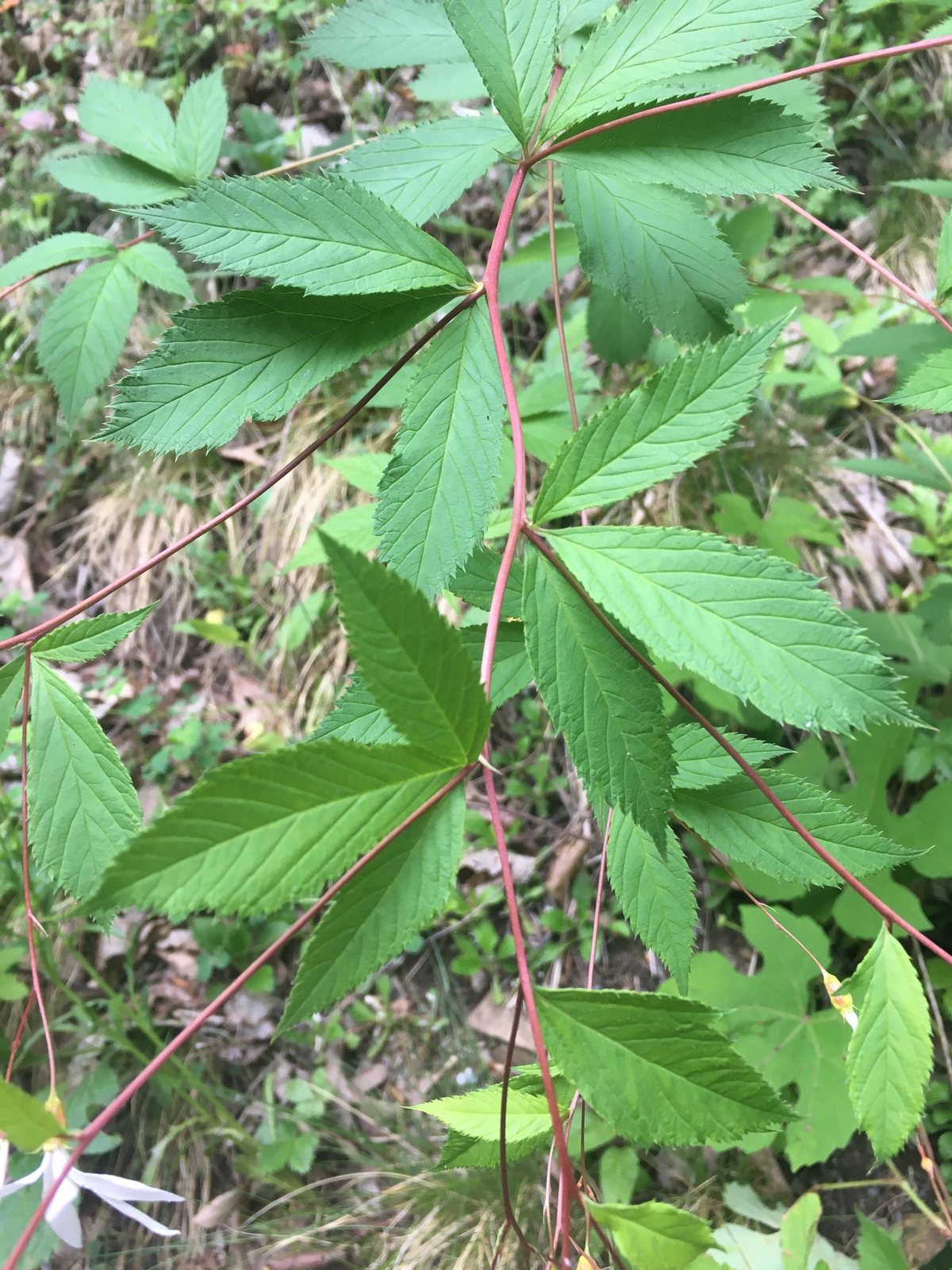
- Deciduous leaves divided into three pointed, toothed leaflets; green in summer, often orange or red in autumn.
- Growth
- Moderate once established; young plants may take two or three years to form substantial clumps.
- Care needed
- Low
The year at a glance
- Pollinators
- Deer resistant
- Cold hardy
- Low allergen
| J | F | M | A | M | J | J | A | S | O | N | D | |
|---|---|---|---|---|---|---|---|---|---|---|---|---|
| Flowers | ||||||||||||
| Plant |
Northern hemisphere months. In Australia, shift them by six.
- Difficulty
- Easy
- Toughness
- Fairly tough
Will it suit your garden?
Pick your zone, country, light and whether you have pets.
Full sun is 6 or more hours of direct sun a day, part shade 3 to 6 hours, shade under 3.
How it grows
Planting day
1 ft (0.3 m)
After 1 year
1.5 ft (0.45 m)
After 2 years
2 ft (0.6 m)
After 3 years
2.5 ft (0.75 m)
full size
About 3 years to full size.
From a typical nursery size, at an average rate for this kind of plant. A rule of thumb, not a forecast.
Good to know
- Cats and dogs
- Mildly toxic: may upset a stomach
- Native to
- the US and Canada
- Growth rate
- Moderate
Care
Jobs through the year
- WaterApr–May, Sep–Oct, every 14 days
- Water established plants during prolonged dry spells; keep new plants evenly moist.
- WaterJun–Aug, every 7 days
- Water deeply during dry spells, especially in sun; young plants need more frequent checks.
- MulchMar–Apr
- Apply leaf mould or compost to conserve moisture, keeping the crown clear.
- PruneFeb–Mar
- Cut dead stems to ground level before new growth emerges.
- DivideMar–Apr
- Divide only if necessary; otherwise leave established clumps undisturbed.
- ProtectMar–May, every 7 days
- Inspect emerging shoots for slugs and control them if damage occurs.
- ProtectMay–Jun
- Add discreet supports if stems lean in shade or exposed positions.
- Water deeply during the first growing season, especially in dry weather.
- Apply a thin layer of leaf mould or compost in spring; rich feeding is usually unnecessary.
- Mulch to conserve moisture, keeping mulch away from the crown.
- Choose a sheltered position; support stems early if they lean in deep shade or rich soil.
- Leave established clumps undisturbed unless division is needed.
Pruning. Cut dead stems to ground level in late winter or early spring before new growth appears. Deadheading is optional and is not needed to maintain the plant.
Through the year
- Late winter
- Cut down old stems before fresh shoots emerge.
- Spring
- Plant or divide as growth begins, watering thoroughly afterwards.
- Mid-spring
- Apply leaf mould or compost and check young shoots for slug damage.
- Early summer
- Add discreet support if stems begin to lean; avoid heavy feeding.
- Summer
- Water during prolonged dry spells, particularly in sunny positions.
- Autumn
- Enjoy the leaf colour and leave stems standing where winter structure is welcome.
In the garden
- Plant in small groups along a woodland edge, where white flowers stand out against dark foliage.
- Thread through a mixed border to soften heavier flowers and broad leaves.
- Combine with ferns and hostas for contrasting leaf shapes in partial shade.
- Use in eastern North American native plantings with sedges and other woodland perennials.
Garden styles it suits: Woodland, Cottage garden, New perennial (prairie), Wildlife garden, White garden and Autumn colour.
Plant it with: Hostas, Lady fern, Solomon's seal, Foamflower, Woodland phlox and Pennsylvania sedge.
Wildlife: Flowers attract bees and other pollinating insects. Deer usually leave it alone, although browsing is still possible.
Problems to watch for
- Flopping stems in deep shade or overly rich soil: provide brighter light, avoid high-nitrogen fertiliser and add discreet support.
- Wilting or scorched foliage during drought: water deeply and mulch; provide afternoon shade in hot gardens.
- Crown or root rot in waterlogged soil: improve drainage or move the plant to a better-drained position.
- Slugs eating emerging shoots: check plants in spring, remove slugs by hand and use locally approved controls if damage persists.
Safety
The roots contain compounds that can cause vomiting and should not be eaten or used as a home remedy. Reliable species-specific toxicity information for cats, dogs and horses is limited; do not assume it is safe for pets or livestock, and seek medical or veterinary advice after ingestion.
Easily confused with
American ipecac (Gillenia stipulata)
This close relative has conspicuous, toothed, leaf-like stipules at the leaf bases; Bowman's root has much smaller, narrow stipules.
Goat's beard (Aruncus dioicus)
Goat's beard is generally larger, with dense, feathery flower plumes and leaves divided into many leaflets; Bowman's root has loose, five-petalled flowers and three leaflets per leaf.
The name
The species name trifoliata means three-leaved, referring to the three leaflets that make up each leaf.
Propagation. Divide carefully in early spring, retaining substantial roots on each piece; established woody crowns can be difficult to split. Sow fresh seed outdoors in autumn, allowing winter cold to help break dormancy; germination can be slow and uneven.
Checked against open data
- Accepted botanical name
- Gillenia trifoliata
- In the US and Canada
- Native in Canada and the lower 48 states.
- Native range
- Alabama, Arkansas, Delaware, District of Columbia, Georgia, Illinois, Indiana, Kentucky, Maryland, Masachusettes, Michigan and Missouri.
Sources: GBIF (CC BY 4.0), USDA PLANTS and Trefle (CC BY 4.0). The care and design notes are LandscapeGPT's own.
See it in your own yard.
Upload a photo of your yard and see it redesigned with plants that suit your climate, each checked against your zone.