Box honeysuckle
Lonicera nitida. Family Caprifoliaceae. Shrub.
Also called Box-leaved honeysuckle, Wilson's honeysuckle.
Box honeysuckle is a fast-growing evergreen shrub with tiny leaves and dense, arching branches. Gardeners grow it mainly as a clipped hedge, low edging or simple topiary, although it needs more frequent trimming than box to keep a crisp outline.
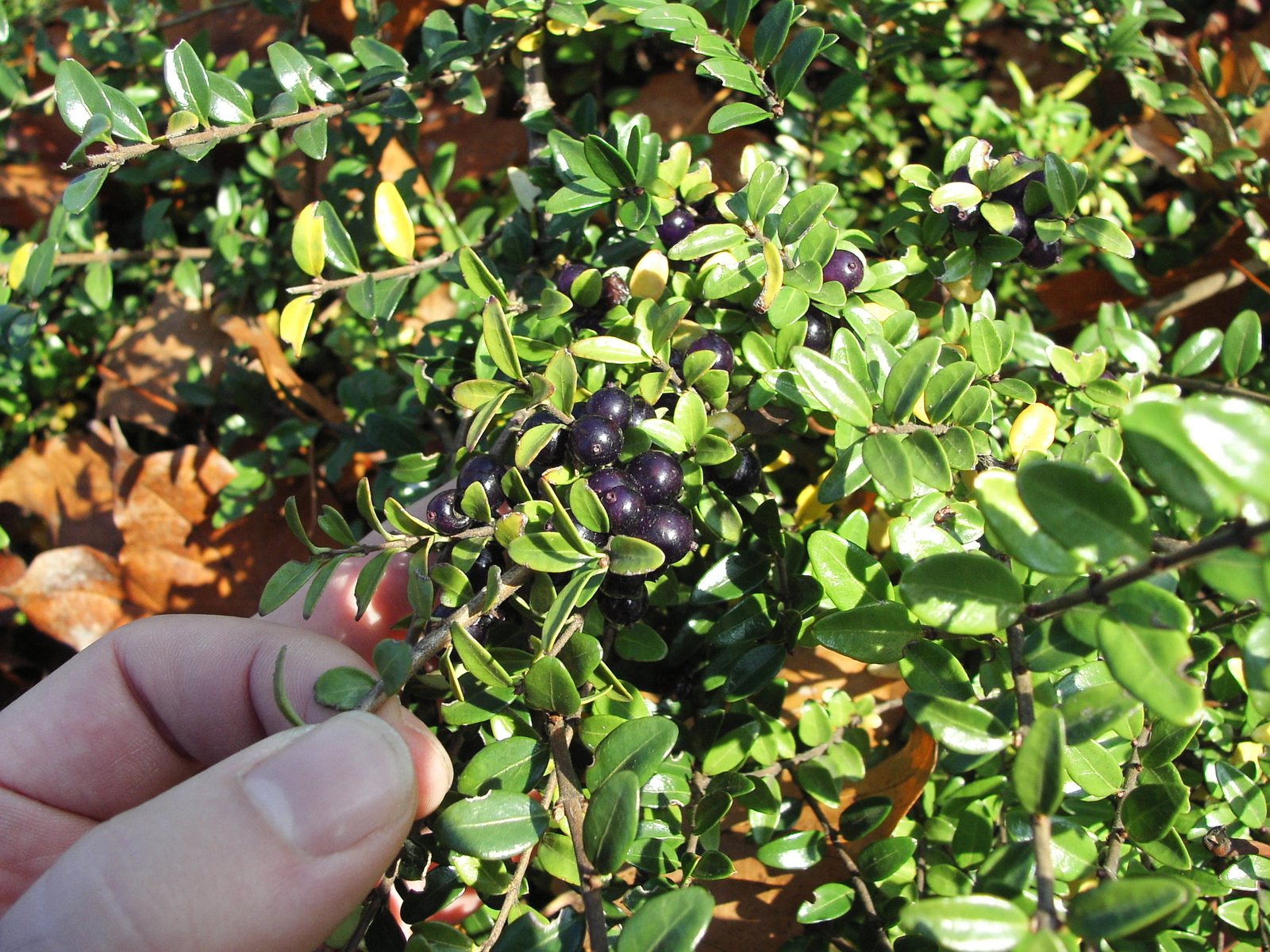
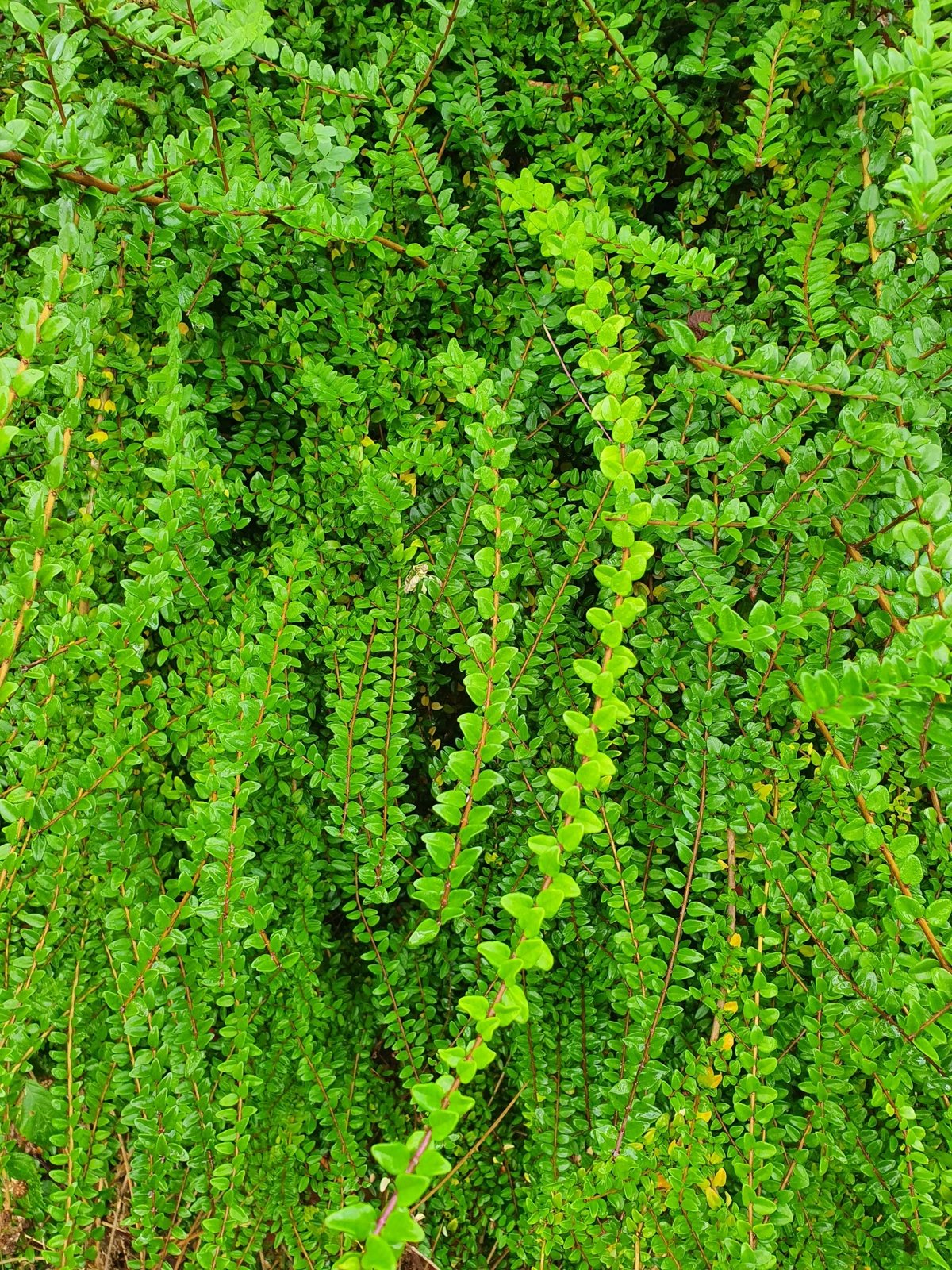
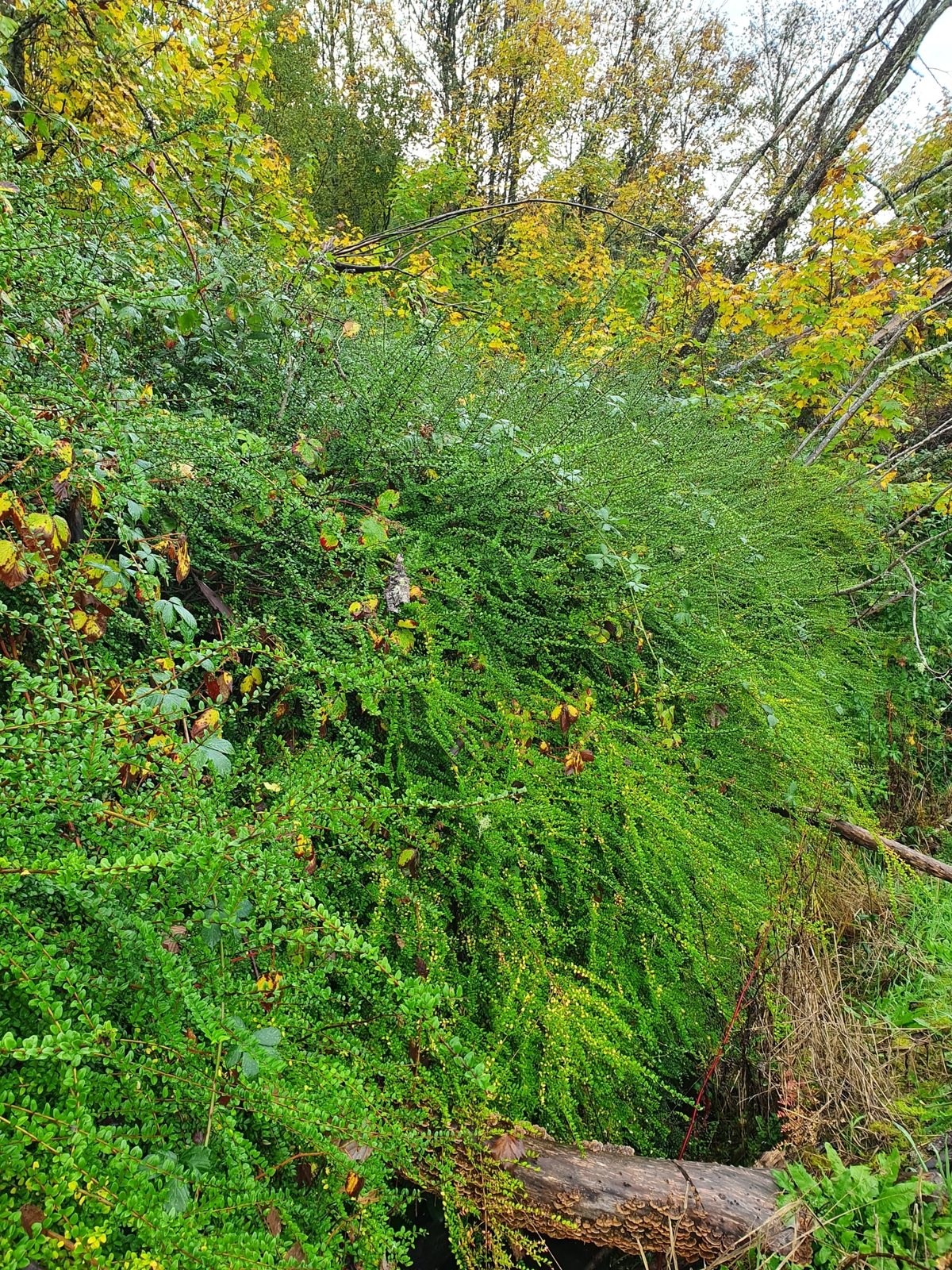
At a glance
- Sun
- Full sun to partial shade; tolerates deeper shade but grows less densely.
- Water
- Water regularly during establishment. Once established, it tolerates short dry spells, but prolonged drought can cause leaf loss.
- Soil
- Most well-drained soils, including chalk, clay and sandy soil; tolerates acidic to alkaline conditions. Avoid persistently waterlogged ground.
- Height
- 5-8 ft (1.5-2.4 m) unpruned; easily maintained lower
- Spread
- 5-8 ft (1.5-2.4 m) unpruned
- Flowers
- Small, creamy-white flowers in late spring, often hidden among the leaves; clipping greatly reduces flowering.
- Foliage
- Evergreen. Tiny, glossy, dark-green leaves in opposite pairs on fine, densely branching stems.
- Growth
- Fast
- Care needed
- Medium
The year at a glance
- Pollinators
- Drought tolerant
- Heat tolerant
- Wildlife
- Low allergen
| J | F | M | A | M | J | J | A | S | O | N | D | |
|---|---|---|---|---|---|---|---|---|---|---|---|---|
| Flowers | ||||||||||||
| Fruit | ||||||||||||
| Plant |
Northern hemisphere months. In Australia, shift them by six.
- Difficulty
- Easy
- Toughness
- Very tough
Will it suit your garden?
Pick your zone, country, light and whether you have pets.
Full sun is 6 or more hours of direct sun a day, part shade 3 to 6 hours, shade under 3.
How it grows
Planting day
1.6 ft (0.5 m)
After 1 year
3 ft (0.95 m)
After 2 years
5 ft (1.4 m)
After 3 years
6 ft (1.8 m)
After 5 years
6 ft (2 m)
full size
About 3 years to full size.
From a typical nursery size, at an average rate for this kind of plant. A rule of thumb, not a forecast.
Good to know
- Cats and dogs
- Mildly toxic: may upset a stomach
- Invasive in
- Australia
- In the garden
- Spreads vigorously: plan to contain it.
- Growth rate
- Fast
Care
Jobs through the year
- WaterApr–May, Sep–Oct, every 14 days
- Check soil beneath established hedges and water if dry; young plants need more frequent watering.
- WaterJun–Aug, every 14 days
- Water established plants deeply during prolonged drought, checking beneath dense foliage.
- MulchMar–Apr
- Refresh organic mulch over the root area without covering stems.
- FeedApr
- Feed lightly only on poor soil or if growth is weak.
- PruneMar
- Remove winter damage or renovate overgrown plants after severe frosts.
- PruneMay–Aug, every 45 days
- Clip hedges as needed with a wider base; check for active nests and avoid heat or drought.
- ProtectJan–Feb, Dec
- Gently brush heavy snow from clipped plants before branches bend or split.
- Water deeply during dry spells through the first growing season.
- Apply organic mulch over the root area, keeping it clear of the stems.
- Feed lightly in spring only if growth is weak or the soil is poor; excessive feeding increases trimming.
- Check soil moisture beneath dense hedges, where rain may not reach the roots.
- Keep young plants free of competing grass and weeds until established.
Pruning. Clip hedges in late spring and again in summer as needed, keeping the base slightly wider than the top; avoid trimming during extreme heat or drought. Renovate an overgrown shrub by cutting back hard in early spring after severe frosts, and check for active bird nests before any pruning.
Through the year
- Early spring
- Remove winter-damaged shoots and renovate overgrown shrubs once severe frosts have passed.
- Spring
- Refresh mulch and give a light feed if growth is weak.
- Late spring
- Give established hedges their first shaping trim after checking for nesting birds.
- Summer
- Trim vigorous regrowth as needed and water young plants during dry spells.
- Early autumn
- Plant where winters are mild, watering thoroughly; in cold regions, wait until spring.
- Winter
- Brush heavy snow gently from clipped plants before branches bend or split.
In the garden
- Clip into low hedges around beds or along paths for a continuous evergreen outline.
- Use for simple balls, mounds or larger topiary shapes where frequent trimming is practical.
- Plant behind flowering perennials to provide a dark-green backdrop through winter.
- Allow informal groups to arch naturally beneath open-canopied trees or along a mixed shrub border.
Garden styles it suits: Formal, Topiary garden, Tudor knot garden, English country, Modern courtyard and Winter interest.
Plant it with: Hardy geranium, Lady's mantle, Japanese anemone, Hellebore, Snowdrop and Panicle hydrangea.
Wildlife: Unclipped plants offer small flowers for visiting insects, berries for birds and dense shelter. Frequent clipping reduces flowers and fruit; established hedges may contain nesting birds.
Problems to watch for
- Sparse or bare hedge bases: trim with a wider base than top so light reaches the lower branches; renovate badly neglected plants in early spring.
- Root rot in wet ground: improve drainage or move the plant rather than continuing to water saturated soil.
- Aphids on soft shoots: wash off small colonies with water and encourage natural predators.
- Winter scorch or drought browning: shelter from drying winds, mulch the roots and water during prolonged dry weather when the ground is unfrozen.
Safety
Do not eat the berries: honeysuckle fruits can cause stomach upset, vomiting or diarrhoea. Species-specific evidence for poisoning in cats, dogs and horses is limited, so keep pets and livestock from eating the berries or substantial amounts of foliage; seek medical or veterinary advice after a significant ingestion.
Where it spreads. Naturalised and capable of invading native vegetation in New Zealand and parts of southeastern Australia, including Tasmania. Birds spread the seed, and low branches can root where they touch the soil; check local weed guidance before planting near bushland.
Easily confused with
Common box (Buxus sempervirens)
Box has thicker, leathery leaves and generally slower, stiffer growth; box honeysuckle has finer, more flexible shoots and smaller, thinner leaves.
Box-leaved holly (Ilex crenata)
Its leaves are alternate and usually have finely scalloped edges; box honeysuckle has opposite leaves with smooth edges.
Privet honeysuckle (Lonicera pileata)
It generally forms a lower, spreading shrub with longer, more narrowly oblong leaves; box honeysuckle is more upright with smaller, rounded to oval leaves.
The name
Lonicera honours the botanist Adam Lonitzer, nitida means shining or glossy, and box honeysuckle refers to its resemblance to box.
Propagation. Take semi-ripe cuttings in summer, or layer a low branch and separate it once well rooted.
Checked against open data
- Accepted botanical name
- Lonicera pileata yunnanensis Lonicera nitida is an older name for Lonicera pileata yunnanensis.
Sources: GBIF (CC BY 4.0). The care and design notes are LandscapeGPT's own.
See it in your own yard.
Upload a photo of your yard and see it redesigned with plants that suit your climate, each checked against your zone.